
Great Lakes Center Newsletter: Issue 8
May 31, 2016
The Great Lakes Center is pleased to release the spring issue of our newsletter. This issue has a special focus on our 50th anniversary. We also say goodbye to Dr. Subodh Kumar and some of our graduate students.
50th anniversary of the GLC
by Alexander Karatayev
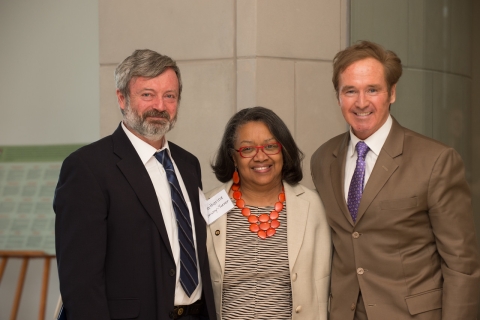
On April 15th, we celebrated 50 years of research at the Great Lakes Center. Over 140 people attended our celebration ceremony which was held at the beautiful Burchfield Penney Art Center at SUNY Buffalo State. Several speakers indicated the importance of the GLC research in addressing urgent environmental issues of the Great Lakes, including Katherine Conway-Turner, President of SUNY Buffalo State; Melanie Perreault, Provost; Mark Severson, Dean of School of Natural and Social Sciences; and Alexander Karatayev, Director of the GLC. Guest speakers were represented by Congressman Brian Higgins, Senator Marc Panepinto, and Assembly member Sean Ryan, among others.
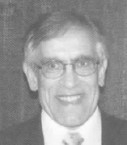
The Center’s research started in 1966 when Dr. Howard Sengbusch established the Great Lakes Laboratory. Dr. Robert Sweeney became the first director of the Great Lakes Laboratory and laid the foundation for 50 years of environmental research, teaching, and education at Buffalo State College.
Today the Center is a multidisciplinary research, education, and service institute with a primary focus on the Great Lakes. We are committed to providing the best possible science for understanding the physical, chemical, biological, and social dimensions of the Great Lakes and their watersheds. Our mission is to improve the quality of the environment by providing the best possible science to decision-makers concerned with the health and sustainability of resources, with a primary focus within the Great Lakes and their watersheds. This is accomplished through high quality research, education, and dissemination of information to the public through outreach.
Great Lakes Center is the only institution in the SUNY system with a field station on the Great Lakes, and a large fleet of research vessels. In addition to 12 full time employees, GLC actively collaborates with over 80 scientists from other departments at Buffalo State, universities, research centers, state and federal employees within New York State, nationwide, and internationally.
Over the last eight years, the Great Lakes Center saw sustained activity and productivity in research, education, and public outreach. Our researchers have: published 80 papers; made over 240 presentations at various state, national and international meetings; been involved in 35 funded projects totaling over 14 million dollars, including over 8 million for Buffalo State.
Beginning in 2013, two new graduate programs in Great Lakes Ecosystem Science (GLES) have been hosted by GLC. Currently, 21 students are enrolled in these programs.
History of the Great Lakes Center
by Kit Hastings
When the Great Lakes Center was founded 50 years ago, the timing was ripe: the Great Lakes were in rough shape, Lake Erie was pronounced dead and rivers were so polluted that they caught on fire. Public sentiment was changing as the environmental movement began. In 1965, Congress formed the Federal Water Pollution Control Administration, which later became the Environmental Protection Agency, and in 1966 the states surrounding Lake Erie agreed to set pollution abatement goals.
Buffalo State had been looking for a waterfront laboratory since 1960. In 1966, SUNY finally authorized the formation of the Great Lakes Lab (GLL) at the site of an old Sea Scout camp on Porter Avenue, near the confluence of Lake Erie and the Niagara River. Dr. Howard Sengbusch, Dean of Arts and Sciences, was instrumental in the formation of the GLL before it was handed over to our first director, Dr. Robert Sweeney.
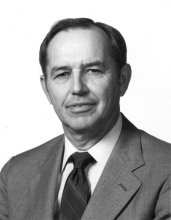
Dr. Sweeney was director of the GLL from 1966-1981 and laid the foundation of our Great Lakes program. During that time, our research focused heavily on water quality testing in the Buffalo River and monitoring the effect of nutrient abatement programs. They participated in numerous research projects throughout the Great Lakes including the International Field Year on the Great Lakes (IFYGL), which is something we continue to be involved with, most recently in Lakes Erie, Michigan, and later this year in Lake Superior. Although we started out with only having space at the Field Station, the GLL grew to include lab and office space on campus.
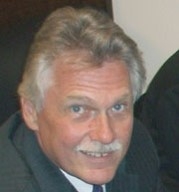
Our second director was Dr. Harish Sikka (1982-1987). Dr. Sikka established the Environmental Toxicology and Chemistry Lab, a program that focused on toxicology, environmental contaminants, and mechanisms of carcinogenesis. Instead of testing just for the presence of chemicals, they were interested in their fate in the environment, how long they persisted, and whether they were affecting fish. During Dr. Sikka’s time as director, Dr. James Spotila served as associate director of fisheries and ecology with the GLL, studying fisheries in the Buffalo River, Lake Erie, and the Niagara River. Dr. Spotila helped create an artificial reef in Buffalo’s Outer Harbor to enhance recreational fishing. After Dr. Sikka’s tenure as director was over, he continued as the director of the Environmental Toxicology and Chemistry Lab.
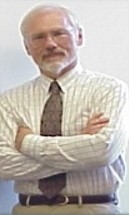
From 1988-1992, Dr. Charles Beasley lead the GLL, which was renamed to the Great Lakes Center for Environmental Research and Education (CERE). The goal of CERE was to involve more campus departments in our work. Four divisions were created: Environmental Toxicology and Chemistry, Aquatic Biology, Water Resources Management, and Environmental Education. These divisions were made up of CERE staff as well as affiliates in other departments. In 1991, a grant was obtained from the National Science Foundation to renovate the Field Station. The renovation nearly doubled the size of the building and also included substantial improvements to the boat launch and shoreline. We also hosted the U.S. Fish & Wildlife Service’s Lower Great Lakes Fisheries Resources Office on campus and at the Field Station for a few years before they moved to an office in Amherst, NY.
Dr. Stephen Brandt (1994-1997) was the first full-time director. During this time, CERE was named the Great Lakes Center (GLC), the name we still use today. The divisions of CERE were no longer in place but there was still strong involvement from our affiliates on campus, some of which served terms as associate directors of research, education, and community service and outreach. Our research was focused on fisheries ecology, bioenergetics modeling, and hydroacoustics, some of which took place on Chesapeake Bay. Research also continued at the Environmental Toxicology and Chemistry Lab. In 1995 we started the Multidisciplinary Graduate Program Option in Great Lakes Environmental Studies. In conjunction with the University at Buffalo, we hosted the 40th Annual Conference on Great Lakes Research (IAGLR) in 1997. Finally, during this time our first website was built and newsletters were routinely published.
Dr. Gordon Fraser was director of the GLC from 1998-2007. There was renewed interst in doing biological assessments and water quality investigations in the Buffalo River. Another area of focus was on combined sewer overflows (CSOs) as a source of pollution in the Buffalo River, Niagara River, and Black Rock Canal. We participated in many outreach events such as Waterfest 2000 at Erie Basin Marina in Buffalo, NY. We built the Dick Smith Teaching Pavilion at the Field Station in 2006, a seasonally available classroom for classes, workshops, and departmental meetings. Dr. Fraser retired in 2007.
The current director of the GLC is Dr. Alexander Karatayev. He joined the Center in 2007. Our current research focuses on invasive species of mussels, zooplankton, and fish; protecting and enhancing habitat for native species such as lake sturgeon, emerald shiners, and unionid mussels; nutrient studies on Lake Ontario and Lake Erie; long term monitoring of water quality and benthos in Lake Erie and across the Great Lakes, as well as a monitoring buoy on Lake Erie. We now have two graduate programs, an M.A. and a M.S. (PSM) in Great Lakes Ecosystem Science. The GLC also hosts the WNY PRISM on behalf of the NYS DEC.
For more information on the history of the GLC you can read our 50th Anniversary Booklet.
Resampling historic sites in the Niagara River
by Knut Mehler
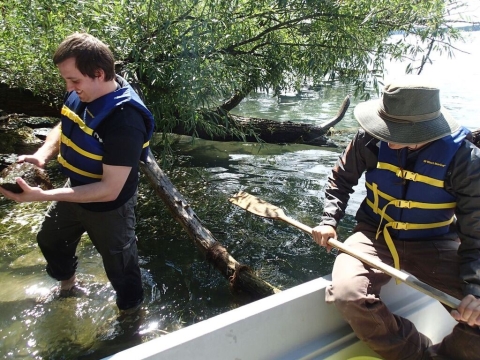
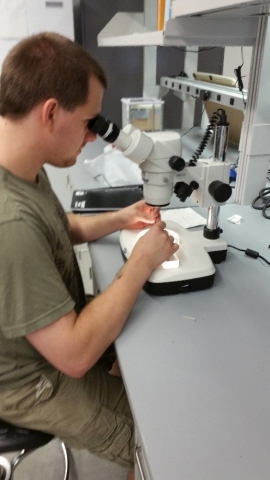
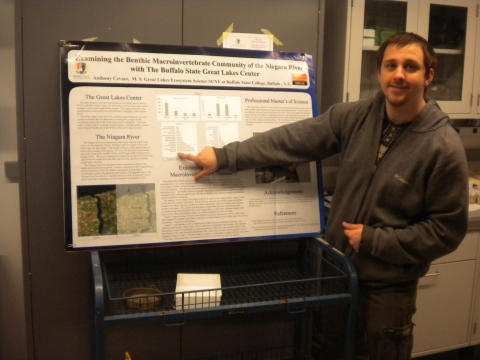
The last few months were busy – especially for our graduate student Anthony Cevaer. After finishing field work last August, the extensive work switched from the field to the lab. Anthony worked on identification of benthic invertebrates collected from 13 sites in the upper and lower Niagara River. The last time those sites were sampled was over 30 years ago – before water treatment improved and before the mussels Dreissena polymorpha and Dreissena rostriformis bugensis arrived in the river.
The goal of this part of our larger study of the Niagara River is to determine if the benthic community changed over the past three decades and if so, what are the reasons? More than 2000 individual organisms were collected and are currently being processed in the lab. The good news: We found a huge number of the caddisfly Brachycentrus spp. – a genus with a very low tolerance to organic pollution.
The next step is to compare our current data with the historic data. We would expect that sites with hard substrate are now dominated by invasive Dreissena spp., but we would also expect more pollutant-intolerant species due to improvements in water and remediation practices.
Anthony has already given a talk about this project and is going to present a poster at the next International Association of Great Lakes Research (IAGLR) in Guelph, Canada.
Farewell, Dr. Kumar!
by Kit Hastings
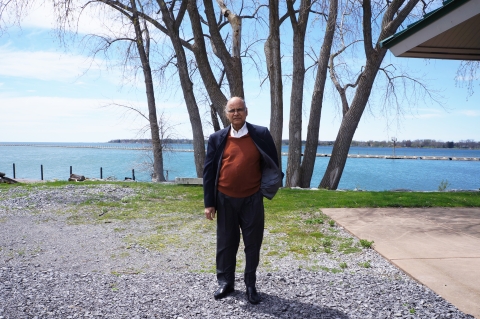
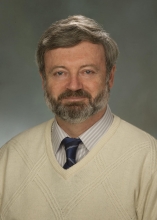
Dr. Subodh Kumar, senior researcher in the Environmatal Toxicology and Chemistry Lab, is retiring this spring. “When I joined the Great Lakes Lab in 1983 it was for a three year position,” Subodh told us at his retirement party on May 6. That three year position stretched out to fill 33 years.
Subodh has been a part of the Center for longer than anyone else here today. At the time he joined, the GLL was run by Dr. Harish Sikka. Their research was focused on the fate of toxic and carcinogenic chemicals in the Great Lakes, how long they stayed in the environment, and whether fish were being contaminated. To test this, fish were collected from the field as well as exposed to toxins in the fish lab at Buffalo State.
They also looked at the mechanisms for tumor promotion by cancer-causing polycyclic aromatic hydrocarbons (PAHs). This became a major focus for the Environmental Toxicology and Chemistry Lab in later years as Subodh and his colleagues studied the mechanism by which carcinogens from the environment and tobacco products and smoke induce carcinogenic effects on animal and human cells. Dr. Kumar also determined other factors that influence susceptibility to cancer development in humans exposed to carcinogens, and worked toward practical strategies for cancer prevention and therapy. During his tenure at the Great Lakes Center, he was instrumental in bringing numerous research grants mostly funded by federal government agencies such as National Institutes of Health, EPA, NOAA, and National Science Foundation.
Dr. Kumar has published over 100 papers, has been honored with the SUNY Chancellor’s Research Recognition Award, and is in the Research Foundation’s Million Dollar Club. He has reviewed papers and grant applications for several journals and funding agencies, and been the mentor to numerous Buffalo State students over the years. Outside of his work at the GLC, he also has taught precertification courses for waste water treatment plant operators.
So here’s to you, Subodh! Thank you for all of the work you’ve done with us over the years. It is our sincerest wish that you have a wonderful and well-deserved retirement.

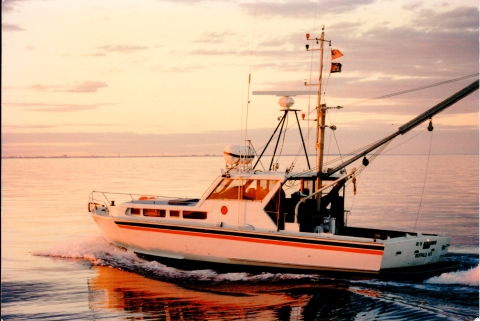
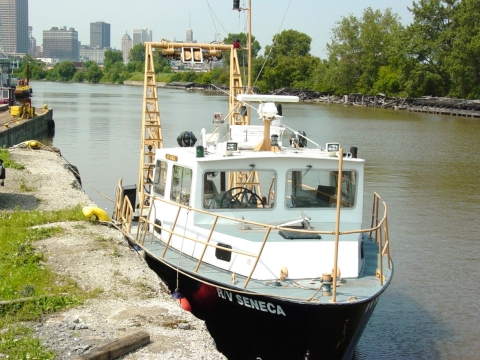
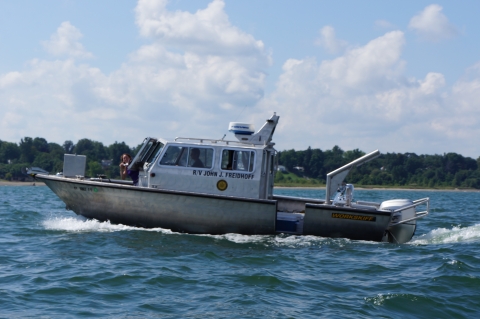
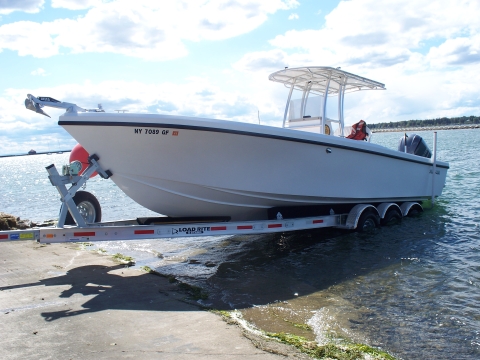
Flagships of the GLC
by Kit Hastings
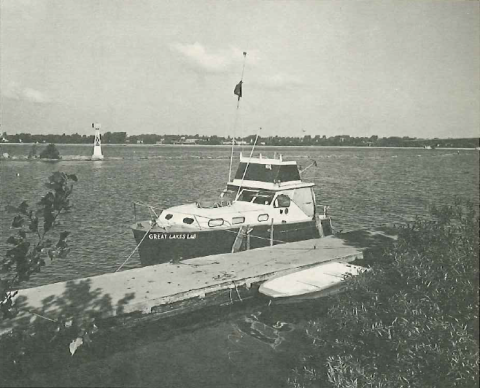
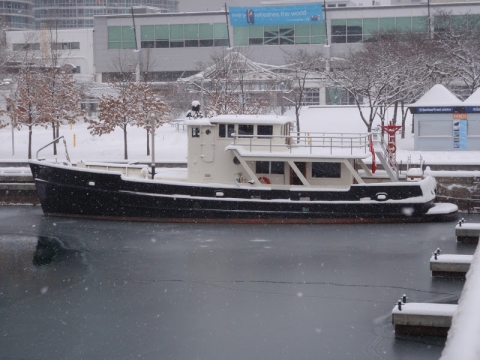
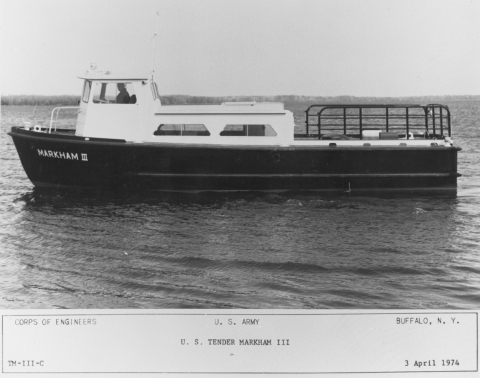
Over the years, we’ve had many boats in a variety of sizes. Here are some of the most memorable and iconic boats in our fleet.

Announcements
Susan Daniel elected to IAGLR Board of Directors
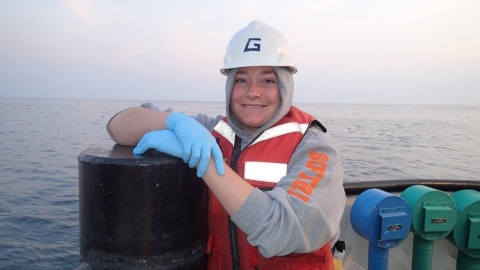
Our colleague Susan Daniel has recently been nominated to the International Association for Great Lakes Research’s Board of Directors. We are very happy to announce that she received the most votes in the IAGLR Board election and has accepted the two year appointment to the Board as a US Student Member that will begin in June 2016.
Susan Daniel is a Senior Research Support Specialist at the Great Lakes Center and the Senior Taxonomist for the EPA-funded grant “Long-Term Biological Monitoring of the Great Lakes.” Susan is also studying toward an M.S. degree in Great Lakes Ecosystem Science at Buffalo State. Before coming to Buffalo State in 2013, she received her B.S. degree in Environmental Science from Heidelberg University (2013) where she gained experience in taxonomy at the National Center for Water Quality Research. Susan’s research is focused on benthic communities within the Great Lakes. Susan presented posters at IAGLR’s 2014 and 2015 annual conferences, and her 2015 presentation “Effect of Dreissena on Profundal Oligochaeta Community” won the poster award for Information Impact.
Congratulations, Susie, great job!
Goodbye, Wendy
In March, research technician Wendy Paterson took a job with our friends at Buffalo Niagara Riverkeeper. BNR collaborates with us on the Emerald Shiner project and some outreach events so we may be working with her again someday in the future. Good luck!
Graduation
Congratulations to our graduating GLES and Biology graduate students! Eric Bruestle, Jacob Cochran, and John Lang all found jobs as with U.S. Fish and Wildlife Service at their Lower Great Lakes Fish & Wildlife Conservation Office. Christopher Osborne will be working as a field technician in Colorado before heading to serve with the Peace Corps in Gambia. Anthony Cevaer will work as a lab tech at the North Tonawanda wastewater treatment facility. Steven Tentinger will be working with NYS DEC Dunkirk as a fish creel technician. Good luck to you all!
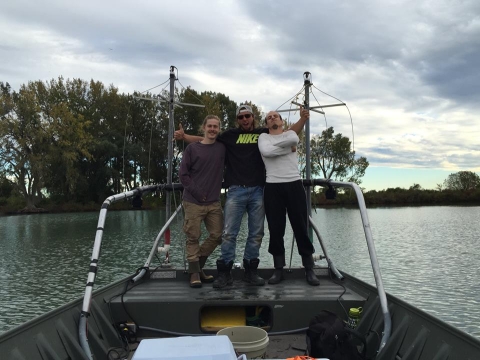
GLC in Chicago to discuss EPA benthic monitoring project, present seminar talks
by Lyubov Burlakova and Alexander Karatayev

In collaboration with Cornell University, GLC scientists are in the midst of a U.S. EPA grant, “Great Lakes Long-term Biological Monitoring Program,” for 2012-2017. The EPA Monitoring Program is designed to provide managers access to biological data on zooplankton and benthos to support decision-making. Scientists from the Great Lakes Center, including Alexander Karatayev, Lyuba Burlakova and Susan Daniel, collect benthos data across the five Great Lakes, analyze this data, and make it available to environmental and fisheries managers.
In February, together with our Cornell partners Drs. Rudstam and Watkins, Knut Mehler, Lyuba Burlakova and Alexander Karatayev traveled to EPA’s Great Lakes National Program Office (GLNPO) in Chicago to present talks at the “Science at Work” Seminar: “Aliens, GoPros, and Popcorn: Counting invasive mussels on the bottom of Lake Michigan” (Karatayev, Mehler, Burlakova) and “This way up - daily migrations of Great Lakes animals (mysids, zooplankton, and fish)” (Rudstam and Watkins).
Afterwards, we met with GLNPO staff and presented preliminary results of our analysis of the 15 years of benthic dynamics in the Great Lakes (GLNPO data), and new technologies like the benthic imagery we used in 2015 to evaluate Dreissena distribution and population densities in Lake Michigan. Results of these studies will be published in the special issue of the Journal of Great Lakes Research in October 2017 “U.S. EPA Great Lakes National Program Office Long-Term Monitoring of the Laurentian Great Lakes: Approaches, achievements and lessons learned.” This special issue (guest editors Burlakova, Warren, Hinchey-Malloy, Karatayev and Nettesheim, associate editor Rudstam) lists 23 potential manuscripts that include papers on the history of the GLNPO program and analysis of changes in the main components of Great Lakes ecosystems.
GLC and Cornell scientists will give more than a dozen presentations on Great Lakes Monitoring at the 59th Annual Conference on Great Lakes Research in June 2016 in Guelph, Canada. Drs. Rudstam, Karatayev, Burlakova, and Watkins are co-chairing a session that focuses on long-term Great Lakes monitoring at this meeting.