

Researching the Great Lakes since 1966
The Great Lakes Center is an institute of researchers and educators at SUNY Buffalo State University dedicated to investigating the ecology of the Great Lakes and their tributaries. Our staff are full time research scientists or technicians and one is also a professor with the Biology department. In addition to lab facilities on the main campus, the GLC also has a field station on the waterfront and a fleet of boats to conduct our field studies. The center offers Master of Arts and Master of Science degrees in Great Lakes Environmental Science.
Events
GLC and Biology Seminar: Dr. Amelia Alessi - October 26
“Stressed Out! - microRNAs, development, and surviving environmental challenges”
Dr. Amelia Alessi, John Kim Lab at Johns Hopkins University
Monday, October 26, 3:00 p.m.
Science and Mathematics Complex (SAMC) 151
Seminar Abstract: Animals have robust mechanisms for adapting to changing environments. A central question in developmental biology is how organisms redirect the gene regulatory programs that normally drive continuous development when conditions become challenging. When faced with starvation or overcrowding, the roundworm C. elegans pauses continuous development and enters dauer, a stress-resistant, reversible diapause stage. Our lab has uncovered how microRNAs, a key class of gene regulators essential for C. elegans development, are downregulated in dauer to enable this developmental pause. MicroRNAs are small noncoding RNAs with conserved roles in developmental gene programs. The conserved microRNA let-7 was first identified in C. elegans as a master regulator of the late larval (L4)-to-adult transition. We have found that the transcription factor NHR-23/ROR directly activates let-7 transcription and let-7 in turn represses nhr-23 transcripts. This NHR-23-let-7 negative feedback loop controls both the number of larval molts and the pace of the molting cycle during continuous development. However, when C. elegans enters dauer in response to environmental stress, the FOXO transcription factor DAF-16 binds upstream of nhr-23 and inhibits its transcription, turning off the NHR-23-let-7 genetic oscillator and promoting developmental arrest. DAF-16 also plays an essential role promoting stress resistance in the C. elegans insulin/IGF-1 signaling (IIS) pathway. This suggests that DAF-16 has a dual role in dauer: activating stress response pathways while simultaneously repressing microRNA-driven genetic programs that drive continuous development. Our findings indicate that interactions among the transcription factors DAF-16 and NHR-23 and the let-7 family of microRNAs are key molecular components that enable C. elegans to balance development and survival of environmental challenges.
Buoys
The buoys have been retrieved for the winter. See you next spring!
Four things to know about Buffalo State's Great Lakes Center

Multi-use research, education, and training venue

Staff engage in year-round research

Part of the Great Lakes Observing System (GLOS)

Offers two graduate degree options

Why it matters
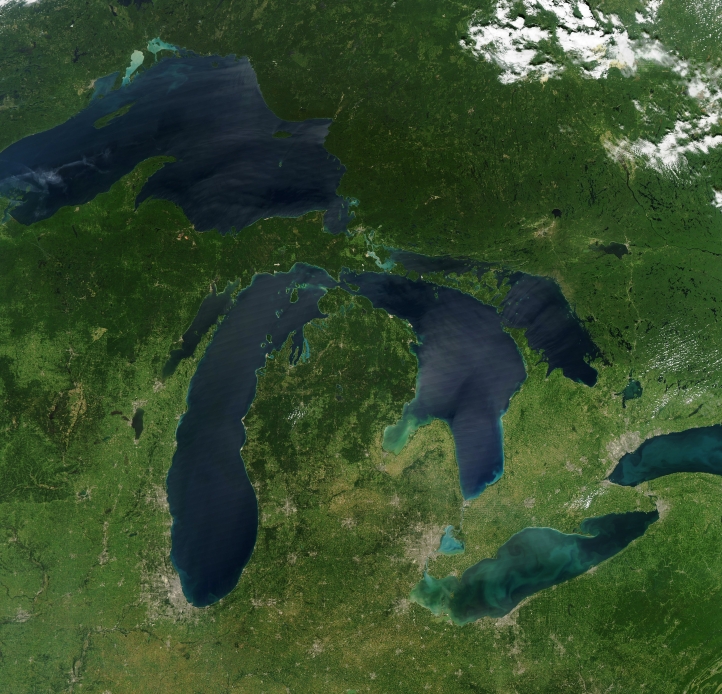
The Great Lakes are the largest system of accessible freshwater on Earth: these inland seas are bounded by eight states and one province and contain about 20 percent of the world's supply of fresh water. Over 30 million people live within the watershed, including more than one-tenth of the U.S. population and one-quarter of the Canadian population. It's easy to see just how many people depend on the Great Lakes for drinking water, agriculture, transportation, industry, power generation, fisheries, and recreation.
Though incredibly vast, the Great Lakes are threatened by decades of hard use. Lake Erie in particular is densely populated, heavily industrialized, and heavily cultivated for agriculture. Toxic chemicals and nutrients accumulated over time from direct disposal, runoff, and atmospheric deposition are still within the basins of these lakes. This is partially due to their incredibly slow outflow rate as well as the large input of pollutants, especially nutrients from agricultural and municipal runoff. Other stressors to the Great Lakes are aquatic invasive species and habitat degradation. Continued urbanization reduces habitat refuges for native species, while increased international shipping can increase the risk of the invasion of non-native species.
Buffalo, New York, is one of 17 large city regions on the Great Lakes. The Great Lakes Center at Buffalo State University is in a unique position to provide high-quality research and education opportunities to people who are living on and being impacted by Lake Erie and Lake Ontario. The center has a research facility located on the waterfront, a fleet of boats, and field equipment that it can use to help answer questions about the ecological processes and patterns acting on the system. This is a prime site for students who wish to study how humans both create and resolve ecosystem-scale problems, especially those related to freshwater systems.