

Zavrelia sp.
-
1/2
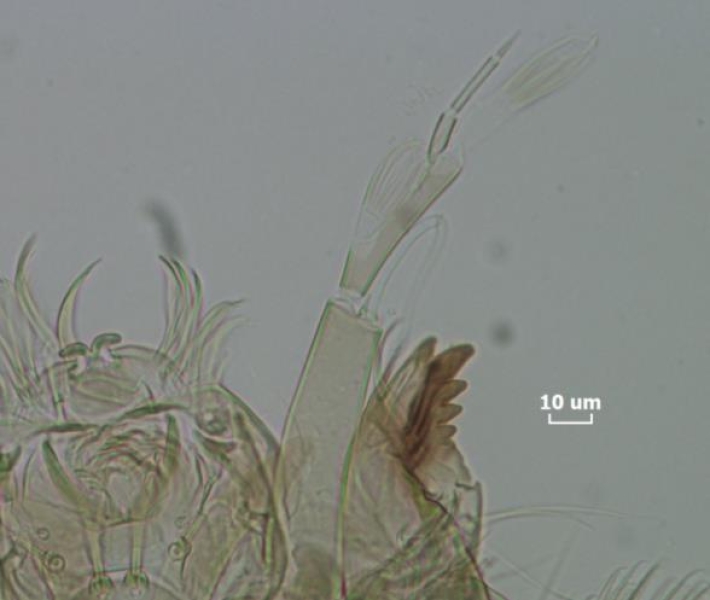
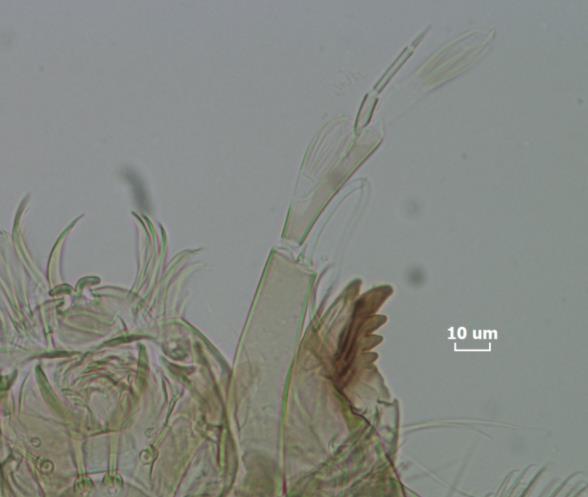
Figure 1. Zavrelia sp. antenna with 5 segments placed on tall pedestal with strong basal spur. Large Lauterborn organs placed on short pedicel, inserted opposite one in proximal half, the other on apex of elongate 2nd segment. Antennal blade longer than flagellum, accessory blade short.
Download Image -
2/2
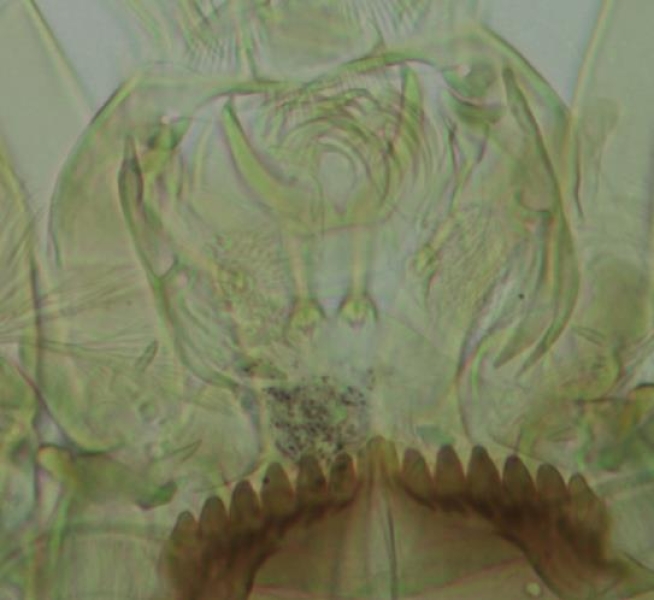
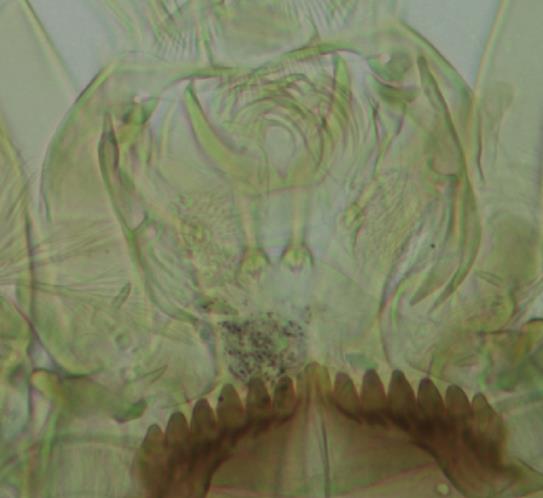
Figure 2. The premandible of Zavrelia sp. has 4 teeth and a well-developed brush.
Download Image
Zavrelia sp.
Taxa description
Zavrelia sp. (Kieffer, 1922) have small larvae, up to 3 mm. Antenna with 5 segments placed on tall pedestal with strong basal spur. Large Lauterborn organs placed on short pedicel, inserted opposite one in proximal half, the other on apex of elongate 2nd segment. Antennal blade longer than flagellum, accessory blade short. Pecten epipharyngis of very small, perhaps non-serrate scales. Premandible with 4 teeth and well-developed brush.
Distinguishing features
Habitat
Zavrelia spp. are found in unpolluted rivers and lakes where it constructs small straight transportable cases of fine sand/silt and detritus.
Lake occurrence
It has been found in all five of the Great Lakes (except Lake Erie) where it is limited to nearshore areas and river mouths (Winnel & White, 1985).
Similar species
Zavrelia spp. can be easily confused with the closely related Stempellinella spp. Zavrelia spp. differ from Stempellinella spp. by the form of the pecten epipharyngis, which consists of 3 unserrated chaetae (3 long slender scales in Stempellinella sp.) and the shape and arrangement of teeth on the premandible. In Zavrelia spp. premadible has 4 teeth while in Stempellinella spp. premandible consists usually of 2-3 teeth.
Relative size
Small larvae, up to 3 mm.
Does it have a barcode reference from the Great Lakes?
References
Anderson, T., P.S. Cranston, and J.H. Epler. 2013. The larvae Chironomidae (Diptera) of the Holoarctic Region: Key and diagnosis. Insect Systematics & Evolution. Supplement No 66.
Occurrence in scientific literature
Winnel, M.H., and D. S. White. 1985. Ecology of Some Chironomidae (Diptera) from Southeastern Lake Michigan, U.S.A. Transactions of the American Entomological Society, 111: 279-359.