

Stempellina sp.
-
1/2
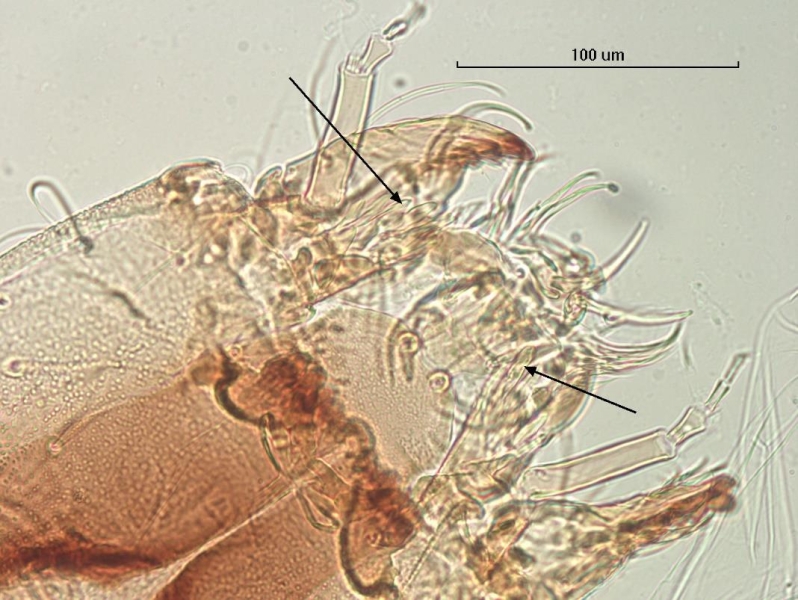
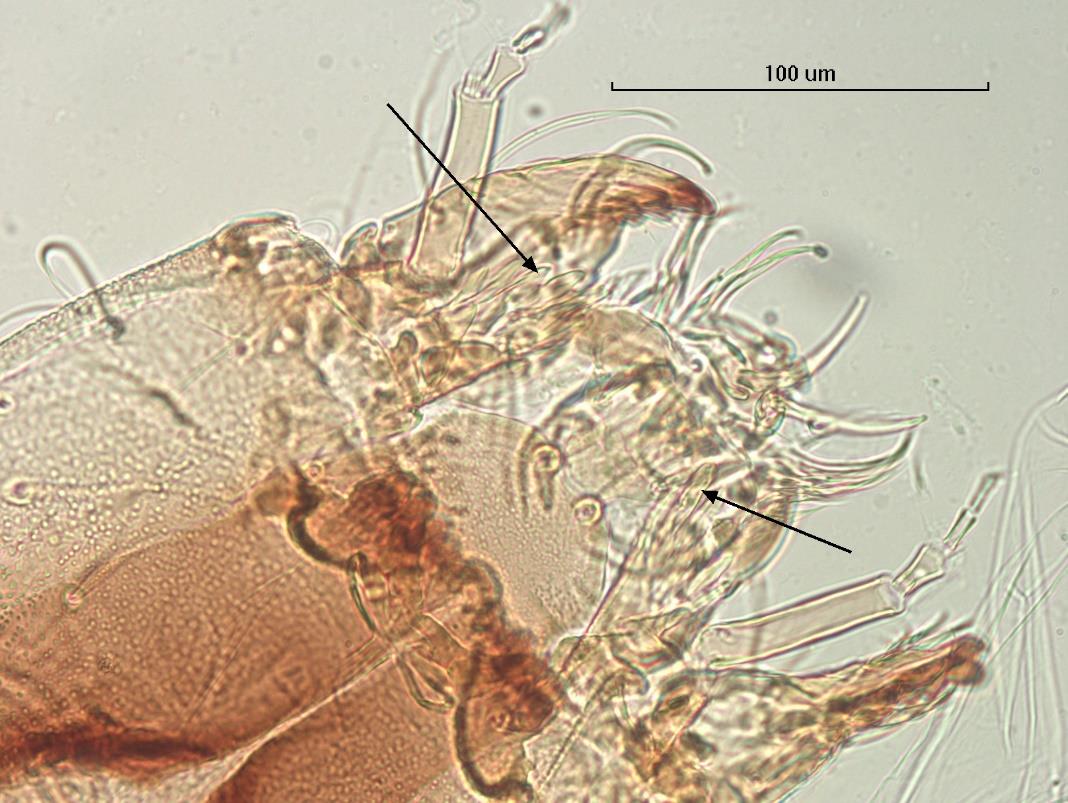
Figure 1. Stempellina sp. antennal base with mesal palmate process; note the finger-like, feathery wing-like tufts at the base of the antennae. Also note the overall granular appearance of the head capsule, typical of Stempellina sp. This individual was found in Lake Michigan during the sampling in July 2021.
Download Image -
2/2
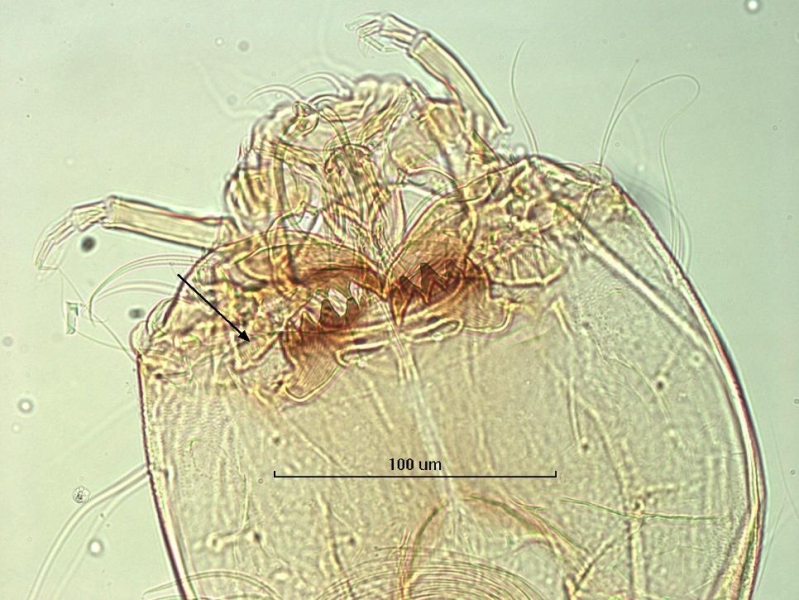
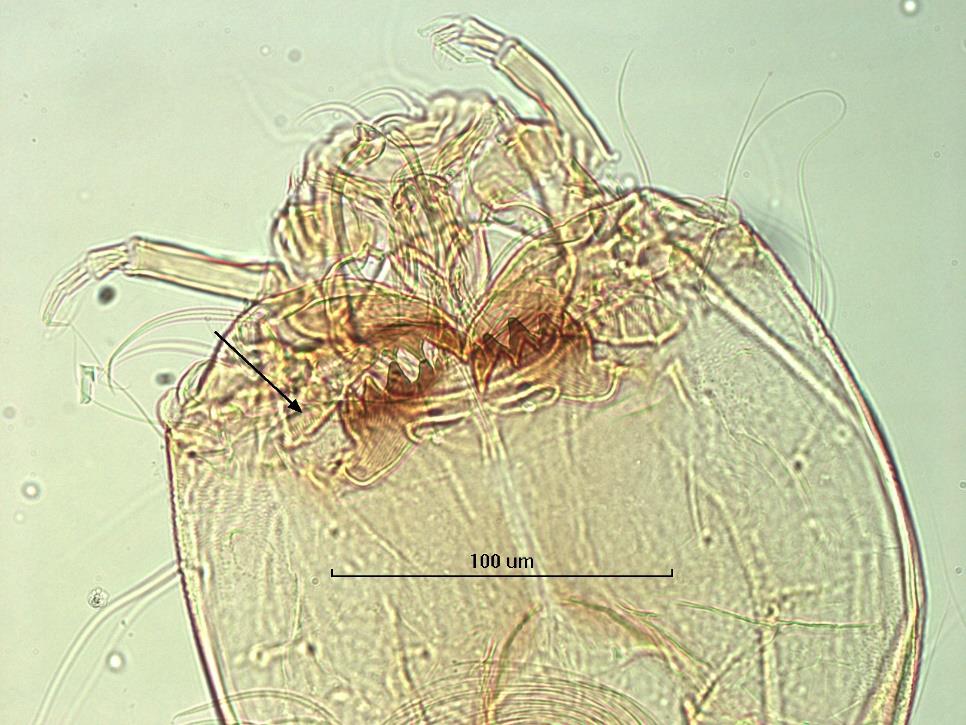
Figure 2. Stempellina sp. mentum, ventromental plates, and mandibles. The arrow is pointing to a ventromental plate, as they are quite pale and difficult to see; note the light striae. The median tooth is lighter in comparison to the darker lateral teeth. The mandible has two triangular inner teeth and a dorsal tooth. This specimen was found in Lake Erie during the CSMI 2019 survey.
Download Image
Stempellina sp.
Taxa description
The small, freshwater midge Stempellina sp. (Thienemann & Bause, 1913) is in the subfamily Chironominae. It is easily distinguished by the large feathery or wing-like mesal palmate process protruding from the antennal base. The antennae have five segments with large lauterborn organs on pedicles emerging from the apex of antennal segment two. The mentum is straight in overall shape with a wide, blunted median tooth. The six pairs of lateral teeth of the mentum are large and triangular, with the first pair being smaller than the rest and located close to or partially appressed to the median tooth. The ventromental plates are fan-shaped, separated from each other by approximately three mentum teeth, with a deep lobe and light striae that do not extend to the anterior margin. The mandible has two triangular inner teeth and a dorsal tooth. The premandible is apically bifid, although it has the appearance of notches farther up the length. The head capsule is granular in appearance. The larvae of this species make portable cases out of silt or fine sand.
Distinguishing features
Habitat
Stempellina sp. are found in many aquatic habitats, including springs, streams, large rivers, lakes, and brackish water. The larvae construct long, tapered, transportable cases out of silt or fine sand.
Lake occurrence
This genus occurs in all five Great Lakes.
Similar species
Relative size
Stempellina sp. larvae are small, only reaching 5 mm in length.
Does it have a barcode reference from the Great Lakes?
References
Andersen, T., Cranston, P.S., Epler, J.H., 2013. The larvae of the Chironomidae (Diptera) of the Holarctic Region. Insect Systematics & Evolution, Supplement No 66.
NOAA and USEPA. 2019 Great Lakes Waterlife. Accessed on 06/05/2026.
Epler, J.H., 2001. Identification manual for the larval Chironomidae (Diptera) of North and South Carolina.
Occurrence in scientific literature
Botts, P., 1997. Spatial pattern, patch dynamics and successional change: chironomid assemblages in a Lake Erie coastal wetland. Freshwater Biology, 37(2), pp.277-286.
Mozley, S.C., and R.P. Howmiller. 1977. Zoobenthos of Lake Michigan (Vol. 6). Argonne National Laboratory.
Trebitz, A., M. Sykes and J. Barge. 2019. A reference inventory for aquatic fauna of the Laurentian Great Lakes. Journal of Great Lakes Research, 45(6), pp.1036-1046.