
Spring 2013 Issue of the GLC Newsletter
May 16, 2013
This issue focuses on some of the big changes that have taken place at the GLC in the past few months: We are hiring three new staff members, we have a few new big projects, and our office moved to the new Science and Mathematics Complex.
Growing the Great Lakes Center
by Dr. Alexander Karatayev, Director
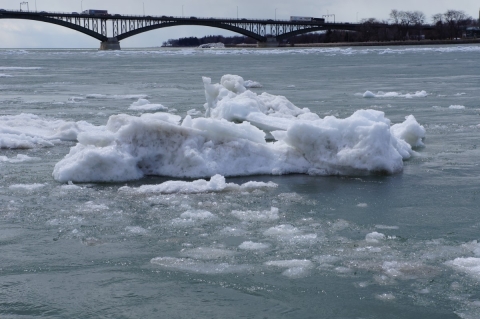
The spring thaw has finally arrived in Buffalo: temperatures are rising, birds are returning, and plants are growing again. The Great Lakes Center is growing, too! We have a new location, two major grants, new employees, and new educational opportunities.
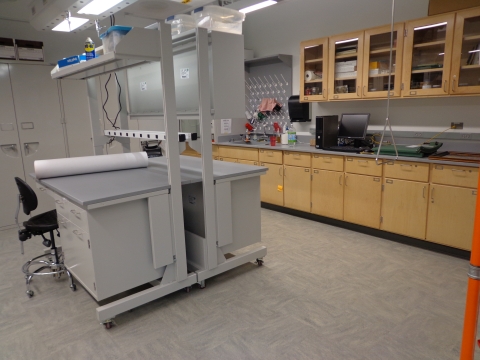
With the completion of construction last fall, the GLC office and Aquatic Ecology laboratories moved into the new Science and Mathematics Complex. Although the moving was a bit painful, we really enjoy the new office and lab space, as well as the new equipment that came with the building.
In collaboration with Cornell University, we were awarded a US EPA monitoring grant for 2012-2017 ($3,867,525, including $1,094,726 for Buffalo State). This research project will be an excellent opportunity to expand our research activity to all of the Great Lakes and to increase our visibility among the Great Lakes research community.
The GLC will host the Western New York PRISM (Partnerships for Regional Invasive Species Management) Coordinator for 2012-2017. PRISM is funded by the New York Department of Environment Conservation ($1,100,768). This program will be an excellent instrument for outreach and will bring a lot of visibility to the Center and Buffalo State. We are in process of searching for a PRISM coordinator.
We are proud to announce that our graduate programs for Master of Art and Master of Science in Great Lakes Ecosystem Science were finally approved at all levels. We are recruiting students into these programs for Fall 2013.
We are also adding three employees to our GLC staff. In addition to the upcoming PRISM coordinator position, we have hired two technicians. Susan Daniel was selected as a new research technician with the main responsibility of collecting and analyzing benthic samples for the EPA grant. The other position we were able to fill was for another Field Station technician. Joshua Fisher has worked for US Fish & Wildlife Service before taking this position and gained a great deal of experience with in field and laboratory studies.
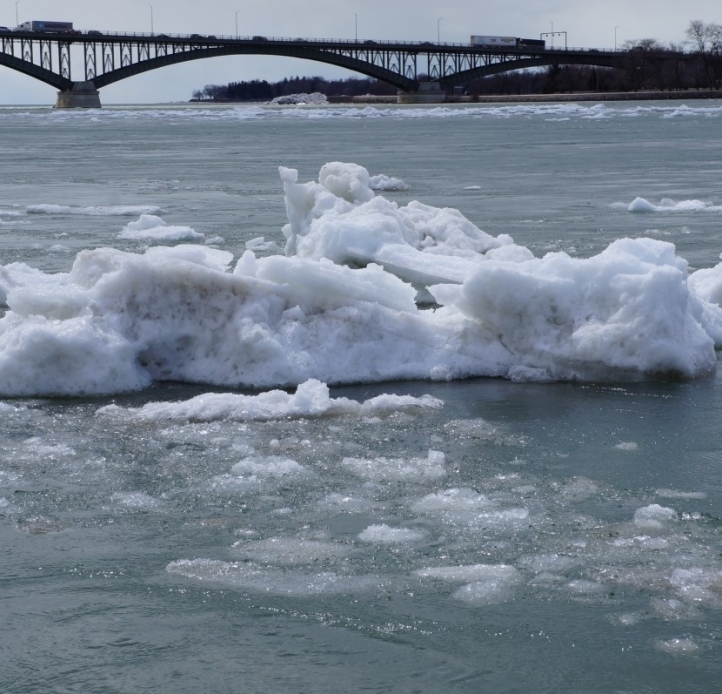
Now that the ice that covered parts of Lake Erie has broken up and floated down the Niagara River, we are turning our thoughts to the field season ahead. See you in the fall!
GLC hosts two new graduate programs
by Kelly Frothingham and Alexander Karatayev
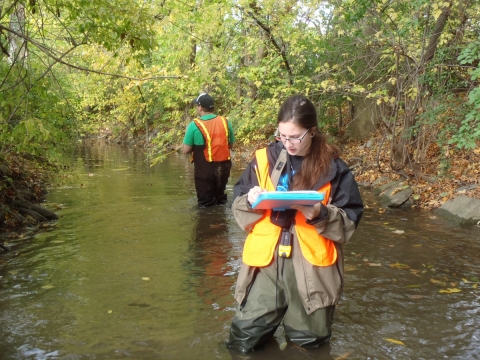
Two new graduate programs in Great Lakes Ecosystem Science (GLES) will be administered through the Great Lakes Center starting in the fall of 2013. In addition to GLC faculty, members the Geography and Planning, Biology, Chemistry, and Earth Sciences and Science Education Departments are involved in the GLES programs.
The GLES programs provide an opportunity for students to pursue graduate studies through two different interdisciplinary applied environmental science programs, a thesis-based Master of Arts (M.A.) and an internship-based professional Master of Science (M.S.). Both programs provide graduates with the opportunity to attain a broad understanding of the physical, chemical, biological, and social factors that comprise the Great Lakes ecosystems, while at the same time offering graduates the depth they need in a particular discipline to prepare them for entry either into a Ph.D. program or into the workforce.
The GLES M.S. program provides a strong foundation in environmental science and allows students to approach problems from a purely scientific perspective. Graduates will be trained to deal effectively with a broad range of problems and issues related to ecosystem structure and function within the Great Lakes and surrounding watersheds, which will prepare them for advanced research, professional employment, or study at the Ph.D. level.
The GLES M.S. combines coursework in environmental science with business communication and project management classes and an internship experience. The M.S. program was designed to meet the needs of industry, consulting firms, non-governmental organizations (NGOs), and governmental agencies with graduates prepared to provide a leadership role as they address a wide range of problems and issues related to the management of resources within the Great Lakes and surrounding watersheds.
GLC, Cornell receive large EPA grant to study Great Lakes
by Alexander Karatayev and Lyubov Burlakova
Recently, Buffalo State received a US EPA grant in collaboration with Cornell University. The project, “Great Lakes Long-term Biological Monitoring Program,” awards a total of $3,867,525, including $1,094,726 for Buffalo State. The EPA Monitoring Program is designed to provide managers access to biological data on zooplankton and benthos to support decision-making.
During this project, we will collect zooplankton, benthos and chlorophyll data across the five Great Lakes from 2013 to 2017. Then we will analyze this data and make it available to environmental and fisheries managers. Four additional research projects associated with the grant include studies of the deep chlorophyll layer, comparative ecology of mysids, evaluation of an early detection system for invasive species, and evaluation of biotic indices of ecosystem health.
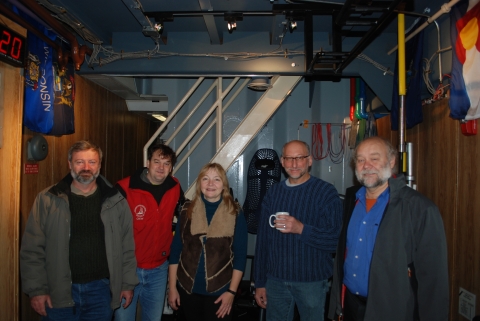
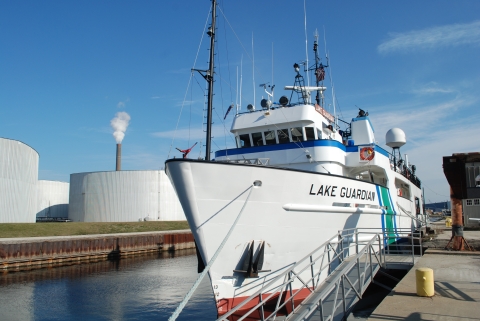
GLC scientists are responsible for collecting benthos and will take an active part in invasive species detection. All benthic samples will be collected onboard EPA R/V Lake Guardian and analyzed in the Aquatic Ecology Lab of the Great Lakes Center, mostly by research technician Susan Daniel.
In addition, we will evaluate and develop new biotic indices of ecosystem health. The project will be conducted in association with the Cooperative Science and Monitoring Initiative, a coordinated effort that focuses on one of the Great Lakes each year.
This will be an excellent opportunity for the GLC to expand our research activity to all of Great Lakes, to increase our visibility among Great Lakes research community, and to further strengthen our collaboration with our colleagues from Cornell.

PRISM on the Move
by Christopher Pennuto
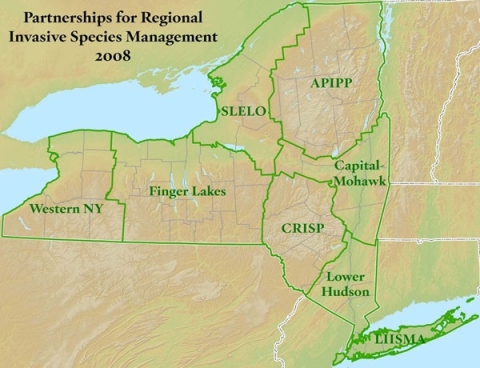
Western NY is now officially ensconced in the New York invasive species management consortium. The Great Lakes Center, with Dr. Chris Pennuto as project PI, was recently awarded a 5 year, $1.1 million dollar grant to operate the WNY PRISM office.
PRISM stands for Partnerships for Regional Invasive Species Management. The WNY PRISM office is one of eight such regional offices in NY. The eight-county region of the Western NY PRISM is home to roughly 1.5 million people and encompasses 16,669 km^2 (6436 mi^2) exclusive of adjacent areas within both Lakes Erie and Ontario. It includes the counties of Allegany, Cattaraugus, Chautauqua, Erie, Genesee, Niagara, Orleans, and Wyoming.
Some of the largest tracts of forest in New York, outside of the Adirondacks, occur within the Western NY region, including Allegany State Park and four Native American reservations (Tuscarora, Tonawanda Seneca, and Seneca Nation of Indians at Allegany and Cattaraugus). There is an abundance of state park and forest land, mixed-used agricultural lands, and lake front and riparian corridors, giving the region a diverse land-use mixture. Western NY also is home to some impressive and environmentally sensitive landscape features such as the Zoar Valley found in Erie and Cattaraugus counties. The forest industry employs roughly 11,000 people in the region, drawing nearly $125 million in annual wages.
Water resources also are significant to the WNY PRISM region and its economy with numerous streams and rivers used for recreation and industry, as well as extensive coastlines on Lake Erie (Erie and Chautauqua counties) and Lake Ontario (Niagara and Orleans counties). The two Great Lakes in the WNY PRISM region, plus the many inland lakes like Chautauqua Lake, support recreational sport fishing (including a charter boat industry), boating, and a cottage industry. The inland sport fishing industry alone contributes an estimated $1.2 billion to the NY state economy and directly employs roughly 10,800 workers.
PRISM offices coordinate invasive species management actions within their regions through activities such as: presenting invasive species workshops and creating educational materials; facilitating public, private, and governmental agency communication in invasive species efforts; monitoring for invasive species, responding to calls for identification and management, and assisting in eradication efforts.
The affiliates and the steering committee generated an initial mission statement for the WNY PRISM office, stating it will: “Proactively identify, evaluate, and address invasive species priorities in western New York using a coordinated partnership of local professionals, organizations, and private citizens to improve, restore, and protect local aquatic and terrestrial resources.”
The office will hire a full-time coordinator soon and hire up to four seasonal staff for various capacities. Currently we envision an outreach/education leader, a volunteer coordinator, and two trained invasive species identification leaders (one for terrestrial and one for aquatic species).
Soon the GLC will be on the map as the go-to location for information and assistance for all things invasive in western NY. There will be ample opportunities for citizens to participate in local eradication or education efforts, so stay tuned and be ready to engage yourselves in invasive species management.
Invasive species of note
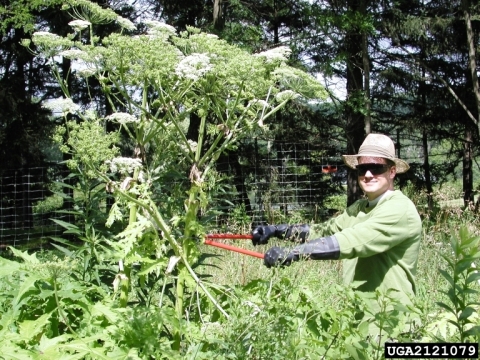
Giant hogweed
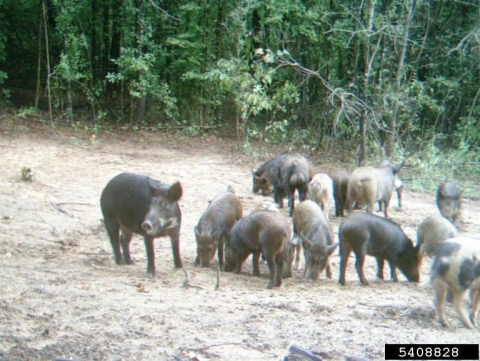
Feral swine
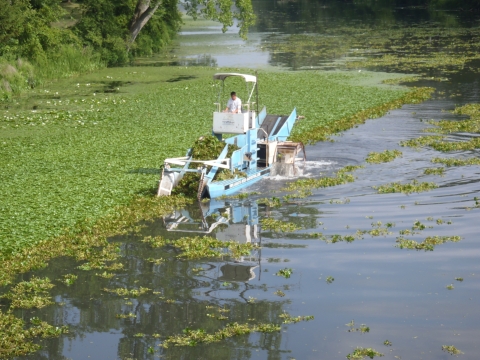
Water chestnut
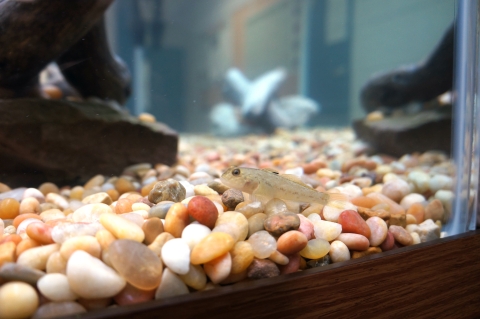
Round gobies
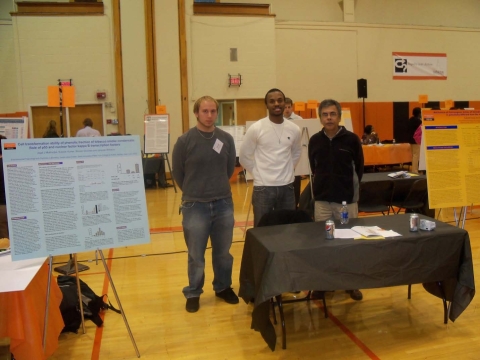
Alcohol’s effect on a protective response to PAHs
by Jagat Mukherjee
The area of research of the Environmental Toxicology and Chemistry laboratory is chemical carcinogenesis. Our laboratory is engaged in understanding of the carcinogenic effect of environmental pollutants known to be present in Great Lakes tributaries. The primary focus of the research is to get an insight of the underlying mechanism in this regard and to identify the signaling molecule(s) for chemo-preventive target.
One of our current research projects (Jagat J Mukherjee as PI and Subodh Kumar as Co-PI) addresses a novel finding by us that alcohol intake can significantly relieve the DNA synthesis inhibition by polynuclear aromatic hydrocarbon benzo[a]pyrene. We questioned ourselves with regard to the implication of this finding.
When we treat different cell lines with BPDE (the carcinogenic metabolite of benzo[a]pyrene) DNA synthesis is inhibited. We proposed that this DNA synthesis inhibition by BPDE is the cell’s protective response to the insult of BPDE. BPDE is known to cause DNA damage and if this damage is not repaired then the cell will fix this damage as permanent mutation (a requirement of tumorigenesis) if cells are allowed to grow through progression of cell cycle. DNA synthesis inhibition will stop further growth of cells, thereby allowing the cell’s repair machinery to repair the BPDE-induced DNA damage and avoid tumorigenesis.
If this cellular protective response to BPDE is blocked, then BPDE or any DNA damaging agents can invoke tumorigenesis. Thus relief of DNA synthesis inhibition by alcohol (ethanol) which we observed has a novel implication that alcohol intake may potentiate tumorigenic function of DNA damaging polynuclear aromatic hydrocarbons (PAHs) present in the environment.
Currently, our laboratory is engaged in deciphering the mechanistic understanding of tumor potentiating effect of ethanol in the presence of PAHs. Recently our proposed study in this regard has been supported by NIH extramural fund (2012-2014).
Newly identified high-risk Ponto-Caspian fishes
by Randal Snyder
Researchers from the Biology Department (Dr. Randal Snyder), the Great Lakes Center (Dr. Lyuba Burlakova and Dr. Sasha Karatayev), and New York Sea Grant (David MacNeill) recently completed a project funded by the US EPA’s Great Lakes Protection Fund (GLRI) entitled “Evaluating Ponto-Caspian Fishes for Risk of Great Lakes Invasion.”
The objectives of this project were to develop biological profiles and a complete listing of high-risk invasive fishes from the Ponto-Caspian region, to evaluate the likelihood that current ballast water regulations would prevent invasion of the Great Lakes by these high-risk species based on physiological and ecological data, and to disseminate our results by producing Powerpoint presentations and fact sheets highlighting characteristics of these high-risk Ponto-Caspian fishes.
We were able to analyze invasion risk for over 40 Ponto-Caspian fishes for which data had previously been incomplete or unavailable. We identified four new species of Ponto-Caspian fishes as having a high risk of invading, spreading, and causing significant harm in the Great Lakes.
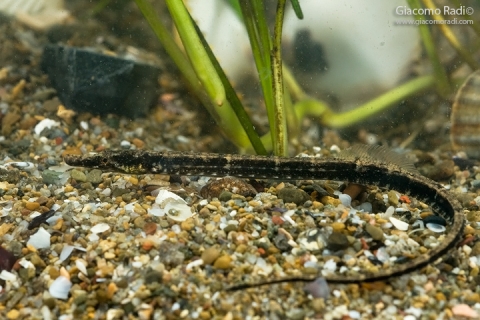
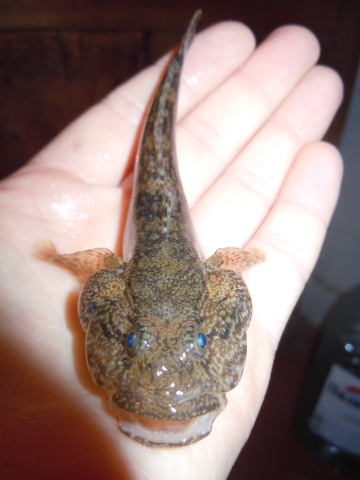
Those four species are the black-striped pipefish (Syngnathus abaster), Caspian tyulka (Clupeonella caspia), Volga dwarf goby (Hyrcanogobius bergi), and Caspian bighead goby (Ponticola gorlap). The black-striped pipefish is particularly interesting: it is closely related to seahorses, and males provide parental care by carrying eggs and young in brood pouches!
Our analysis indicates that current regulations regarding ballast water exchange are likely to be effective in preventing introductions of high-risk Ponto-Caspian fishes based on salinity tolerances and dilution effects. However, more information is needed on larval and egg densities in European ports to fully predict efficiencies of ballast water exchange.
The results of this project will enhance current invasive species surveillance activities in the Great Lakes by focusing efforts on fishes from Europe that are most likely to invade and cause significant harm in the Great Lakes in the future.
2013 surveys of Texas Hornshell populations in the Rio Grande drainage, Texas
by Lyubov Burlakova and Alexander Karatayev
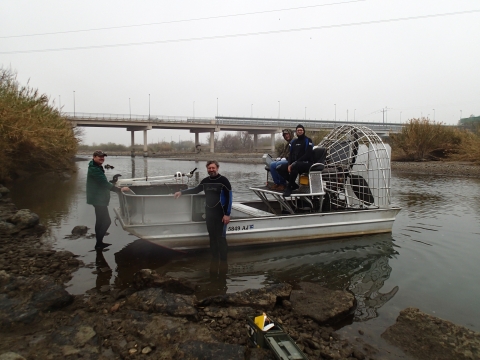
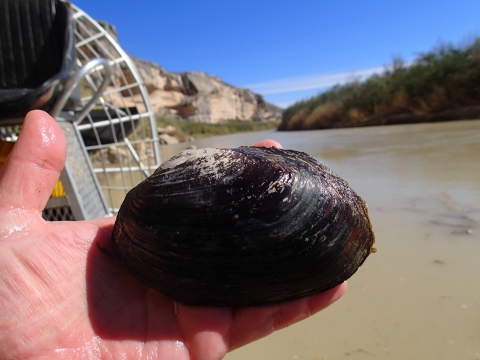
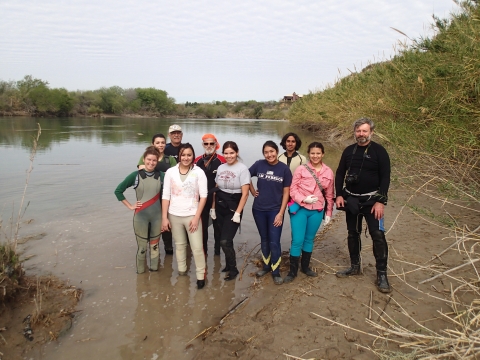
In March 2013, we already finished our fieldwork in Texas for the year. Using an airboat we were able to survey over 200 km of remote areas of the Rio Grande.
This was a very exciting adventure: we saw beautiful canyons, lots of waterfowl and other wildlife. The whole study was done within the project “Survey of Texas Hornshell Populations in Texas,” funded by U.S. Fish and Wildlife Service, Texas Parks and Wildlife Department, Buffalo State College, and New Mexico Department of Game and Fish.
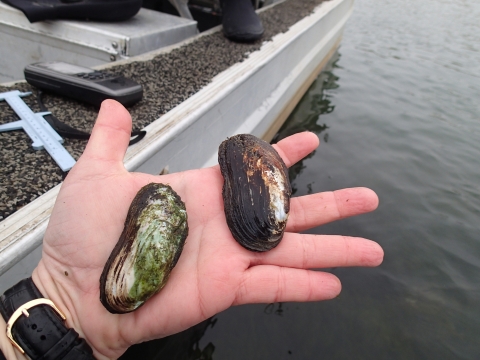
The main goal of this project was to assess the current distribution and population size of the rare freshwater mussel Texas hornshell. Texas hornshell is a regional endemic that is currently a candidate for listing under the federal Endangered Species Act.
We found that the stretch of Rio Grande above Laredo still supports the largest known population of Texas hornshell. We estimated that over the last 100 years its population faced local extirpation, range fragmentation and dramatic decline. This mollusc currently occupies only about 25% of its former distribution range in Texas and its total population size has declined by almost 90%. The most significant threats for this population are over extraction of water, pollution, impoundments, and salinization.
Another important accomplishment was a discovery in the Rio Grande: a small population of the endemic mussel Salina mucket. This species is so rare that before our recent discovery scientists were not sure if the species still existed in Texas.
Office news
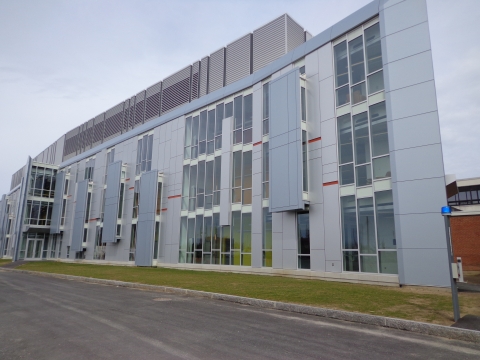
Our office has moved!
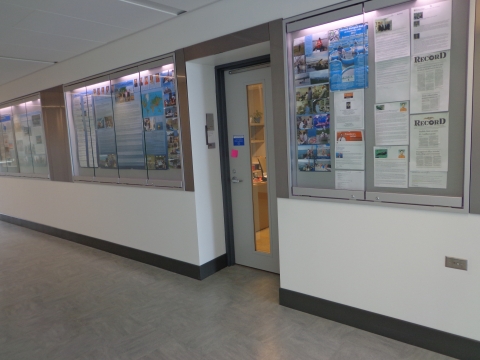
The Great Lakes Center office moved this winter to the newly completed Science and Mathematics Complex (Phase I). Most of our staff have new offices and lab spaces in the new building as well. Stop by sometime to see what we’ve been up to!
Fisheries class
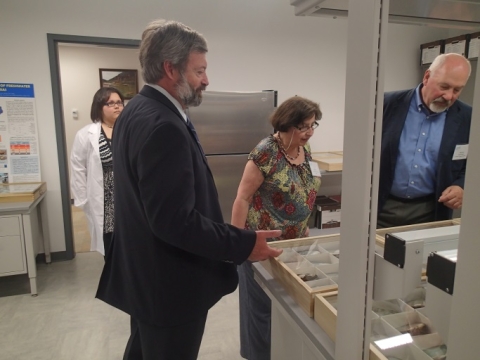
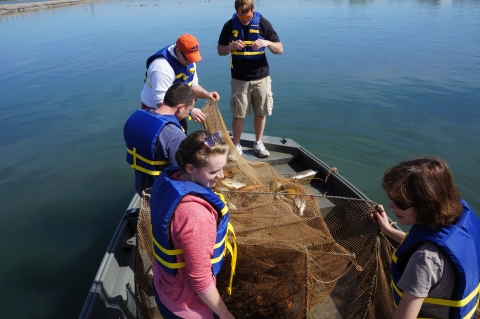
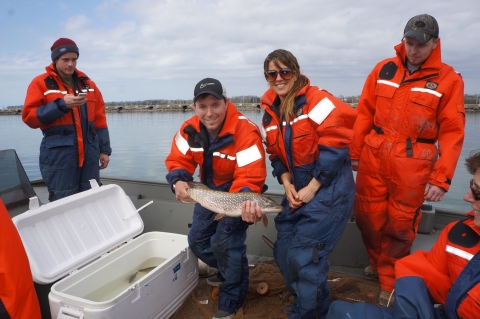
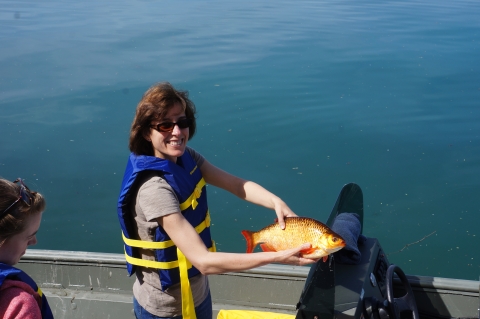
This spring, the Field Station hosted two sections of Alicia Pérez-Fuentetaja’s Fisheries Biology class. The class is offered every other year and Dr. Pérez typically takes her class down to the Field Station to discuss the use of trap nets and electrofishing.
Notes from the Field Station
by Mark Clapsadl
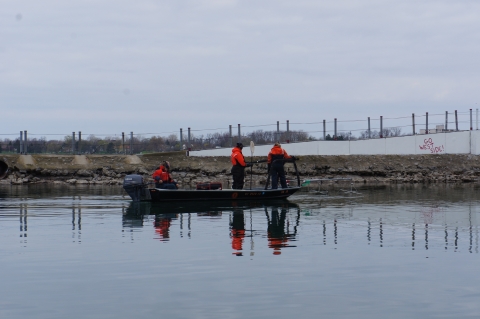
The Great Lakes Center Field Station has undergone a number of changes in the last few years with the addition of new boats, a storage building, and now we have a new full-time staff member at the Field Station. We are happy to welcome Joshua Fisher to the GLC as a Research Technician. Josh is a graduate of SUNY ESF with a Bachelor of Science degree in Environmental Biology. He has held various positions with the New York State Department of Environmental Conservation and most recently as a Biologist for the US Fish and Wildlife Service. Josh brings variety of skills, experience and knowledge that I am confident will prove useful to the many and varied projects that involve the Great Lakes Center.
Kit Hastings has just finished a minor in Geographic Information Systems (GIS) at Buffalo State. They already hold Bachelor of Science from SUNY Fredonia in Environmental Science with minors in Chemistry and Biology. They have already put their new GIS skills to work building maps that we have used in grant proposals and maps that will be used in an upcoming special issue of the Journal of Great Lakes Research as well as other publications and presentations.

Ongoing projects
This season the folks at the Field Station get to take a bit of a breather from the “whole lake” projects that we have participated in for most of the last five years. This means we won’t be running around in boats from one end of Lake Erie to the other collecting data and samples aimed at gaining a better understanding of nutrient dynamics. We do, however, still have a busy season ahead with multiple projects operating from the station.
We have already started work on the Lake Erie Long Term Monitoring project and the Great Lakes Observing System buoy project this summer. The LTM is a cooperative project that involves Buffalo State as well as all of the state, federal or provincial fisheries management agencies that have Lake Erie within their jurisdiction.
The GLOS project is also an annual long term effort. Our GLOS buoy measures wave heights, wind speed, humidity, and solar radiation on the surface of Lake Erie five miles north of Dunkirk NY. The buoy also measures temperature conditions every 2 m down to 25 m as well as dissolved oxygen at 25 m. In the past year we have already documented evidence of intrusions of anoxic cold waters in the eastern basin of the lake that were likely responsible for fish kills on the northern shore of the lake. Results of this work will be presented at the SIL meeting in Budapest, Hungary, this summer.
Algae cultivation
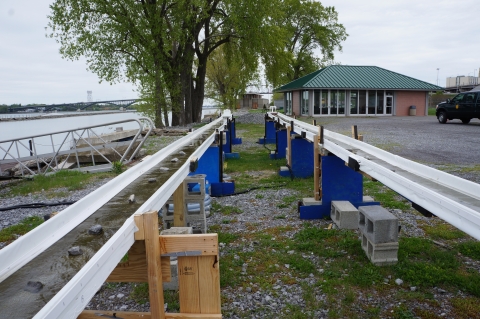
We are collaborating on a project headed by David Blersch from the University of Buffalo Department of Civil, Structural and Environmental Engineering and funded by a grant from the Rochester Institute of Technology’s Pollution Prevention Institute. The objective of this research project is to evaluate the efficacy of large-scale algal cultivation for aquatic pollution recovery from waters in the Buffalo region.
Pollution can come in the form of excess nutrients or other contaminants. In this project water from the Black Rock Canal is diverted to flow across culture raceways where a growing community of attached benthic algae can take up nutrients and other pollutants. Periodic harvesting of the algae then removes the pollutants from the aquatic system, and produces a biomass byproduct that potentially has economic value.
In this project, algal biomass will be analyzed for net yield, nutrient content, fatty acid content, and carbohydrate content. From these results, an assessment of total rate of pollutant recovery and total yield of usable and economically-viable biomass can be determined. Depending on results, the algal biomass may potentially be used as an economic product such as a biofuels feedstock or as a fertilizer amendment creating economic benefit as well as cleaning local waterways. The project was initiated in January of 2013, and data collection is expected to continue through August of 2013.
What this means for the Field Station is that since April we have had two raceways by the water front. A pump pulls water from the canal to a reservoir, where two smaller pumps send water to the raceways. One has a tipping bucket to simulate wave action and the other just pours the water continuously. This is to see whether one method produces more algae.
2013 Alewife research overview
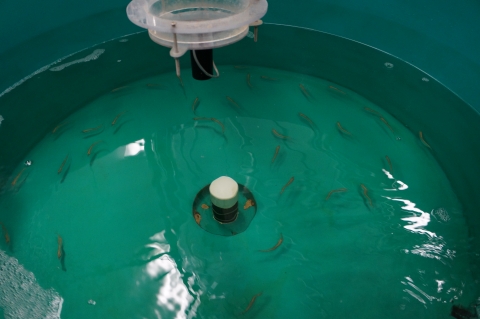
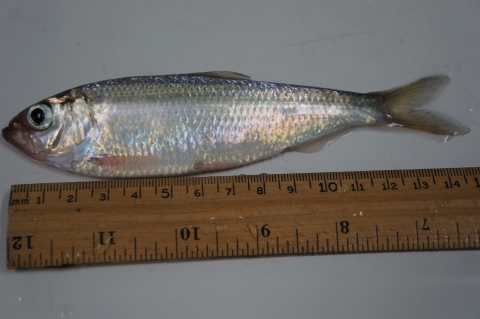
Randal Snyder, from the Biology Department at Buffalo State, is continuing his work on physiological and ecological adaptations of landlocked and anadromous alewives, making extensive use of the fish culture facility at the Field Station. Using tissue samples obtained from the “common garden” experiment he successfully carried out in fall 2012, he will examine possible differences in gill morphology (abundance and distribution of mitochondrial-rich cells) and gill physiology (ATPase activity) in alewives reared in freshwater and saltwater. This information will be used to characterize changes that occur in the gills of these fishes when they adapt to environments differing in salinity.
Dr. Snyder is also manipulating temperature and photoperiod to attempt to induce the alewives to produce mature eggs and sperm. If this is successful, he will then attempt to produce viable offspring in the laboratory, which would support future novel genetic work on this species.