

Sergentia sp.
-
1/3
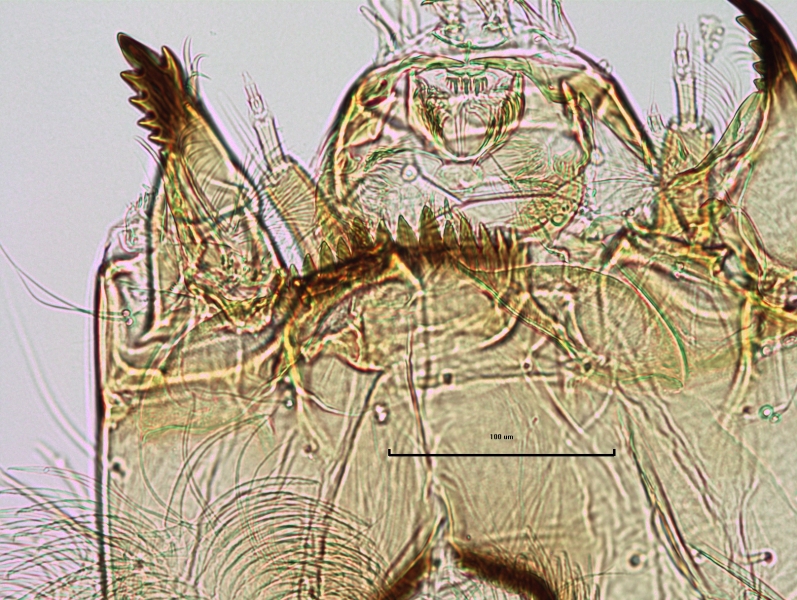
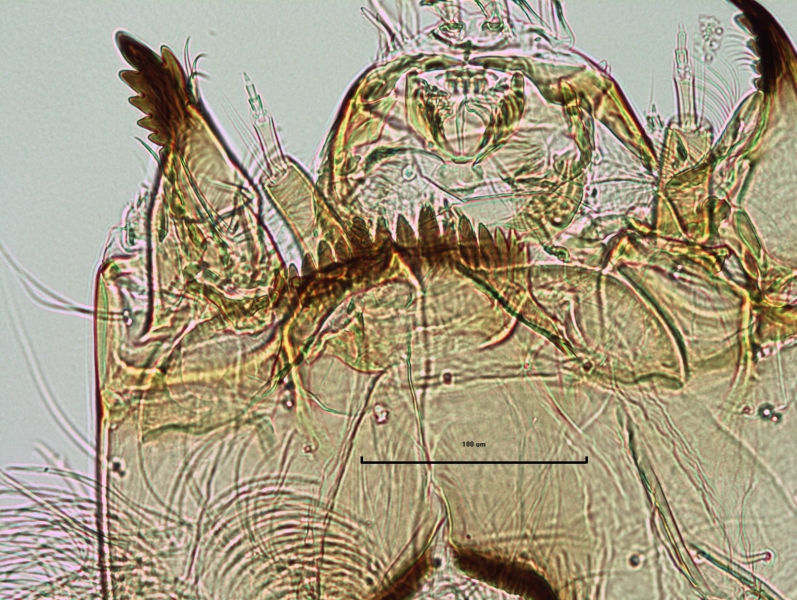
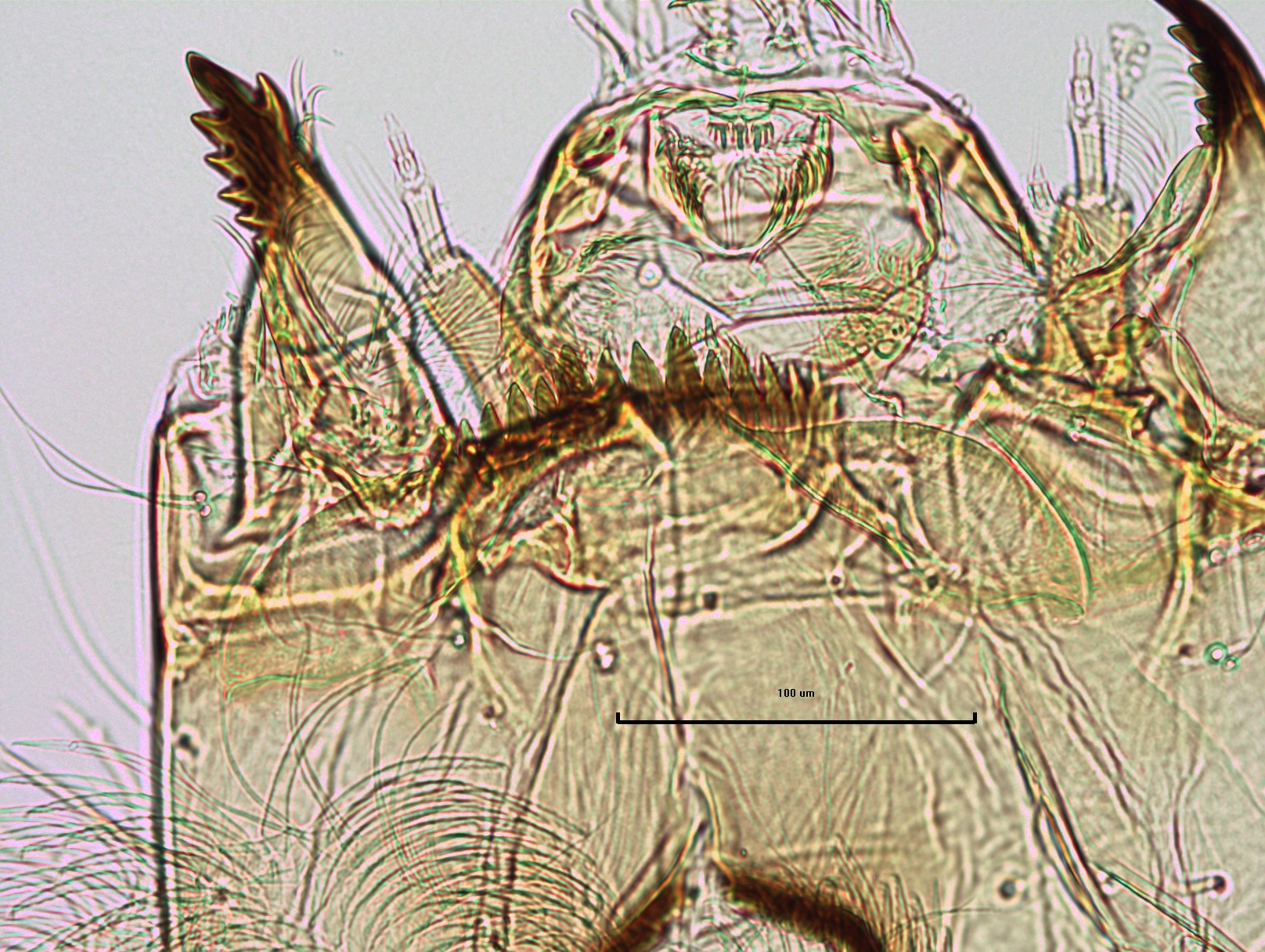
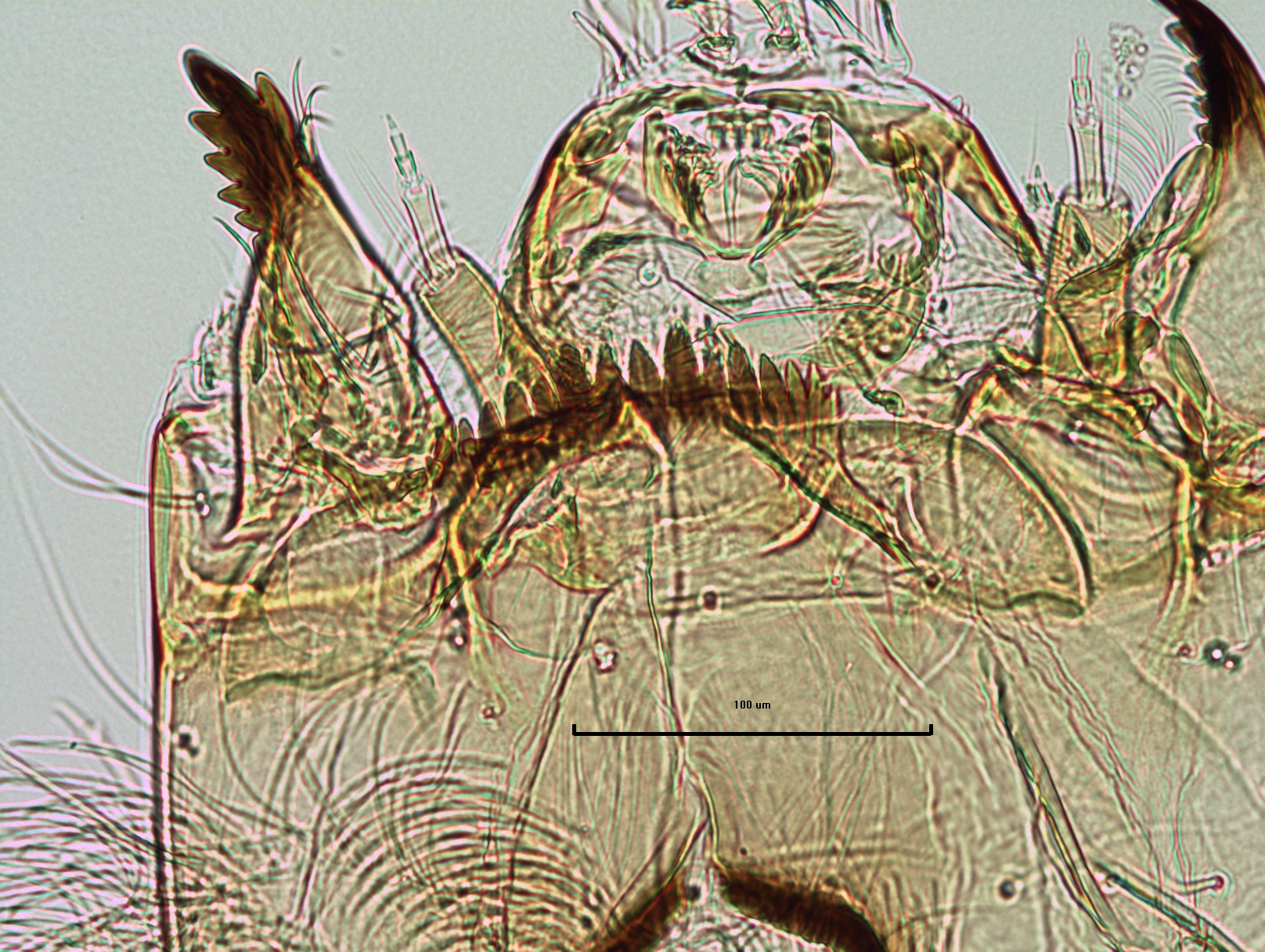
Figure 1. Sergentia spp. has a mentum with 4 large widely separated, equally broad and slightly elevated inner median teeth, with 6 pairs of scarcely differing lateral teeth. A distinct line connects the posterior margin of the outer median teeth with the ventromental plate.
Download Image -
-
3/3
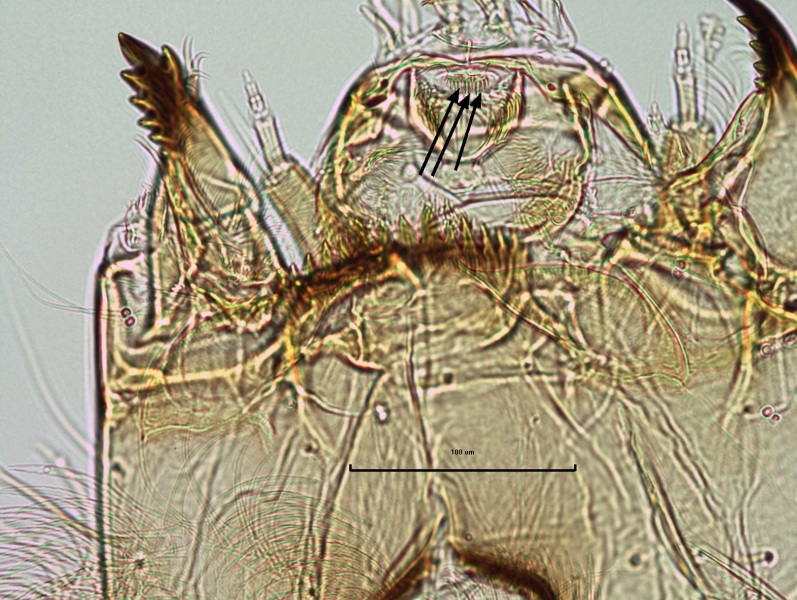
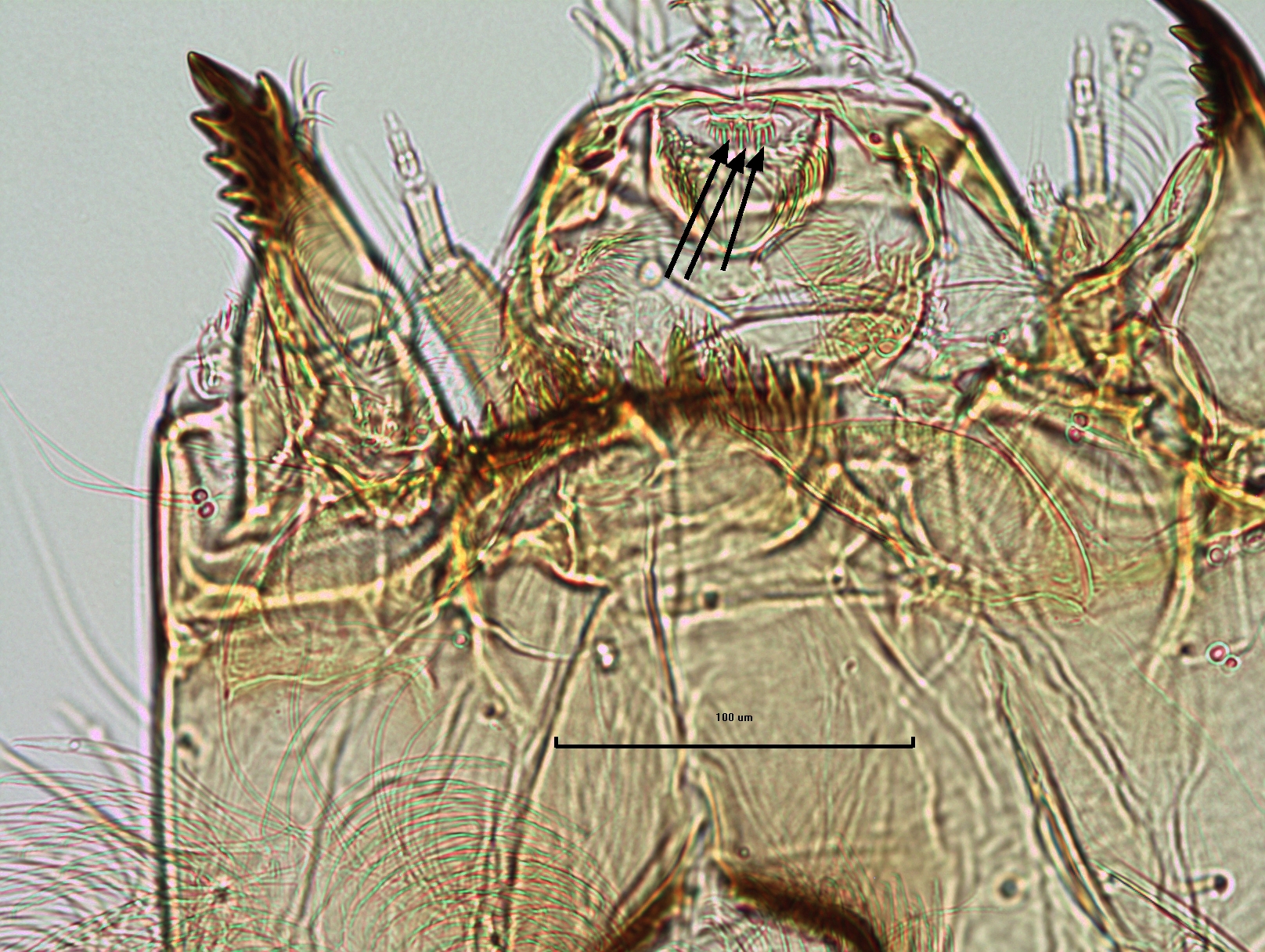
Figure 3. Sergentia spp. has a pecten epipharyngis consisting of 3 separate, distally serrated platelets.
Download Image
Sergentia sp.
Taxa description
Large larvae, up to 18mm, color red, with 2 pairs of eyes. Antenna with 5 segments, ring organ situated about 1/3 of basal segment. Pecten epipharyngis consisting of 3 separate, distally serrated platelets. Mentum with 4 large widely separated, equally broad and slightly elevated inner median teeth, with 6 pairs of scarcely differing lateral teeth. A distinct line running from the posterior margin of the outer median teeth of the anteromedial margin of the ventromental plate.
Distinguishing features
Habitat
Sergentia spp. occur in the sublittoral and profundal of oligotrophic to mesotrophic lakes. Sergentia coracina was found in splash in splash zone of freshwater coastal rock pools in Lake Superior at Isle Royale, Michigan (Egan and Ferrington, 2015).
Lake occurrence
Sergentia spp. have been found in all Great Lakes, however, was more often documented in Lake Michigan compared to other Great Lakes (Mozley & Howmiller, 1977).
Similar species
Sergentia spp. can be easily confused with the closely related Phaenopsectra spp. and has been used as a synonym of Phaenopsectra spp. by many North American authors. However, Sergentia spp. has 4 rather than 3 mandibular teeth.
Relative size
Sergentia spp. are relatively large chironomid larvae, up to 18mm.
Does it have a barcode reference from the Great Lakes?
References
Anderson, T., P.S. Cranston, and J.H. Epler. 2013. The larvae Chironomidae (Diptera) of the Holoarctic Region: Key and diagnosis. Insect Systematics & Evolution. Supplement No 66.
Occurrence in scientific literature
Egan, A.T., and L.C. Ferrington Jr. 2015. Chironomidae (Diptera) in freshwater coastal rock pools at Isle Royale, Michigan. Transactions of the American Entomological Society 141:1-25.
Mozely, S. C., and R.P. Howmiller. 1977. Environmental status of the Lake Michigan region. Volume 6. Zoobenthos of Lake Michigan. Environmental Control Technology and Earth Sciences. 148pp.