

Labrundinia sp.
-
1/4
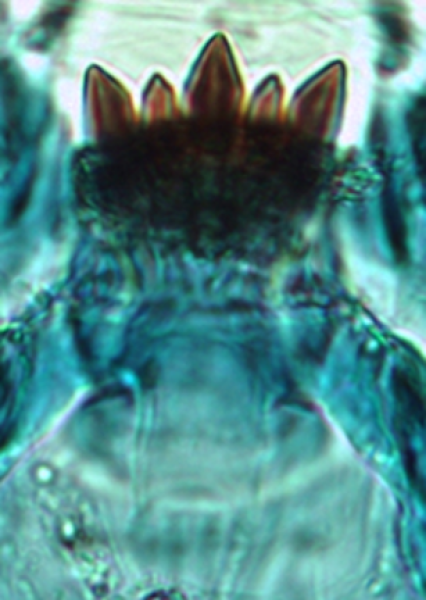
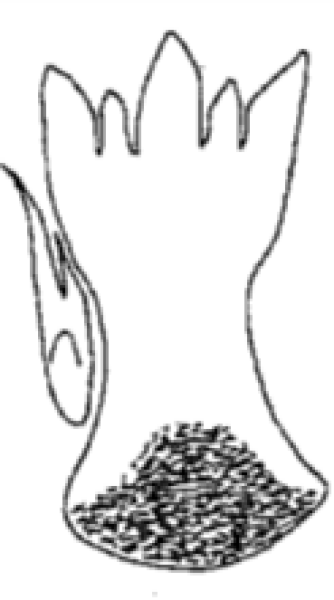
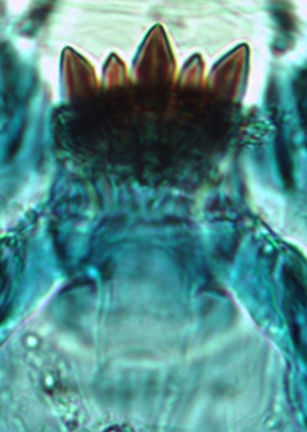
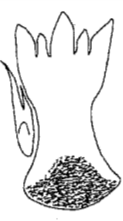
Figure 1. Median tooth of the ligula of Labrundinia sp. is larger than the two teeth beside it. The outer teeth are almost as large as the middle tooth.
Download Image -
-
3/4
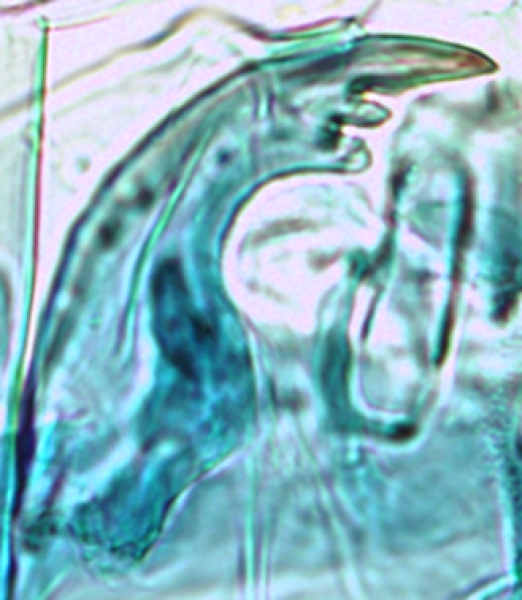
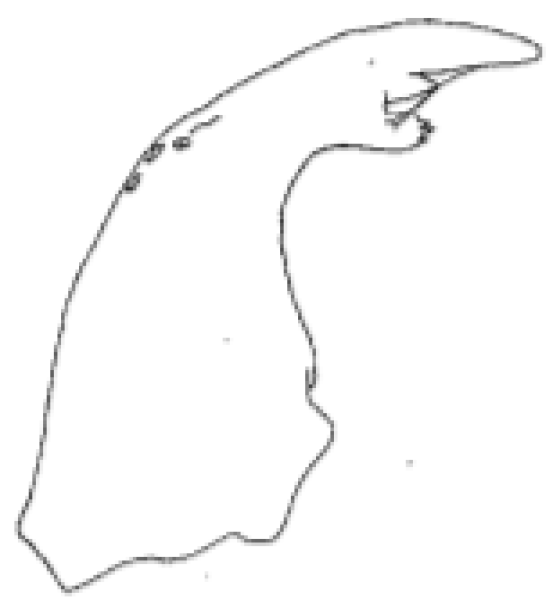
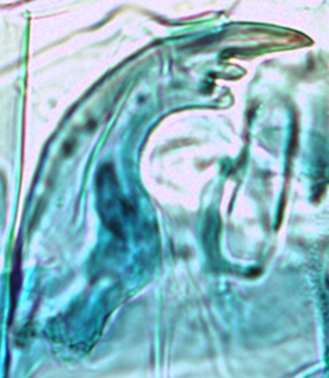
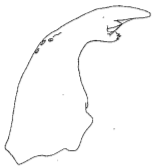
Figure 3. Mandible of Labrundinia sp. Note the relatively large basal teeth, and the bulbous lower tooth.
Download Image -
Labrundinia sp.
Taxa description
Labrundinia sp. (Fittkau, 1962) is a genus of Tanypodinae that is easily distinguished by a ligula with five teeth, with the inner teeth considerably shorter and narrower than the outer and middle teeth (Fig 1), a head capsule covered with spinules, and mandibles with large basal teeth and the lower basal tooth bulbous (Fig 3).
Distinguishing features
The ligula is very distinct with a a longer median tooth on the ligula when compared to the inner teeth.
Habitat
This genus has been found in the Great Lakes region before (Winnell and Jude 1987), and is typically found in herbaceous marshes, ponds, lakes, and slower moving portions of streams and rivers.
Lake occurrence
Similar species
It should be noted that species of Labrundinia sp. and Nilotanypus sp. are similar in their ligulas but can be distinguished by the basal teeth of the mandibles, since the expansion of the basal teeth is much larger in Labrundinia sp. In addition, Nilotanypus sp. is typically found in clean, relatively shallow sand bottomed streams and Labrundinia sp. can be found in a lotic setting like the Western Basin of Lake Erie.
Relative size
Does it have a barcode reference from the Great Lakes?
References
Epler, J.H. 2001. Identification Manual for the Larval Chironomidae (Diptera) of North and South Carolina. North Carolina Department of Environment and Natural Resources.
Winnell, M.H. and Jude, D.J., 1987. Benthic community structure and composition among rocky habitats in the Great Lakes and Keuka Lake, New York. Journal of Great Lakes Research, 13(1), pp. 3-17.