

Hydrosmittia sp.
-
1/3
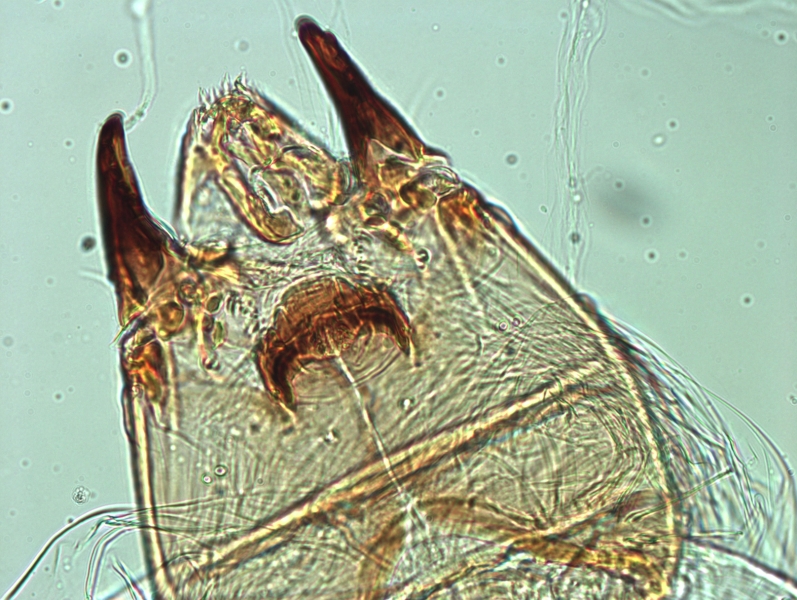
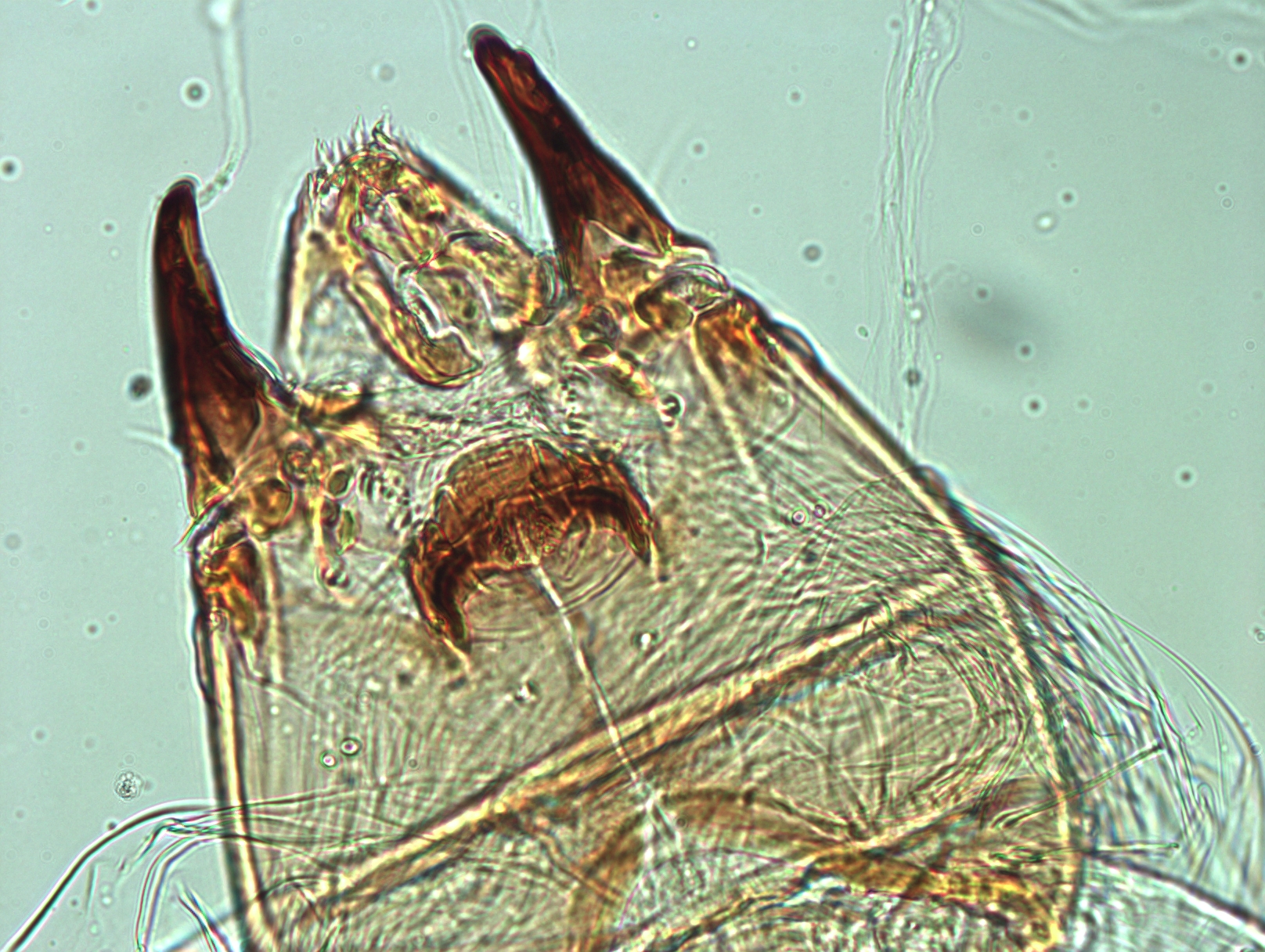
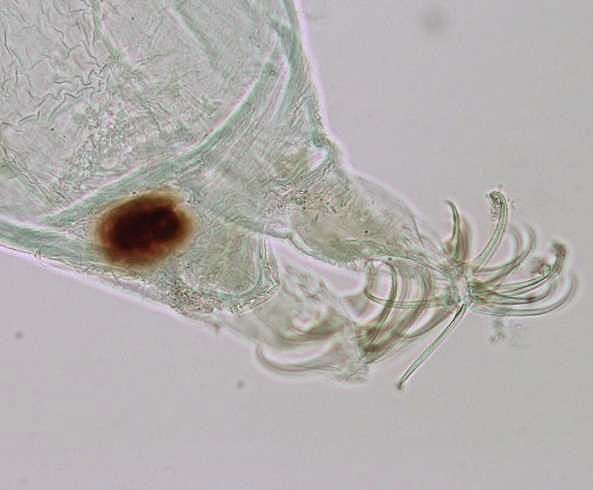
Figure 1. The head capsule of Hydrosmittia sp. showing some key diagnostic features, some of which are out of plane or hard to see.
Download Image -
-
3/3
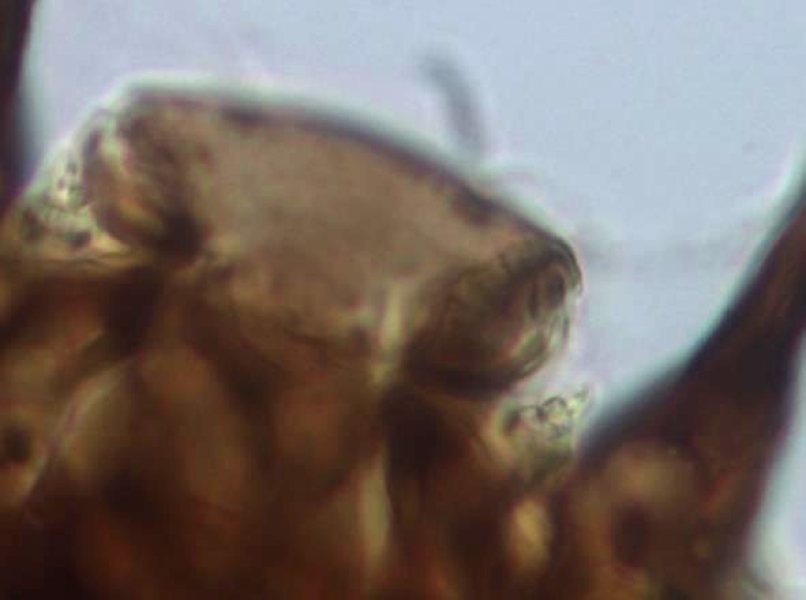
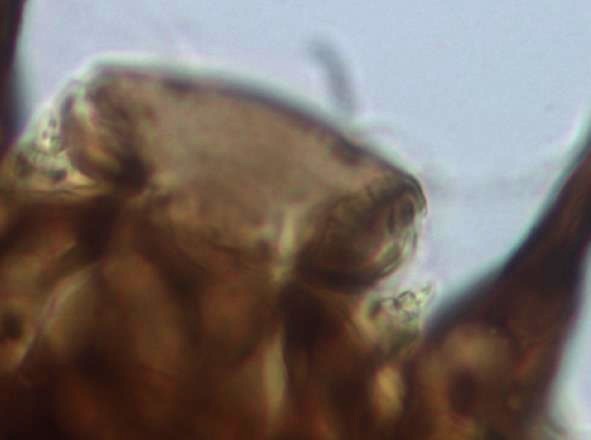
Figure 3. Hydrosmittia sp. has very short antennae that is less than a quarter of the length of the mandible, with the first segment about as wide as it is long.
Download Image
Hydrosmittia sp.
Taxa description
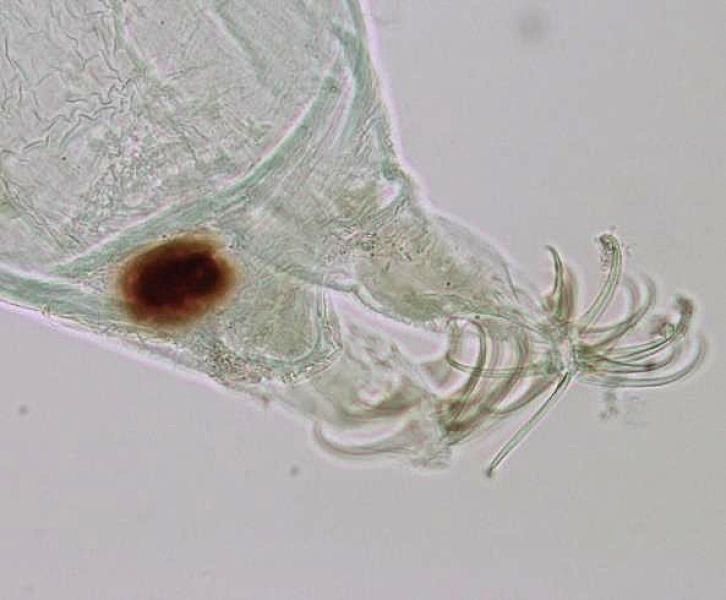
The antennae of Hydrosmittia sp. (Farrington and Sæther, 2011) is ¼ the length of the mandible, with a basal segment at least as wide as long, and the second segment is often sclerotized. It has a premandible with 2 apical teeth and 1-2 more or less tooth-like inner projections and has a distinct brush. Both SI and SII are broad and bifid which separates Hydrosmittia sp. from all other orthoclads except Camptocladius sp., Pseudosmittia sp., and Allocladius spp. Its posterior parapods and anal claws distinguish Hydrosmittia sp. from Camptocladius sp. It can be separated from Pseudosmittia sp. and Allocladius sp. by having posterior parapods with 7-11 claws, a mandible with 3-4 inner teeth, a mentum with 5 pairs of lateral teeth, an antenna blade longer than the flagellum, or because the mandible has 3 inner teeth and 4 pairs of lateral teeth, and an antenna blade longer than the flagellum.
Distinguishing features
Habitat
Species of Hydrosmittia were found in splash zone of freshwater coastal rock pools in Lake Superior at Isle Royale, Michigan; in algae growths on stony substrates (Hydrosmittia ruttneri) in northern and montain lakes and rivers; in aquatic moss and algae, often cold-stenothermic (Hydrosmittia sp.) (Egan & Ferrington, 2015).
Lake occurrence
Lakes Superior and Huron.
Similar species
Relative size
Does it have a barcode reference from the Great Lakes?
References
Anderson, T., P.S. Cranston, and J. H. Epler. 2013. The larvae Chironomidae (Diptera) of the Holoarctic Region: Key and diagnosis. Insect Systematics & Evolution. Supplement No 66.
Occurrence in scientific literature
Egan, A.T. and L.C. Ferrington Jr. 2015. Chironomidae (Diptera) in freshwater coastal rock pools at Isle Royale, Michigan. Transactions of the American Entomological Society, 141(1), pp.1-25.