

Dicrotendipes fumidus
-
1/4
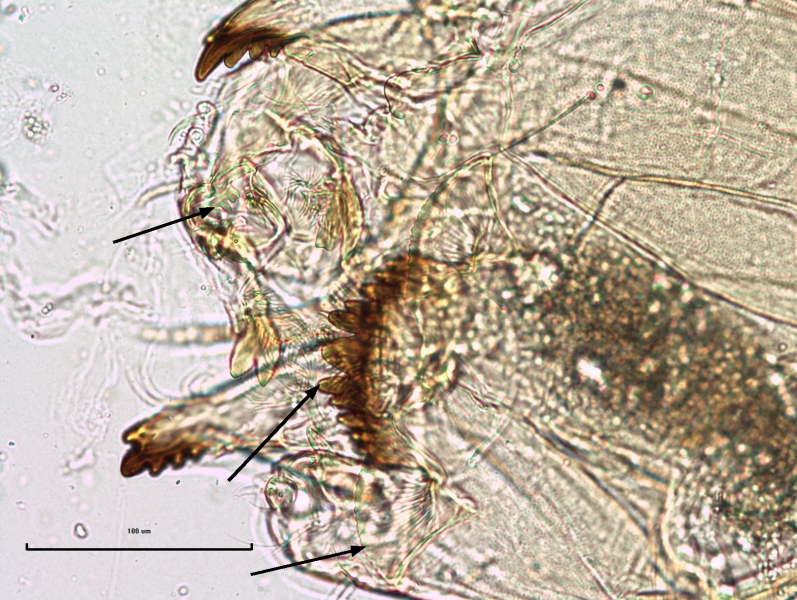
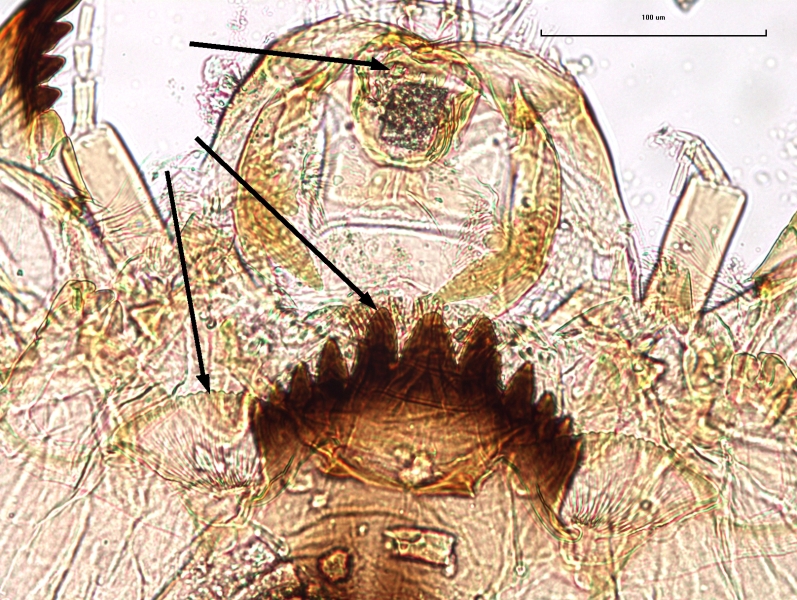
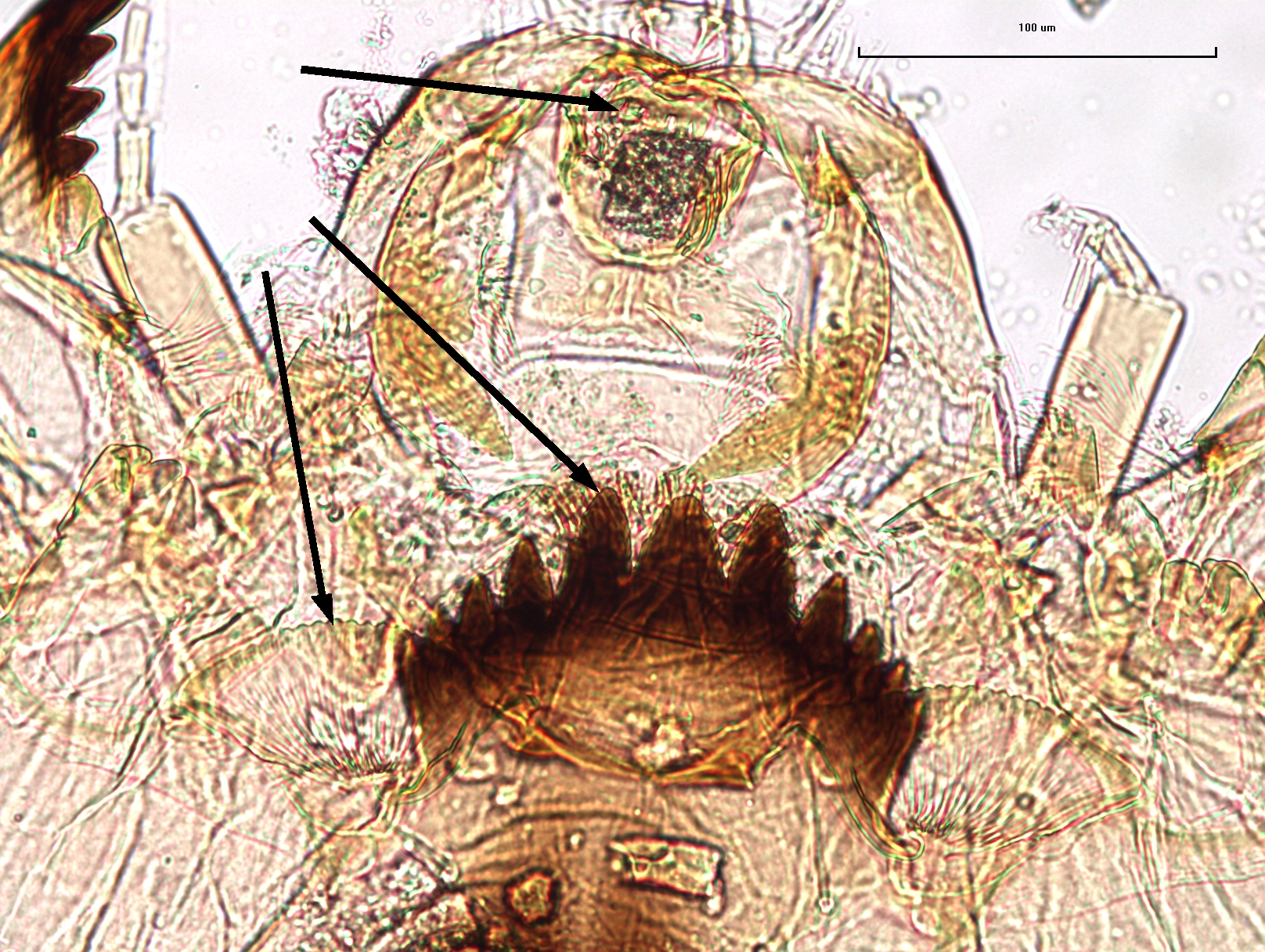
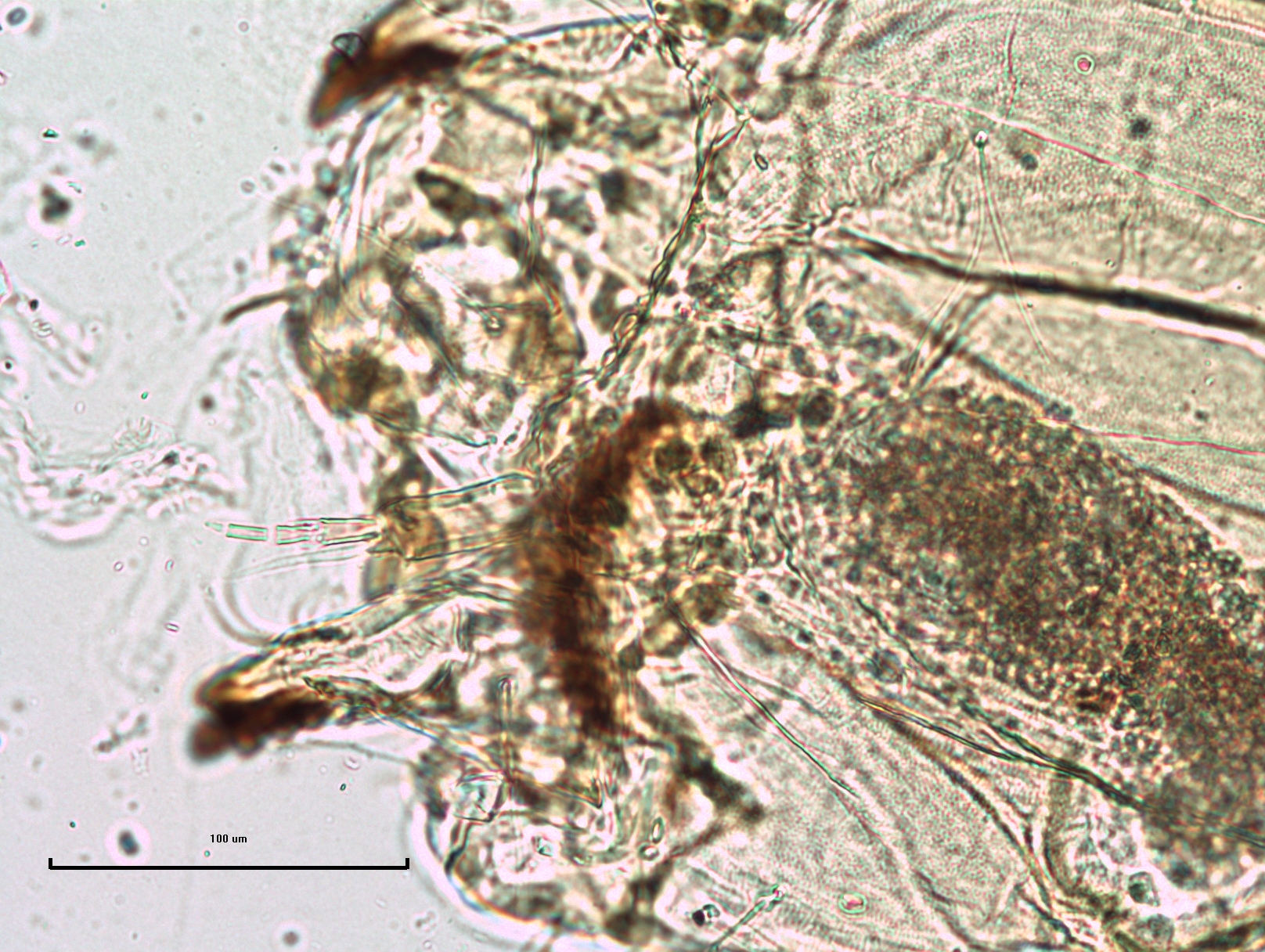
Figure 1. Features of Dicrotendipes fumidus. The first and second lateral tooth of the mentum are fused, the ventromental plate is crenulated or wavy and about 2/3 the width of the mentum, and the head capsule integument is coarsely granular.
Download Image -
-
3/4
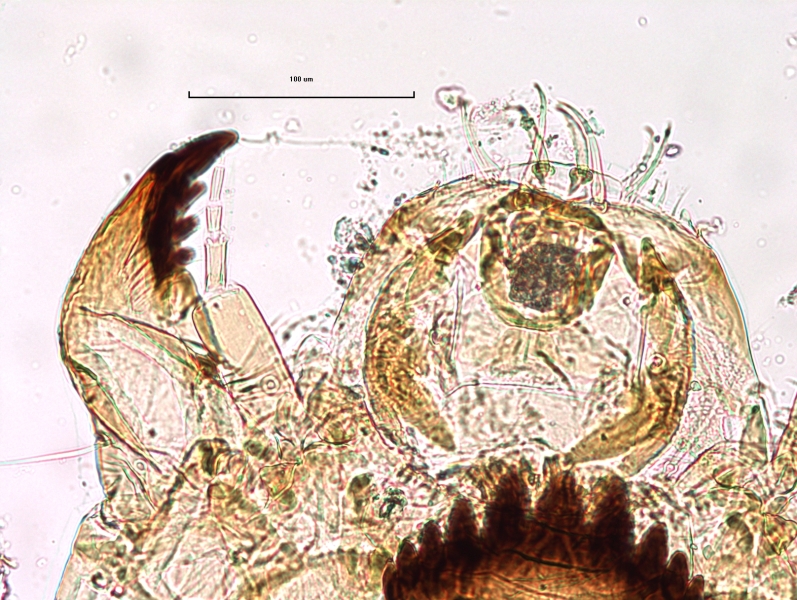
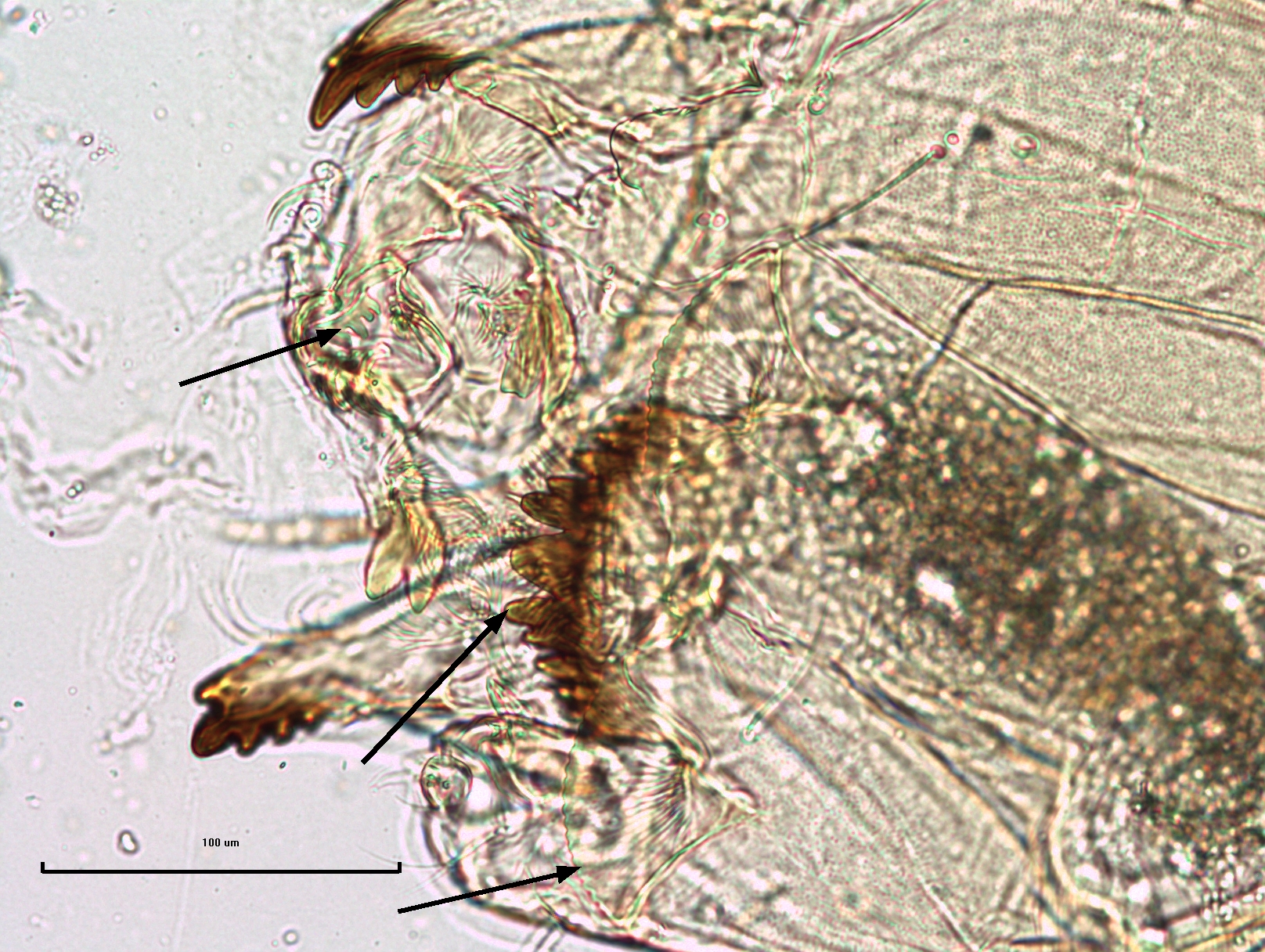
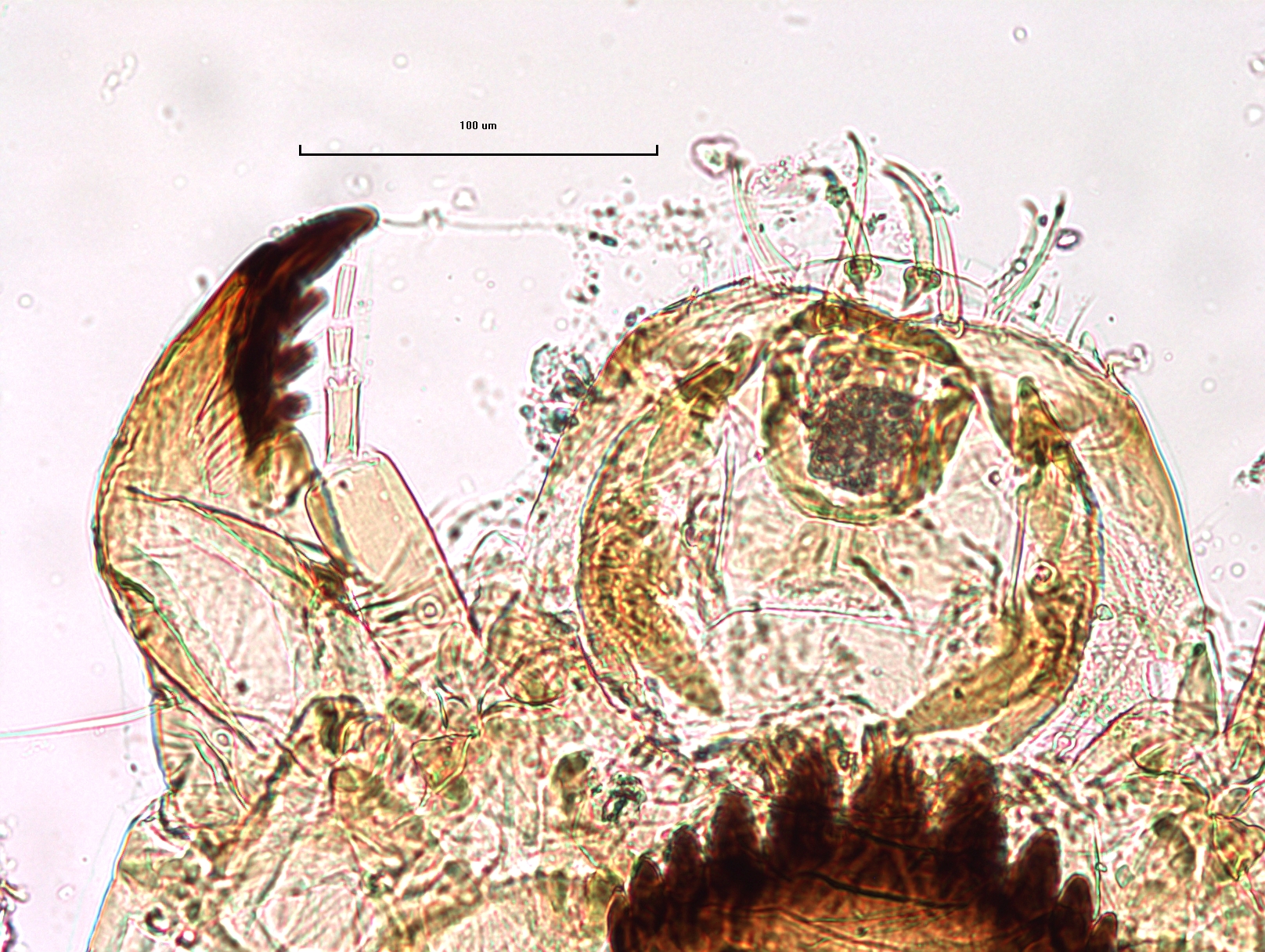
Figure 3. The antennae is about five segments with the ring organ on the basal segment. The mandibles and premandibles are also visible.
Download Image -
4/4
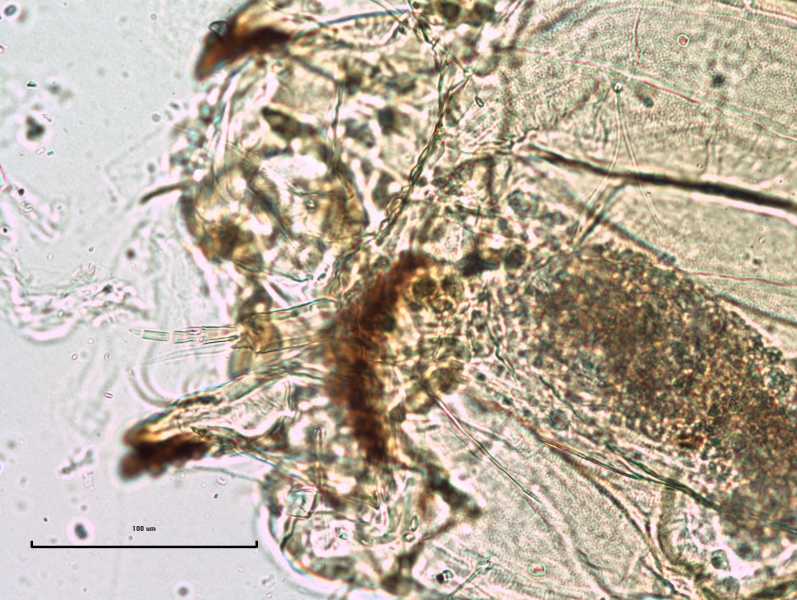
Figure 4. The antennae have about five segments with a blade that is about as long as the last four segments.
Download Image
Dicrotendipes fumidus
Taxa description
Dicrotendipes fumidus is a species of freshwater chironomids belonging to the Chironominae subfamily. This genus is distinguished by palmate or coarsely plumose S1 and ventromental plates that are distinctly narrower than the mentum and often crenulated. The pecten epipharyngis has 5-7 broad teeth and the clypeal and labral sclerites are separate. Species identification of D. fumidus is recognized by the second lateral teeth of the mentum nearly completely fused with the first lateral teeth, appearing notched. The first lateral teeth are turned outward, and the head capsule integument is coarsely granular at 400x.
Distinguishing features
Habitat
Dicrotendipes larvae are found in littoral sediments of standing waters and may be common in lentic habitats. It can also inhabit lotic ecosystems in the slower moving water near shore or in pools.
Lake occurrence
This species occurs in all five Great Lakes.
Similar species
Relative size
D. fumidus larvae are of medium size, 8-11 mm long.
Does it have a barcode reference from the Great Lakes?
References
Andersen, T., Cranston, P.S., Epler, J.H., 2013. The larvae of the Chironomidae (Diptera) of the Holarctic Region. Insect Systematics & Evolution, Supplement No 66.
NOAA and USEPA. 2019 Great Lakes Waterlife. Accessed on 06/05/2026.
Epler, J.H., 2001. Identification manual for the larval Chironomidae (Diptera) of North and South Carolina.
Epler, J.H., 1987. Revision of the Nearctic Dicrotendipes Kieffer, 1913 (Diptera: Chironomidae). Evolutionary Monographs 9.