

Sparbarus sp.
-
1/3
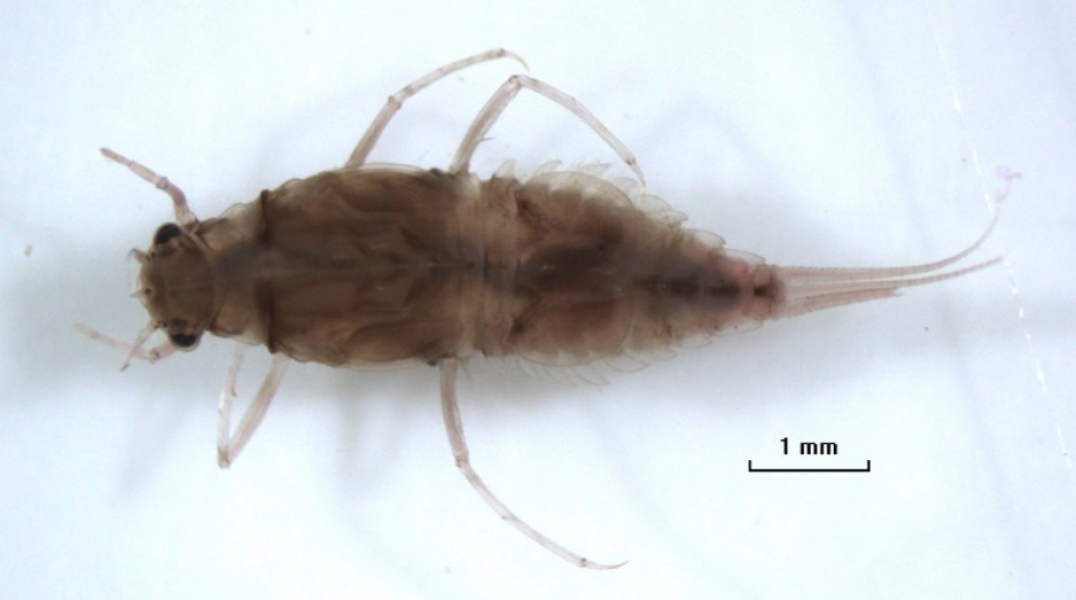
Figure 1. Whole body of Caenid Sparbarus spp. found during the CSMI Lake Erie 2024 survey.
Download Image -
2/3
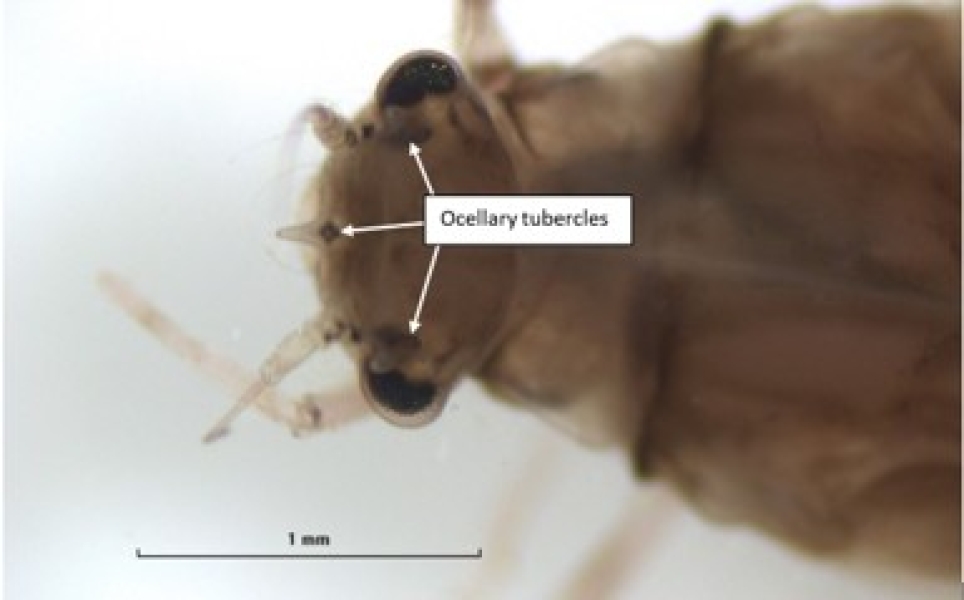
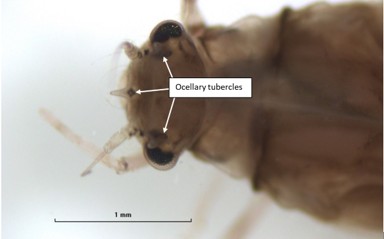
Figure 2. Closeup of Sparbarus spp. head, note the three prominent ocellary tubercles.
Download Image -
3/3
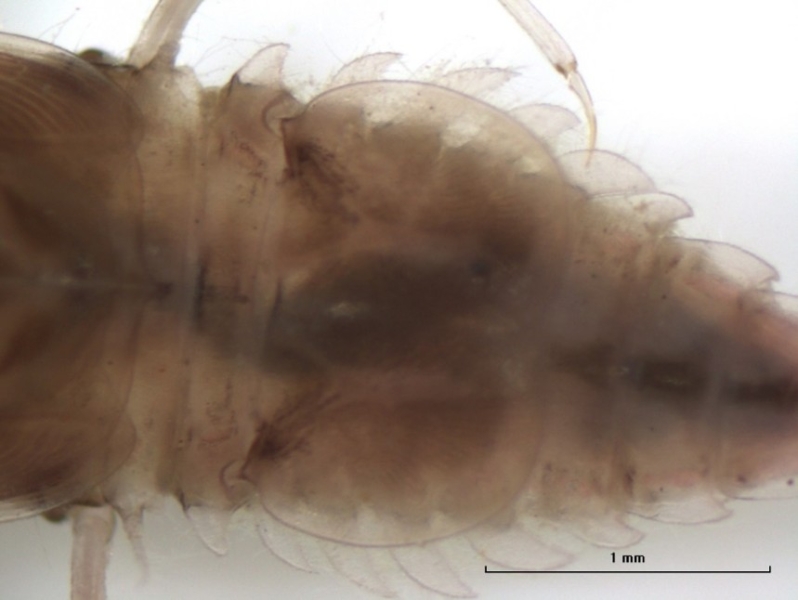
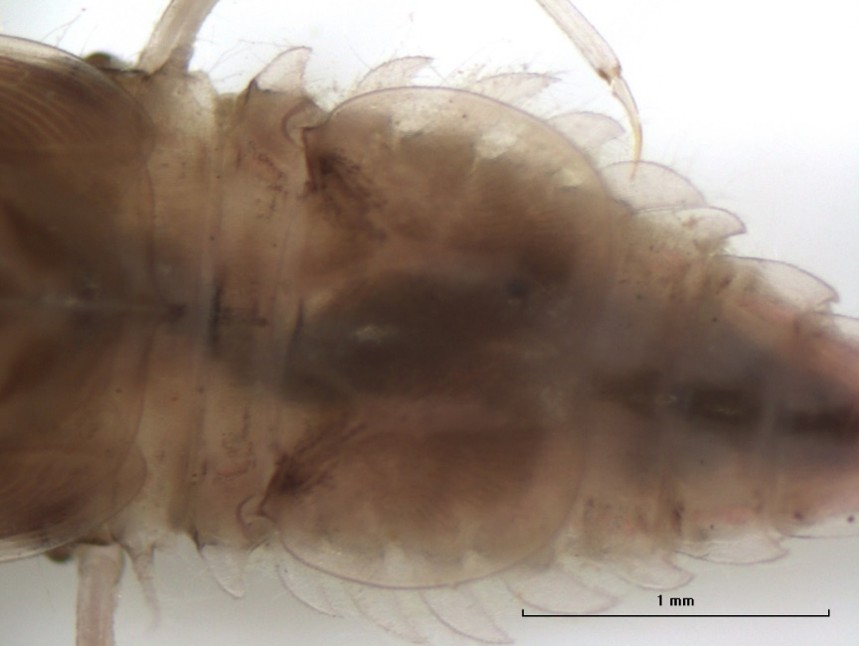
Figure 3. A closeup of the abdominal gills of Sparbarus spp. abdominal gill 2 operculate with posterior margin roughly parallel to the anterior margin.
Download Image
Sparbarus sp.
Taxa description
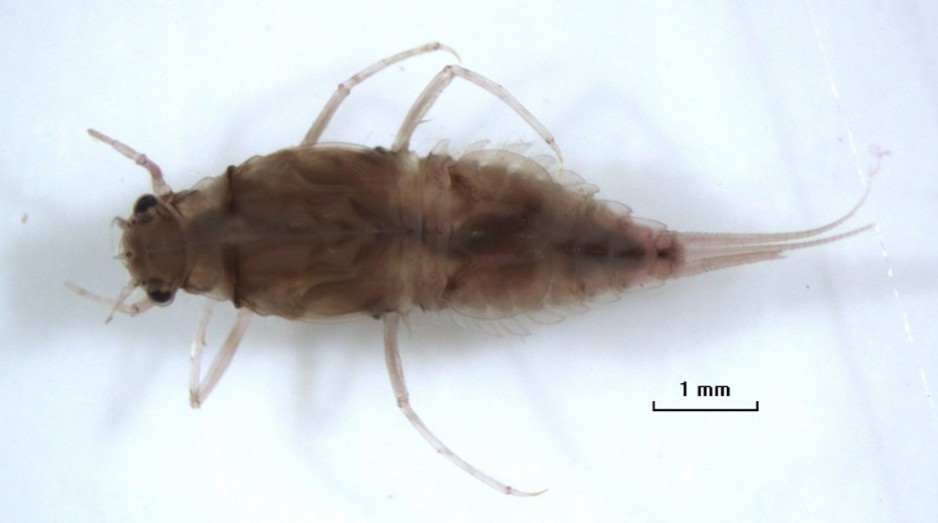
Sparbarus spp. is a mayfly in the Caenidae family. This unique genus is easily distinguished by the presence of three prominent ocellary tubercles (Figures 1-2), the maxillary and labial palpi two-segmented, and having forelegs distinctly shorter than middle and hind legs in the larvae. The larvae should also have abdominal gill 2 operculate with posterior margin roughly parallel to the anterior margin (Figure 3), and the meso- and metathoracic sterna should not have median tubercles. The posteriolateral projections of abdominal segment six is not curved toward the midline of the body, and the segments of the hind legs with few, scattered long hair-like setae. Lastly, the lateral ocellar tubercles are usually distinctly pointed apices (Merritt, Cummins, and Berg 2019; Sun and McCafferty 2008).
Distinguishing features
Habitat
Lake occurrence
There are two species listed in the Water Life database; S. maculatus which is very widespread and found in all five Great Lakes, and S. lacustris which has only been reported from Lake Superior (NOAA and USEPA 2019). However, given the lack of keys to larvae, and the rarity of it occurring in our GLNPO samples, we think it is more appropriate to record this taxa at the genus level.
Similar species
Relative size
Does it have a barcode reference from the Great Lakes?
References
Merritt, R.W., K.W. Cummins, and M.B. Berg. 2019. An introduction to the aquatic insects of North America Fifth Editon. 1996. Kendall Hunt.
Sun, L., and W. P. McCafferty. 2008. Cladistics, classification and identification of the brachycercine mayflies (Insecta: Ephemeroptera: Caenidae). Zootaxa, 1801(1), pp.1-239.
Occurrence in scientific literature
US EPA. 2017. Great Lakes Invertebrate DNA Collection, 2012-present [Excel spreadsheet]. Curated by contract taxonomists G.T. Shepard, A. Frankiewicz, B. Gilbertson, and E. Timmerman, with specimen verification by outside experts K. Schmude, G. Mackie, T. Lee, and R. Dillon. Duluth, MN: Environmental Protection Agency, Office of Research and Development, National Health and Environmental Effects Research Laboratory, Mid-Continent Ecology Division.