

Psammoryctides barbatus
-
1/5
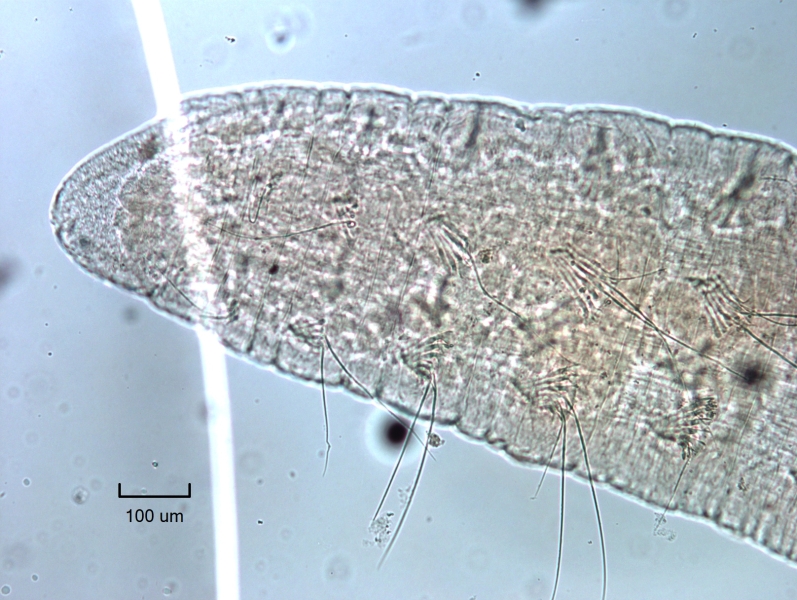
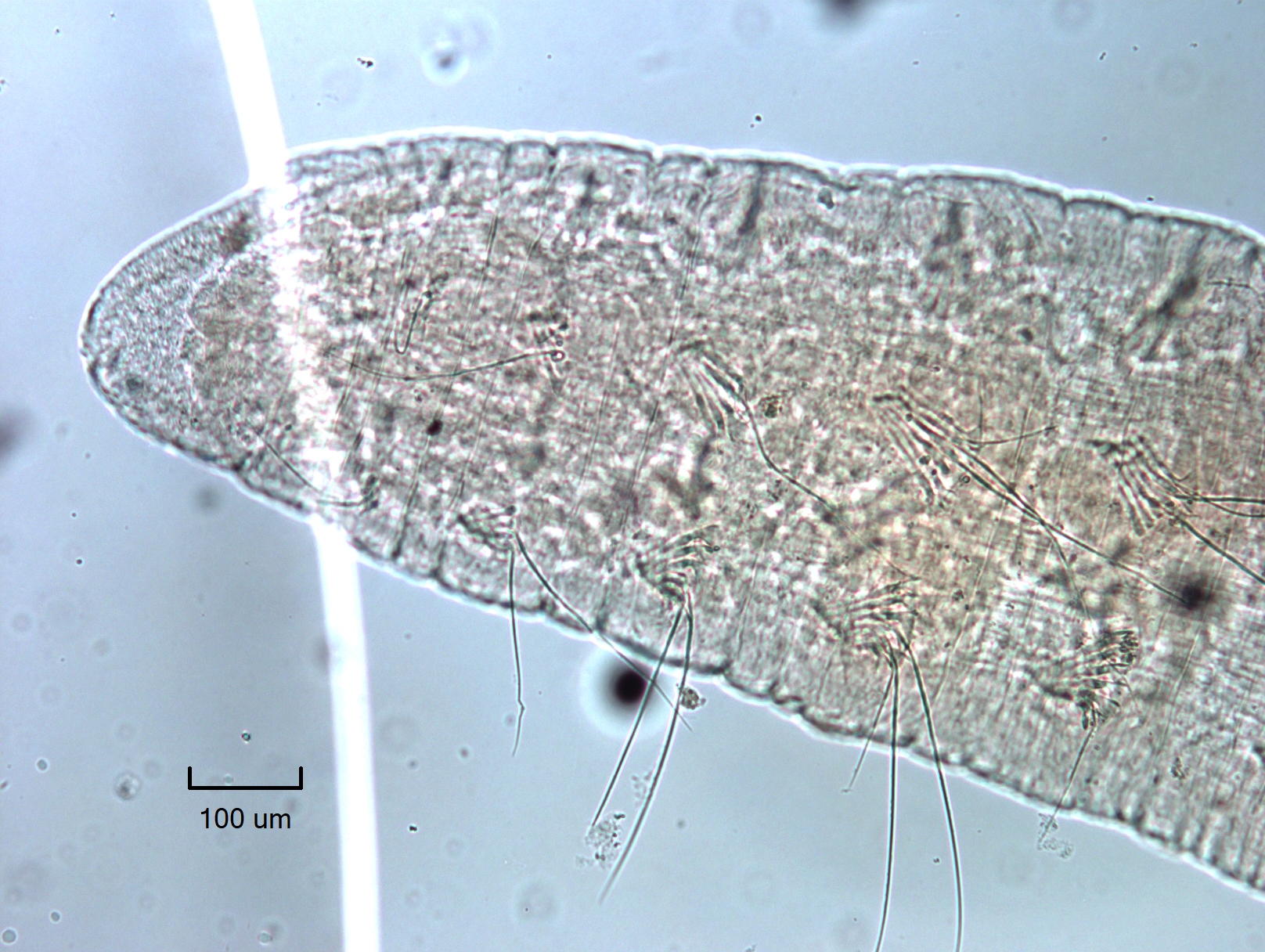
Figure 1. The anterior end of Psammoryctides barbatus, showing bundles with hairs and palmate chaetae. The chaetae may be mistaken for pectinate at first glance, but a closer look will show that they are much broader than pectinate chaetae.
Download Image -
2/5
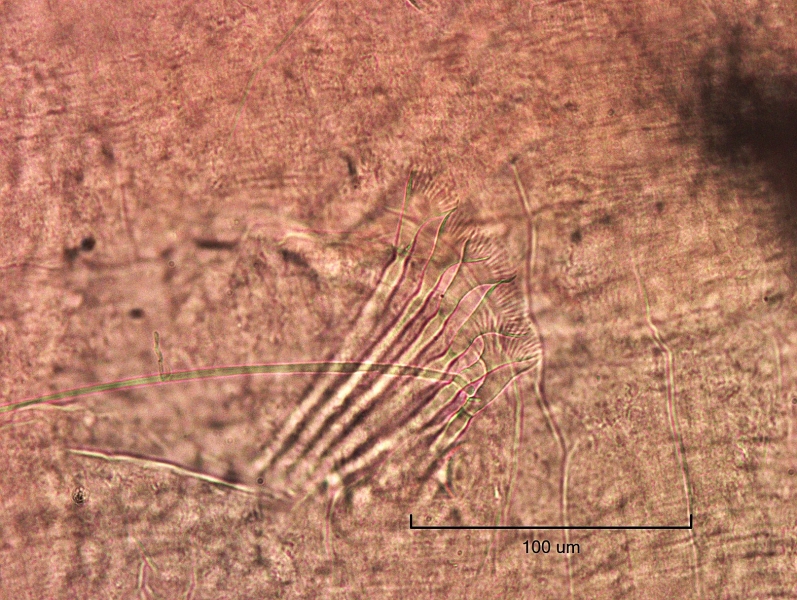
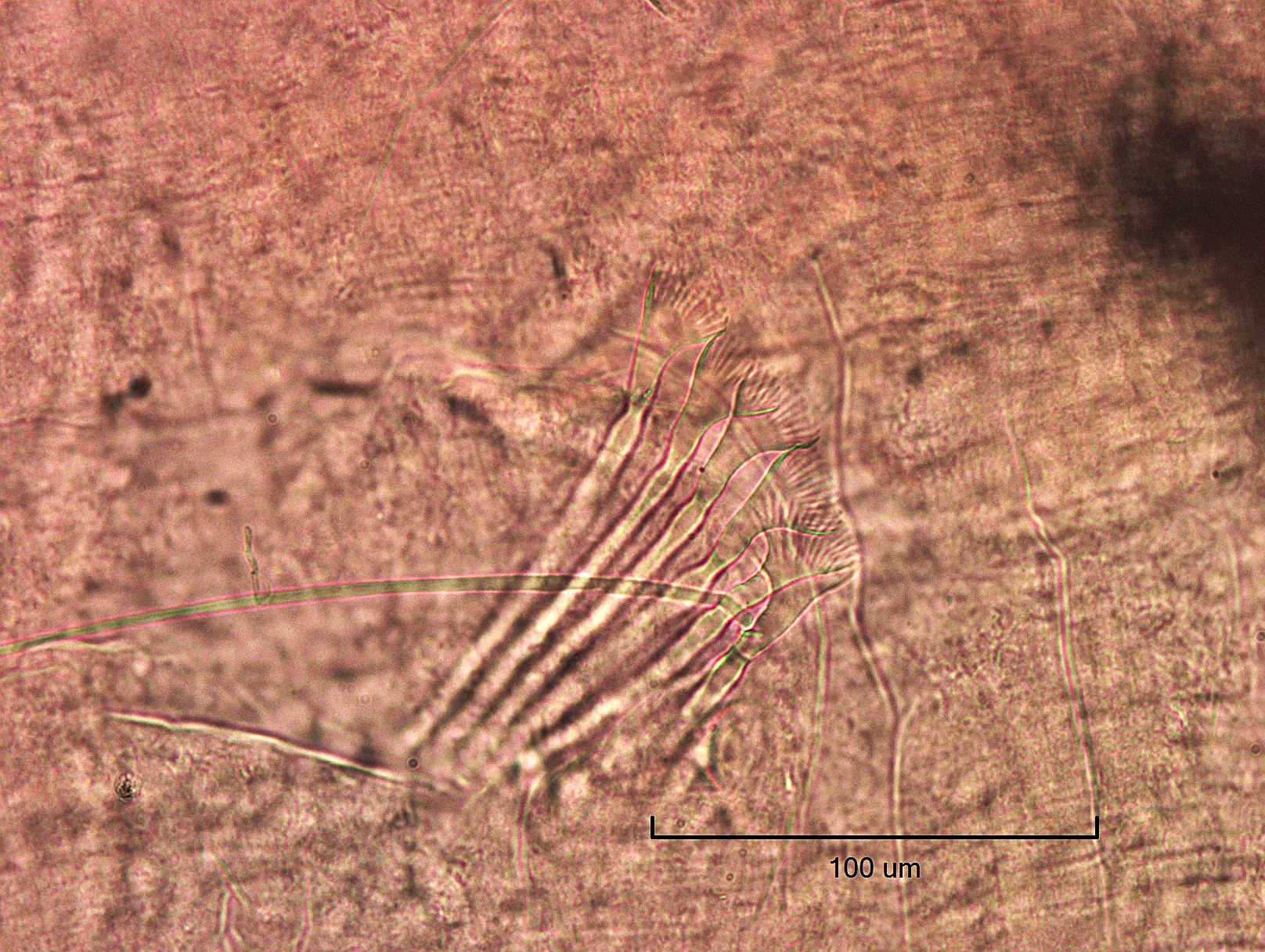
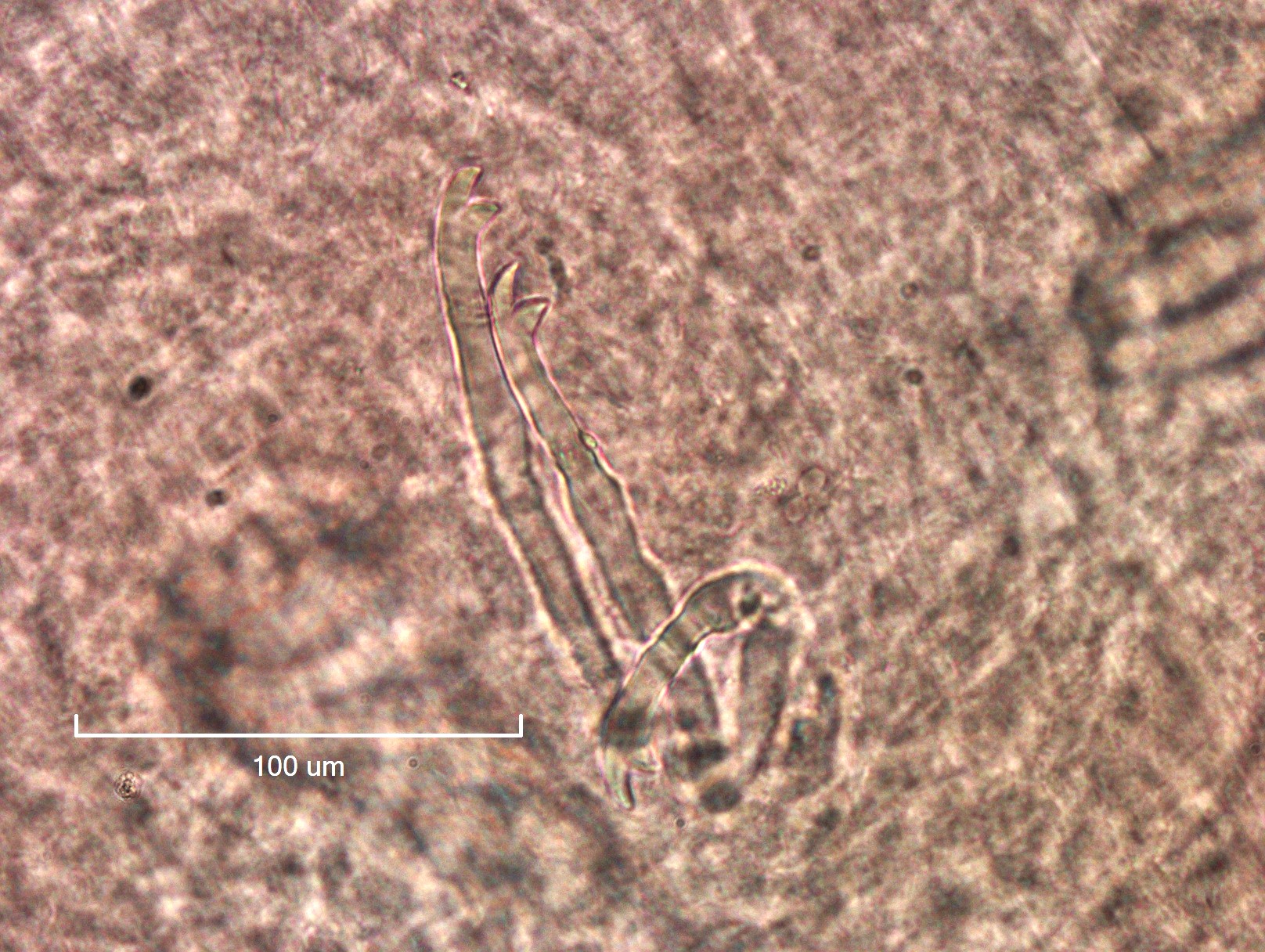
Figure 2. The anterior dorsal bundles have 7–8 broadly palmate chaetae and 2–3 hairs. The palmate chaetae may have more pronounced edges, and the intermediate teeth are much wider than pectinate chaetae’s intermediate teeth, which are very narrow filaments. These intermediate teeth are wide and may appear fused.
Download Image -
3/5
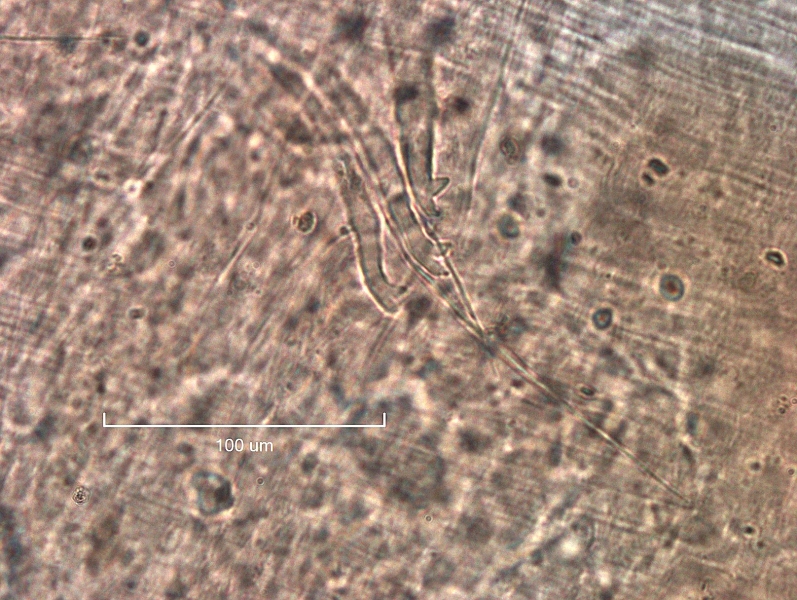
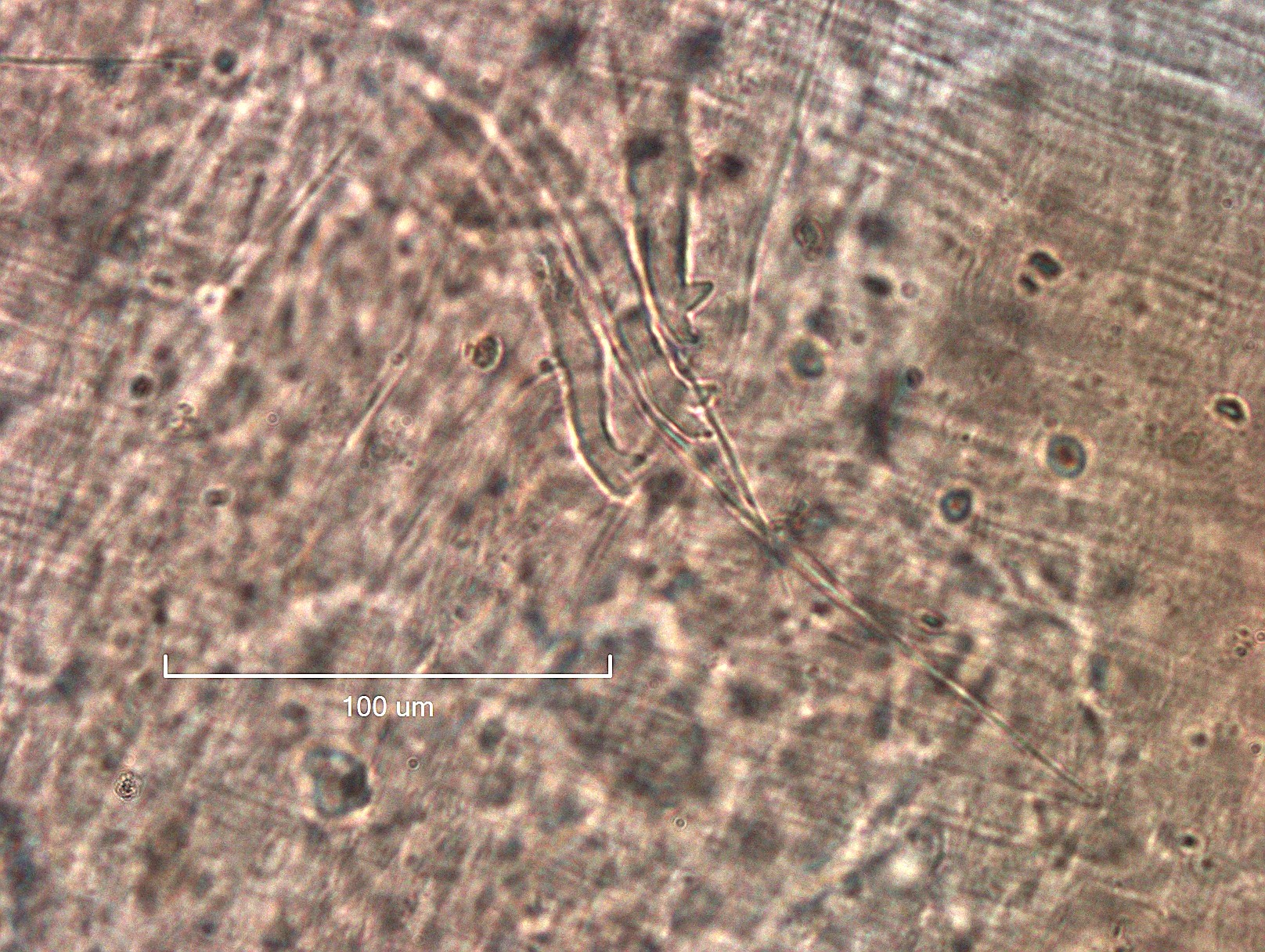
Figure 3. After XI, there are hairs and bifid chaetae with short upper teeth instead of palmate chaetae. If the palmate chaetae were mistaken for pectinate chaetae, finding bifid chaetae with hairs (absent in some bundles) will give the opportunity to recheck the anterior bundles, since not many tubificids have hair and bifid chaetae.
Download Image -
4/5
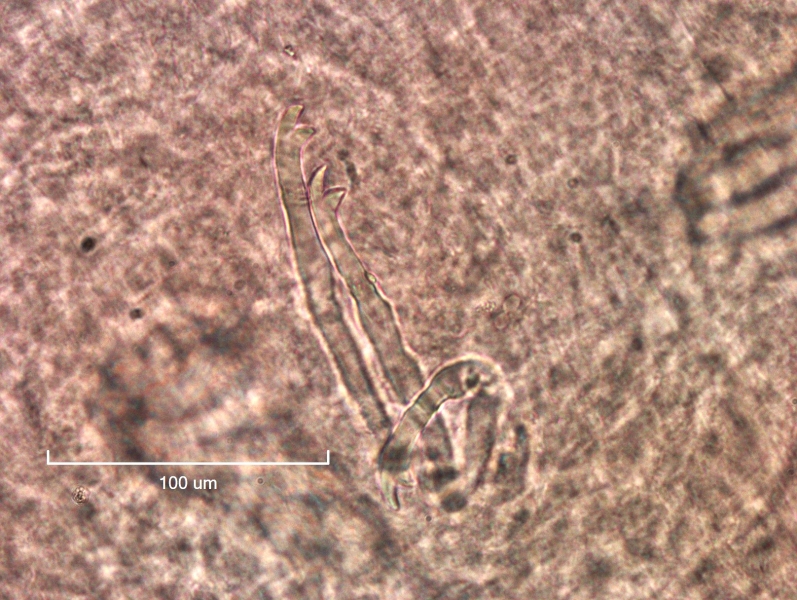
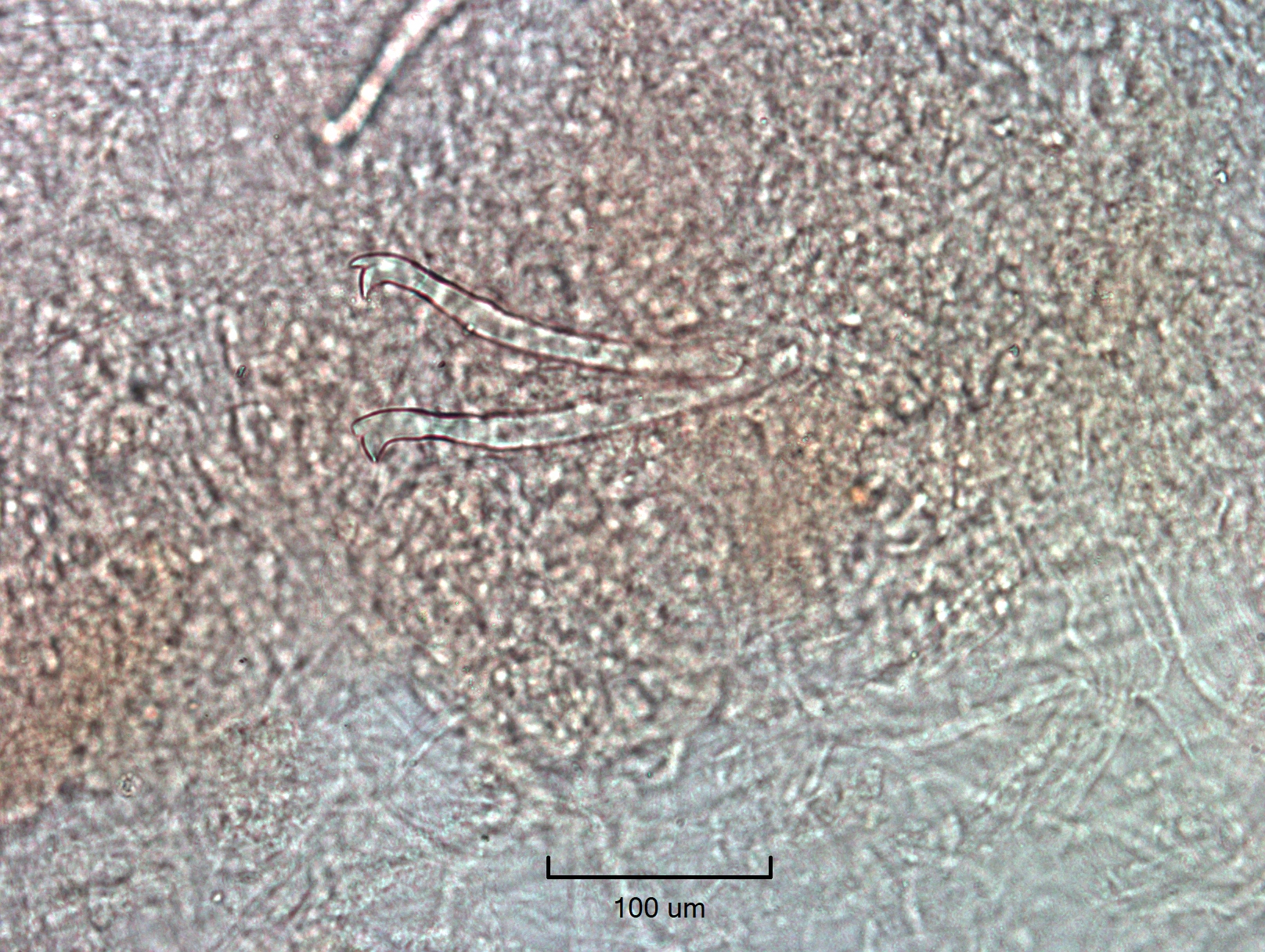
Figure 4. The anterior ventral bundles contain 3–5 bifid chaetae with the upper tooth longer and thinner than the lower.
Download Image -
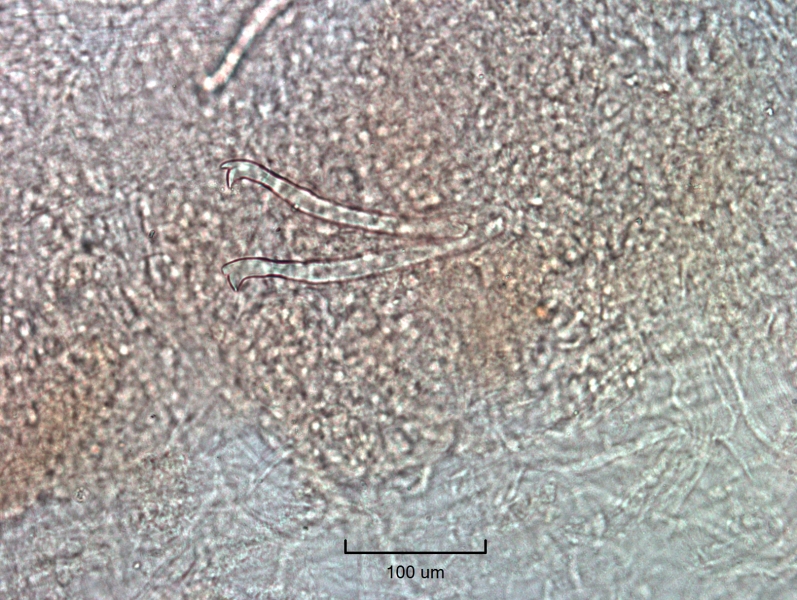
5/5
Figure 5. The poster ventral bundles contain bifid chaetae with the upper tooth shorter than the lower.
Download Image
Psammoryctides barbatus
Taxa description
Psammoryctides barbatus (Grube, 1891) is a freshwater oligochaete worm that is a rare oligochaete in the Great Lakes. It is a tubificid worm with dorsal hairs and palmate chaetae beginning in II and ventral chaetae are bifid. It has spermathecal chaetae on X. The anterior dorsal bundles have 7–8 broadly palmate chaetae and 2–3 hair chaetae to segment X; starting in XI, there are hairs and bifid chaetae with short upper teeth. The ventral bundles contain 3–5 bifid chaetae with the upper tooth longer and thinner than the lower anteriorly but shorter than the lower posteriorly. The spermathecal chaetae in X are long, thin, and hollow. There are penes with very thin penis sheaths. P. barbatus is a European species that was introduced to the freshwater estuary of the St. Lawrence River. It has only been found in our samples in a few sites in Lake Ontario since 2018.
Distinguishing features
P. barbatus is identified by dorsal bundles with broadly palmate chaetae with hair chaetae that become bifid with hair chaetae posteriorly, spermathecal chaetae on X, and penes in very thin penis sheaths. This species does not need to be sexually mature to identify due to the distinct and robust palmate chaetae found in anterior dorsal bundles (Figure 2).
Habitat
Psammoryctides barbatus dwells in rivers and lakes, in silty and sandy substrata, sometimes in brackish water, at a depth of 2 to 120m. This species is clearly imported from Europe, and has been reported in the St. Lawrence River, Quebec, with possible expansion to Eastern Lake Erie.
Lake occurrence
This species occurs in the St. Lawrence River and some harbors in Lake Ontario.
Similar species
Unlike many other tubificids, P. barbatus does not need to be mature in order to be identified because the palmate chaetae are distinct. None of the other Psammoryctides species have palmate chaetae, they are all pectinate. There might be some confusion with P. californianus, which has also been introduced into the Great Lakes region (St. Marys River, for instance) but hasn’t been found in our samples before. P. californianus has 2–5 finely hispid hairs with only 2–4 pectinate or slightly palmate chaetae with longer lateral teeth and fine intermediates, with only 1–2 hairs and pectinate chaetae posteriorly. Ventral chaetae have the upper tooth longer and thinner than the lower, with 3–4 anteriorly and 2–3 posteriorly. The spermathecal chaetae is long, thin, parallel-sided, and hollow. The apparent penis sheath is tub-shaped without a reflexed head, but it is often crumpled.
Palmate chaetae may have defined outer teeth but have broad intermediate teeth, whereas pectinate chaetae usually have well-defined outer teeth and very thin intermediate teeth. Palmate chaetae may also just have teeth that are the same size across the entire surface without defined outer teeth. There is one other tubificid species in North America with palmate chaetae, Arctodrilus wulikensis, but it is only found in the Wulik River drainage in Alaska. The teeth appear palmate at low magnification but are actually pectinate. It also lacks spermathecal or other modified genital chaetae, and the ventral chaetae that have upper teeth which become longer posteriorly, which is the reverse of what usually happens to the length of the upper tooth in many tubificids. Dero vaga is a naidid species with palmate dorsal chaetae, but it is much smaller than P. barbatus, dorsal chaetae don't start until VI, and it has branchial fossa and gills on the posterior end.
Relative size
P. barbatus is a large freshwater oligochaete.
Does it have a barcode reference from the Great Lakes?
No, this species does not yet have a barcode reference from the Great Lakes.
References
Kathman, R.D. and R.O. Brinkhurst. 1999. Guide to the freshwater oligochaetes of North America. Aquatic Resources Center. pp. 148–149, 104, 174.
Stimpson, K.S., D.J. Klemm, and J.K. Hiltunen. 1982. A Guide to the Freshwater Tubificidae (Annelida: Clitellata: Oligochaeta) of North America. pp. 20, 26, 49.
Occurrence in scientific literature
Spencer, D.R. and P.L. Hudson. 2003. The Oligochaeta (Annelida, Clitellata) of the St. Lawrence Great Lakes region: an update. Journal of Great Lakes Research, 29(1), pp.89-104.