

Pristina acuminata
-
1/4
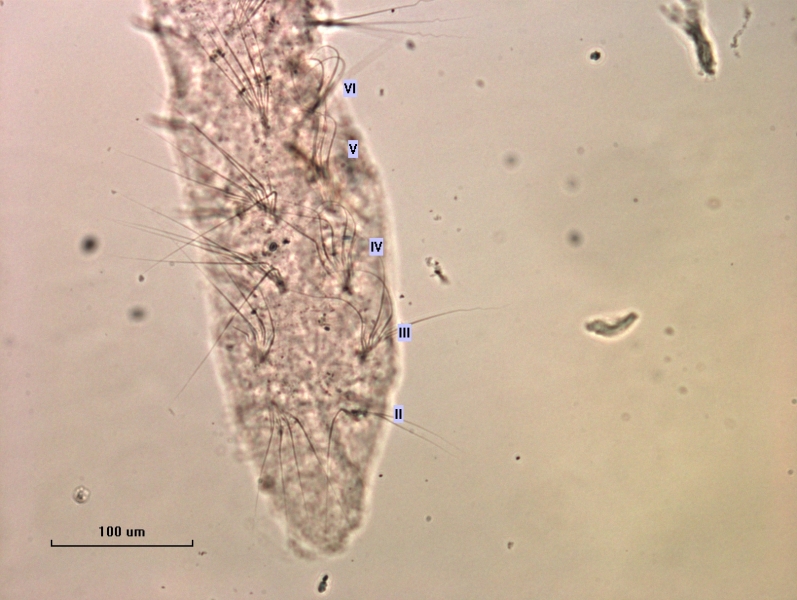
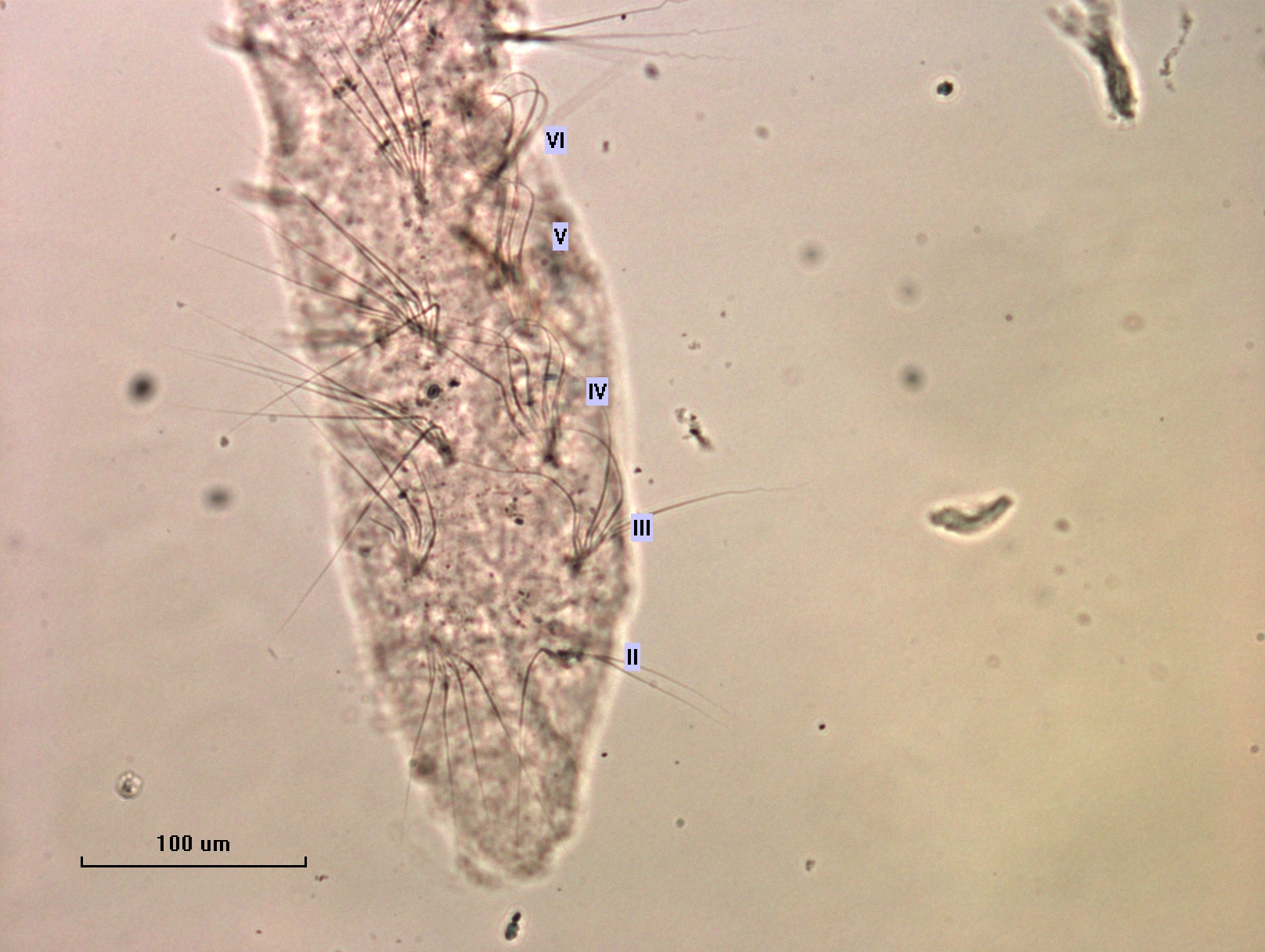
Figure 1. Pristina acuminata has dorsal bundles starting in II with 2-4 hairs and 2-5 bifid chaetae, and there is no proboscis.
Download Image -
2/4
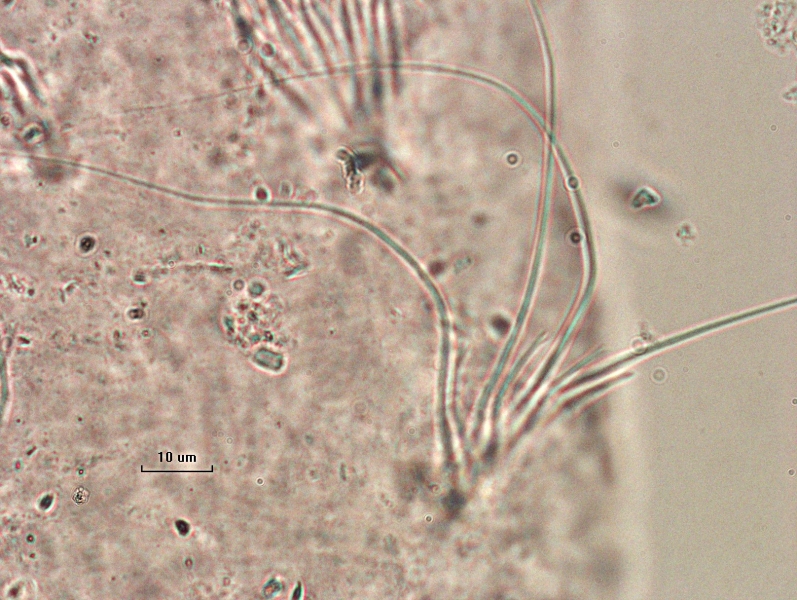
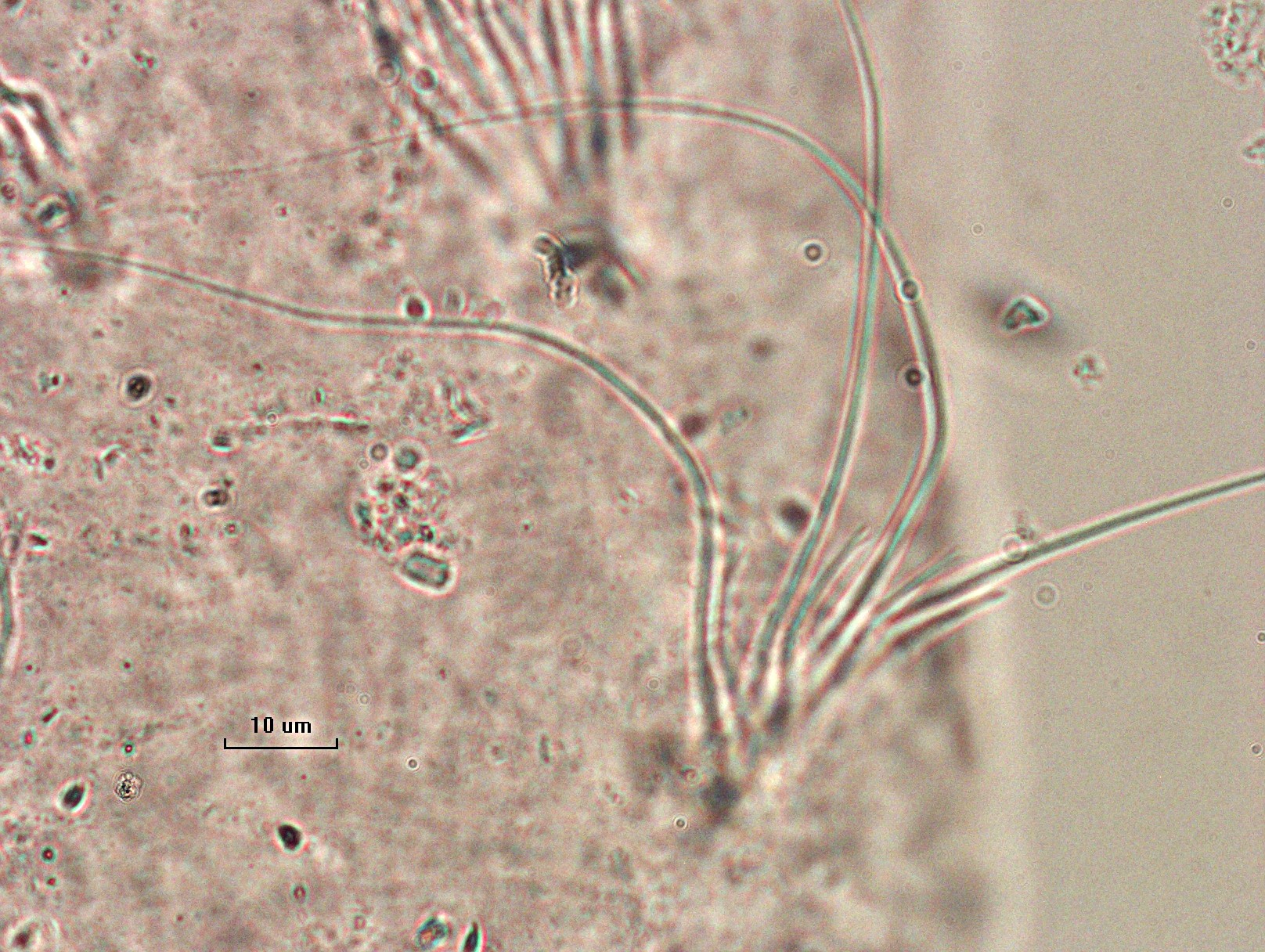
Figure 2. The bifid needle chaetae have long, parallel, slightly divergent teeth of uneven length.
Download Image -
3/4
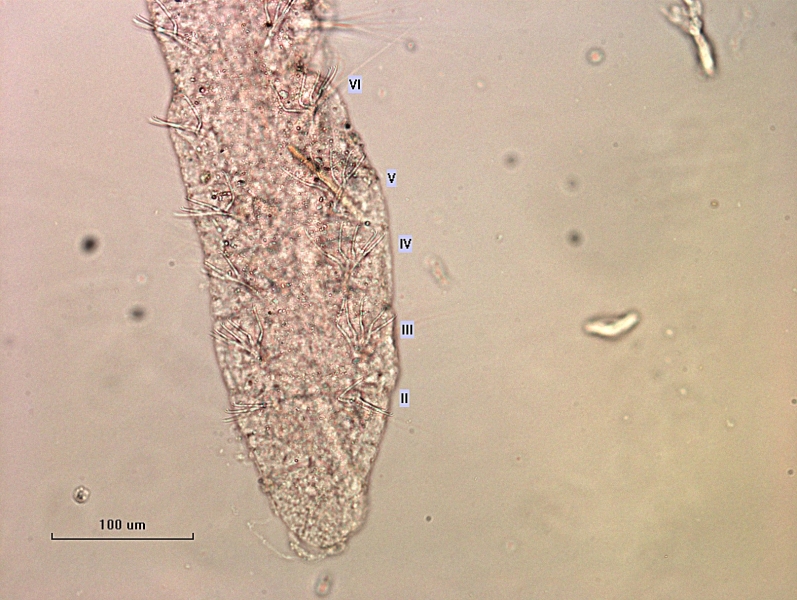
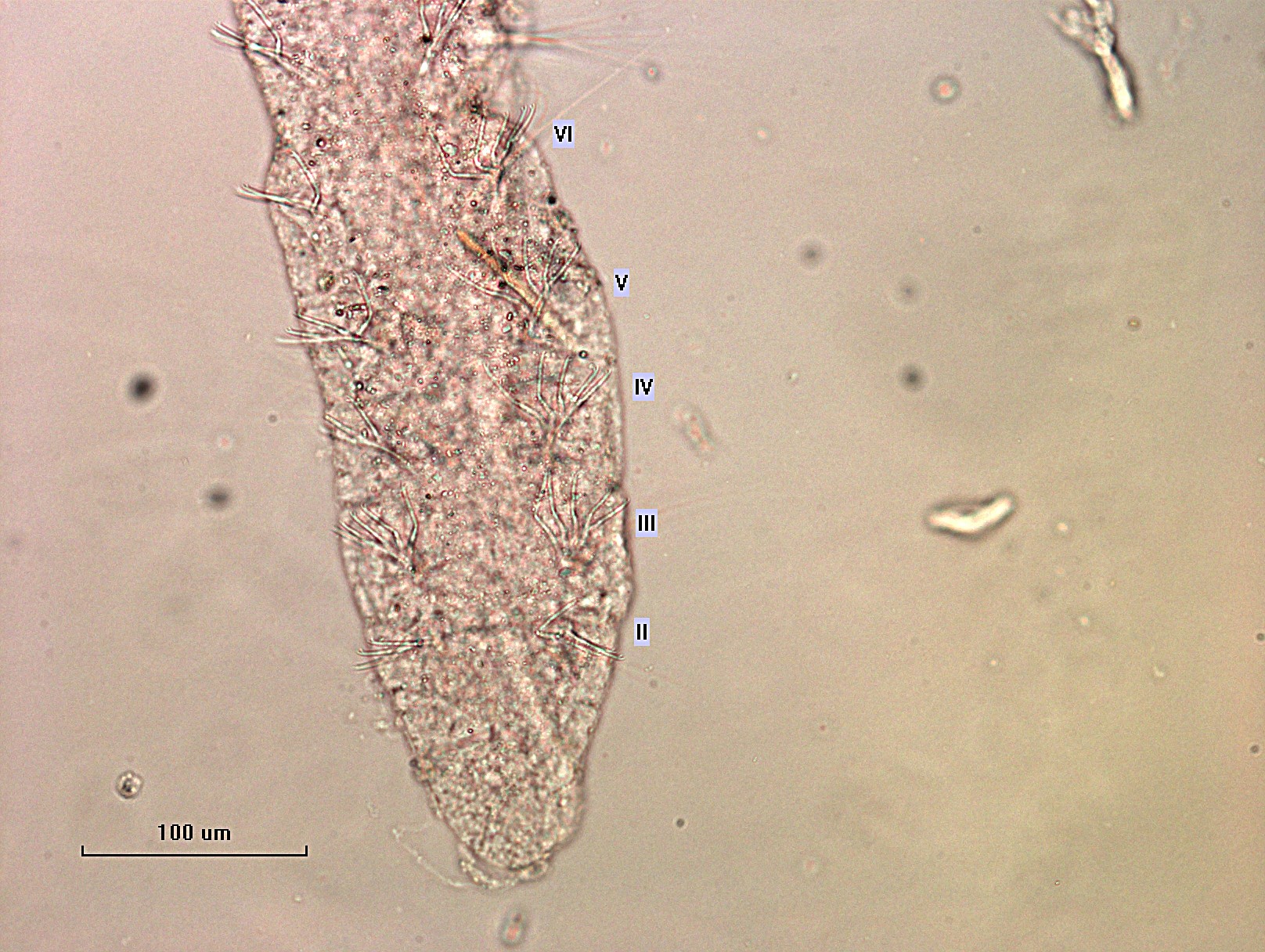
Figure 3. The ventral chaetae start in II, with 2-5 bifid chaetae per bundle. The upper and lower teeth are the same length. There is no proboscis.
Download Image -
4/4
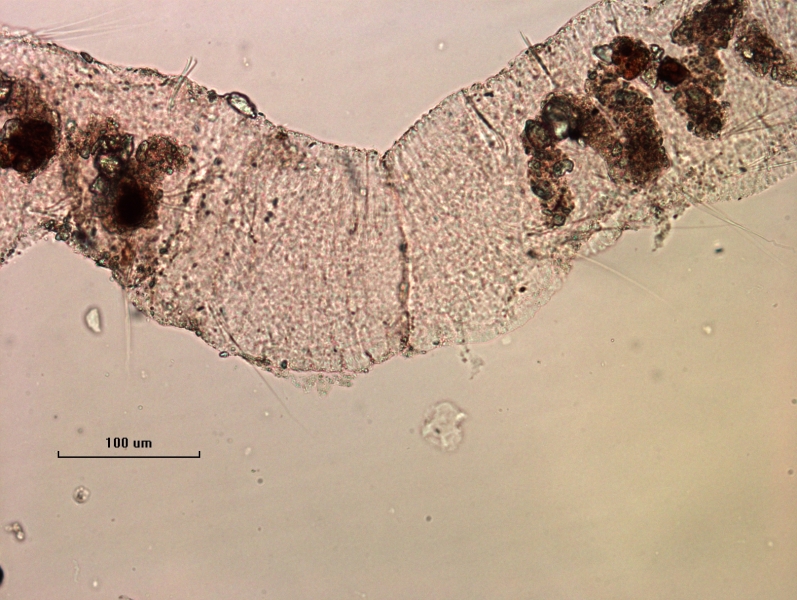
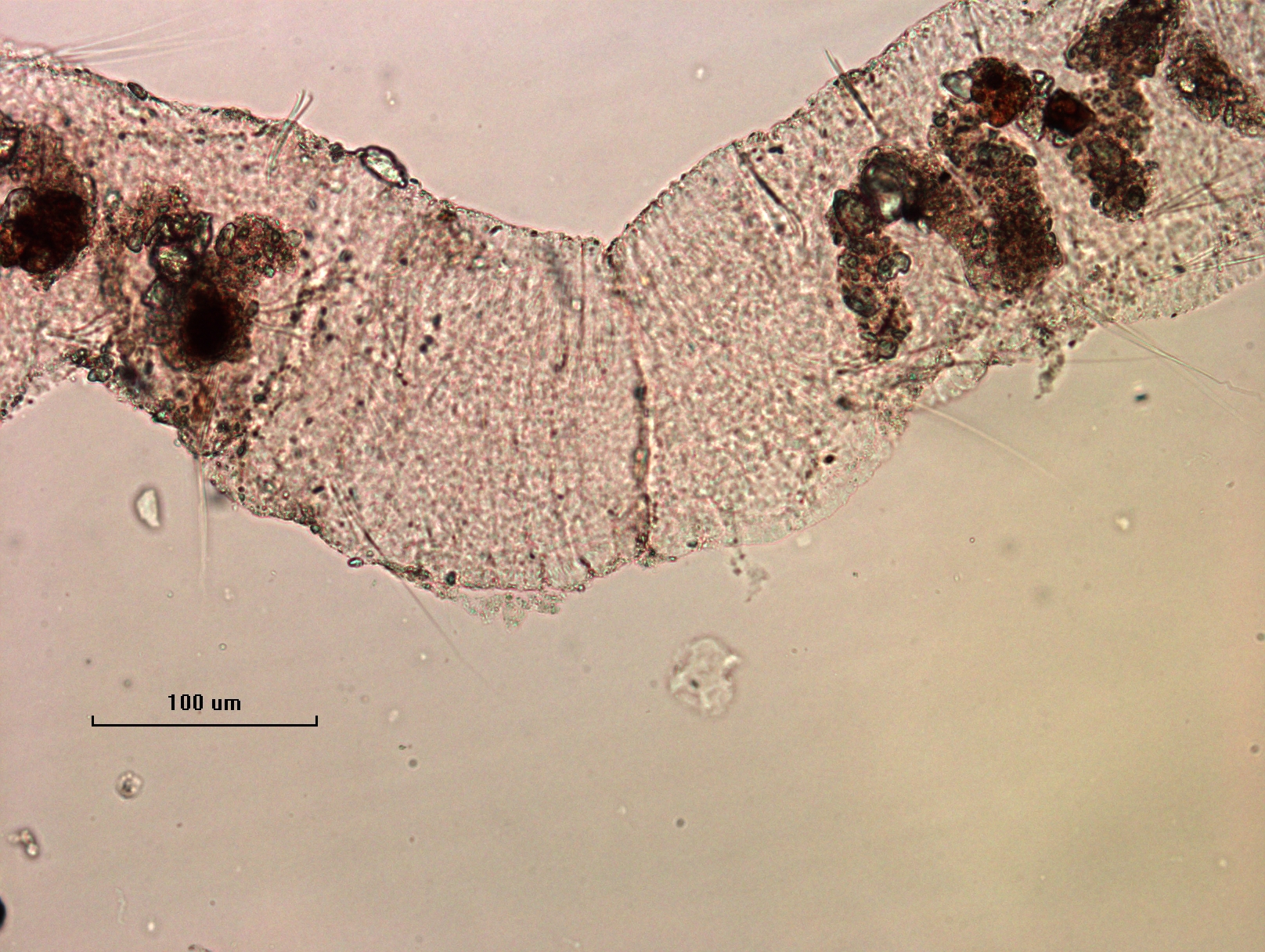
Figure 4. Like many naidid worms, P. acuminata often reproduces asexually. Here is a zooid developing at the posterior end of a specimen.
Download Image
Pristina acuminata
Taxa description
Pristina acuminata Liang, 1958 is a freshwater oligochaete worm that is an uncommon oligochaete in the Great Lakes. It is a naidid worm with dorsal and ventral bundles beginning in II, hair chaetae in the dorsal bundles, no elongate hairs, and no proboscis. There are 2–5 finely hispid hair chaetae and 2–5 bifid needles dorsal bundle. The needles have long, parallel, slightly divergent teeth with the upper tooth longer than the lower. Ventral bundles contain 3–4 chaetae with teeth that are equal in length. This genus was separated into two by Brinkhurst (1985) based on the presence (Pristina) or absence (Pristinella) of a proboscis, although Collado and Schmelz (2000) later suppressed this and recombined them based on their research.
Distinguishing features
P. acuminata is identified mainly by dorsal bundles starting in II with finely hispid hairs and bifid needles with long, parallel teeth of unequal length, and no proboscis. There are 2-4 hairs and 2-5 bifid chaetae, instead of 1-2 each. The ventral chaetae have teeth that are equal in length and do no change shape.
Habitat
Lake Erie and Ohio River.
Lake occurrence
Lake Erie, Saginaw Bay.
Similar species
P. acuminata most closely resembles P. jenkinae, except that P. jenkinae has smooth hairs and only 1-2 hairs and needles per bundle. It also closely resembles P. longidentata, which has 1-2 finely hispid hairs and 1-2 needles with long, parallel teeth, but is native to Louisiana and Oklahoma. Worms that feature proboscis can sometimes have them torn off. Of the Pristina spp. that have proboscises, Group B (Kathman and Brinkhurst, 1998) have needles with long bifid teeth, but only 1-2 hairs and needles per bundle. P. breviseta is the most widespread and most likely candidate, but it has 1 smooth hair and 1 needle with equal teeth per bundle, as well as ventral chaetae in II has the upper tooth longer than the lower but all other ventral chaetae have teeth of equal length or the upper tooth shorter than the lower.
Pristina species can be confused with a different family of oligochaetaes, Opistocystidae. Opistocystids are small like naidids, have a proboscis, and have hair chaetae and simple-pointed needles starting in II, but are differentiated by having three ciliated appendages on the posterior end. Opistocystids are much rarer than naidid worms and are not found in the Great Lakes region.
Relative size
P. acuminata is a small freshwater oligochaete.
Does it have a barcode reference from the Great Lakes?
No, this species does not yet have a barcode reference from the Great Lakes.
References
Kathman, R.D., and R.O. Brinkhurst. 1998. Guide to Freshwater Oligochaetes of North America. pp. 94–99, 34–36, 90, 56–61, 22, 28.
Hiltunen, J.K., and D.J. Klemm. 1980. A Guide to the Naididae (Annelida: Clitellata: Oligochaeta) of North America. pp. 28–29, 36.
Occurrence in scientific literature
Brinkhurst, R.O. 1985. The generic and subfamilial classification of Naididae (Annelida: Oligochaeta). Proceedings of the Biological Society of Washington 98(2): 470-475.
Collado, R., and R.M. Schmelz. 2000. Pristina silvicola and Pristina terrena spp.nov., two new soil-dwelling species of Naididae (Oligochaeta, Annelida) from the tropical rain forest near Manaus, Brazil, with comments on the genus Pristinella. Journal of Zoology, London 252: 509-516.”
Wetzel, M.J., R.D. Kathman, S.V. Fend, and K.A. Coates. (2025). Classification and checklist of the freshwater oligochaetes occurring in North America north of Mexico. Mark J. Wetzel.