

Potamothrix bedoti
-
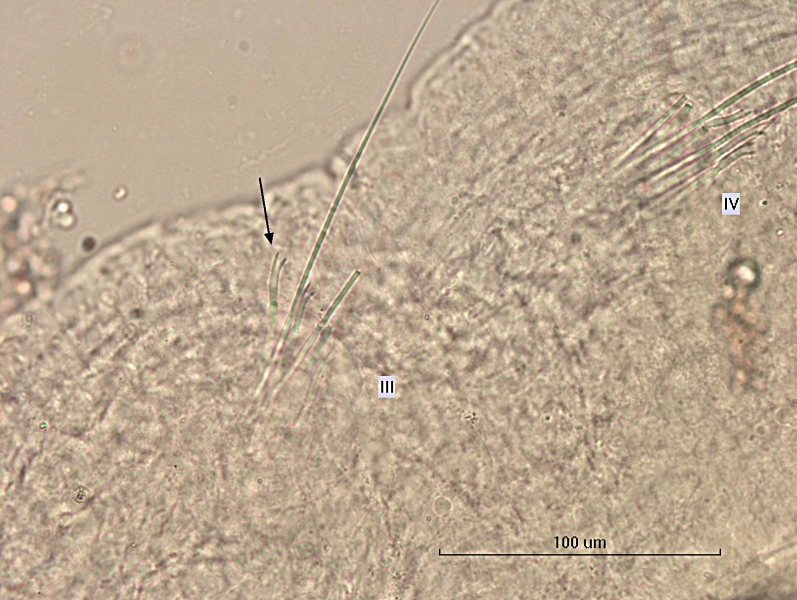
1/5
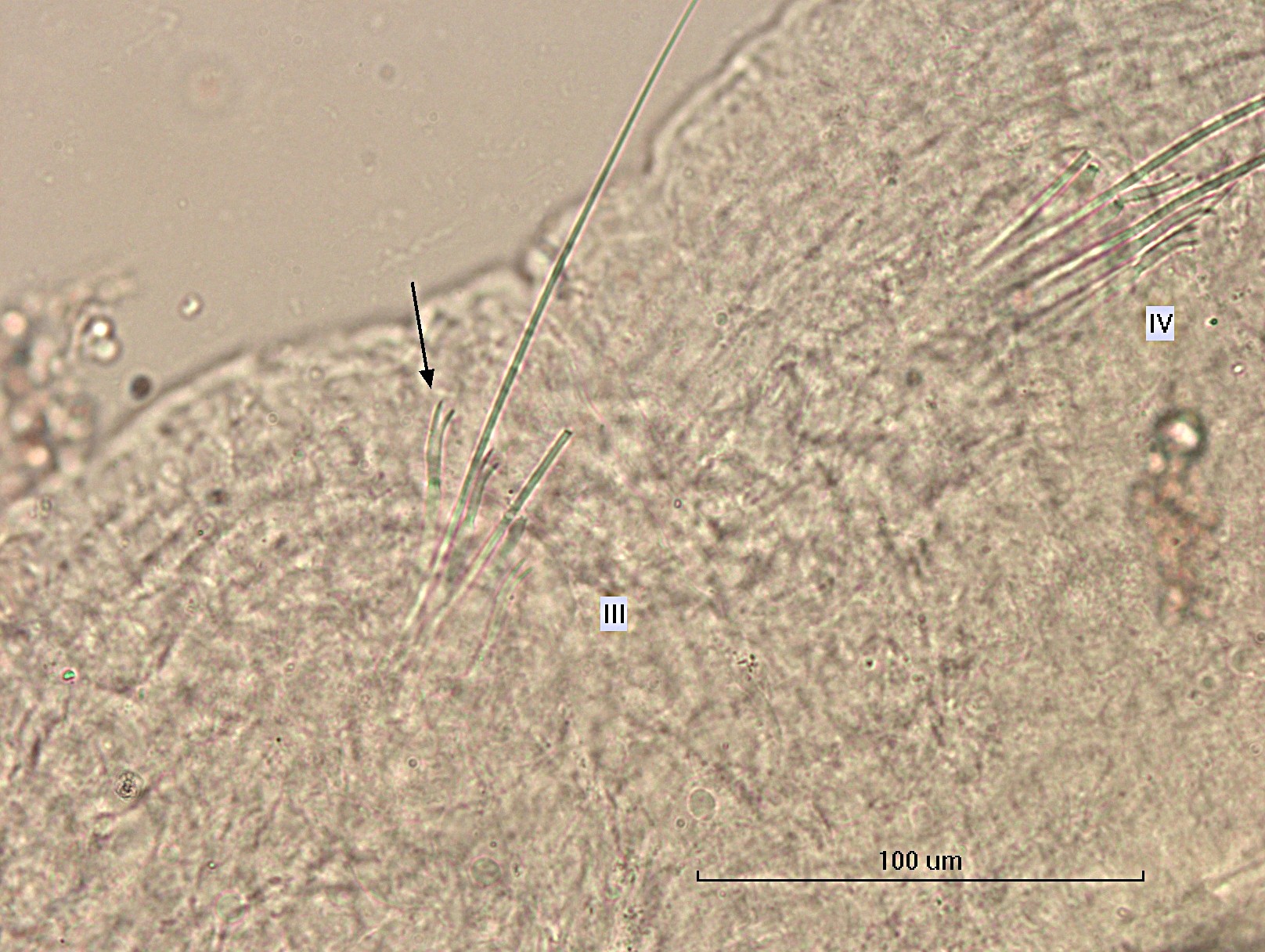
Figure 1. Unlike Potamothrix vejdovskyi, P. bedoti appears just like other tubificids with hairs if it is not mature. The anterior dorsal bundles have 3–4 hairs with 3–4 pectinate chaetae with the upper teeth longer than the lower. Posteriorly, the upper teeth are noticeably longer than the lower teeth.
Download Image -
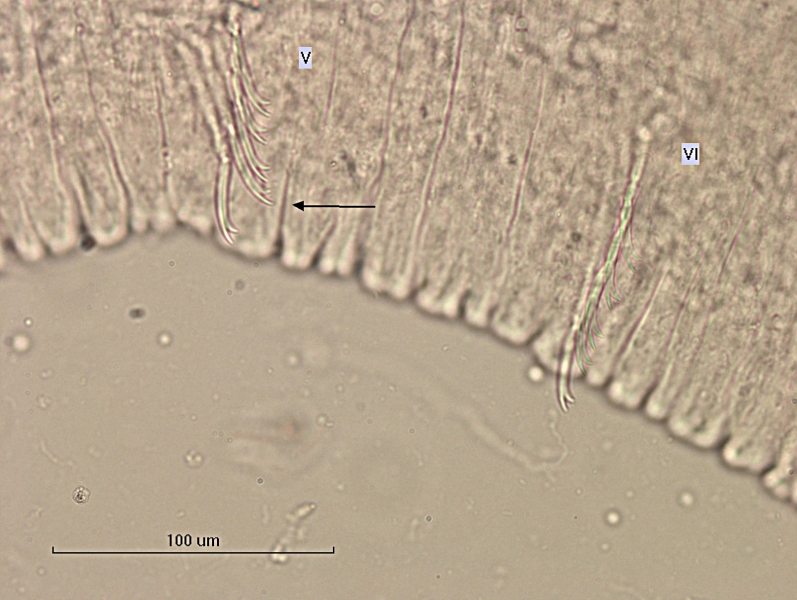
2/5
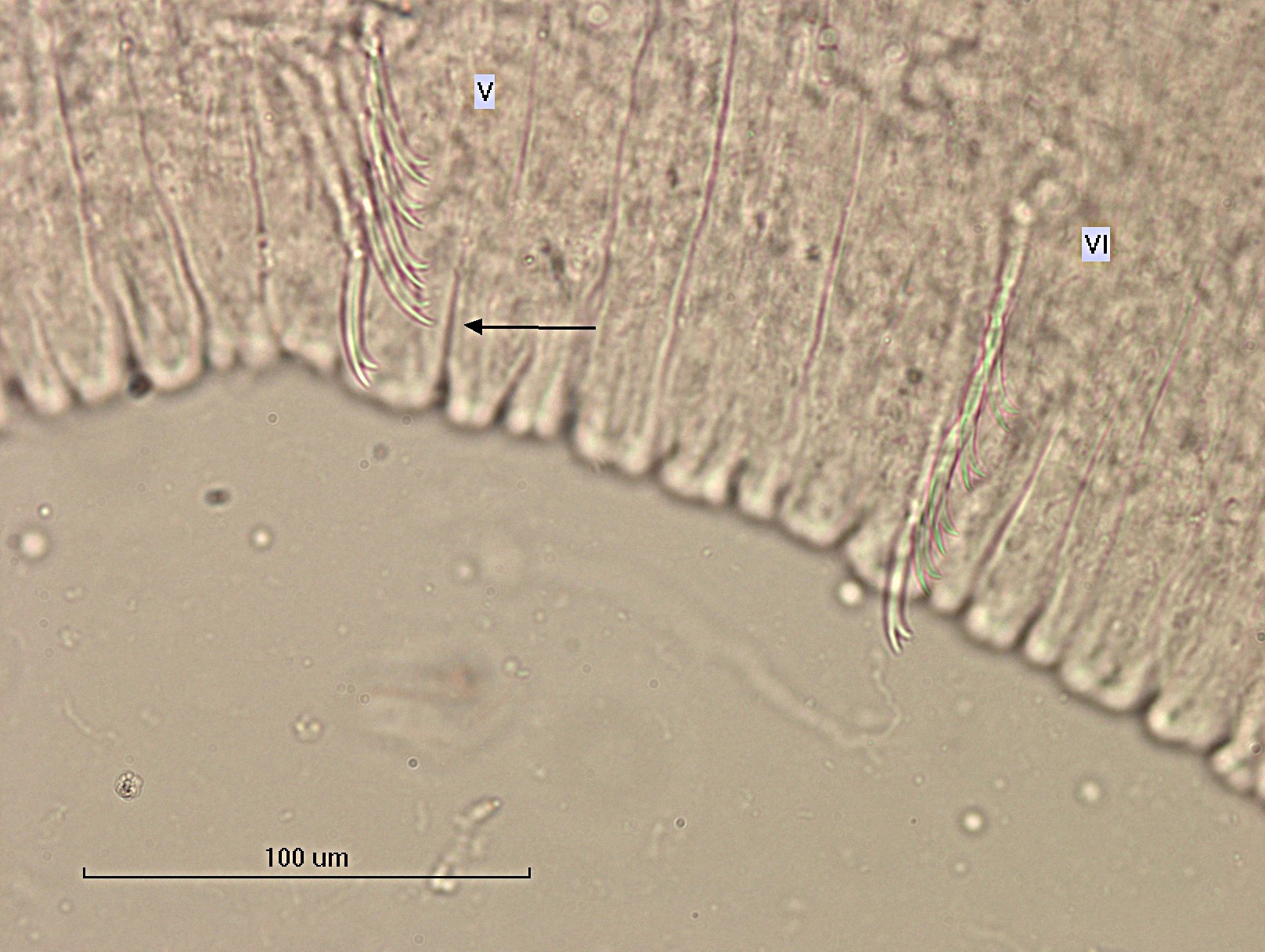
Figure 2. There are 3–4 bifid chaetae in the ventral bundles, with the upper teeth slightly longer and thinner than the lower.
Download Image -
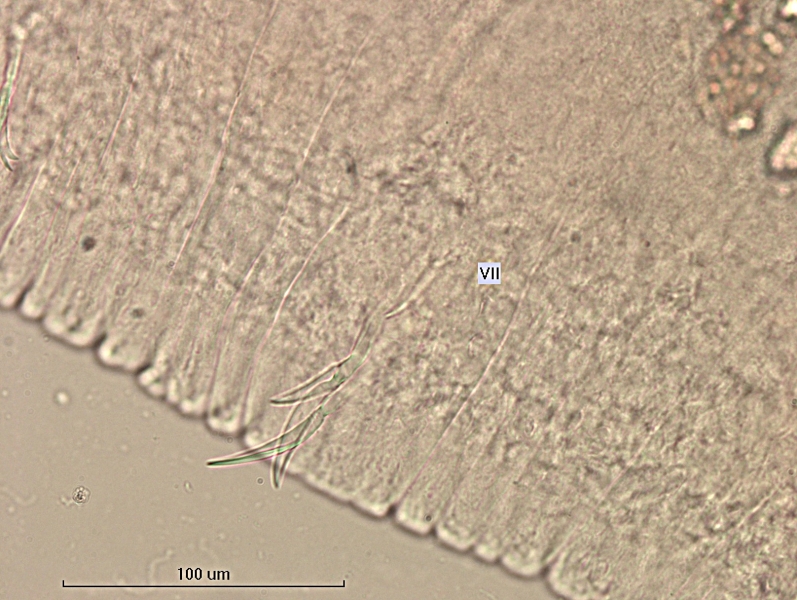
3/5
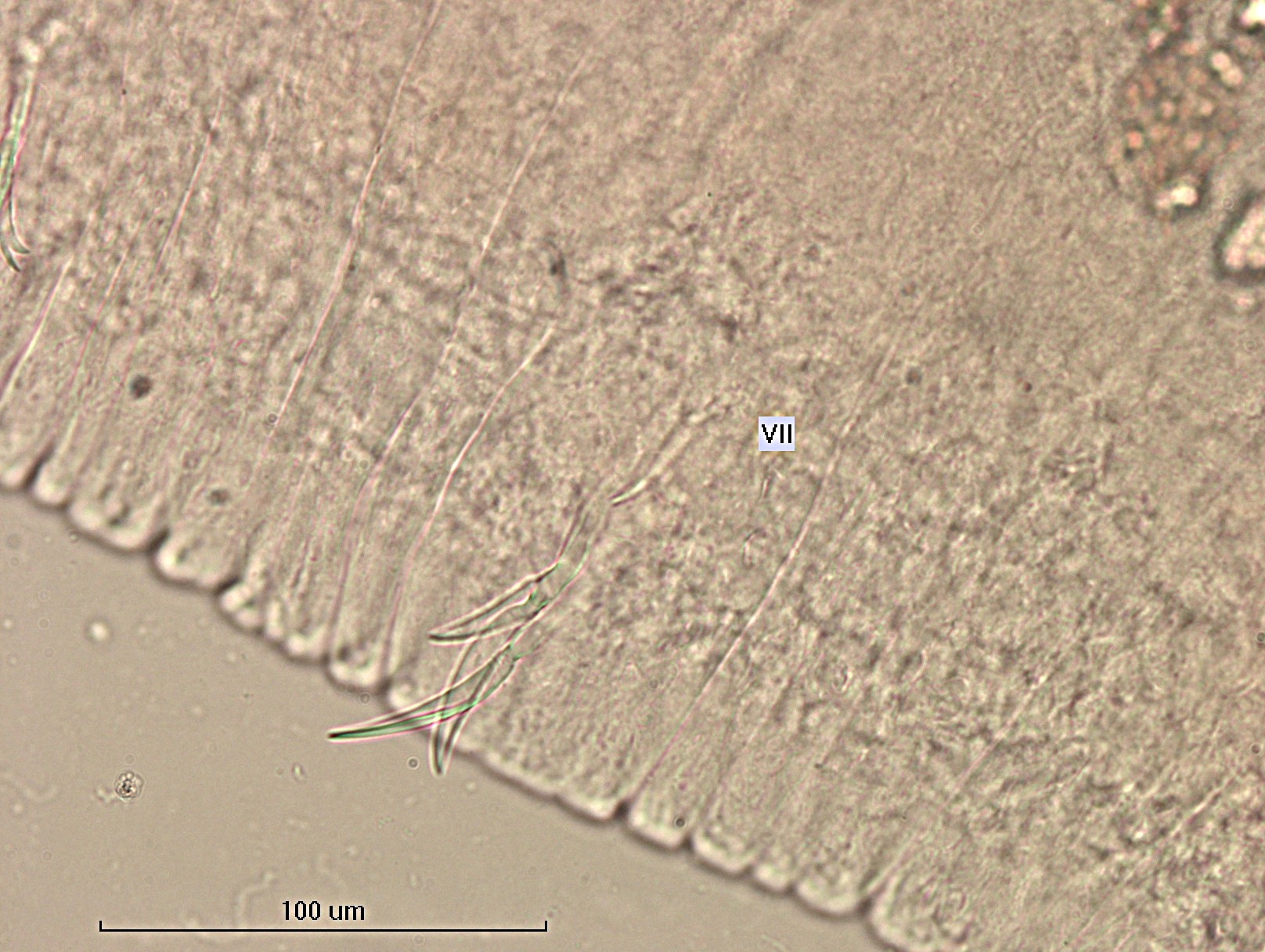
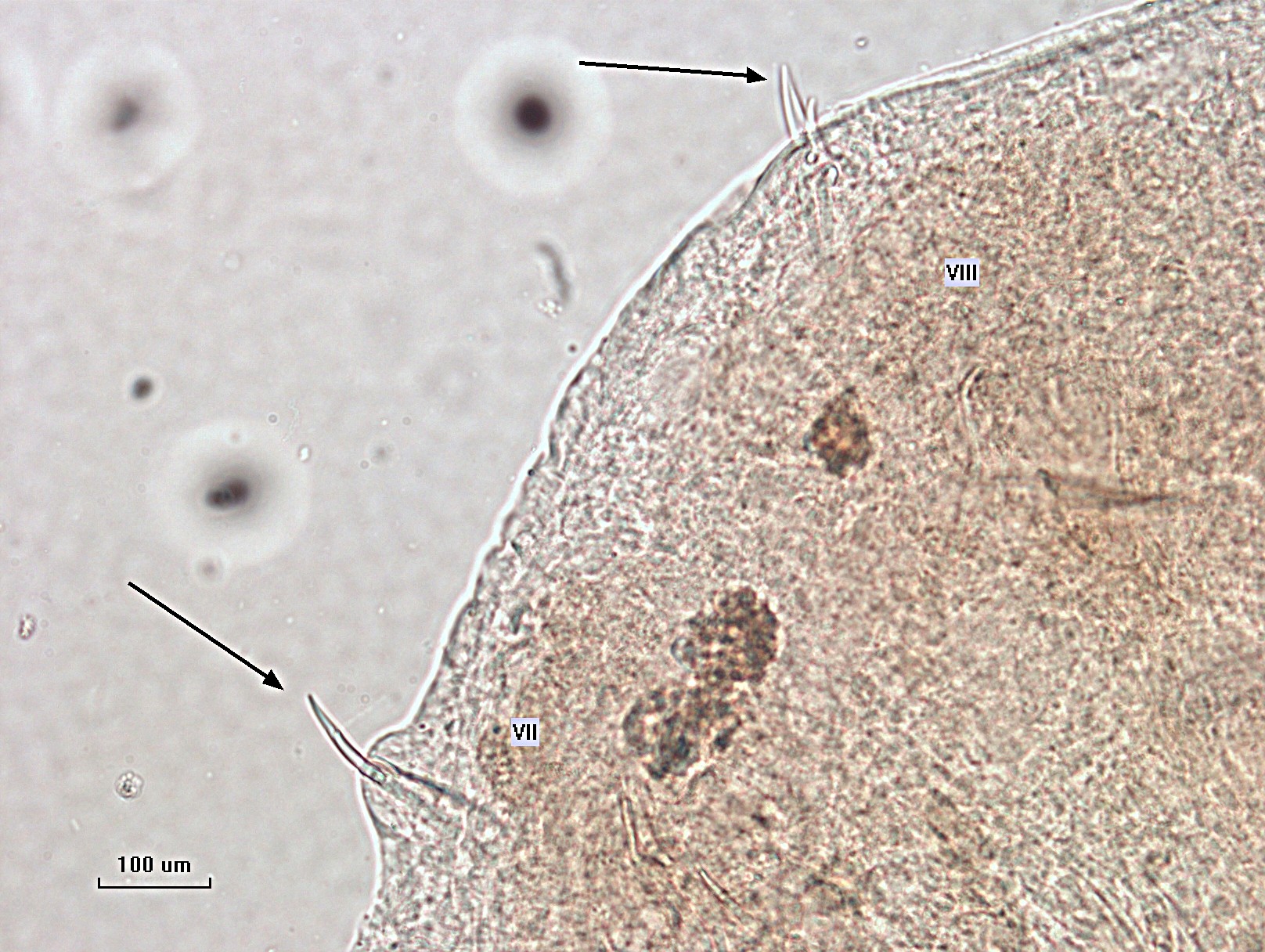
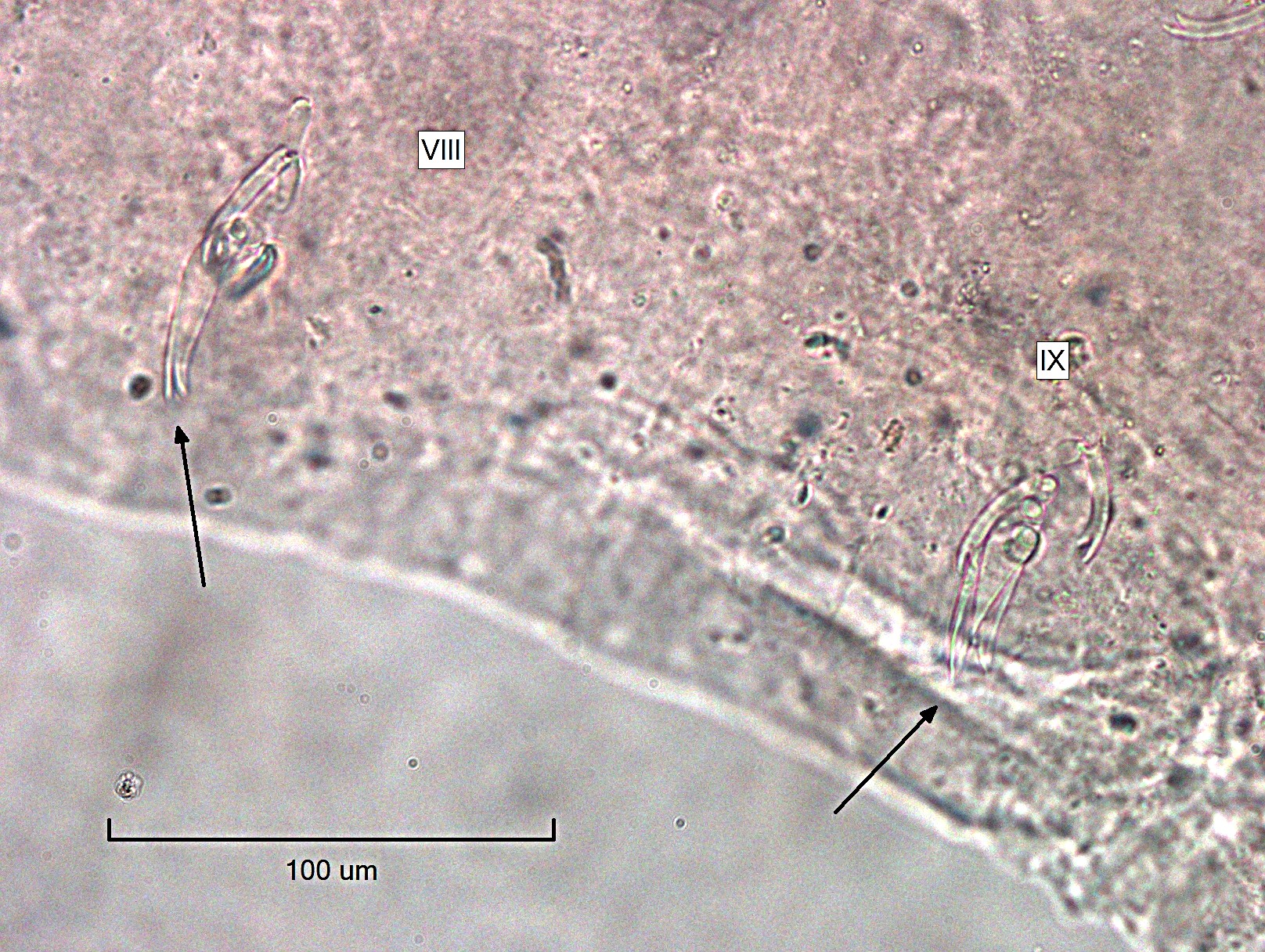
Figure 3. The spermathecal chaetae may appear in one or many segments between VI and XII, with short blade-shaped tips, although the shape may vary with the degree of maturity. The spermathecal chaetae are smaller and less robust than those of P. bavaricus, P. vejdovskyi, and P. moldaviensis, and may be accompanied by regular ventral chaetae.
Download Image -
-
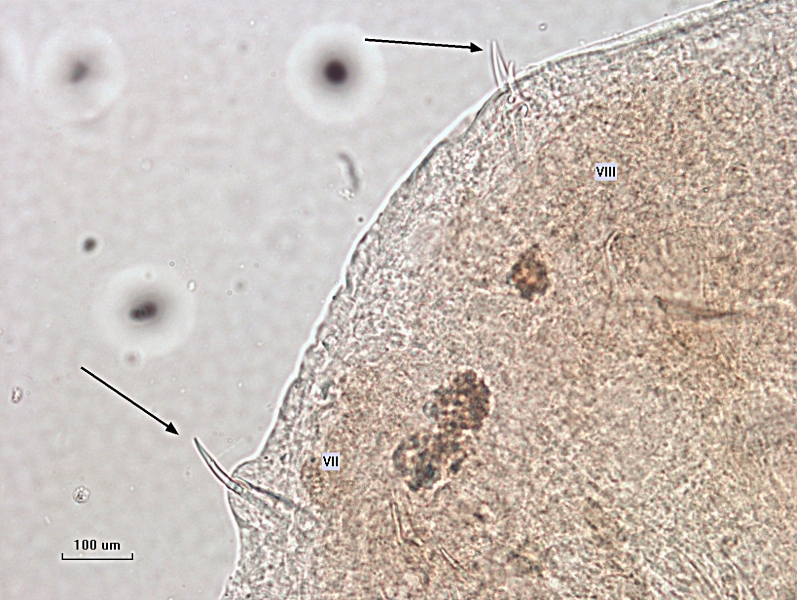
5/5
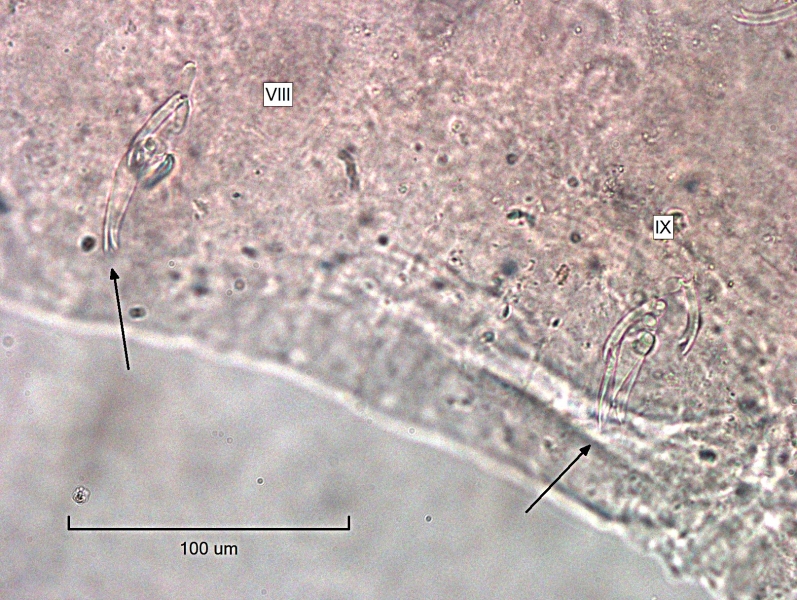
Figure 5. There are two segments with spermathecal chaetae in this specimen, as well as a mixture of normal ventral chaetae, spermathecal chaetae, and at least one chaetae that seems to be an imperfect spermathecal that is a bifid spermathecal chaetae.
Download Image
Potamothrix bedoti
Taxa description
Potamothrix bedoti (Piguet, 1913) is a freshwater oligochaete worm that is an uncommon oligochaete in the Great Lakes. It is a tubificid worm with dorsal hairs and pectinate chaetae beginning in II and ventral chaetae are bifid. It has spermathecal chaetae on VII, VIII, or on any of VI-XII. The anterior dorsal bundles have 3–4 hairs with 3–4 pectinate chaetae with the upper teeth longer than the lower. Posteriorly, the upper teeth are noticeably longer than the lower teeth. There are 3–4 bifid chaetae in the ventral bundles, with the upper teeth slightly longer and thinner than the lower. The spermathecal chaetae may appear in one or many segments between VI and XII, with short blade-shaped tips, although the shape may vary with the degree of maturity. Penes without penis sheaths are on IX, prostate glands are absent, and spermathecae are in VIII. P. bedoti was once considered a variant form of P. bavaricus. P. bedoti readily fragments and most of its reproduction is thought to be asexual (Timm 2020).
Distinguishing features
P. bedoti is identified by the having dorsal bundles with hair and pectinate chaetae with the upper teeth longer than the lower, but especially because there are blade-shaped spermathecal chaetae on VII-VIII or any or all of VI–XII. There are non-papillate body walls and no penis sheaths.
Habitat
Often found in the profundal area of lakes, preferring silty muck substrates.
Lake occurrence
Lakes Erie, Huron, and Michigan.
Similar species
Without the presence of reproductive features (in this case, spermathecal chaetae), many tubificid worm species can only be identified as “immature tubificid with or without hair.” P. bedoti is most likely to be confused with other Potamothrix species, but none of them will have spermathecal chaetae that appear on any or all of VI–XII, they are mostly on X or maybe XI. The closest species would be Potamothrix bavaricus, which also has pectinate chaetae with hairs, but the teeth are equal lengths and may become bifid posteriorly with missing hair chaetae. The biggest difference, however, is that P. bavaricus has broad, spear-shaped spermathecal chaetae in X only. The other possibility is Potamothrix hammoniensis which has hairs with pectinate chaetae that become bifid posteriorly and up to 2 long, narrow spermathecal chaetae per bundle on X and sometimes also IX. However, P. hammoniensis has not been confirmed in North America and the few reported specimens were actually Potamothrix vejdovskyi.
Relative size
P. bedoti is a large freshwater oligochaete.
Does it have a barcode reference from the Great Lakes?
No, this species does not yet have a barcode reference from the Great Lakes.
References
Kathman, R.D., and R.O. Brinkhurst. 1998. Guide to Freshwater Oligochaetes of North America. pp. 150–153, 106, 120.
Stimpson, K.S., D.J. Klemm, and J.K. Hiltunen. 1982. A Guide to the Freshwater Tubificidae (Annelida: Clitellata: Oligochaeta) of North America. pp. 24, 26, 48.
Occurrence in scientific literature
Timm, T. 2020. Observations on the life cycles of aquatic Oligochaeta in aquaria. Zoosymposia 17: 102–120.