

Potamothrix bavaricus
-
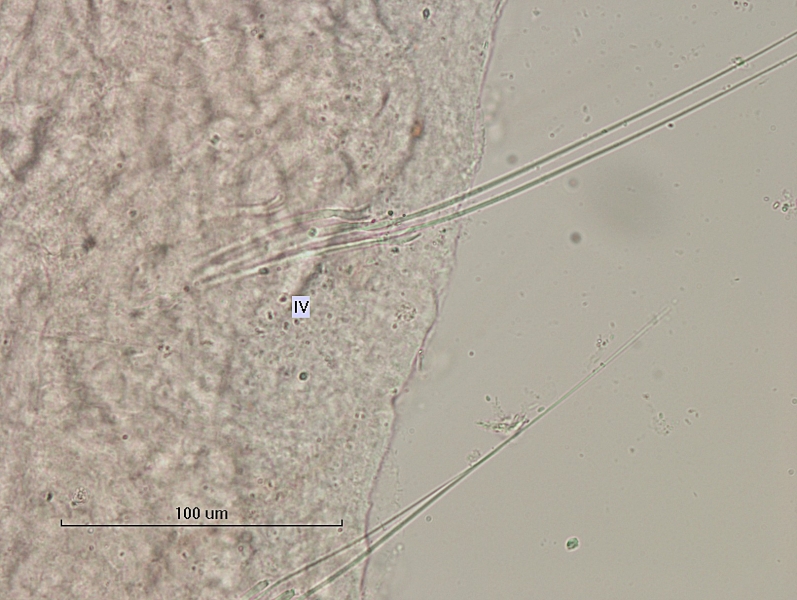
1/5
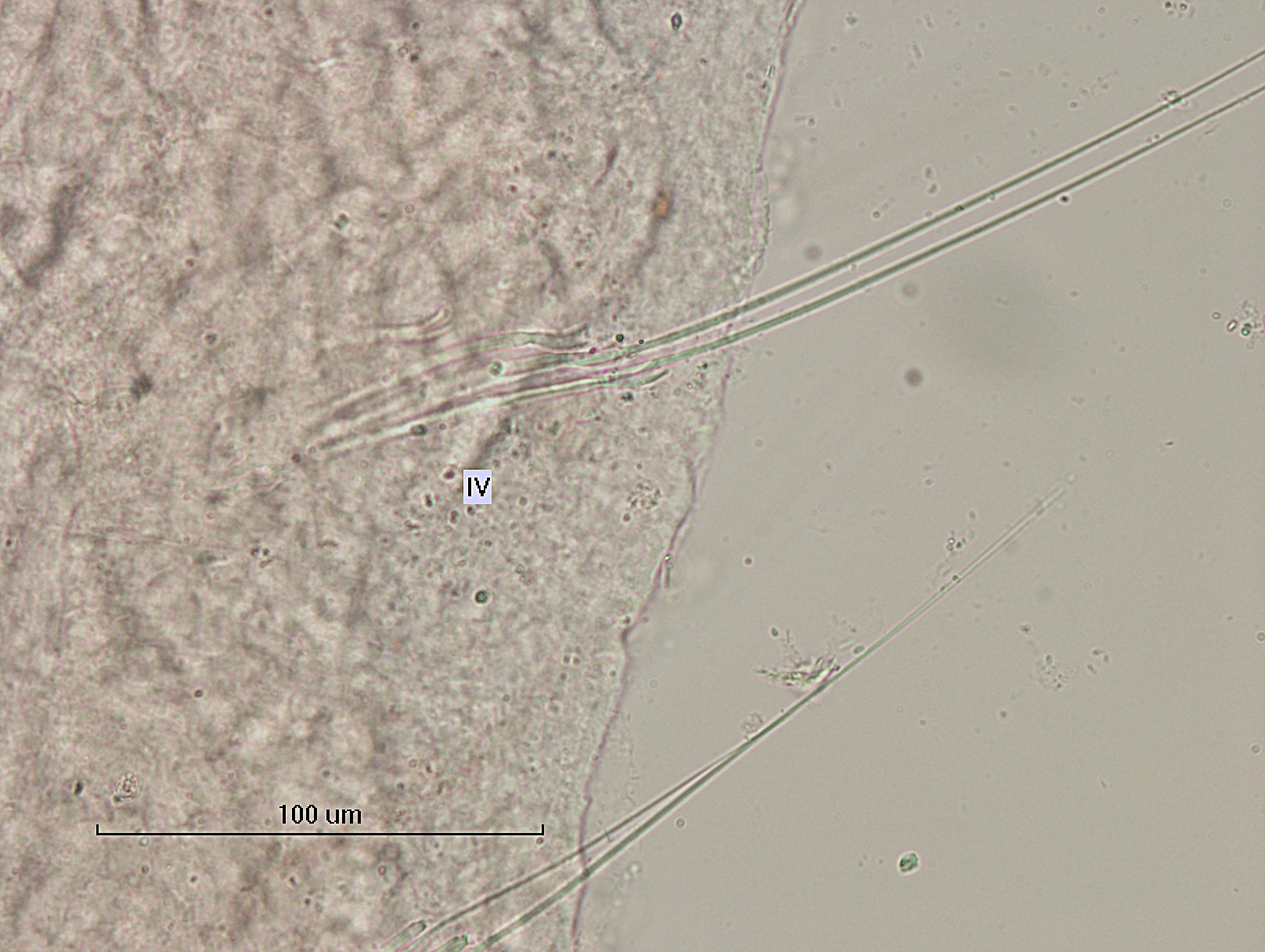
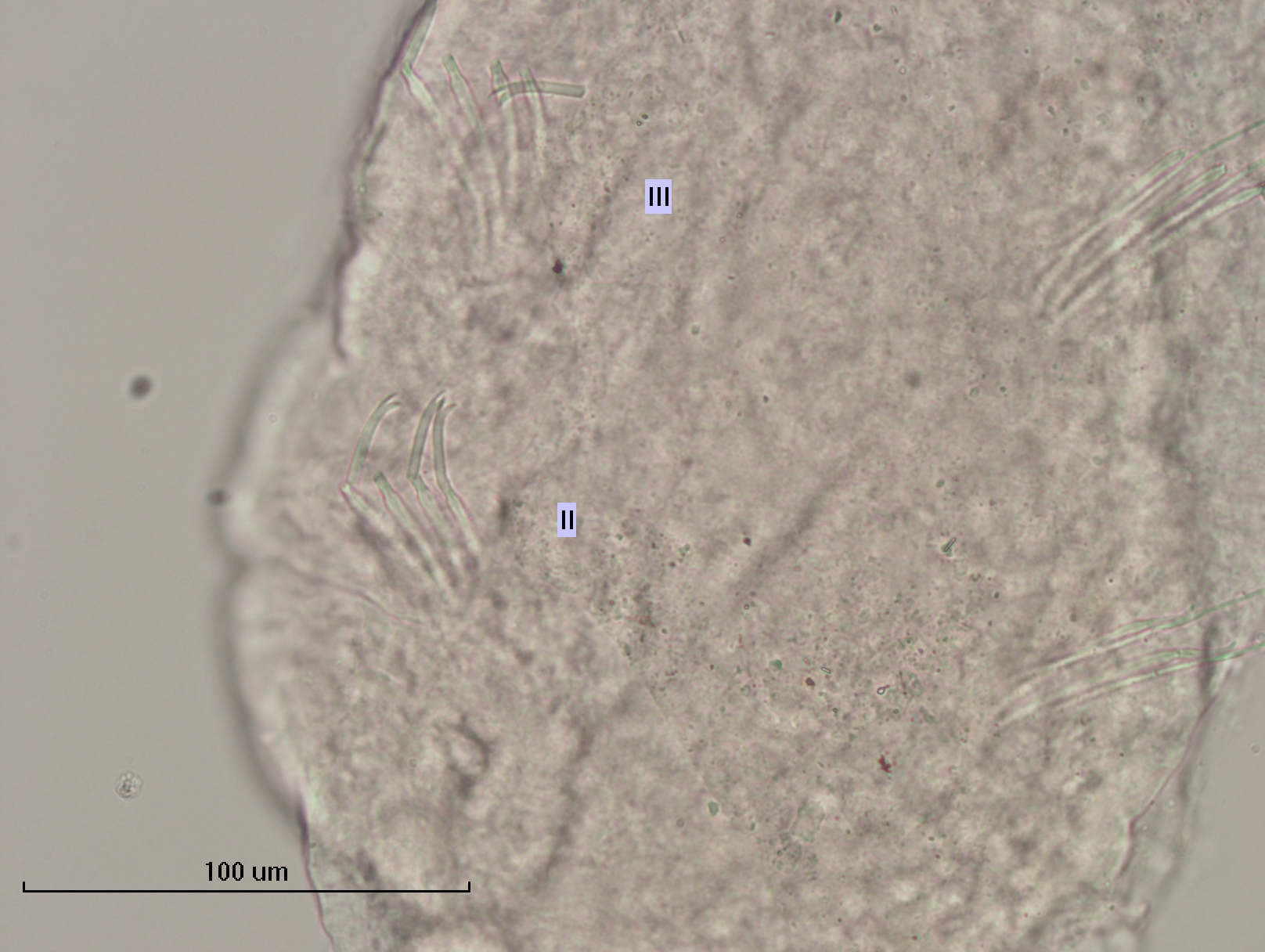
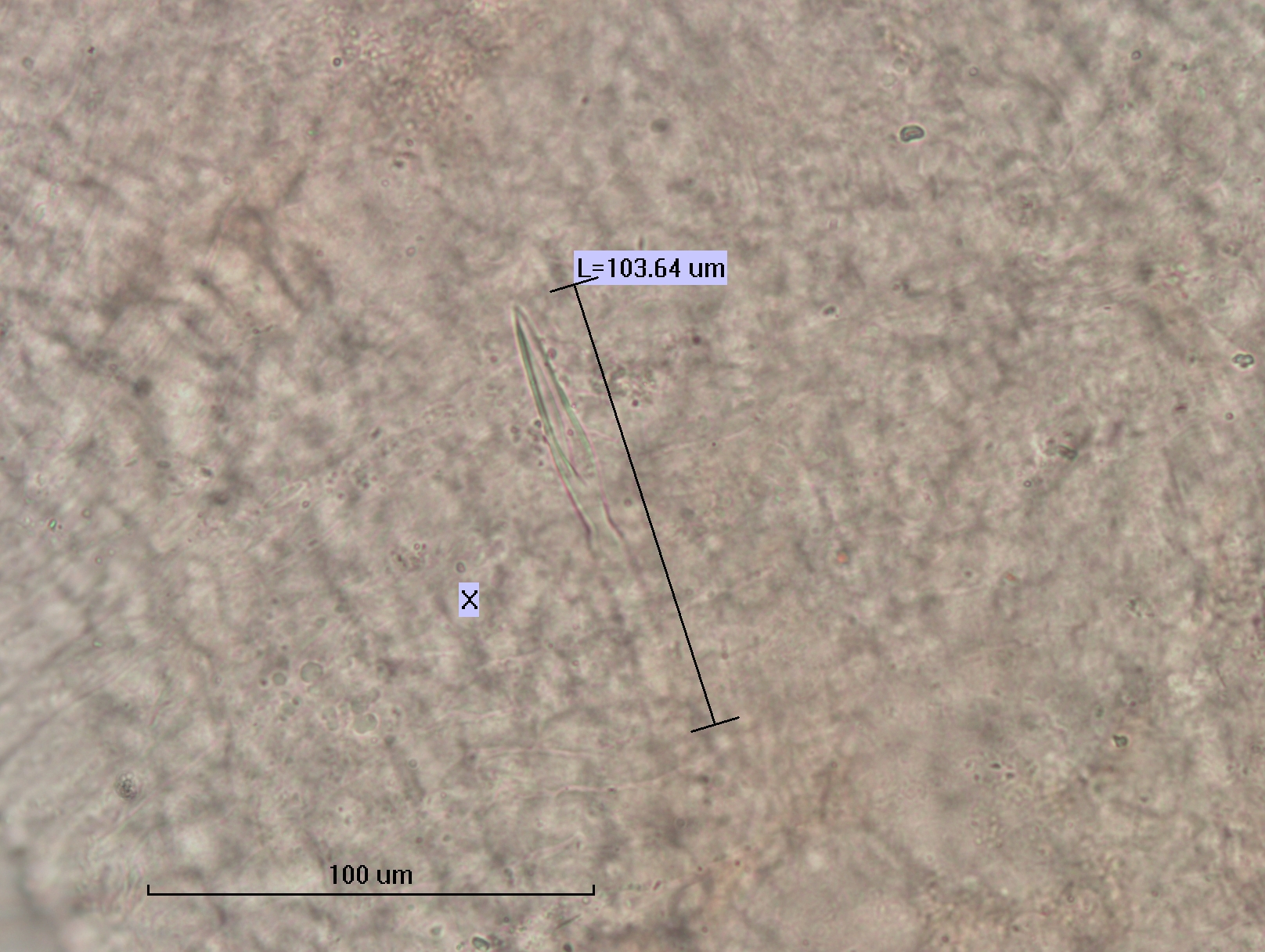
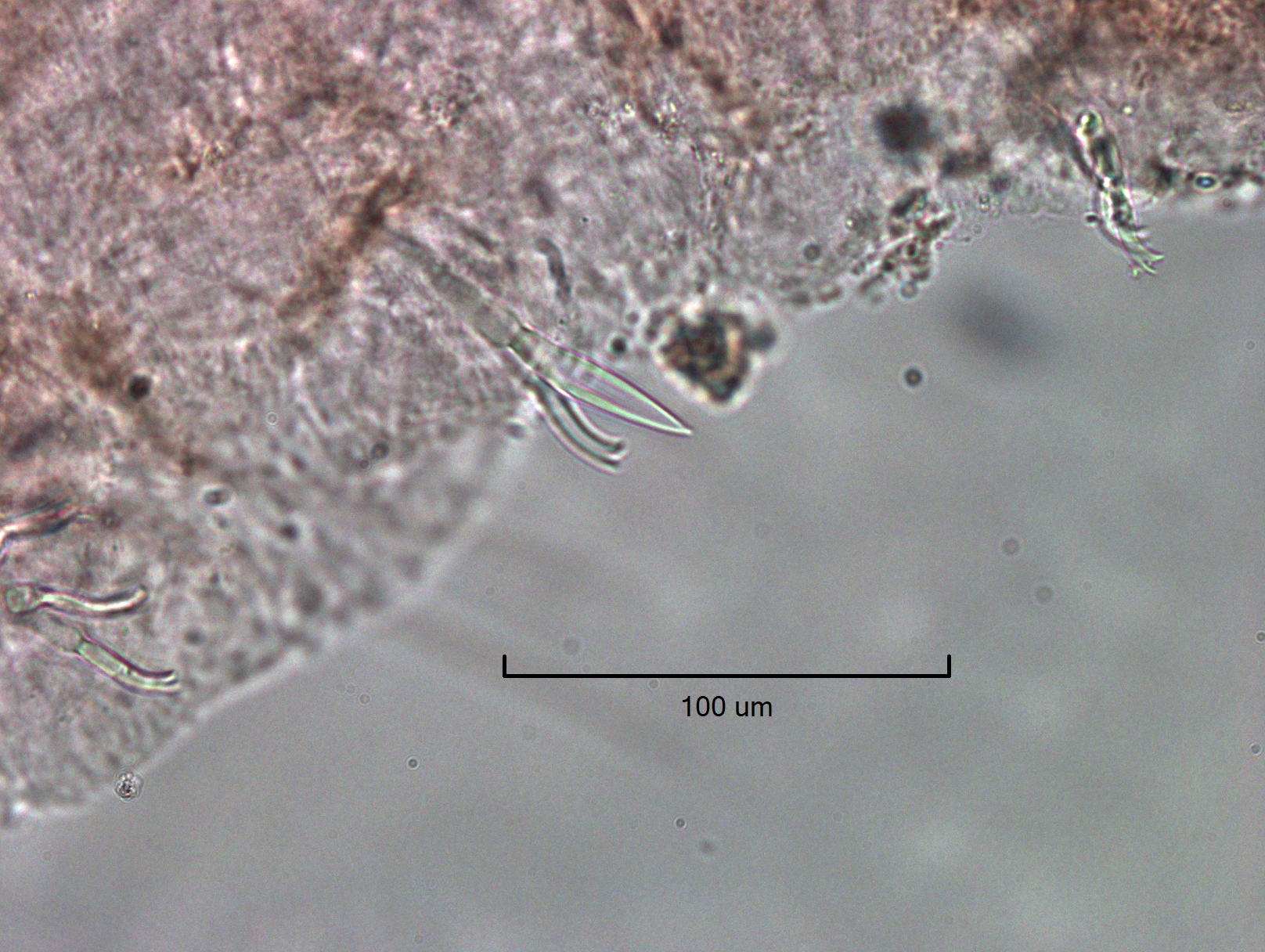
Figure 1. Potamothrix bavaricus has anterior dorsal bundles with 2–3 hairs with 3–4 pectinate chaetae with the teeth relatively short, divergent, and equally long. Posteriorly, hair chaetae may frequently be missing, and dorsal chaetae may be pectinate or bifid, with the upper teeth ranging from subequal to longer but thinner than the lower teeth.
Download Image -
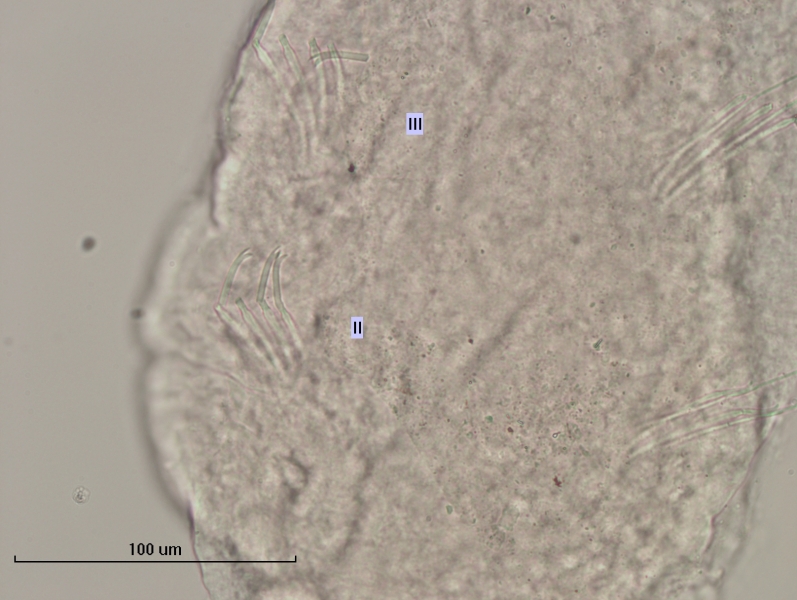
2/5
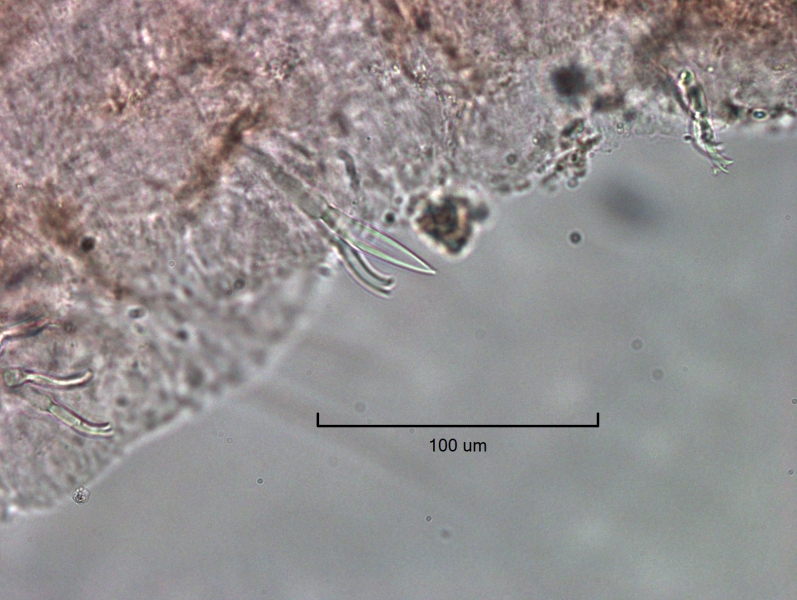
Figure 2. There are 3–5 bifid chaetae in the ventral bundles, with the upper teeth slightly longer and thinner than the lower.
Download Image -
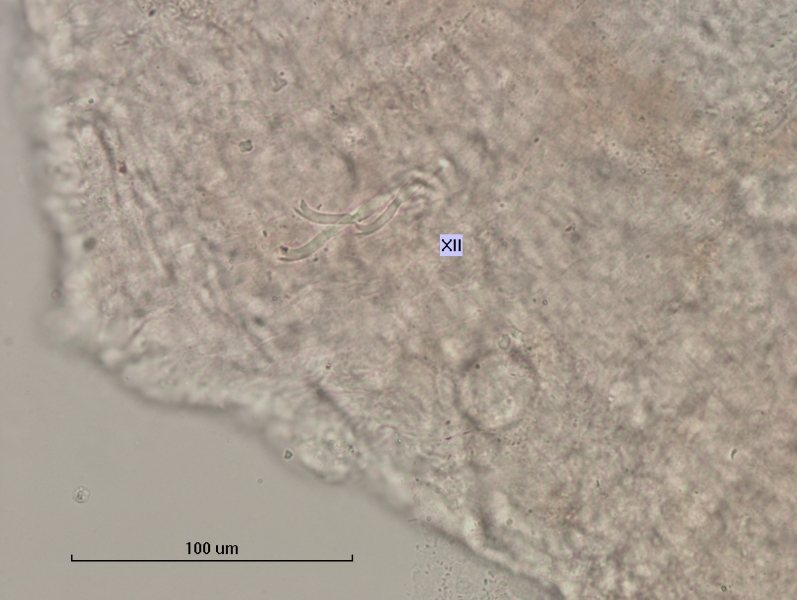
3/5
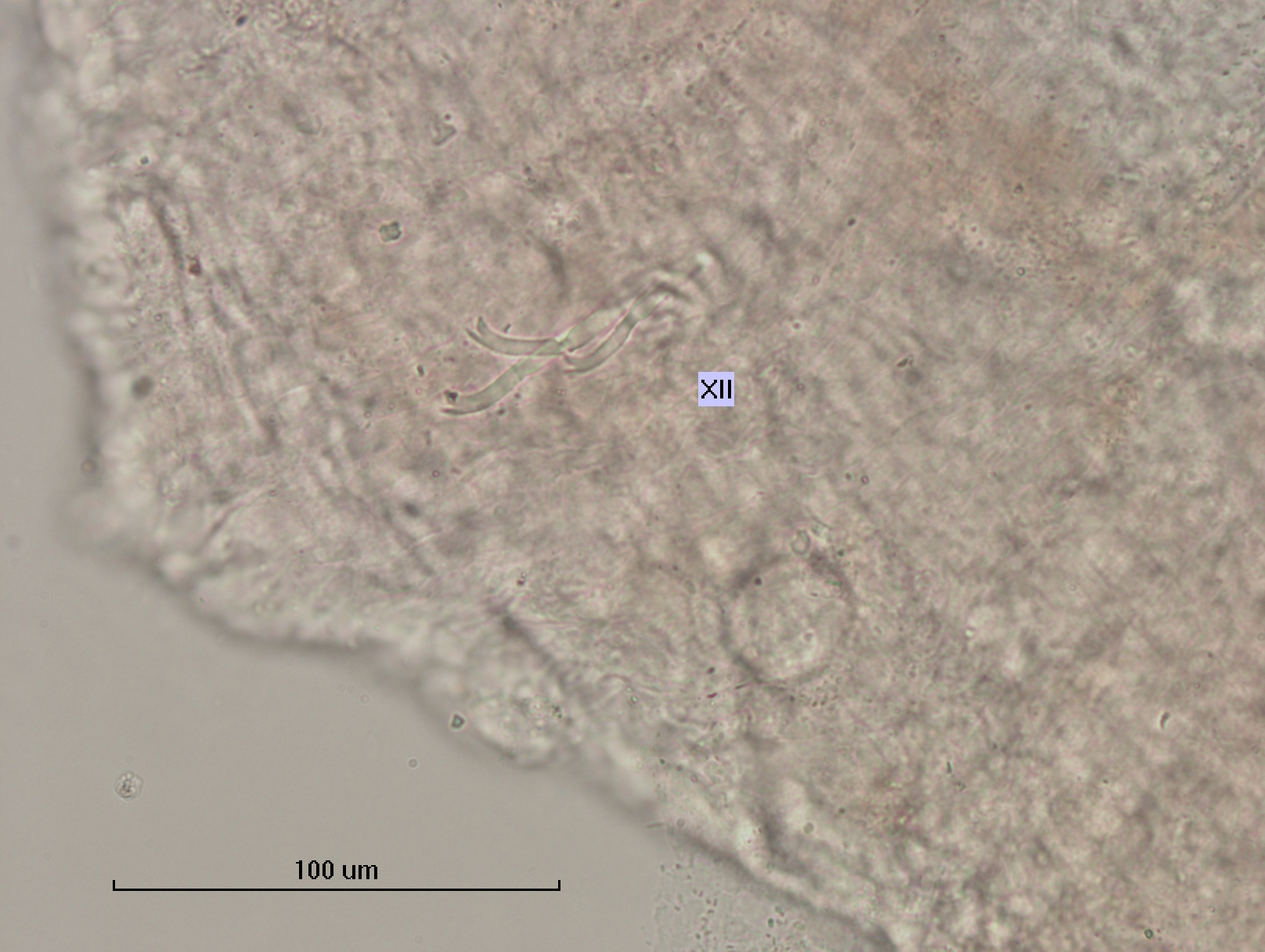
Figure 3. Like many tubificid oligochaetes, the posterior chaetae are thicker than the anterior, with the upper tooth thinner compared to the thick lower tooth.
Download Image -
-
Potamothrix bavaricus
Taxa description
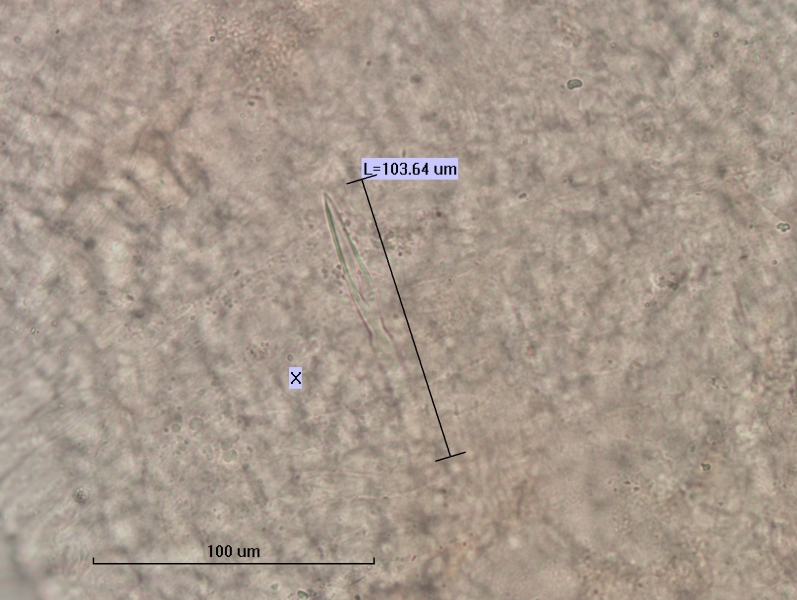
Potamothrix bavaricus (Öschmann, 1913) is a freshwater oligochaete worm that is an uncommon oligochaete in the Great Lakes. It is a tubificid worm with dorsal hairs and pectinate chaetae beginning in II and ventral chaetae are bifid. It has spermathecal chaetae on X. The anterior dorsal bundles have 2–3 hairs with 3–4 pectinate chaetae with the teeth relatively short, divergent, and equally long. Posteriorly, hair chaetae may frequently be missing, and dorsal chaetae may be pectinate or bifid, with the upper teeth ranging from subequal to longer but thinner than the lower teeth. There are 3–5 bifid chaetae in the ventral bundles, with the upper teeth slightly longer and thinner than the lower. The spermathecal chaetae in X are short with broad spear-shaped tips, 108–180 µm long, although the shape may vary with the degree of maturity. Penes are naked, prostate glands are absent, and spermathecae are in X.
Distinguishing features
P. bavaricus is identified mainly by the having dorsal bundles with hair and pectinate chaetae with the teeth equal lengths and spermathecal chaetae in X without penis sheaths and non-papillate body walls.
Habitat
Often collected in littoral habitats.
Lake occurrence
Lakes Erie, Huron, Michigan, and Ontario.
Similar species
Without the presence of reproductive features (in this case, spermathecal chaetae), many tubificid worm species can only be identified as “immature tubificid with or without hair.” P. bavaricus is most likely to be confused with other Potamothrix species. The closest species would be Potamothrix bedoti, which also has pectinate chaetae with hairs, but the upper teeth are increasingly longer than the lower teeth posteriorly. The biggest difference, however, is that P. bedoti has spermathecal chaetae in VI–VIII or any or all of VI–XII instead of X. The other possibility is Potamothrix hammoniensis which has hairs with pectinate chaetae that become bifid posteriorly and up to 2 long, narrow spermathecal chaetae per bundle on X and sometimes also IX. However, P. hammoniensis has not been confirmed in North America and the few reported specimens were actually Potamothrix vejdovskyi.
Relative size
P. bavaricus is a large freshwater oligochaete.
Does it have a barcode reference from the Great Lakes?
No, this species does not yet have a barcode reference from the Great Lakes.
References
Kathman, R.D., and R.O. Brinkhurst. 1998. Guide to Freshwater Oligochaetes of North America. pp. 150–153, 120, 106.
Stimpson, K.S., D.J. Klemm, and J.K. Hiltunen. 1982. A Guide to the Freshwater Tubificidae (Annelida: Clitellata: Oligochaeta) of North America. pp. 26, 48.