

Piguetiella blanci
-
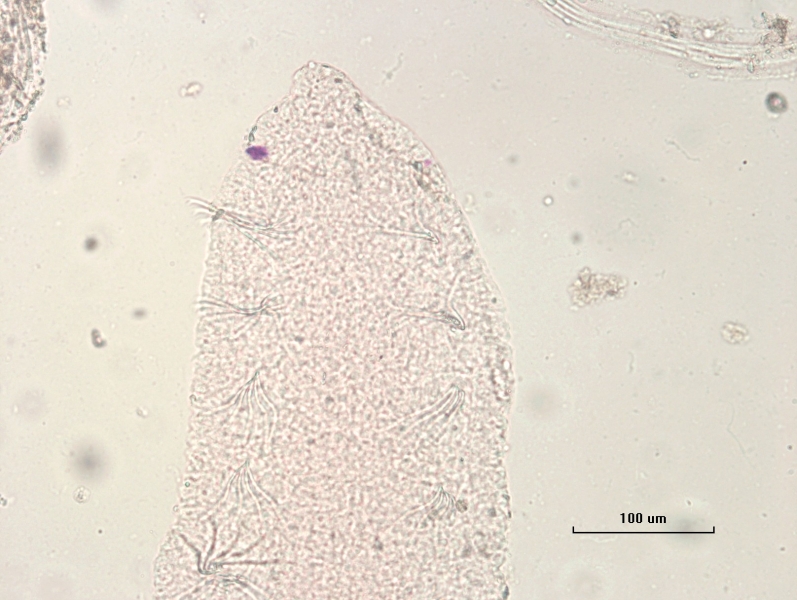
1/5
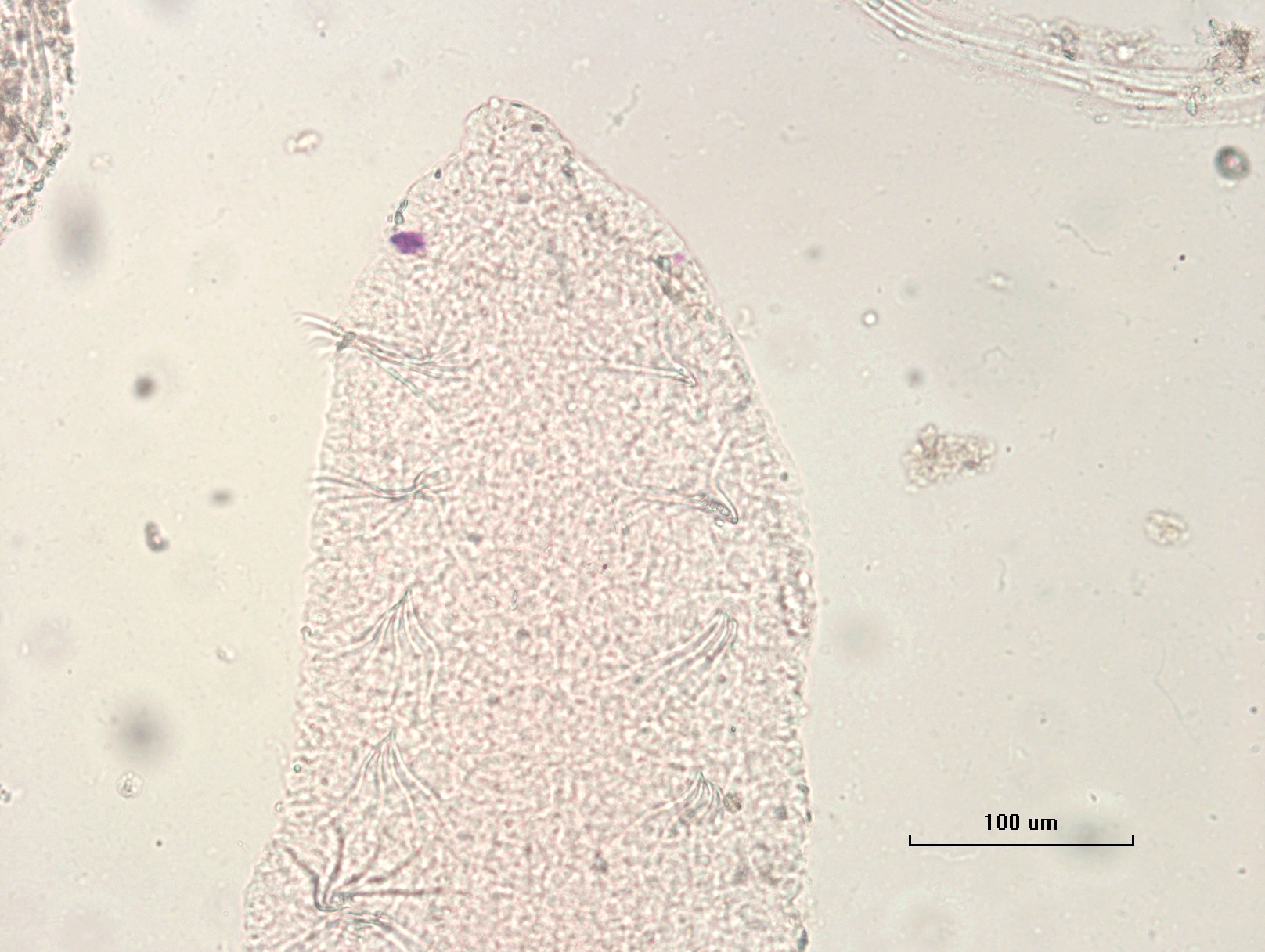
Figure 1. Piguetiella blanci may or may not have eyes. It has eyes on this specimen.
Download Image -
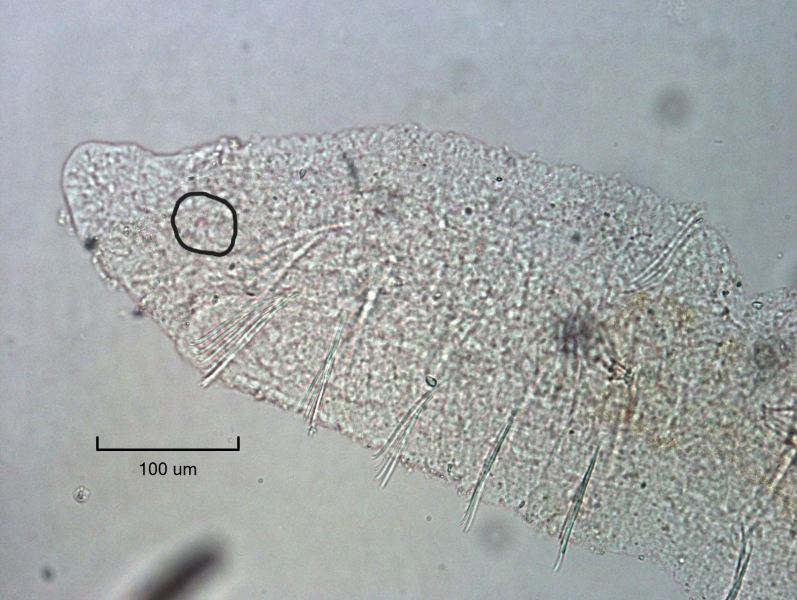
2/5
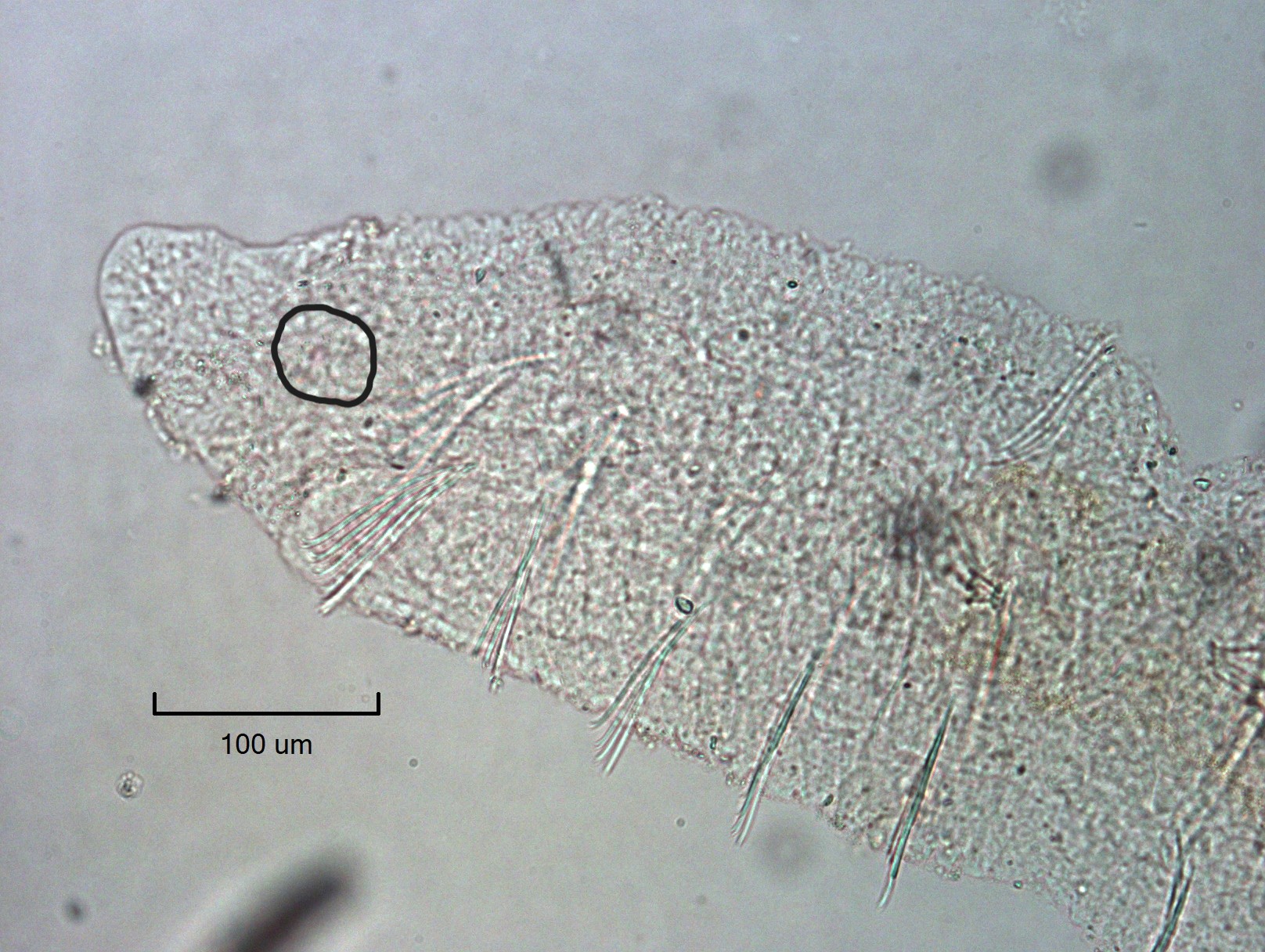
Figure 2. Piguetiella blanci may or may not have eyes. The eye on this specimen is very faint (a pink dot within in the hand-drawn circle).
Download Image -
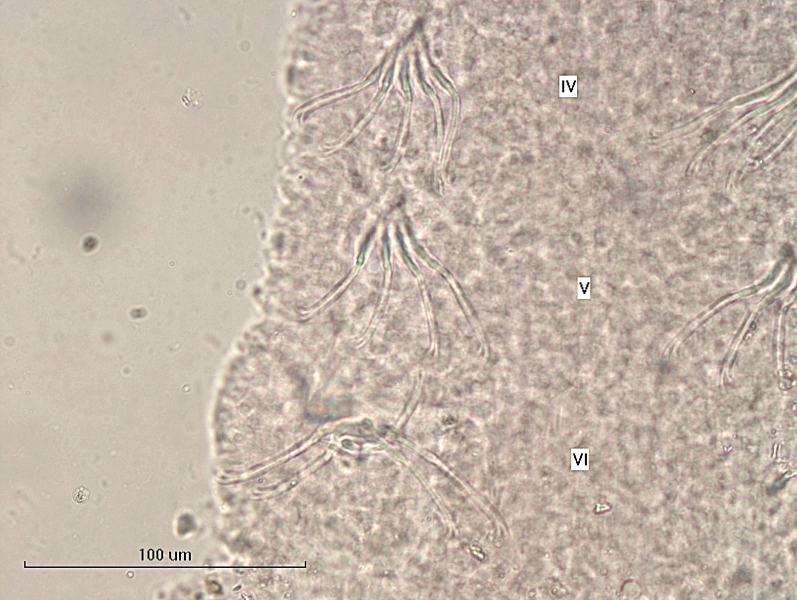
3/5
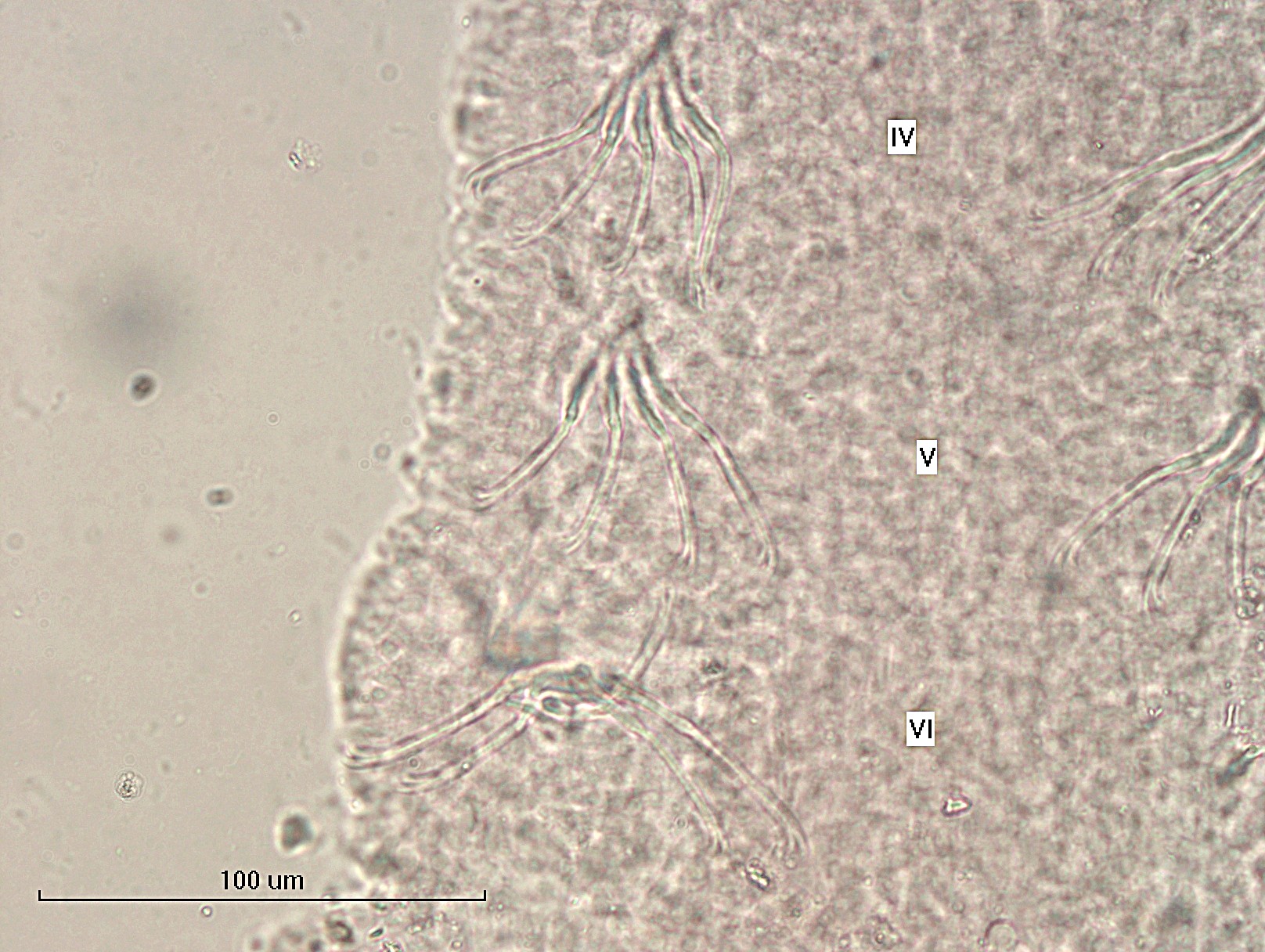
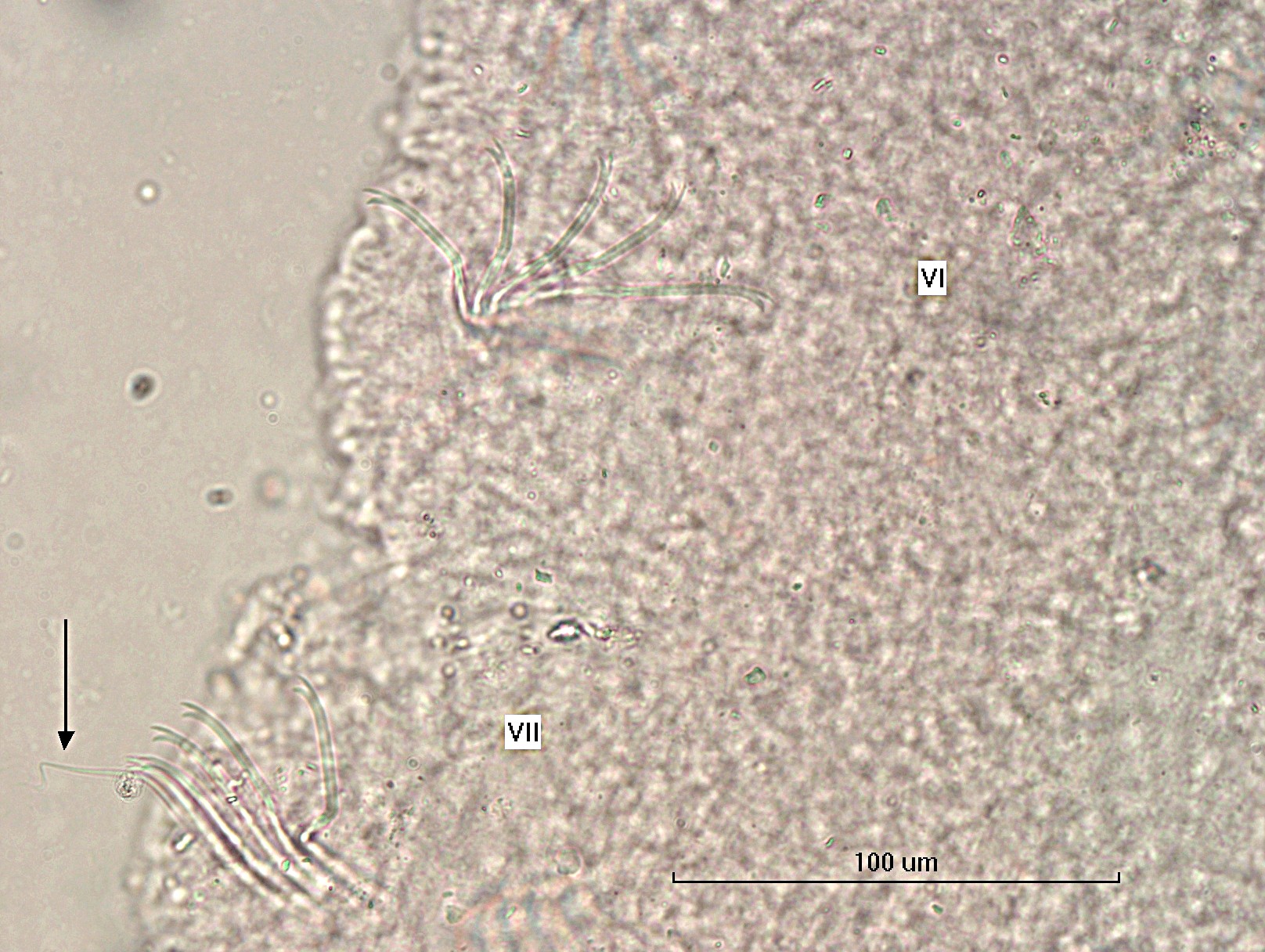
Figure 3. Ventral bundles contain 5–8 or up to 10 bifid chaetae that resemble the dorsal needles, and chaetae do not change shape between V and VI.
Download Image -
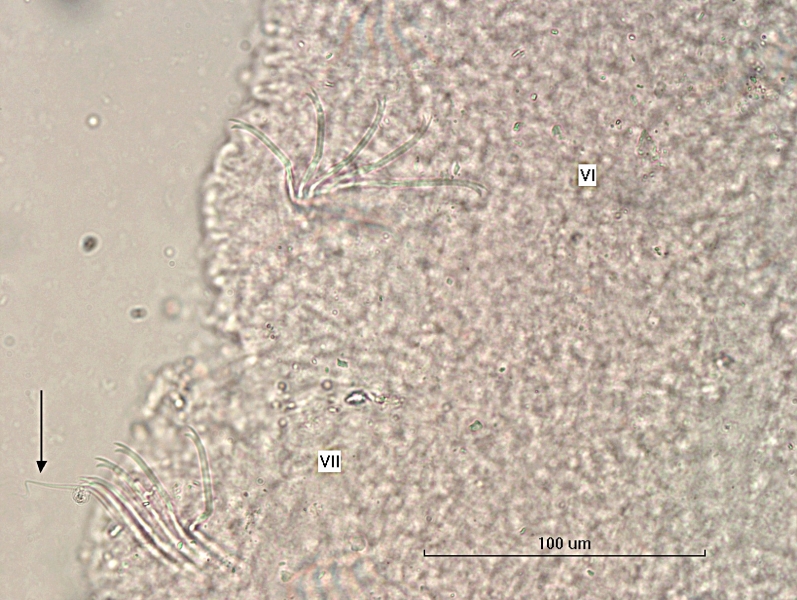
4/5
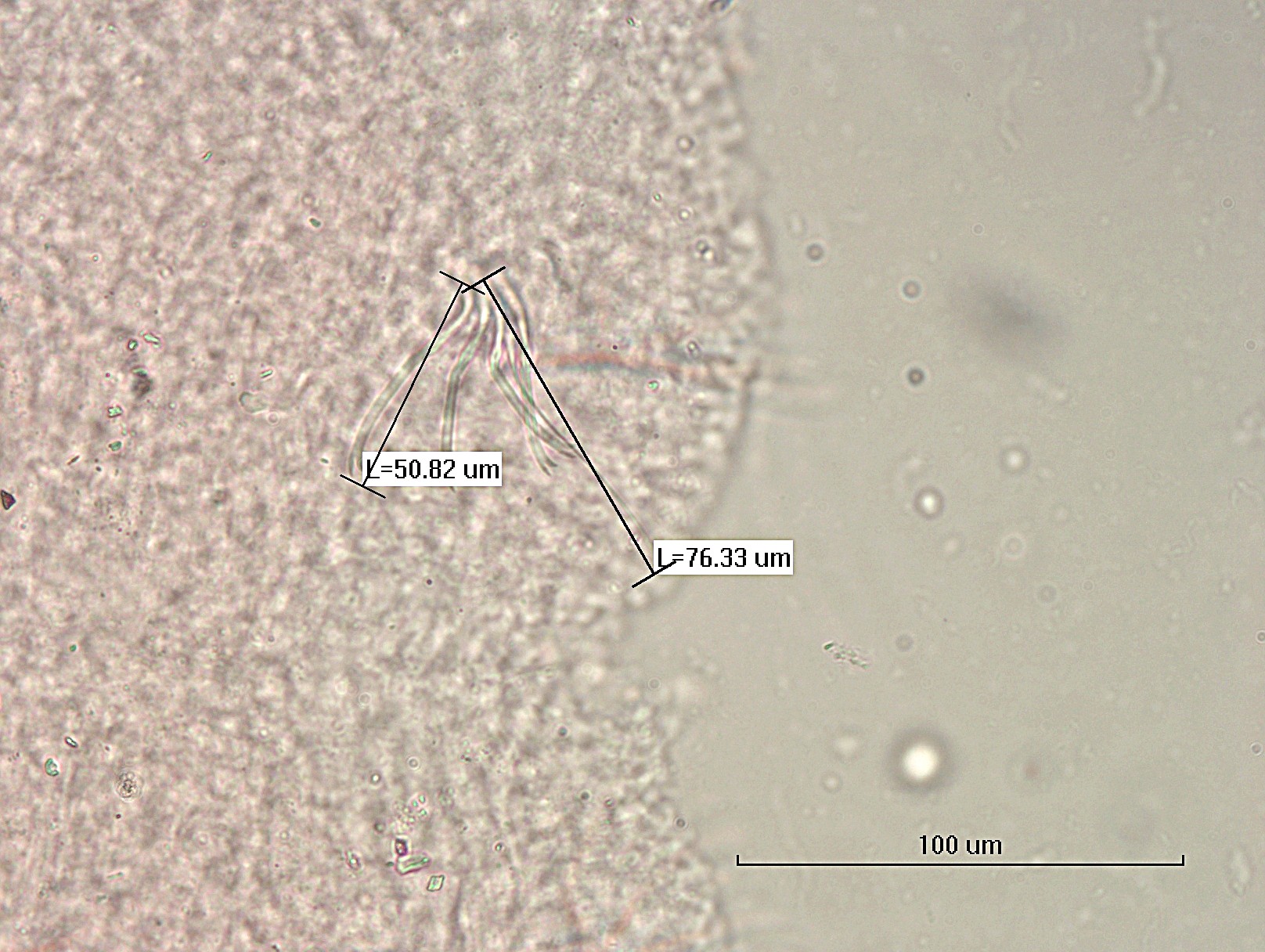
Figure 4. There are 0–3 hair chaetae per dorsal bundle, and the hair chaetae may be missing from some or all dorsal bundles. Dorsal bundles also contain 2–6 sigmoid bifid needles.
Download Image -
5/5
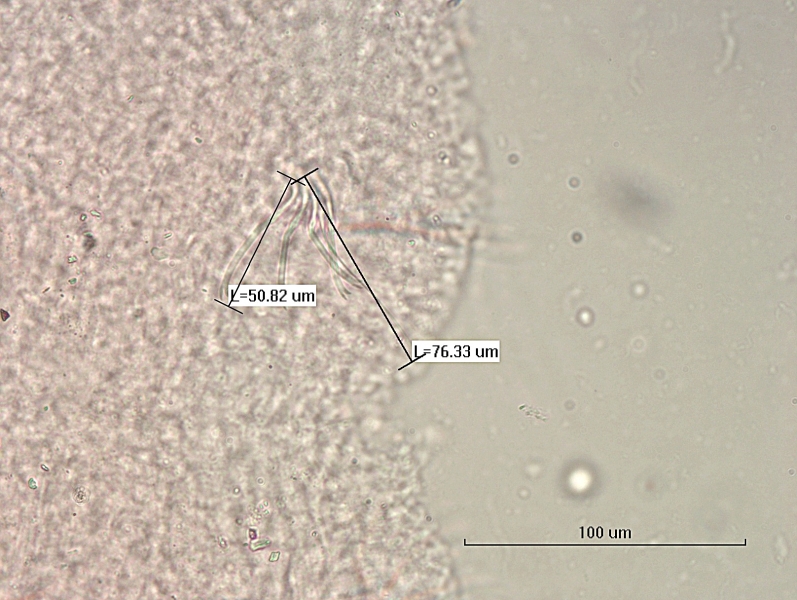
Figure 5. The hairs are relatively short and wispy, <1.5 times the length of the bifid needles.
Download Image
Piguetiella blanci
Taxa description
Piguetiella blanci (Piguet, 1906) is a freshwater oligochaete worm that is an uncommon oligochaete in the Great Lakes. It is a naidid worm with dorsal bundles beginning in VI and ventral bundles beginning in II, hair chaetae in the dorsal bundles, and without a proboscis. There are 0–3 hair chaetae per dorsal bundle, with hairs <1.5 times the length of the needles, and the hair chaetae may be missing from some or all dorsal bundles. Dorsal bundles also contain 2–6 sigmoid bifid needles. Ventral bundles contain 5–8 or up to 10 bifid chaetae that resemble the dorsal needles. P. blanci is mostly eyeless but may have eyes. If mature, simple-pointed spermathecal chaetae are present in V that may replace ventral chaetae. The presence of hair chaetae may be influenced by pH or conductivity, and it may be synonymous with Piguetiella michiganensis, which lacks hair chaetae.
Distinguishing features
P. blanci is identified mainly by the dorsal chaetae starting in VI that have 0–3 somewhat short hair chaetae and 2–6 bifid needles with divergent teeth that resemble the ventral chaetae. The hair chaetae are irregularly placed and many may be missing.
Habitat
Lake occurrence
Lakes Erie and Ontario.
Similar species
P. blanci most closely resembles P. michiganensis. The main difference between these species is that P. michiganensis lacks hair chaetae and is eyeless, although it is possible for some P. blanci to lack hair chaetae. From Kathman and Brinkhurst, it appears that the spermathecal chaetae of P. blanci are simple-pointed but those of P. michiganensis may be minutely bifid.
Specaria josinae is sometimes confused with P. blanci because both have hair chaetae starting in VI, but S. josinae has more hair chaetae (2–6 hairs with 2–6 bifid needles) that are longer (more than 1.7 times the length of needles), with teeth that are long and divergent. The needle chaetae are more sigmoid. The ventral chaetae of S. josinae do not resemble the needles, since the upper teeth are longer than the lower. S. josinae is eyeless. Instead of spermathecal chaetae in V, S. josinae has penial chaetae in VI.
Some specimens that lack hair could be confused with Uncinais uncinata, which has dorsal bundles usually starting in VI and lacks hair chaetae. There are 2–4 bifid chaetae dorsally and 2–7 chaetae in dorsal bundles. All chaetae in U. uncinata have the upper teeth longer and thinner than the lower, which is not the case for P. blanci. Ventral chaetae of II may be longer than the rest, or II–IV may be thinner and longer. Older individuals have eyes, while P. blanci is mostly eyeless. Penial chaetae have a simple hook, whereas the spermathecal chaetae of P. blanci is simple-pointed.
It is possible that some P. blanci have dorsal chaetae beginning in V instead of VI. In that case, it may be confused with Paranais species. Paranais lacks hair chaetae, so P. blanci can be distinguished if it has any hair chaetae at all. P. frici, the most likely Paranais species, has fewer chaetae than P. blanci with 2–4 ventral chaetae in II and 1–2 ventral chaetae posteriorly; the upper teeth are much longer than the lower and hook-shaped. P. frici has transverse furrows on the body wall and may have a thin layer of foreign matter. Instead of spermathecal chaetae in V, there are 2–3 bifid strongly curved penial chaetae.
Rarely, C. diastrophus may have dorsal chaetae starting in VI. If that is so, it might key out to Uncinais uncinata or Piguetiella sp. The chaetae are not shaped like Piguettiella sp. so it is more likely to be confused with U. uncinata, but the arrangement of the chaetae in II, the missing chaetae from III-V, and the enlarged pharynx should help point it back towards C. diastrophus.
Relative size
P. blanci is a small freshwater oligochaete.
Does it have a barcode reference from the Great Lakes?
No, this species does not yet have a barcode reference from the Great Lakes.
References
Kathman, R.D., and R.O. Brinkhurst. 1998. Guide to Freshwater Oligochaetes of North America. pp. 52–53, 34, 38, 48–51, 54–55.