

Paranais frici
-
1/3
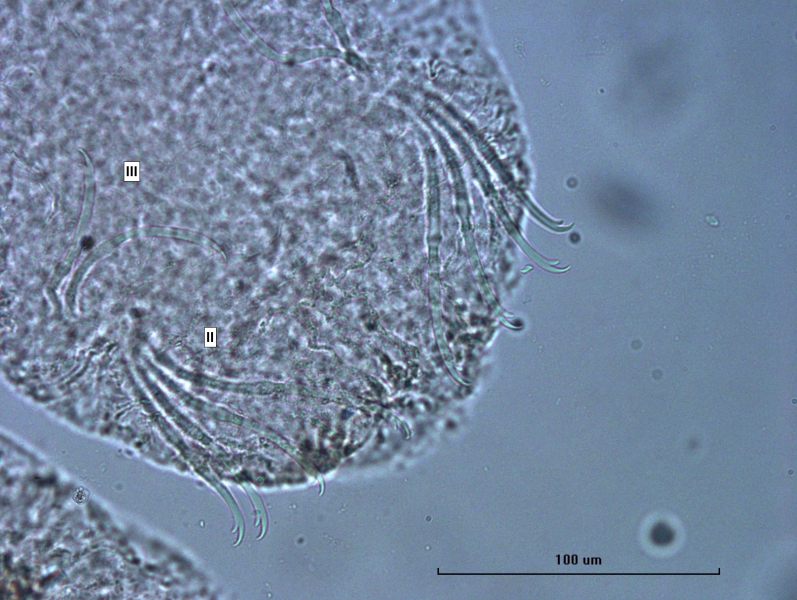
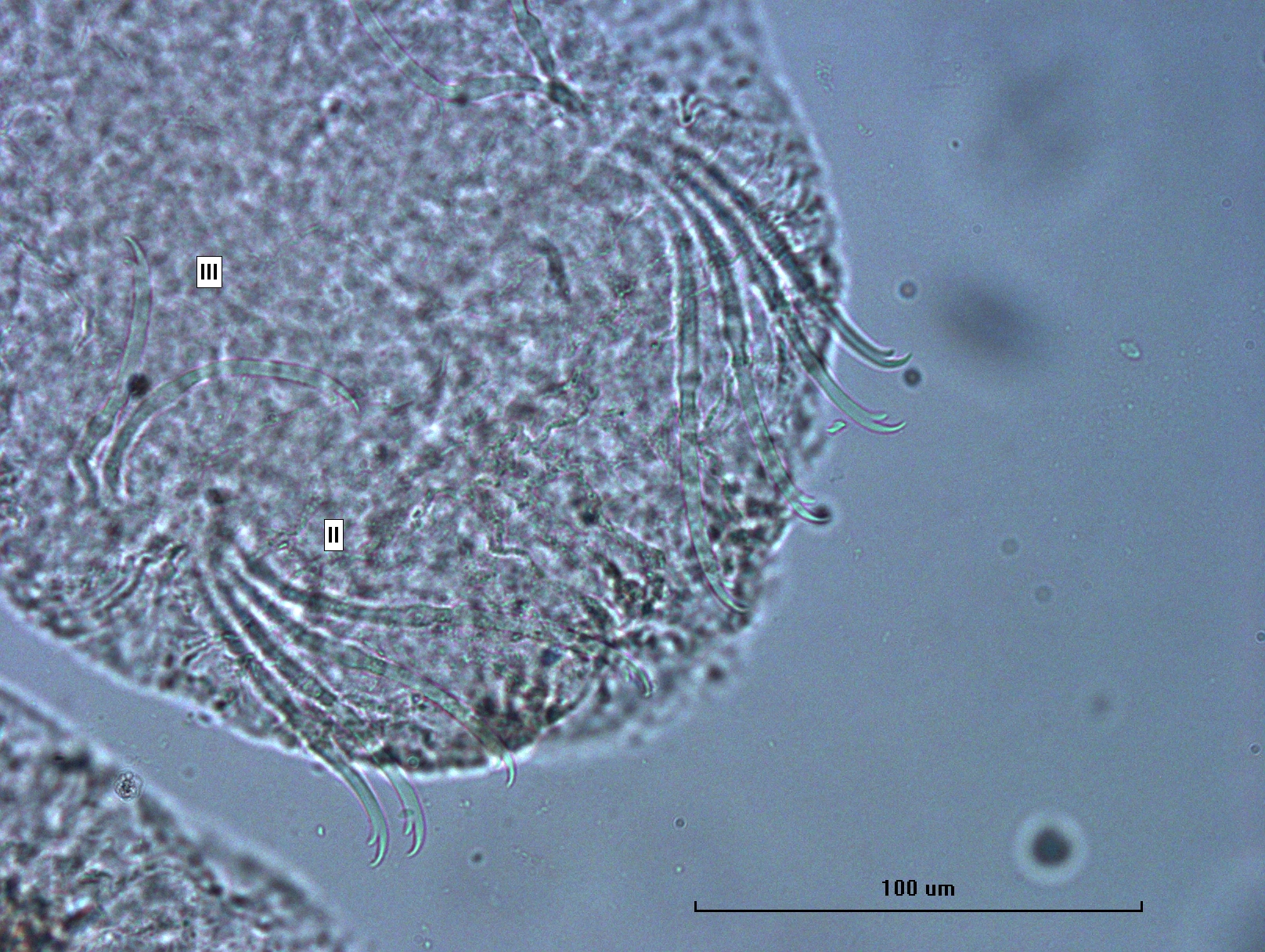
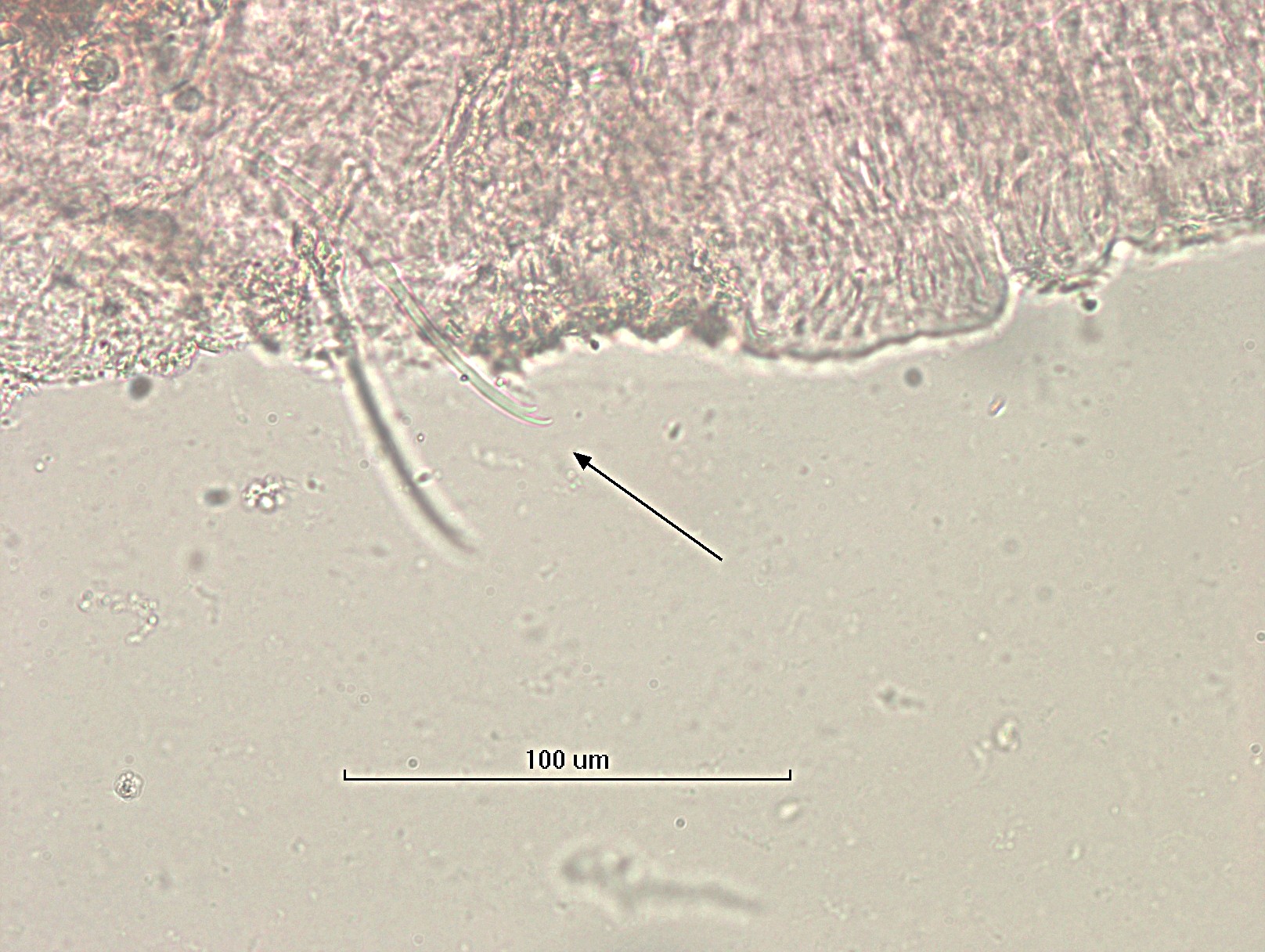
Figure 1. Paranais frici has 2–4 ventral chaetae that are hook-shaped, with the upper tooth approximately twice as long as the lower. All other bundles except for V have 1–2 or rarely 3 chaetae per bundle with the upper tooth much longer than the lower tooth.
Download Image -
-
3/3
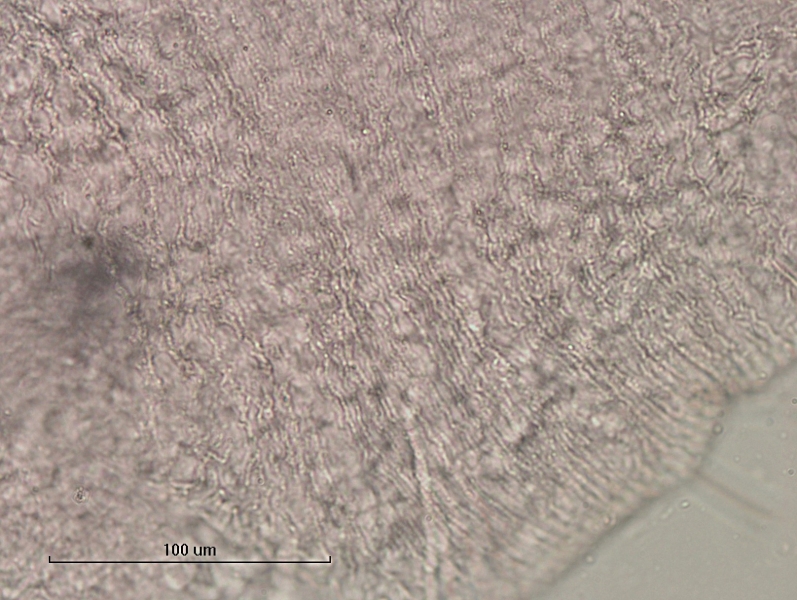
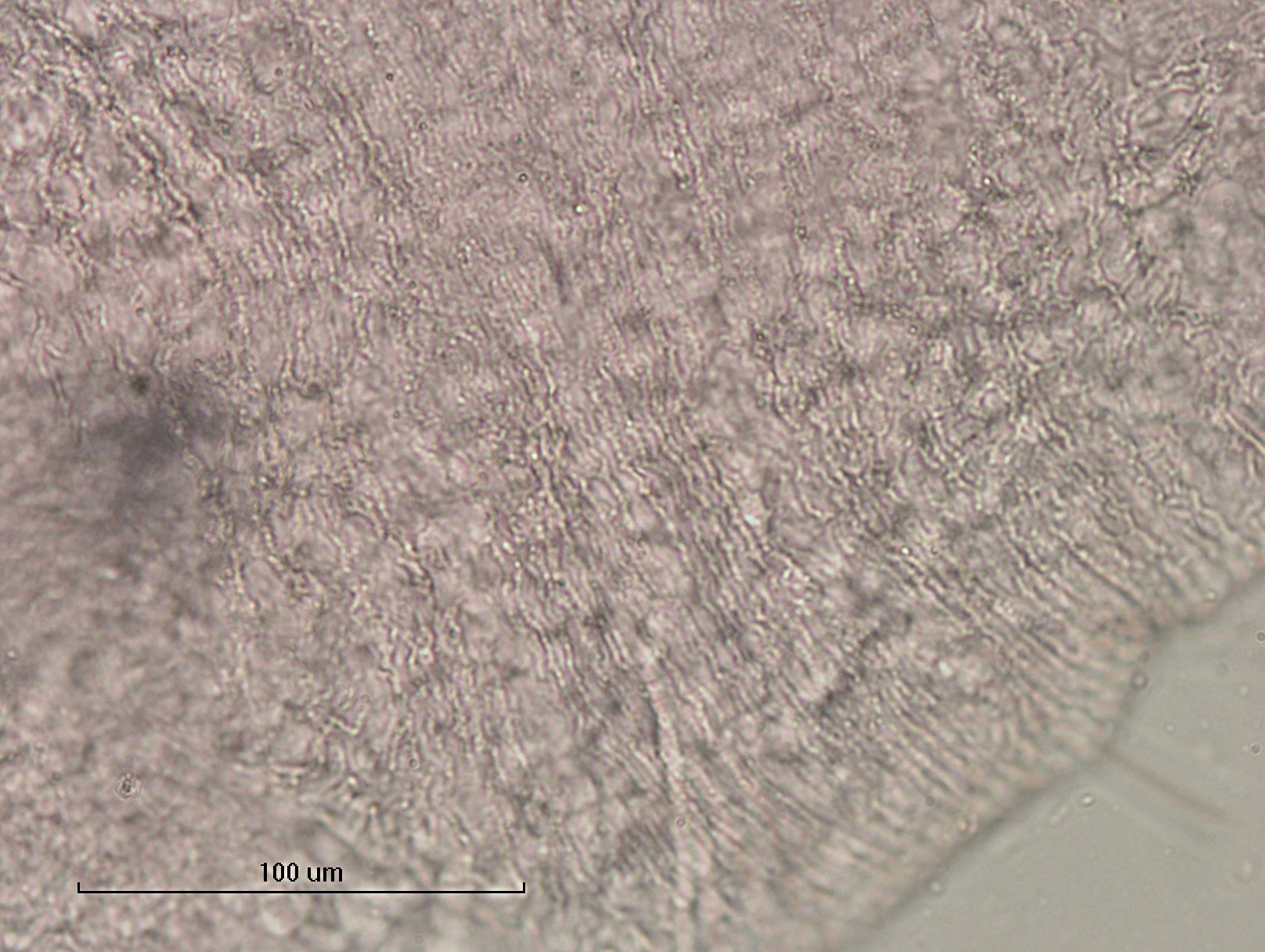
Figure 3. There are transverse furrows on the body wall and there may be a thin layer of foreign matter.
Download Image
Paranais frici
Taxa description
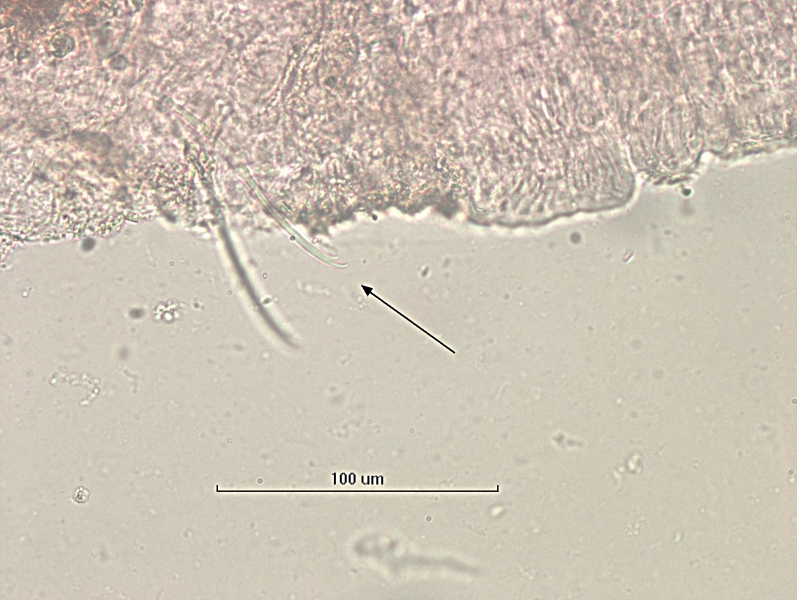
Paranais frici Hrabě, 1941 is a freshwater oligochaete worm that is an uncommon oligochaete in the Great Lakes. It is a naidid worm with dorsal bundles beginning in V and ventral bundles beginning in II, no hair chaetae in the dorsal bundles, and without a proboscis. Ventral bundles of II and V have more chaetae than the other bundles, all with the upper tooth about twice as long as the lower tooth and hook-shaped. Dorsal chaetae are bifid. There are transverse furrows on the body wall and there may be a thin layer of foreign matter. P. frici includes Wapsa mobilis, which still appears in some of the key books. Wapsa is morphologically similar to Paranais.
Distinguishing features
Paranais is identified mainly by the dorsal chaetae starting in V and lacking hair chaetae and a proboscis. To distinguish Paranais species, the ventral chaetae and penial chaetae are most important. In II, P. frici has 2–4 ventral chaetae that are hook-shaped, with the upper tooth approximately twice as long as the lower (chaetal length 94–106 µm). All other bundles except for V have 1–2 or rarely 3 chaetae per bundle with the upper tooth much longer than the lower tooth. If mature, there are 2–3 penial chaetae per bundle that replace the normal chaetae in V. The penial chaetae are thick, bifid, and sigmoid. If visible, the atria are globular with thin walls that are not very muscular compared to other Paranais.
Habitat
P. frici is often found in freshwater coastal regions, estuaries, or rivers, but may also be found in brackish water.
Lake occurrence
Lakes Erie, Huron, and Ontario.
Similar species
P. frici bears most resemblance to other Paranais species, although it is the most likely to be encountered in Great Lakes samples. P. frici is separated from the others partially based on the shape and number or length of ventral chaetae in II, although the key books are slightly confusing. In Kathman and Brinkhurst (1998), P. frici is separated from P. grandis and P. litoralis because P. frici has hook-shaped upper teeth instead of typically shaped teeth, but the drawings all look hook-shaped. Hiltunen and Klemm (1980) separate P. litoralis from the others as having upper teeth only slightly longer than the lower tooth, while the others are listed as Wapsa and have upper teeth about twice as long as the lower. P. grandis is then separated from P. frici by having longer chaetae in II and a higher number of chaetae. Despite this slight confusion from the key, it is most important to note that P. grandis is not found in the Great Lakes and 6–7 chaetae in II that are distinctly longer than all other chaetae (128-148 µm); P. litoralis has been found in Lake Michigan but none of our samples, has 4–7 chaetae in II, the upper tooth is only longer than the lower in II (anterior chaetal length about 60 µm), and the other ventral chaetae are in bundles of 3. The penial chaetae of P. grandis and P. litoralis are more strongly curved than P. frici.
Most of the other naidid species either begin in a different segment, or if they start in V they also have hair chaetae. Uncinais uncinata and Piguetiella both lack hair chaetae and usually start in VI, but some specimens also have dorsal chaetae in V. U. unicinata has chaetae with upper teeth longer and thinner than the lower but not hook-shaped, the anterior ventrals may be longer than the rest with 2–7 chaetae per bundle (more than P. frici), and there are 2–4 bifid dorsal chaetae per bundle that resemble the ventrals except they are slightly shorter. The biggest difference is that older individuals may have eyes. There are two species of Piguetiella, although P. blanci usually has some hair chaetae. P. blanci and P. michiganensis have 5–8 ventral chaetae per bundle and the teeth are of equal length. The penial chaetae of U. uncinata are a simple hook and Piguetiella have spermathecal chaetae that are simple or minutely bifid, but not bifid and sigmoid like the penial chaetae of P. frici.
Relative size
P. frici is a small freshwater oligochaete.
Does it have a barcode reference from the Great Lakes?
No, this species does not yet have a barcode reference from the Great Lakes.
References
Kathman, R.D., and R.O. Brinkhurst. 1998. Guide to Freshwater Oligochaetes of North America. pp. 48–49, 34, 50–53.
Hiltunen, J.K., and D.J. Klemm. 1980. A Guide to the Naididae (Annelida: Clitellata: Oligochaeta) of North America. pp. 15–16, 26, 36, 39.