

Molanna flavicornis
-
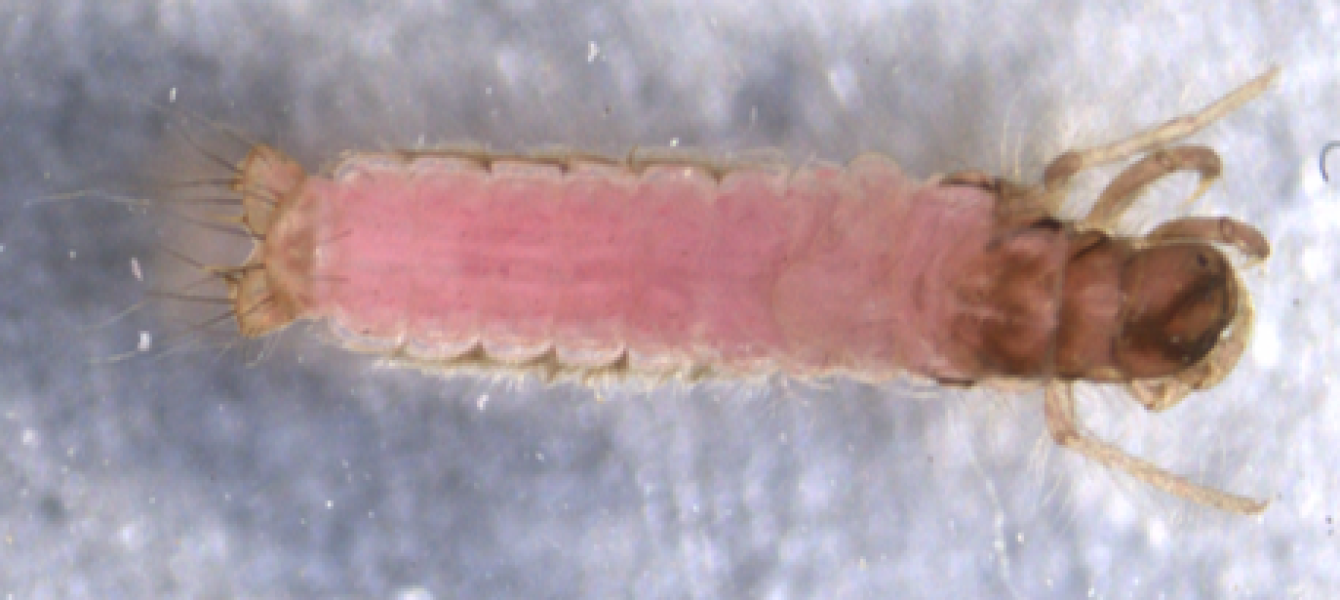
1/5
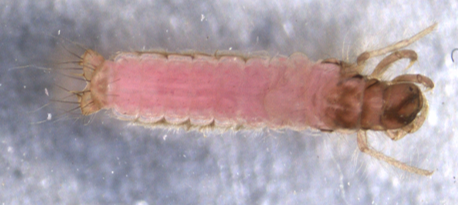
Figure 1. Larva of Molanna flavicornis. This individual was found in the North Channel of Lake Huron in July 2022.
Download Image -
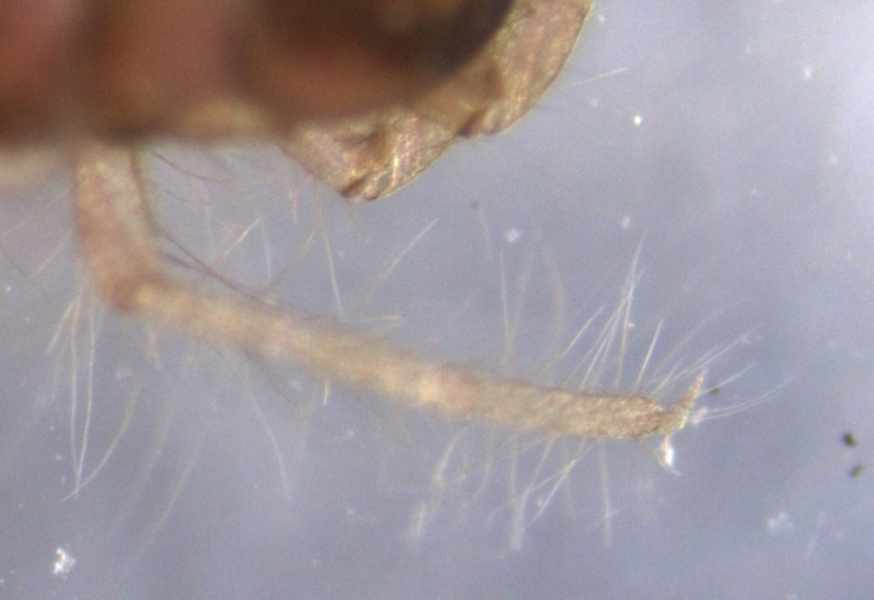
2/5
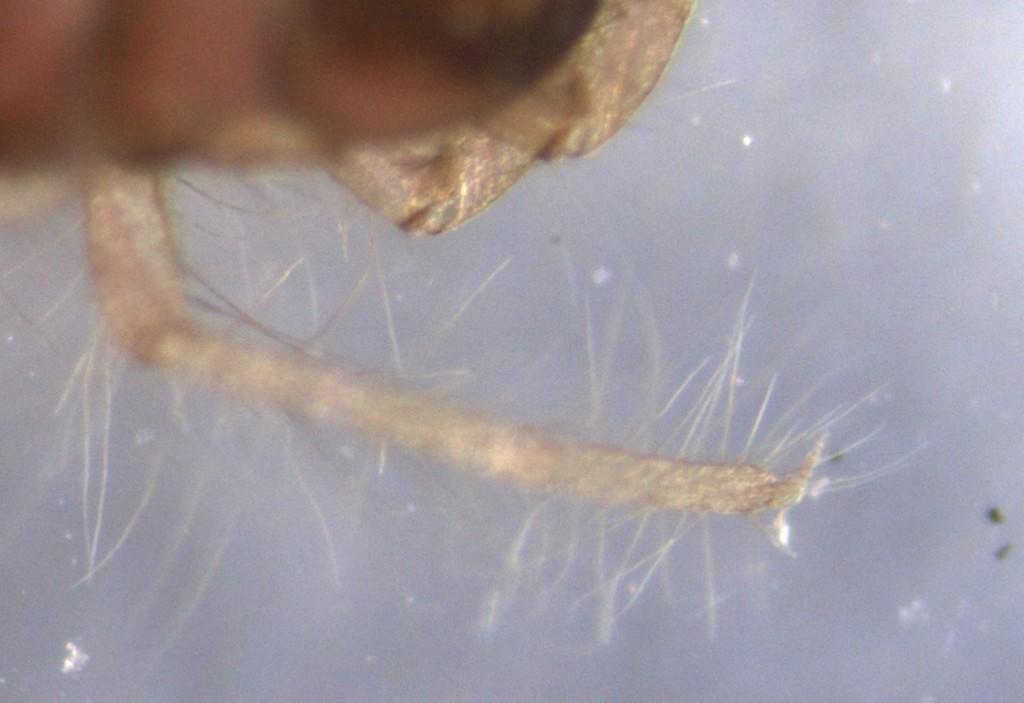
Figure 2. Larva of Molanna flavicornis, note the short and stout tarsal claw of the metathorax leg. This individual was found in the North Channel of Lake Huron in July 2022.
Download Image -
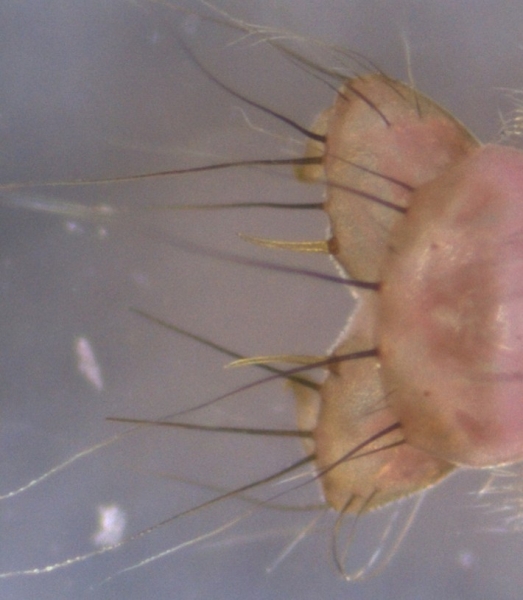
3/5
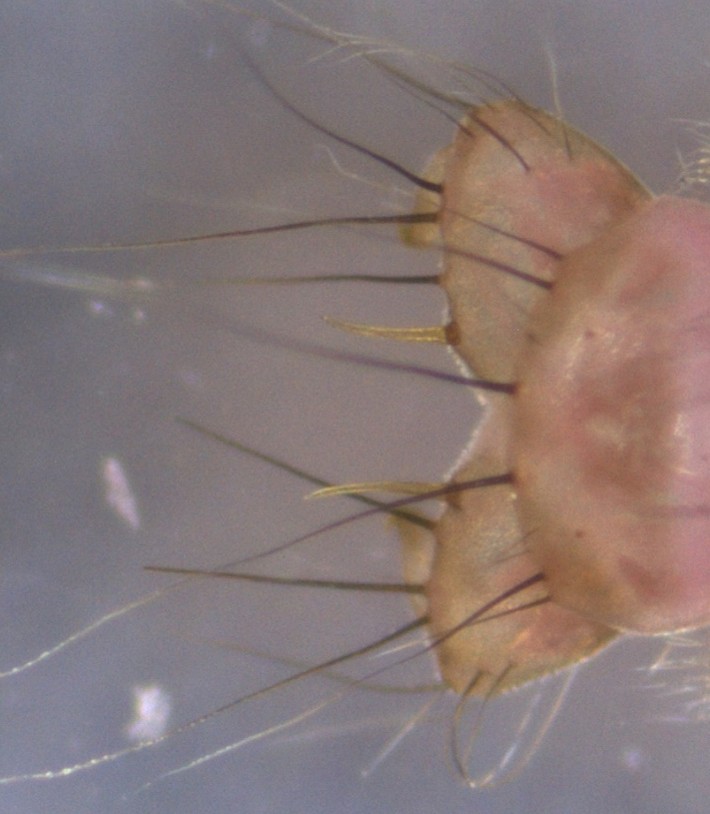
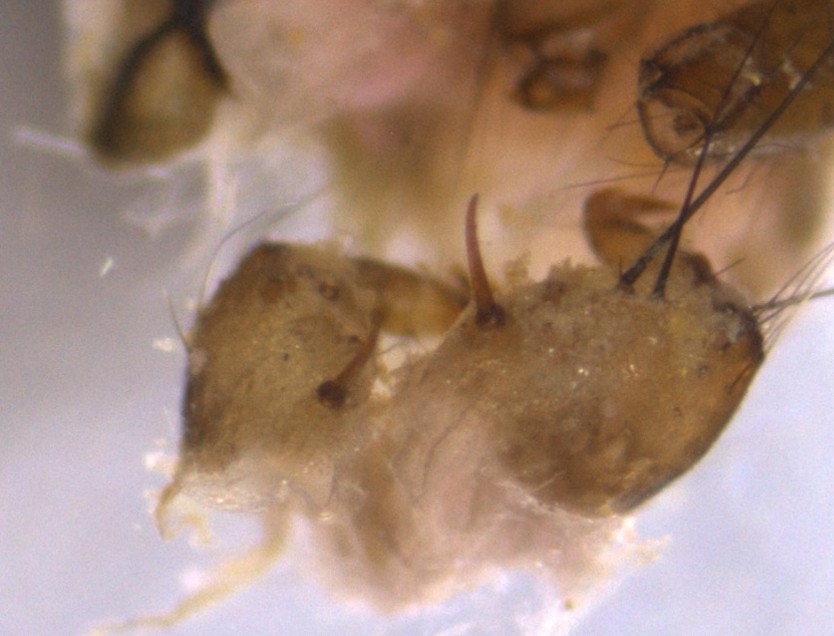
Figure 3. Stout spur at the base of the anal proleg on larva, unique only to Molanna flavicornis. This individual was found in the North Channel of Lake Huron in July 2022.
Download Image -
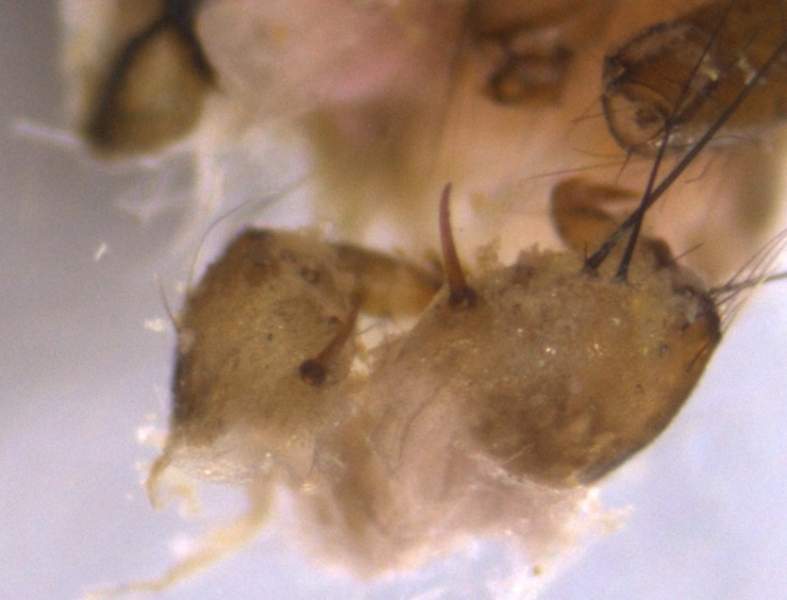
4/5
Figure 4. Stout spur at the base of the anal proleg on larval skin dissected from a pupa case, unique only to Molanna flavicornis. This individual was found in the North Channel of Lake Huron in July 2022.
Download Image -
5/5
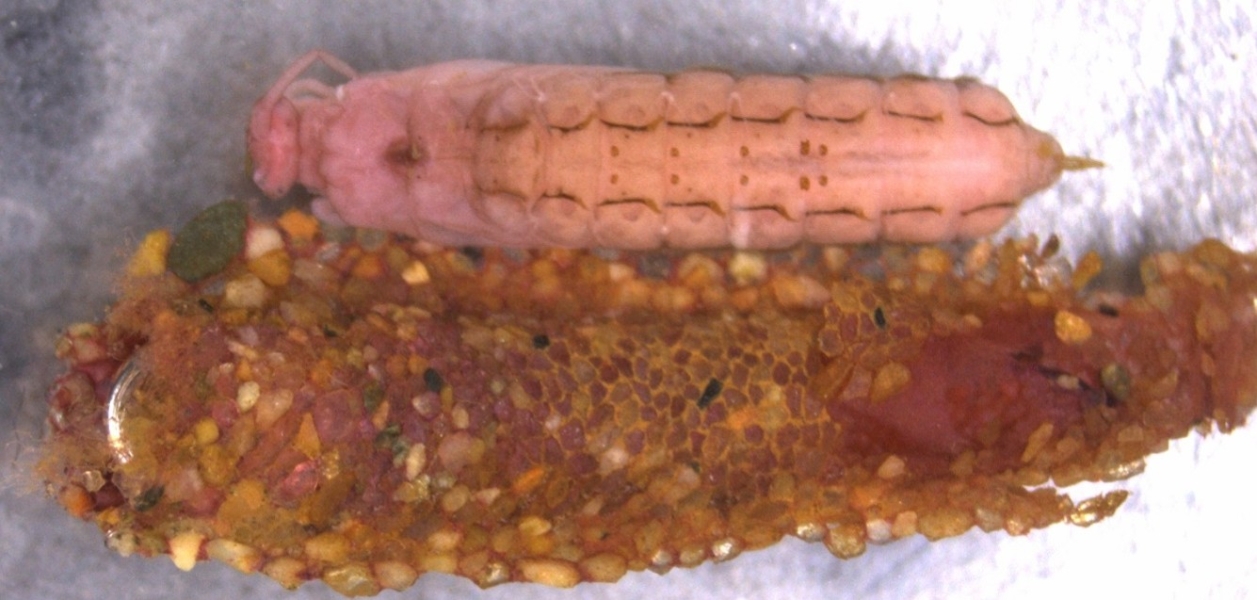
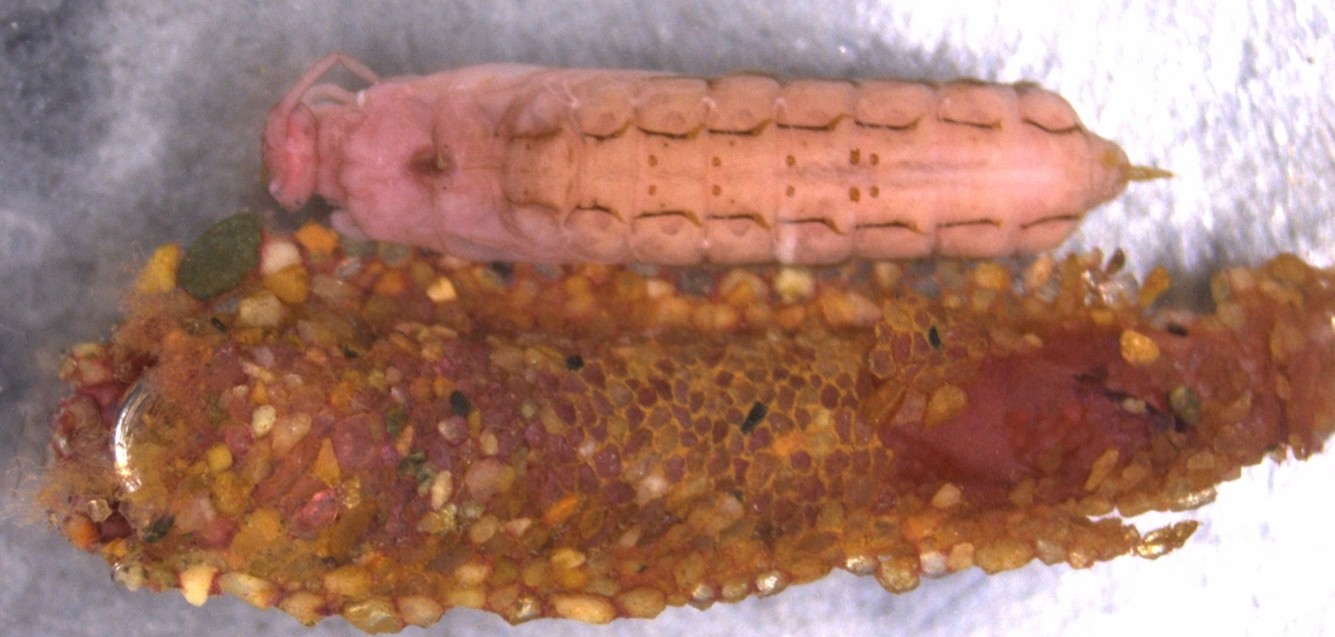
Figure 5. Case and pupae of Molanna flavicornis; note the construction with rock fragments and a prominent lateral flange and anterior hood. This individual was found in the North Channel of Lake Huron in July 2022.
Download Image
Molanna flavicornis
Taxa description
Molanna flavicornis Banks, 1914 is a Trichoptera in the family Molannidae (Fig. 11). Molanna larvae are characterized by a short, stout claw of the hind leg (Fig. 12) and the basal seta of the claw originating from about its center with the upper surface of the claw bearing short setae. All larvae of Nearctic Molanna species possess contrasting dark bands on the dorsal ecdysial lines of the head and most have 2-4 abdominal gill filaments. M. flavicornis is distinguished from other North American Molanna species by a long, stout spur at the base of each anal proleg (Fig 13-14). Cases are comprised of rock fragments and occasionally organic material with a prominent lateral flange and anterior hood (Fig 15).
Distinguishing features
Habitat
Larvae live in lakes or the slower currents of rivers and streams and inhabit the sand and mud substrates of these sites. M. flavicornis was found in other Great Lakes and Lake Winnipeg as deep as 20 m (Neave, 1933).
Lake occurrence
M. flavicornis has records from the Huron-Erie corridor, and Lakes Superior and Erie (NOAA and USEPA 2019).
Similar species
M. flavicornis is distinguished from other North American Molanna species by a long, stout spur at the base of each anal proleg (Fig 13-14).
Relative size
Larvae up to 19 mm. Larval cases can be up to 27 mm in length (Wiggins, 1996).
Does it have a barcode reference from the Great Lakes?
References
Merritt, R.W., and Cummins, K.W. eds., 2008. An introduction to the aquatic insects of North America. Kendall Hunt.
Neave, F., 1933. Ecology of two species of Trichoptera in Lake Winnipeg. Internationale Revue der Gesamten Hydrobiologie und Hydrographie, 29(1‐2), pp.17-28.
NOAA and US EPA. 2019 Great Lakes Waterlife. Accessed on 09/05/2023.
Wiggins, G.B. 1996. Larvae of the North American caddisfly genera (Trichoptera). University of Toronto Press.
Occurrence in scientific literature
Davis, B. M., P.L. Hudson, and B.J. Armitage. 1991. Distribution and abundance of caddisflies (Trichoptera) in the St. Clair-Detroit River system. J. Great Lakes Res. 17(4), 522-535.
Glass, W.R, N.E. Mandrak, and M.A. Koops. 2014. Application of the Ecologically Significant Species Criteria to the aquatic community of the Bay of Quinte, Lake Ontario. DFO Can. Sci. Advis. Sec. Res. Doc. 2014/043. v + 32 p.
Masteller, E. C. 1993 b. The Trichoptera (caddisflies) of Presque Isle State Park and Lake Erie, Erie County, Pennsylvania. J. Penn. Acad. Sci., 167, 132-136.
US EPA. 2017. Great Lakes Invertebrate Reference Collection, 2012-present [Excel spreadsheet]. Curated by contract taxonomists G.T. Shepard, A. Frankiewicz, B. Gilbertson, and E. Timmerman, with specimen verification by outside experts K. Schmude, G. Mackie, T. Lee, and R. Dillon. Duluth, MN: Environmental Protection Agency, Office of Research and Development, National Health and Environmental Effects Research Laboratory, Mid-Continent Ecology Division.