

Lirceus sp.
-
1/5
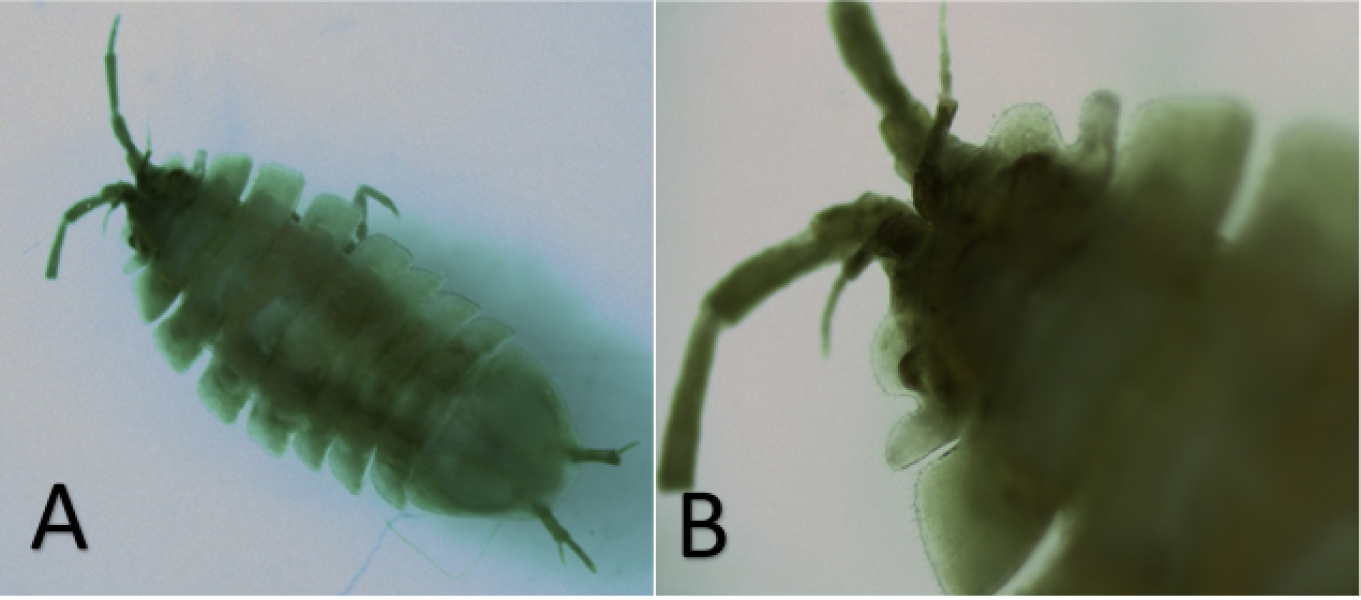
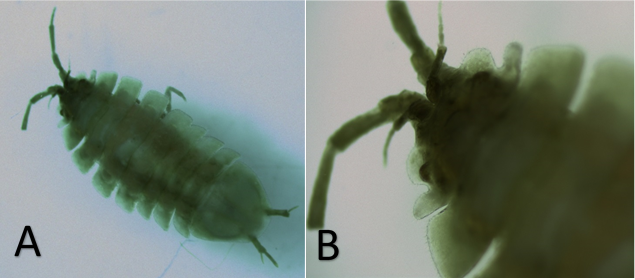
Figure 1: Lirceus sp. individual found in Lake Michigan in summer 2013. A: dorsal whole-body view; B: dorsal view of cephalothorax, note two lobes on lateral margin.
Download Image -
2/5
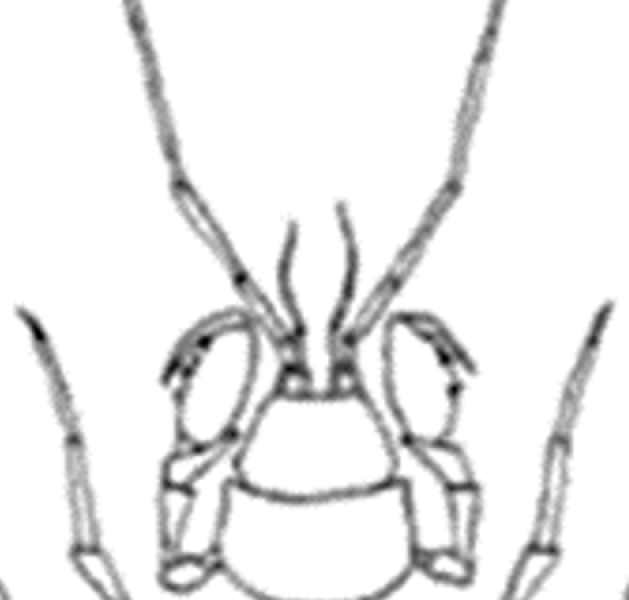
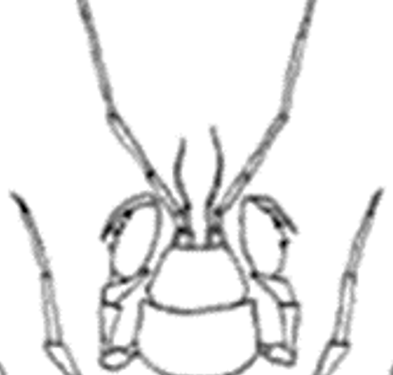
Figure 2: Dorsal view of the cephalothorax of Caecidotea sp., note the straight anterior margin (Smith, 2001).
Download Image -
3/5
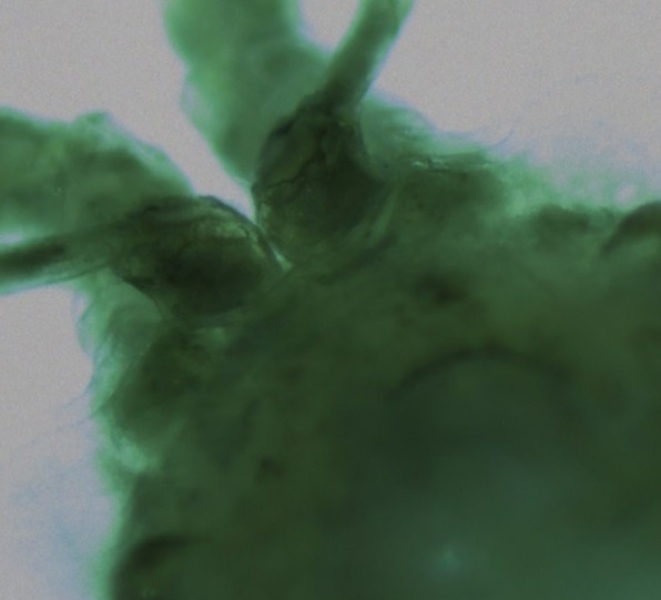
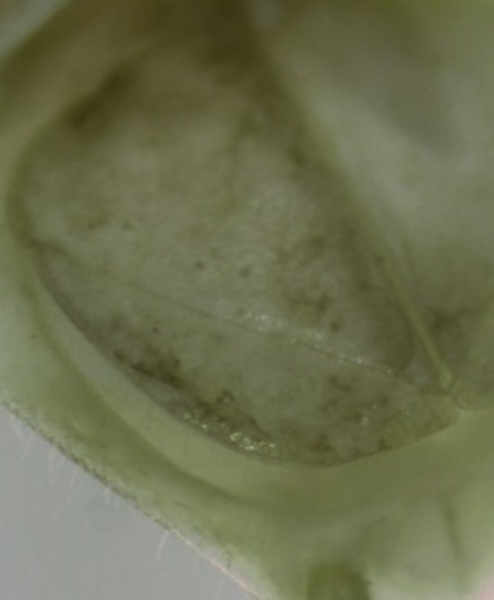
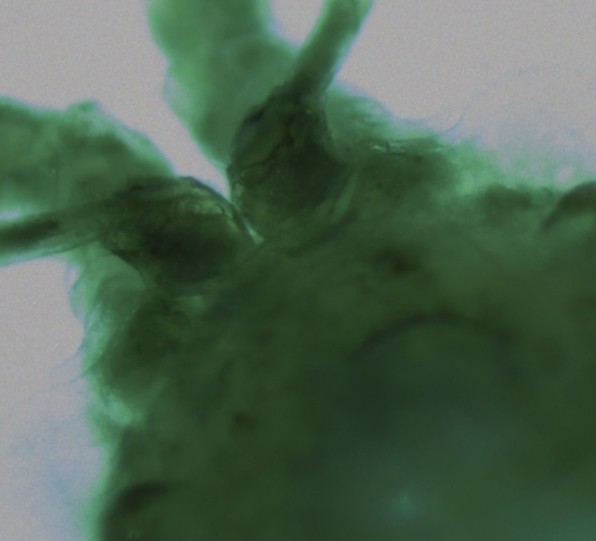
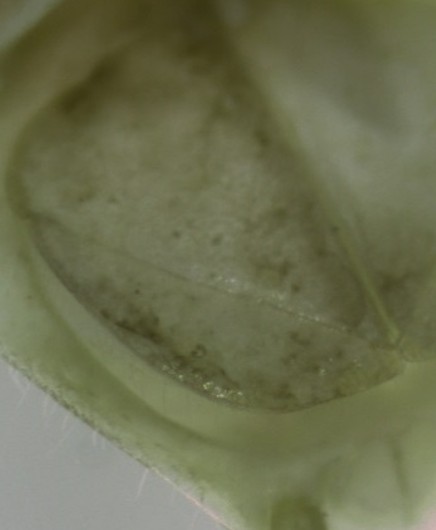
Figure 3: Dorsal view of the cephalothorax of Lirceus sp. has a distinct carina, or raised ridges.
Download Image -
4/5
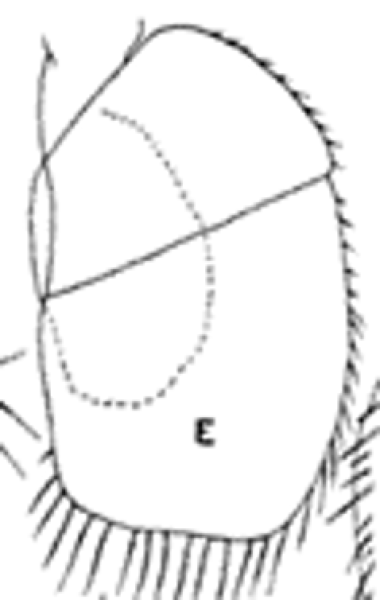
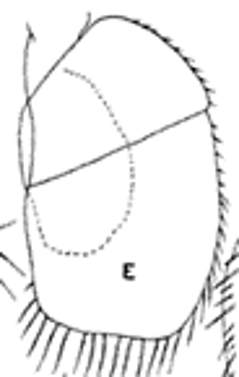
Figure 4: Third peleopod of Caecidotea sp., note the slight angle of the fold (Smith, 2001).
Download Image -
Lirceus sp.
Taxa description
The key characteristics to distinguish the isopod Lirceus sp. Rafinesque-Schmaltz, 1820 from Caecidotea sp. include the structure of the cephalothorax and third pleopod. In Lirceus sp. the cephalothorax has distinct carina or folds along the anterior margin (Fig. 3). The lateral margins of the cephalothorax also has distinct lopes (Fig. 1B) whereas Caecidotea sp. have smooth lateral and anterior margins (Fig. 2). Lastly, the fold along the pleopod of Lirceus sp. (Fig. 5) has a greater angle compared to Caecidotea sp. (Fig. 4), which has a very low angle.
Distinguishing features
The angle of the fold on the pleopod is a key characteristic of this genus, as well as the lobes and carina on the cephalothorax.
Habitat
Lirceus sp. is a well-known species to all the Great Lakes, including Lake Michigan, but is usually restricted to nearshore zones and lotic habitats (Hubricht and Mackin, 1949).
Lake occurrence
Similar species
Lirceus sp. is most similar to Caecidotea sp.
Relative size
Does it have a barcode reference from the Great Lakes?
References
Smith, D.G. 2001. Pennak's Freshwater Invertebrates of the United States: Porifera to Crustacea. 4th edition. John Wiley and Sons, Incorporated, New York, New York. 638 pp.
Occurrence in scientific literature
Hubricht, L., and J. G. Mackin. 1949. The freshwater isopods of the genus Lirceus (Asellota, Asellidae). American Midland Naturalist: 334-349.