
Great Lakes Center Newsletter: Issue 6
May 6, 2015
This issue has a special focus on graduate student projects and internships. We feature a few articles updating progress on samples we’ve been processing and our first attempts at sampling this spring. We also say farewell to our secretary, Cathy, and remind you to join us for an Open House at the field station this Friday.
Icy start to the sampling season
by Knut Mehler
It was quite busy over the winter 2014/2015 in the Great Lakes Center’s laboratory. Benthic samples that were collected last summer from about 150 sites in the lower Niagara River are currently being processed. So far, organisms from 70 samples were measured, weighed and mounted. While chironomids were identified here at the GLC, Oligochaeta were sent out to Heidelberg University in Ohio to be identified by taxonomic experts there.
About 10,000 individual organisms belonging to 117 species have been identified. These data are currently under preparation for presentations on the Freshwater Science meeting in Milwaukee, WI, and IAGLR in Burlington, VT, in May.
Additionally, 60 sediments samples were processed by our GLES graduate student Anthony Cevaer including sieve analysis and organic matter content analysis. Both grain size and organic matter are important abiotic factors that can affect benthic invertebrate abundance and biomass.
Even though it was a very harsh winter in Buffalo, an attempt was made to continue sampling in the lower Niagara River in March. With a lot of confidence and happy to start the new sampling season Josh Fisher, Mark Clapsadl, Knut Mehler, and Anthony Cevaer went out to Lewiston to resume last year’s sampling of the 3 sites that were identified as ‘sturgeon hotspots.’
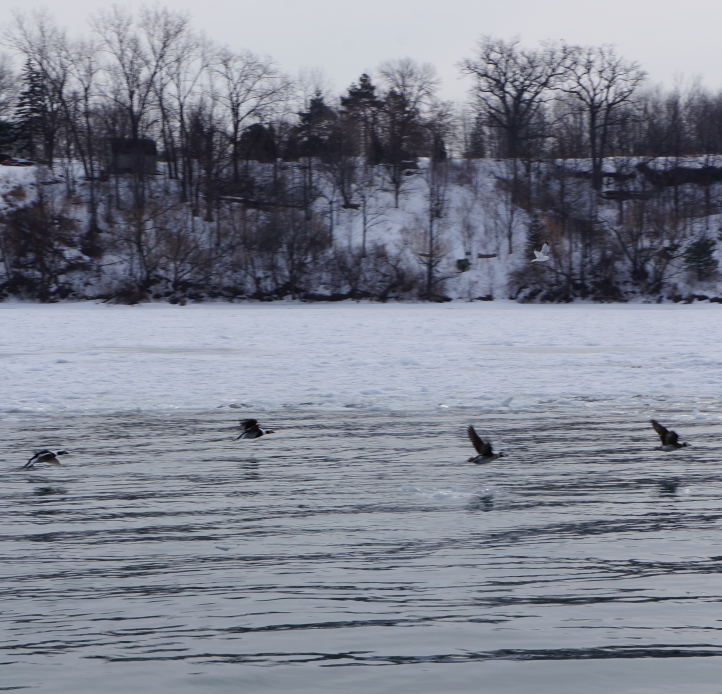
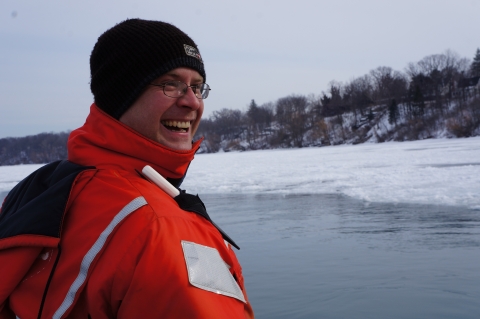
Upon arriving in the field the crew was greeted by a thick layer of ice in all of our sampling areas. Nevertheless, our graduate student Anthony tried really hard and got us at least one sample. After only 20 minutes in the boat we all decided to head back into the warm laboratory and keep working on the taxonomic identification. The plan for the second half of the year is to finish up identification of the rest of the samples and get ready for another exciting sampling season at the Niagara River – hopefully at warmer temperatures.

GLES Internship Spotlight
by Kelly Frothingham, GLES Program Coordinator
Two Great Lakes Ecosystem Science (GLES) M.S. students recently completed their required internships. The GLES M.S. is a Professional Science Master’s (PSM) program, so students combine knowledge gained in their environmental science master’s coursework with project management and communication skills, which they apply to an internship experience. John Grabowski interned at Buffalo Niagara Riverkeeper and Keith Pawlowski worked for Ecology and Environment, Inc.
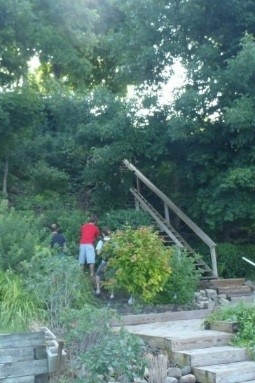
John’s internship focused on riparian zone restoration work being performed as part of a Living Shorelines program administered by Buffalo Niagara Riverkeeper. During the summer of 2014, John was part of a field crew that monitored plant survivability at 22 Phase I restoration sites located throughout the Niagara River Greenway. His internship continued into the fall and that work focused on identifying potential Phase II restoration sites, invasive species removal best management practices, and riparian buffer design.
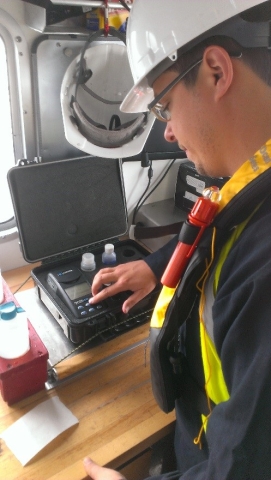
Keith’s internship had him working on Ecology and Environment projects downstate and here in Western New York. He performed water quality monitoring during construction of an offshore natural gas pipeline in the Atlantic Ocean off the coast of Queens, NY. That work also involved monitoring endangered species, including Atlantic sturgeon and right whale. Locally, Keith worked with geologists collecting soil samples in the Eighteenmile Creek watershed in Niagara County.
Both John and Keith presented about their internship experiences in GLC 600 Great Lakes Seminar during the spring 2015 semester. John is graduating in May and Keith is planning on an August or December 2015 graduation. Current GLES M.S. students, as well as all GLES graduates, can use the new internship and career opportunity search widget available on the Great Lakes Center website.
Graduate students explore emerald shiner ecology in the Upper Niagara River
by Jacob Cochran (GLES); and Christopher Osborne, John Lang, and Steven Fleck (Biology)
This winter, the Emerald Shiner crew has been busy processing samples that were collected over the 2014 field season. During summer sampling, adult emerald shiners (Notropis atherinoides) were collected with electroshocking equipment and juvenile/larval fishes were seined in the upper Niagara River. Processing these collected specimens has been at the forefront of our work this offseason. Here we report what each of us has been working on individually to further advance our collective understanding of the emerald shiner in the upper Niagara River.
To better understand the feeding ecology of adult emerald shiners, Steve Fleck and John Lang are performing a diet analysis. This procedure involves dissecting preserved guts, quantifying the various prey items, and drying the gut contents to determine dry weights. So far, they have encountered several notable prey items, including the invasive cladoceran zooplankton Bythotrephes.
John Lang is in the beginning stages of his research on emerald shiner morphometrics. For preliminary data, he will assess differences in body shape of adult emerald shiners between different size classes and also between fresh and preserved samples. He plans to present these results as a poster at the 2015 International Association for Great Lakes Research (IAGLR) Conference in May.
Chris Osborne has begun work to determine lipid allocation to the female shiner ovaries, to measure reproductive effort across age classes over the spawning season, which lasts from May through August, and in different habitats. He is able to do this by first removing the ovaries from each fish then separately extracting all lipids from both the ovary and the rest of the fish’s tissue. He also ages each fish by counting annuli on tiny auditory bones called otoliths, located just anterior to the base of the skull. This work will be presented at the IAGLR conference.
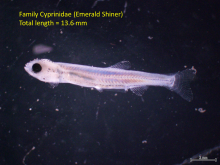
Jake Cochran, with the help of Joshua Fisher (a biologist at our Field Station), has been conducting taxonomic analysis of juvenile/larval fish samples collected at various sites throughout the river. Samples were first sorted by family and will be taken to the species level. Currently, cyprinid (carp/minnow family) samples are being identified to species. Along with identifying the specimens of each sample, weights and lengths are recorded to analyze length-frequency distributions. The data collected from these samples will allow for size distribution and species diversity analyses of young-of-the-year fishes throughout the river over the sampling season. This work will also be presented at the IAGLR conference.


GLC to host International Freshwater Bivalves Conference
by Lyuba Burlakova and Alexander Karatayev

We are pleased to announce that the 2nd International Meeting on Biology and Conservation of Freshwater Bivalves will be hosted by the Great Lakes Center in beautiful Buffalo from October 4-8, 2015. The conference will be held at the Hyatt Regency Buffalo Hotel and Conference Center in downtown Buffalo, NY.
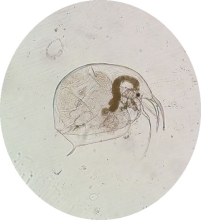
Freshwater bivalves are one of the most imperiled groups of animals in the world, and play an extremely important ecological role in cleaning water, creating benthic habitats, and linking the water column and benthic compartments through their feeding activities - thus providing ecosystem services that influence the rest of the food web. At the same time, bivalves include the most aggressive aquatic invaders that are threatening freshwater ecosystems and are causing significant economic damage worldwide. We hope that by bringing together international experts, our meeting will contribute toward a better understanding of the taxonomy, biology, and ecology of bivalves, and aid in developing efforts for the conservation of this important group.
There will be several thematic oral and poster sessions, including: biology and ecology; threats and conservation needs; invasive species; biogeography and taxonomy; phylogeny and genetic diversity; physiology and reproduction; and ecosystem services and functioning.
The social program will include one of two trips: either a visit to Niagara Falls with a barbeque afterward, or a full day trip to Letchworth State Park. There will also be a banquet after the conference concludes.
The submission deadline for abstracts has already passed, but so far we have over 70 participants from 15 different countries. Late registration is still available until October 1, 2015. For more information please visit our website.
Aquatic invertebrate identification workshop
by Lyubov Burlakova and Alexander Karatayev
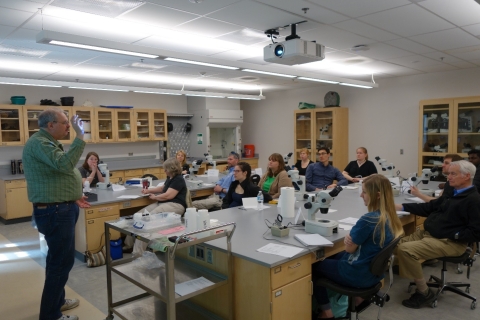
On May 1st and 2nd, we hosted an aquatic invertebrates identification workshop led by Dr. Ron Griffiths, an internationally recognized taxonomist who has taught many similar workshops in different countries around the world. The workshop was funded by the US EPA within the Great Lakes Long-Term Biological Monitoring project. Almost 20 participants enrolled, including Buffalo State faculty and staff, students, and our colleagues from USFWS.
The workshop was very intense and extremely productive. It was amazing how much the participants learned in just two days of work. Ron generously shared with us his vast experience in identification of major aquatic species in the Great Lakes and many stories about the history of benthic studies in the Great Lakes accumulated over the 40 years of his research. At the end of the workshop participants successfully passed the test and received training certificates. Thank you to Susan Daniel for organizing and coordinating this workshop!
Updates
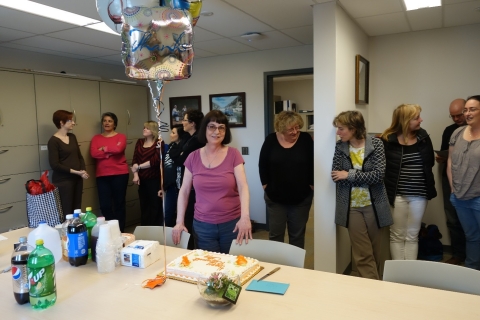
Happy Retirement to our secretary Cathleen Nasca!
As of April 30th, our dear Cathy has officially retired after many years working for Buffalo State. For the last 7 years she expertly coordinated multiple tasks maintaining our Center and was extremely helpful for all of us. We wish her a wonderful retirement. Fortunately for us, Cathy will be working part-time for a bit longer to help with the upcoming field season and to share her vast experience with her future replacement.
Field Station Open House: May 8th
Curious about what we are doing on the lakefront?
GLC Director Sasha Karatayev and Field Station Manager Mark Clapsadl cordially invite you and your guest to join us for an Open House event at our Field Station at the foot of Porter Avenue. The open house is on Friday, May 8 from 3:00 p.m. to 6:00 p.m.
Please join us to celebrate the end of the semester, taste wine and cheese, and share our plans for the coming Field Station season. For directions, view the map. Hope to see you there!
Long-term monitoring of Great Lakes benthos: progress to date
by Lyubov Burlakova and Alexander Karatayev
In the last six months, we’ve achieved a good progress in data processing, submission and analysis for the Great Lakes Long-Term Biological Monitoring project. In the fall of 2014, we submitted our first 2012 data to EPA’s Great Lakes National Program Office, which was a significant learning experience for us. Susie Daniel and the students working in her lab finished sorting samples collected in 2013 and started processing 2014 samples. We are planning to submit the 2013 benthic data to EPA this summer.
In a related project, Wendy Paterson identified invasive species in samples collected in Great Lakes ports. The samples were collected last summer from the ports in Buffalo, NY, on Lake Erie and Oswego, NY, on Lake Ontario. The focus of that project is to monitor for new invasive species.
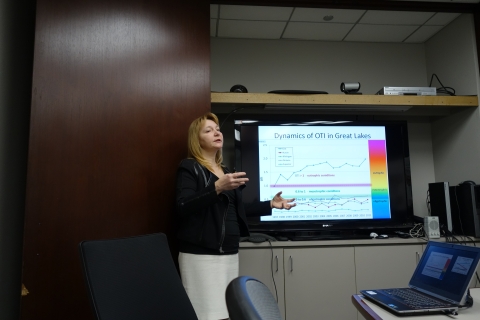
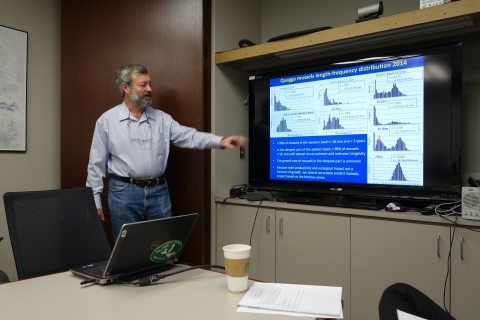
In February 2015, together with our partners from Cornell University Lars Rudstam and Jim Watkins, we attended a meeting with GLNPO in Chicago where Lyuba Burlakova discussed the 15-year dynamics of the Oligochaete Trophic Index in the Great Lakes. Sasha Karatayev and Knut Mehler presented results of Dreissena spp. study in Lake Erie using traditional sampling and video imaging analysis. Jim talked about enhanced zooplankton monitoring and Lars evaluated causes for ecosystem changes in Great Lakes. These presentations generated many questions; the meeting continued with discussion of 2015 sampling logistics and finished with a dinner in an Indian restaurant.
We will present our data on the 58th Annual Conference on Great Lakes Research (May 25-29, Burlington, Vermont), where together with our Cornell and EPA colleagues we will lead two sessions: “Long-Term Monitoring” and “Indicators of biotic integrity for the Great Lakes.”