

Gammarus tigrinus
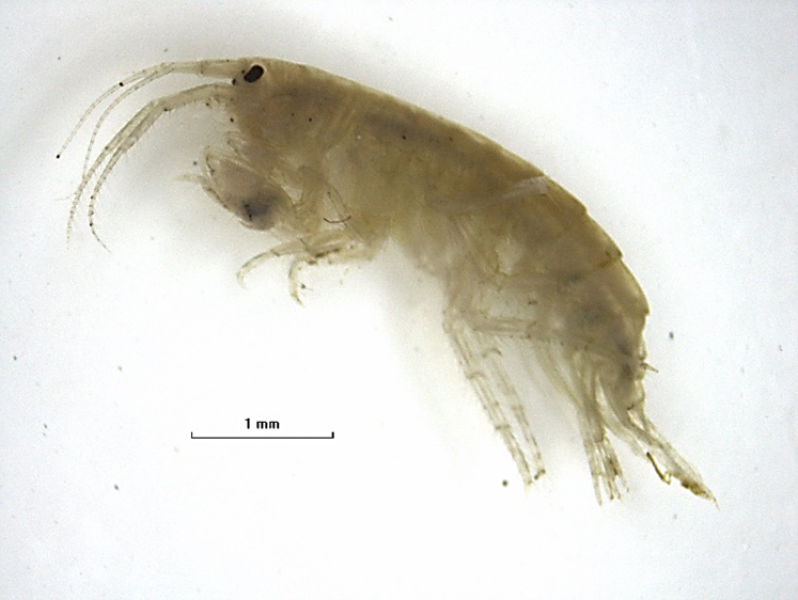
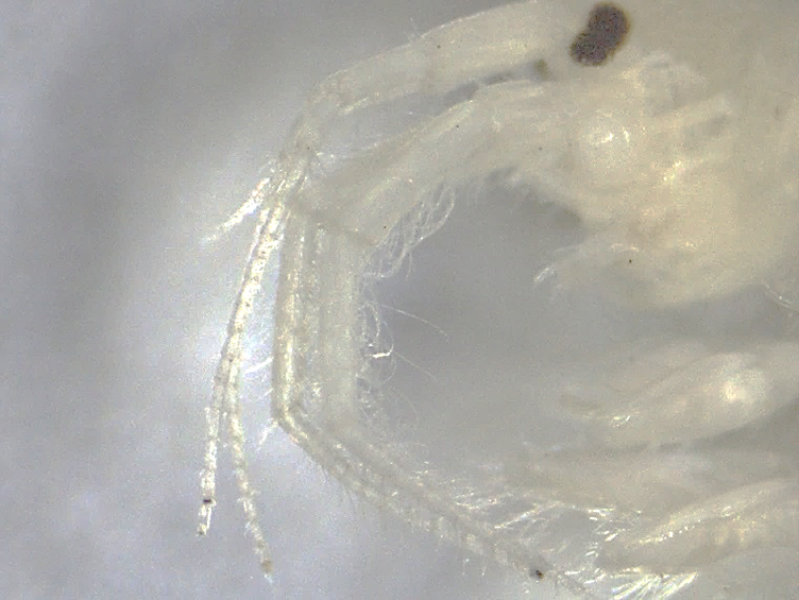
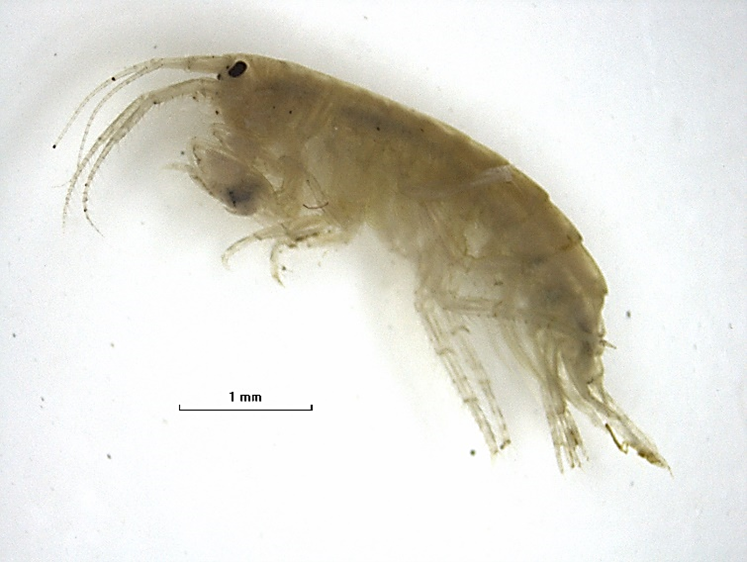
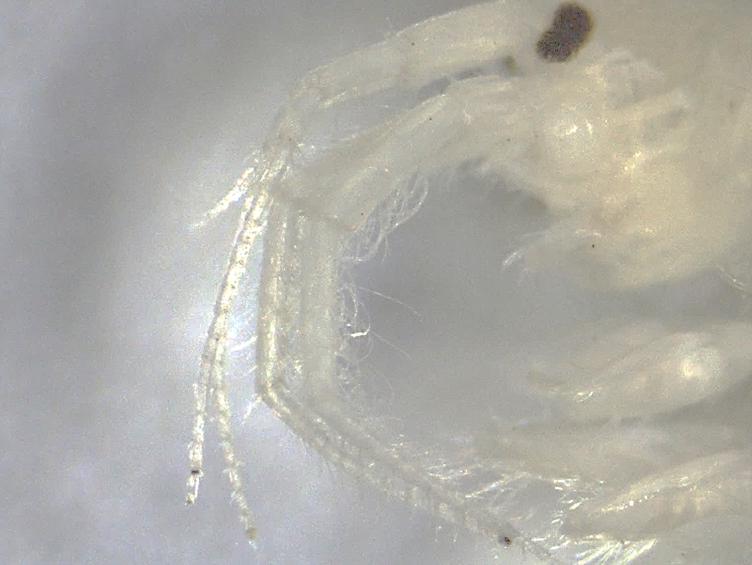
Gammarus tigrinus
Taxa description
Mature male tiger scuds, Gammarus tigrinus (Sexton, 1939), typically have relatively long and curly setae on the second antennae, distinct setae on their pereopods and 2-5 groups of posterior marginal setae on the 2nd peduncular (basal) segment of their 1st antennae. Females have fewer setae on the antennae and pereopods, however, still have more setae compared with native Amphipoda. Additionally, both sexes have long inner ramus on the 3rd uropod (differing from Echinogammarus ischnus). G. tigrinus also has distinct pigmentation dorsally in live or recently preserved specimens.
Distinguishing features
Habitat
Gammarus tirginus is native to the North American Atlantic coast and has expanded its range to shallow (<2m) coastal margins with silty sand overgrown by aquatic macrophytes and algae. The abundance and biomass of G. tigrinus vary as a function of wave exposure, water salinity and transparency, being higher at less exposed, less saline and more turbid sites (Kotta et al., 2014). Though this species has only been found in shallow zones, we recorded them at a 13.1m deep station; however, this could be due to recent rains and the outflow of the Humber River pushing individuals inhabiting Cladophora out to deeper water. Our notes of sediment characteristics support this conclusion, because there was a large amount of detritus, Dreissena shells, and Cladophora in the sample that could easily entangle amphipods.
Lake occurrence
Grigorovich, Kang, and Ciborowski (2005) reported that G. tigrinus is present in all Great Lakes, and in 2004 was only outnumbered by one native amphipod in nearshore zones (particularly Typha beds).
Similar species
Gammarus fasciatus, G. pseudolimnaeus, Echinogammarus ischnus
Relative size
Does it have a barcode reference from the Great Lakes?
References
Grigorovich, I.A., Kang, M. and Ciborowski, J.J., 2005. Colonization of the Laurentian Great Lakes by the amphipod Gammarus tigrinus, a native of the North American Atlantic Coast. Journal of Great Lakes Research, 31(3), pp.333-342.
Kotta, J., Torn, K., Reisalu, G., Veber, T., 2014. Relationships between mechanical disturbance and biomass of the invasive amphipod Gammarus tigrinus within a charophyte-dominated macrophyte community. Marine Ecology, 35(s1), 11-18.