

Ferrissia rivularis
-
1/5
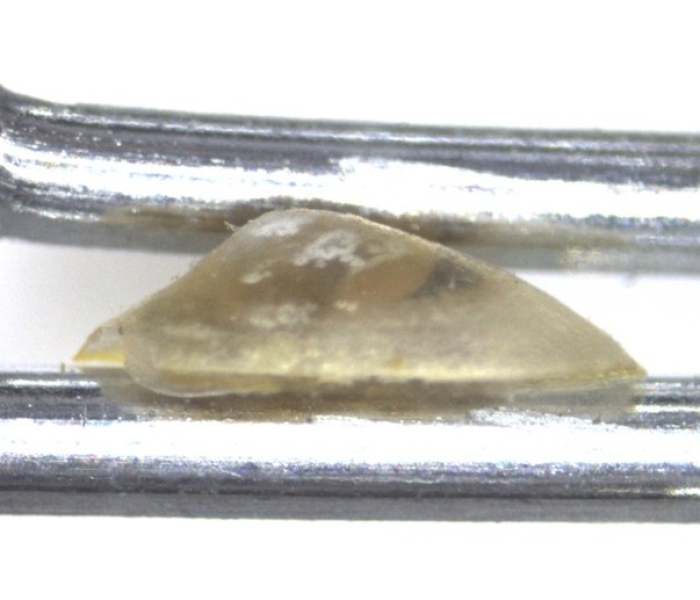
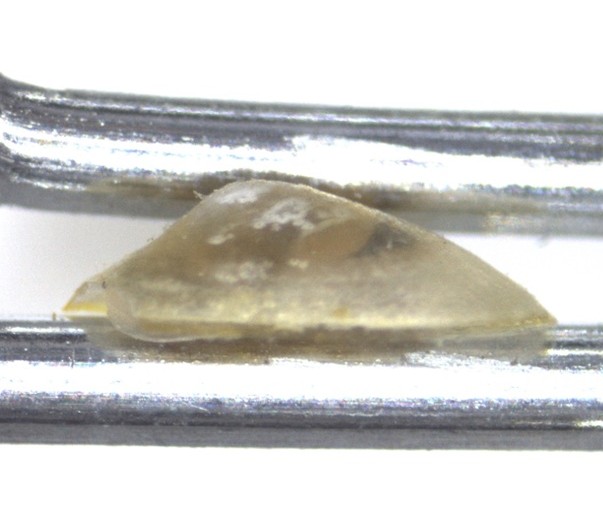
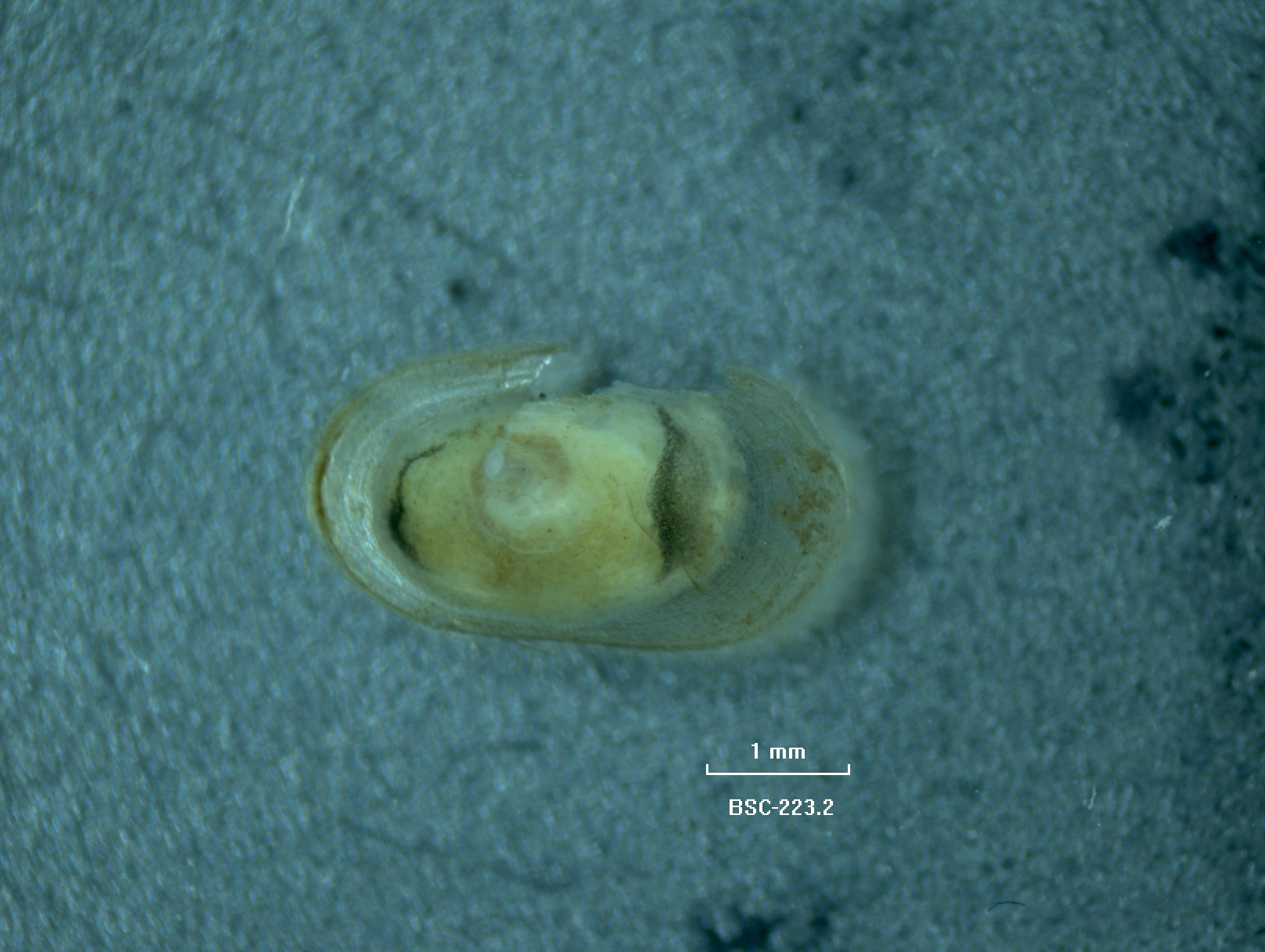
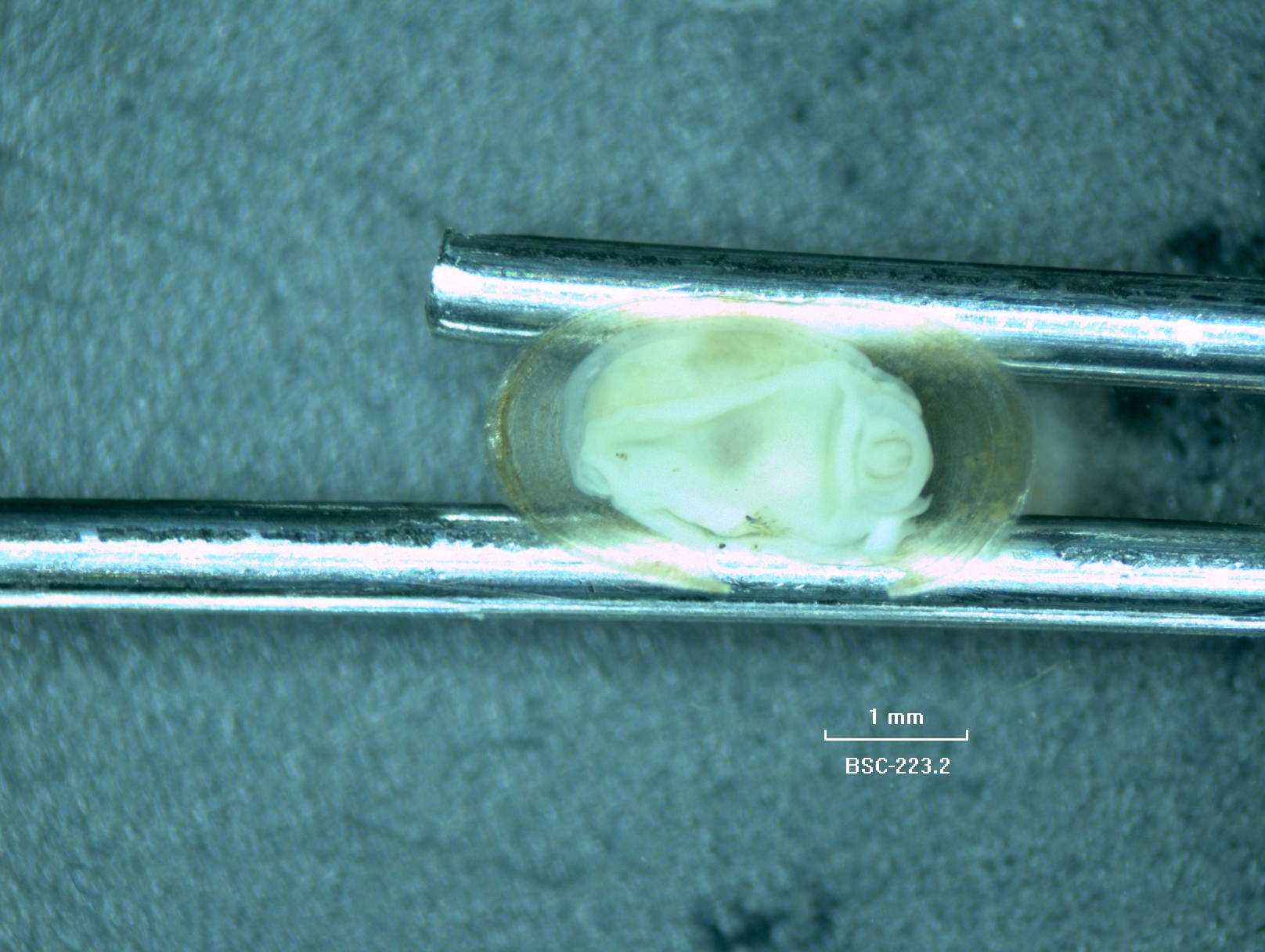
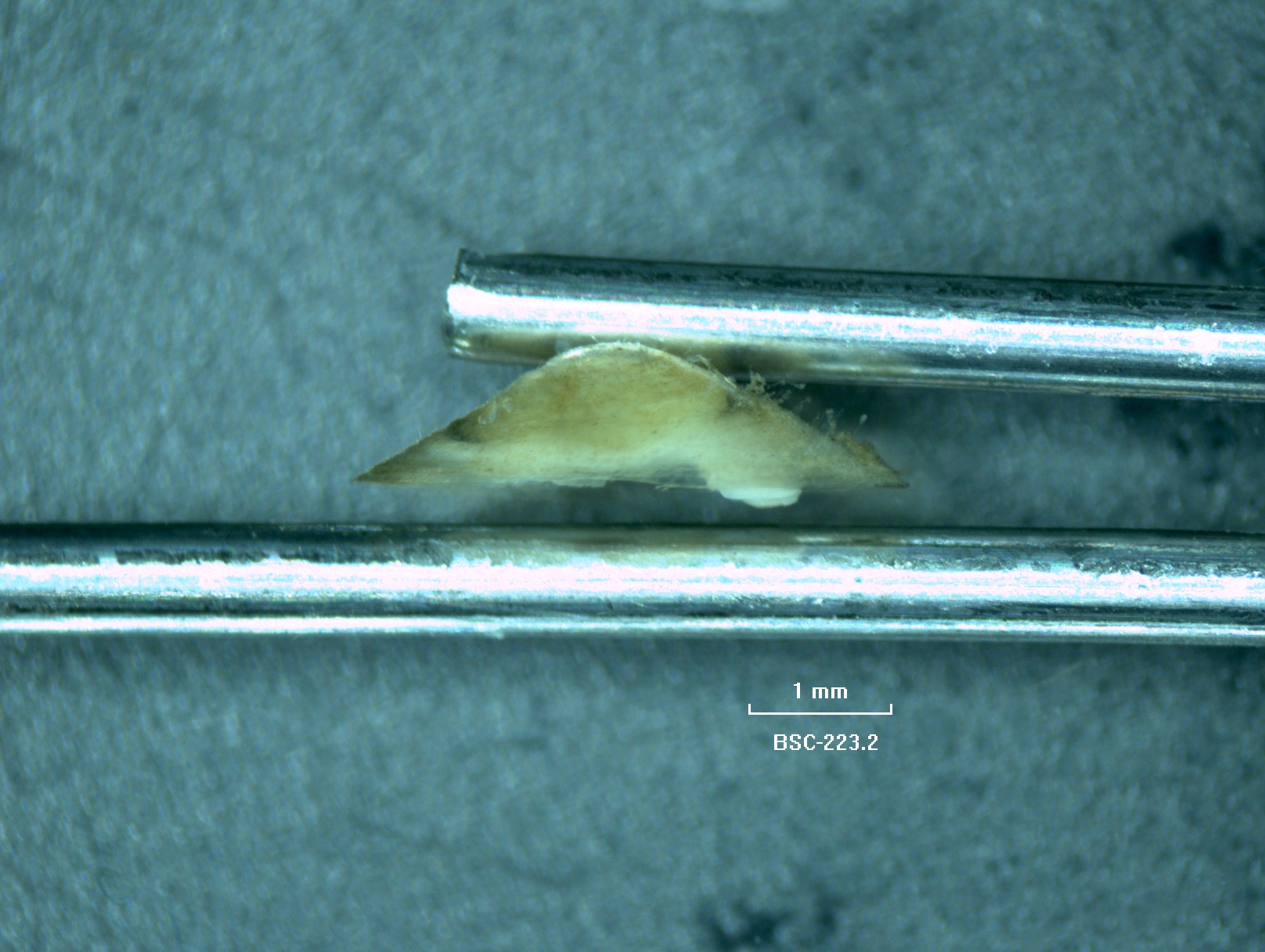
Figure 1. Ferrissia rivularis individual found in western Lake Erie during CSMI 2019. The apex may be central or slightly off center.
Download Image -
-
-
-
5/5
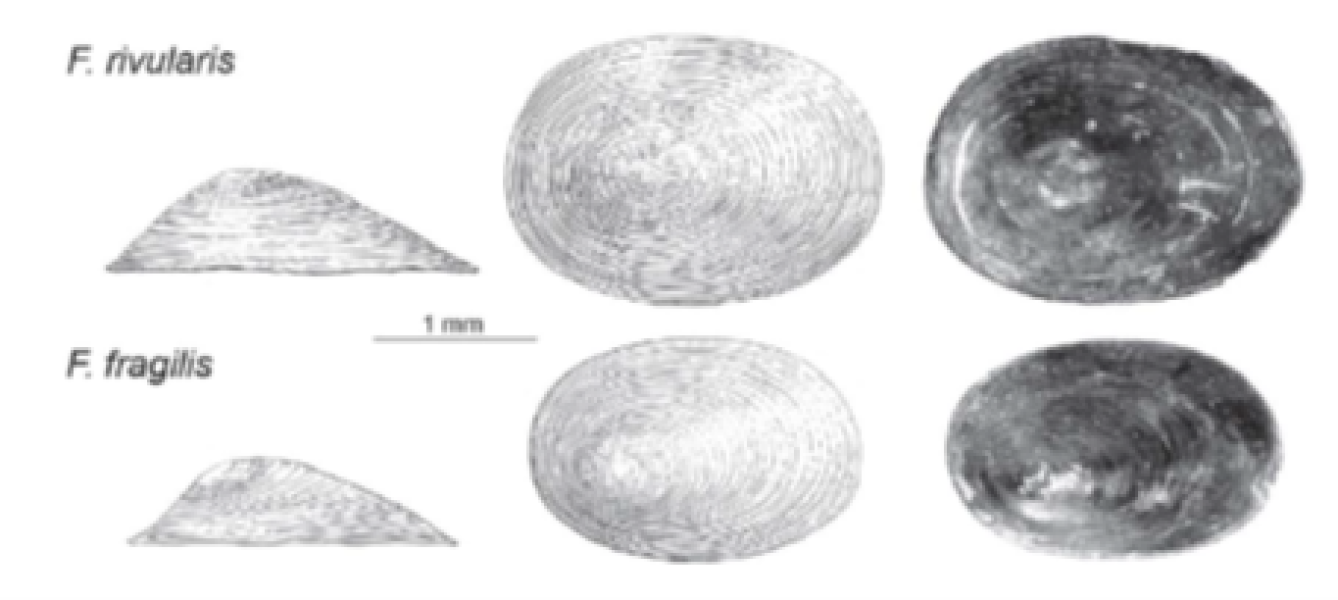
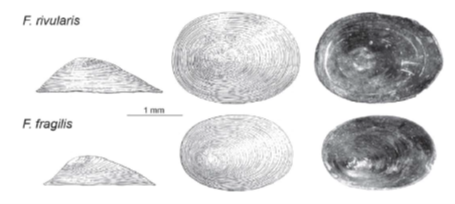
Figure 5. Comparative drawings (lateral and dorsal views) and photographs (dorsal views) of representative similar-sized Ferrissia rivularis and F. californica (formerly F. fragilis) specimens that were sampled sympatrically from a Crystal Lake tributary in Benton Co., Arkansas (ARL) and then genotyped. Note that the F. californica specimen was distinguished by an eccentric apex that was depressed, positioned posterior to the shell summit, and posteriad (modified from Walther et al., 2010).
Download Image
Ferrissia rivularis
Taxa description
Members of the gastropod genus Ferrissia Walker, 1903, have a near-cosmopolitan distribution in freshwater ecosystems. Five North American species, distinguished by conchological habitat and distribution details, are generally recognized, but hard to distinguish in practice. Revisiting systematics and taxonomy using molecular phylogenies, Walther et al. (2010) found two highly distinctive Ferrissia clades widely distributed across North American watersheds: F. rivularis and F. fragilis. The first clade is restricted to North America and exclusively composed of lotic F. rivularis (Say, 1817) and lentic F. parallela (Haldemann, 1841) that exhibited geographic, rather than taxonomic, genetic structuring, suggesting that F. parallela is a junior synonym of F. rivularis. The other clade contained four species, with F. fragilis having taxonomic priority. Recently Christensen (2016) replaced species name fragilis with the senior synonym californica, and suggested Ferrissia californica (Rowell, 1863) as the valid name for this species.
Ferrissia rivularis (Say, 1817) is also known as creeping ancylid.
Distinguishing features
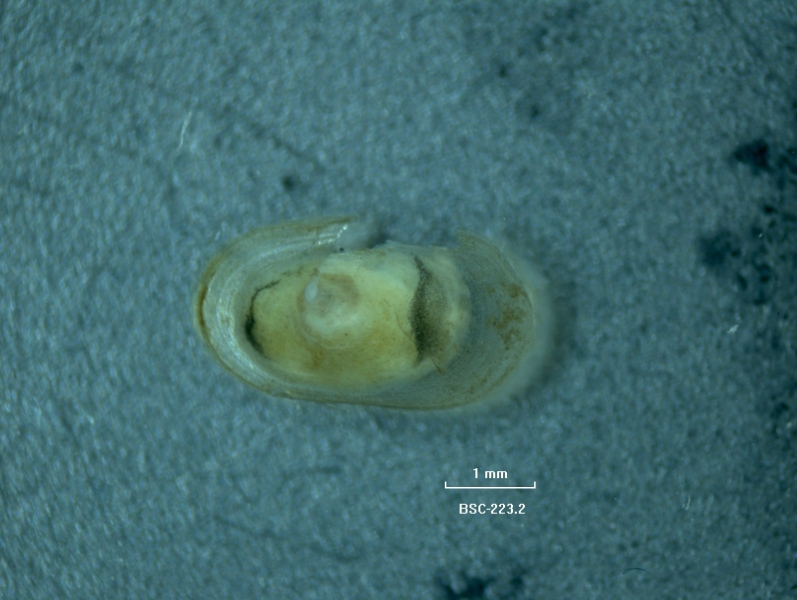
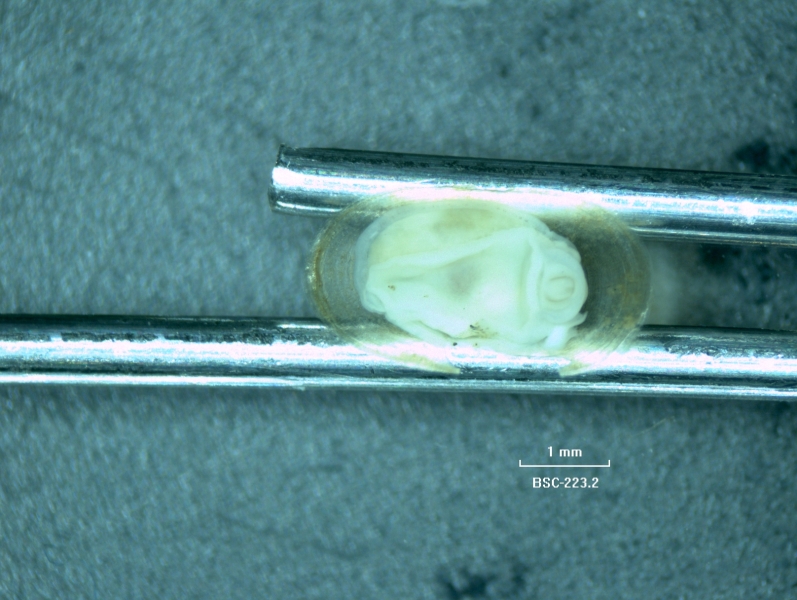
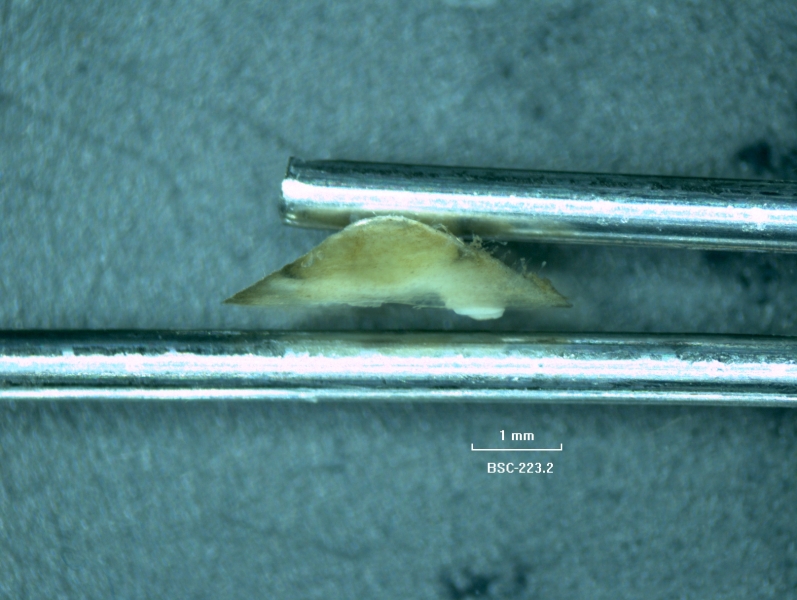
Adult Ferrissia rivularis are up to 9 mm in length, with less fragile shells than that of sympatric F. californica. Although there was some minor individual variation, adult F. rivularis had apices (protoconchs) that were typically positioned at the shell summit and were consistently less eccentric, depressed, and posteriad in orientation than those of similarly-sized sympatric F. californica.
Habitat
Ferrissia rivularis (former F. parallela) is fairly common on aquatic vegetation and in substrates ranging from mud to sand, stones, on narrow-bladed plants in lentic environments, while F. californica from vegetation and organic debris in flowing water, and on broad-leaved plants in lentic environments (reviewed in Mackie et al., 1980; Jokinen, 1992). Jokinen’s (1987) analysis of the distribution of F. rivularis (listed as F. parallela) in Connecticut and New York led her to classify it as a “C-D tramp,” potentially present in nearly every community. It is common in shallow zone of Great Lakes and watersheds (Mackie et al., 1980; Walther et al., 2010; Jokinen, 1992).
Lake occurrence
It was recorded in Lake Erie (Pliodzinskas, 1979; Krieger, 1985; Herdendorf et al., 2006;), Lake Huron (Barton, 2004), and Lake Ontario (Glass et al., 2014; Trebitz et al., 2019).
Similar species
Ferrissia rivularis and F. californica differ in several conchological traits, including maximum body size, details of apex positioning and sympatric populations. Adult Ferrissia rivularis are much larger (≤ 9 mm in length) than F. californica (≤ 3.5 mm in length; Fig. 5). Ferrissia californica shells (as name implies) are more fragile than that of sympatric F. rivularis, and many of the former were inadvertently damaged by routine handling during sampling and/or tissue extraction. Although there was some minor individual variation, adult F. californica had apices (protoconchs) that were typically positioned just posterior to the shell summit (at the shell summit for F. rivularis clade and were consistently more eccentric, depressed and posteriad in orientation than those of similarly-sized sympatric F. rivularis.
F. rivularis is also similar to another limpet, Laevapex fuscus, but L. fuscus's shell is more depressed than F. rivularis, with a lower, more centered apex.
Relative size
Adult Ferrissia rivularis are up to 9 mm in length.
Does it have a barcode reference from the Great Lakes?
Yes, this species does have a barcode reference from the Great Lakes.
References
Burch, J.B. 1982. Freshwater Snails (Mollusca: Gastropoda) of North America. EPA-600/3-82-026. U.S. EPA, Cincinnati, Ohio.
Mackie, G.L., D.S. White, and T.W. Zdeba. 1980. A Guide to the Freshwater Mollusks of the Laurentian Great Lakes with Special Emphasis on the Genus Pisidium. EPA-600/3-80-068. U.S. EPA, Duluth, MN.
Jokinen, E.H. 1992. The freshwater snails (Mollusca: Gastropoda) of New York State. New York State Museum Bulletin 482: 1-112.
Walther, A. C., J. B. Burch, and D. O Foighil. 2010. Molecular phylogenetic revision of the freshwater limpet genus Ferrissia (Planorbidae: Ancylinae) in North America yields two species: Ferrissia (Ferrissia) rivularis and Ferrissia (Kincaidilla) fragilis. Malacologia, vol. 53, no. 1. 25-45.
Occurrence in scientific literature
Barton, D.R. 2004. Differences in wave-zone benthic invertebrate communities in Lake Huron and Georgian Bay, 1974–2003. J. Great Lakes Res. 30, 508-518.
Christensen, C. C. 2016. Change of status and name for a Hawaiian freshwater limpet: Ancylus sharpi Sykes, 1900, is the invasive North American Ferrissia californica (Rowell, 1863), formerly known as Ferrissia fragilis (Tryon, 1863) (Gastropoda: Planorbidae: Ancylinae) Bishop Museum Occasional Papers 118: 5-8.
Herdendorf, C.E., Klarer, D.M., Herdendorf, R.C. 2006. The ecology of Old Woman Creek, Ohio: an estuarine and watershed profile – second edition. Ohio Dept. Natural Resources, Division of Wildlife, Columbus, Ohio, 452 pp.
Glass, W.R, Mandrak, N.E., Koops, M.A. 2014. Application of the Ecologically Significant Species Criteria to the aquatic community of the Bay of Quinte, Lake Ontario. DFO Can. Sci. Advis. Sec. Res. Doc. 2014/043. v + 32 p.
Jokinen, E. 1987. Structure of freshwater snail communities: Species-area relationships and incidence categories. Amer. Malac. Bull. 5: 9 - 19.
Krieger, K. A. 1985. Snail distributions in Lake Erie: the influence of anoxia in the southern central basin nearshore zone. Ohio J. Sci. 85 (5): 230-244.
Pliodzinskas, A.J. 1979. A general overview of Lake Erie's nearshore benthic macroinvertebrate fauna. Ohio State University, Center for Lake Erie Area Research Tech. Rept. No. 126, Columbus, Ohio. 83 p.
Trebitz, A., Maicie, S., Barge, J. 2019. A reference inventory for aquatic fauna of the Laurentian Great Lakes. Journal of Great Lakes Research 45: 1036–1046.