

Dero vaga
-
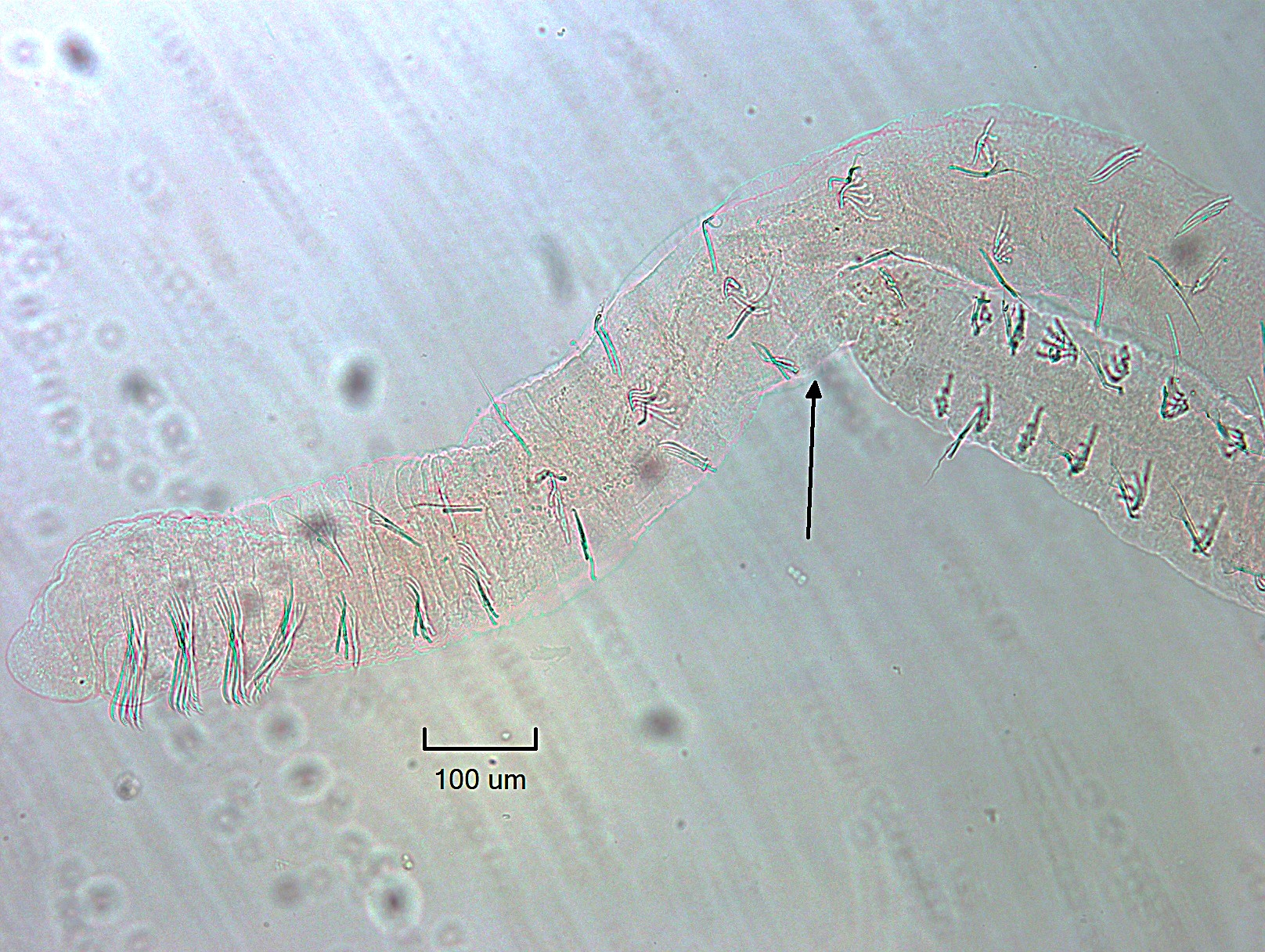
1/6
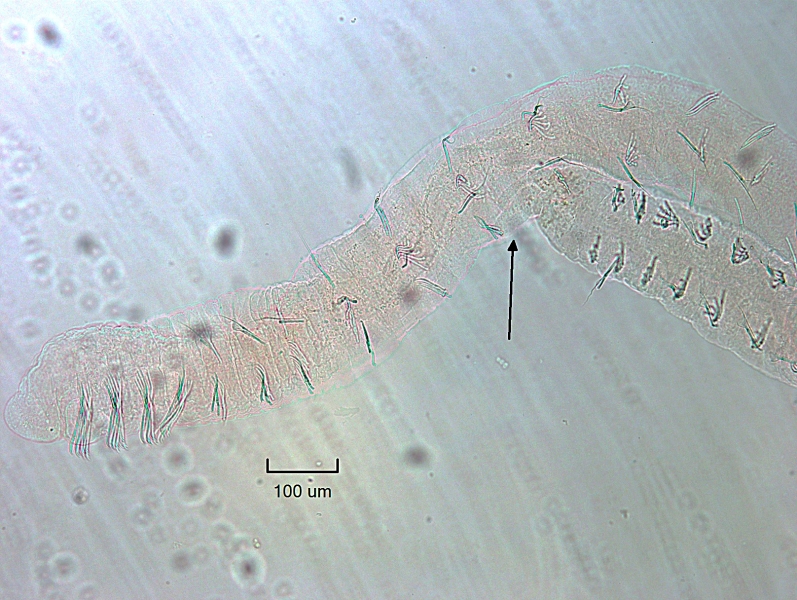
Figure 1. D. vaga has noticeably longer ventral chaetae anteriorly, is missing some anterior dorsal chaetae, has hairs with broadly palmate needles, and has two palps posteriorly.
Download Image -
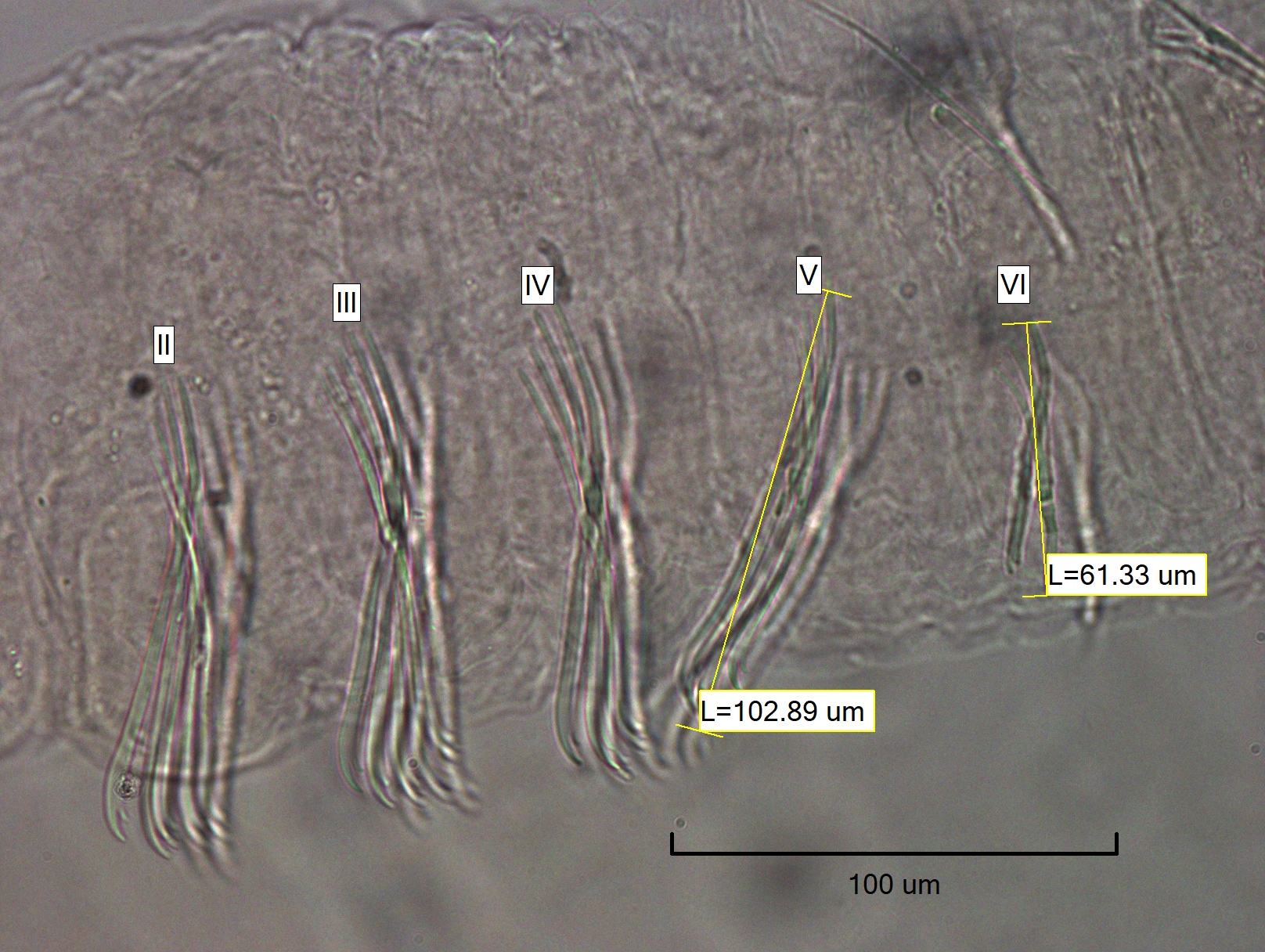
2/6
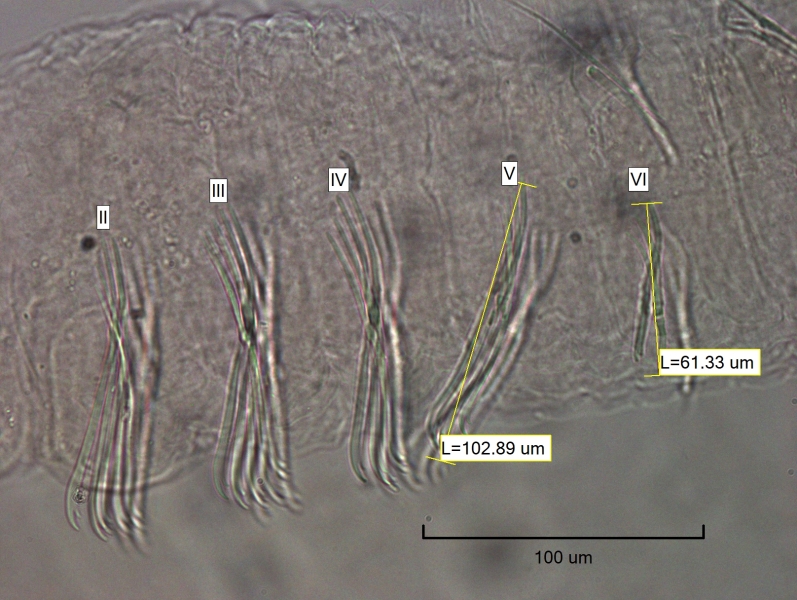
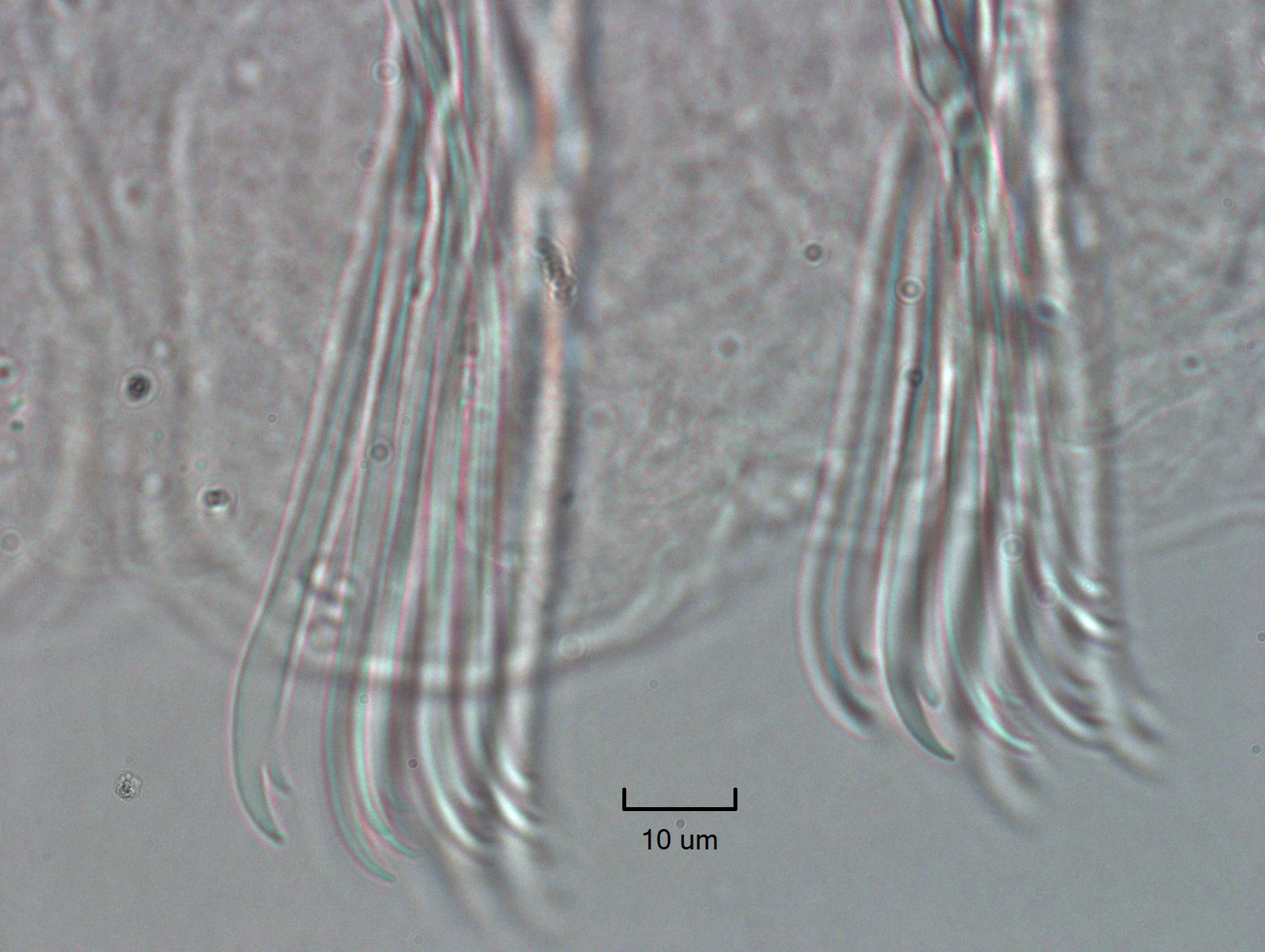
Figure 2. The ventral chaetae of II through V are about twice as long as chaetae from VI and onward.
Download Image -
3/6
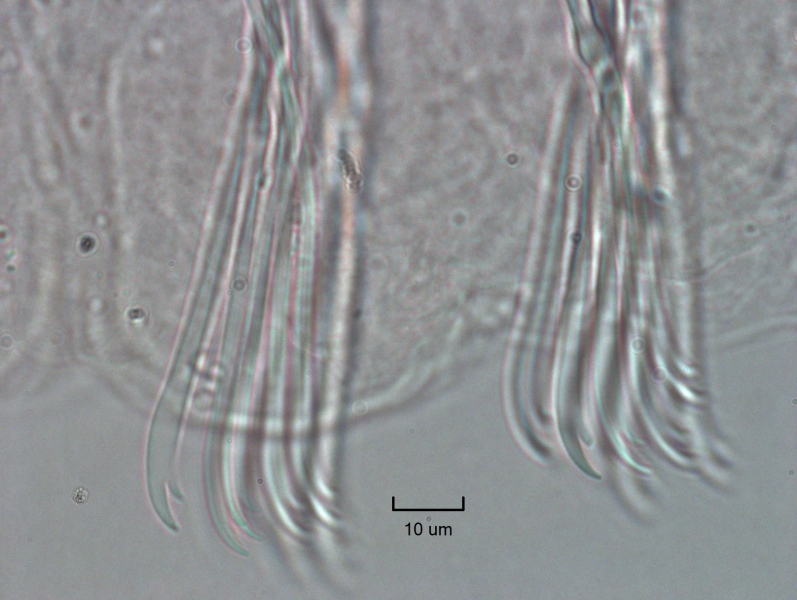
Figure 3. The anterior ventral chaetae have an upper tooth about twice as long as the lower. This individual has about 5 chaetae per bundle, although there are usually 7–14 per bundle.
Download Image -
-
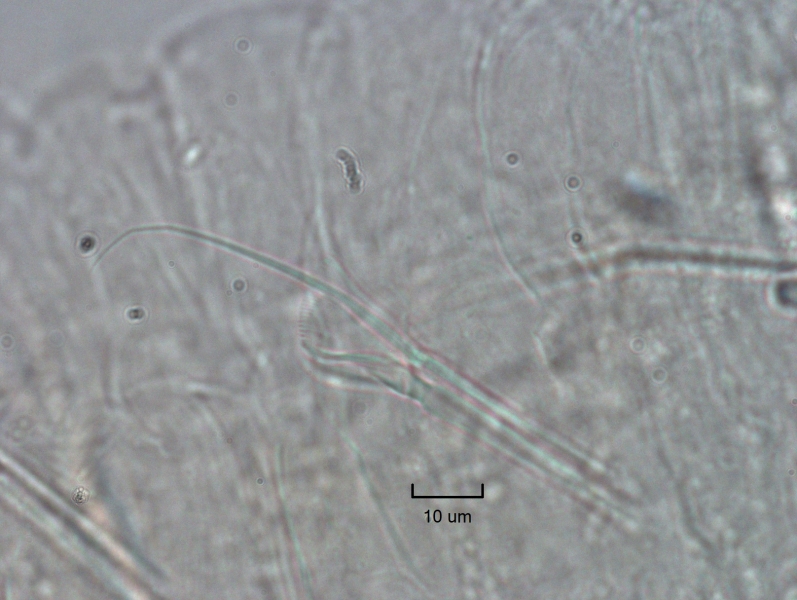
5/6
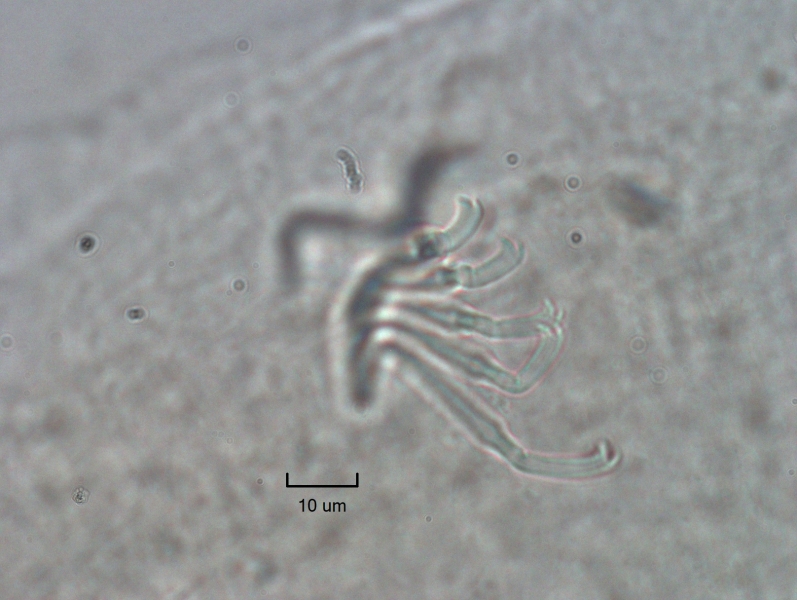
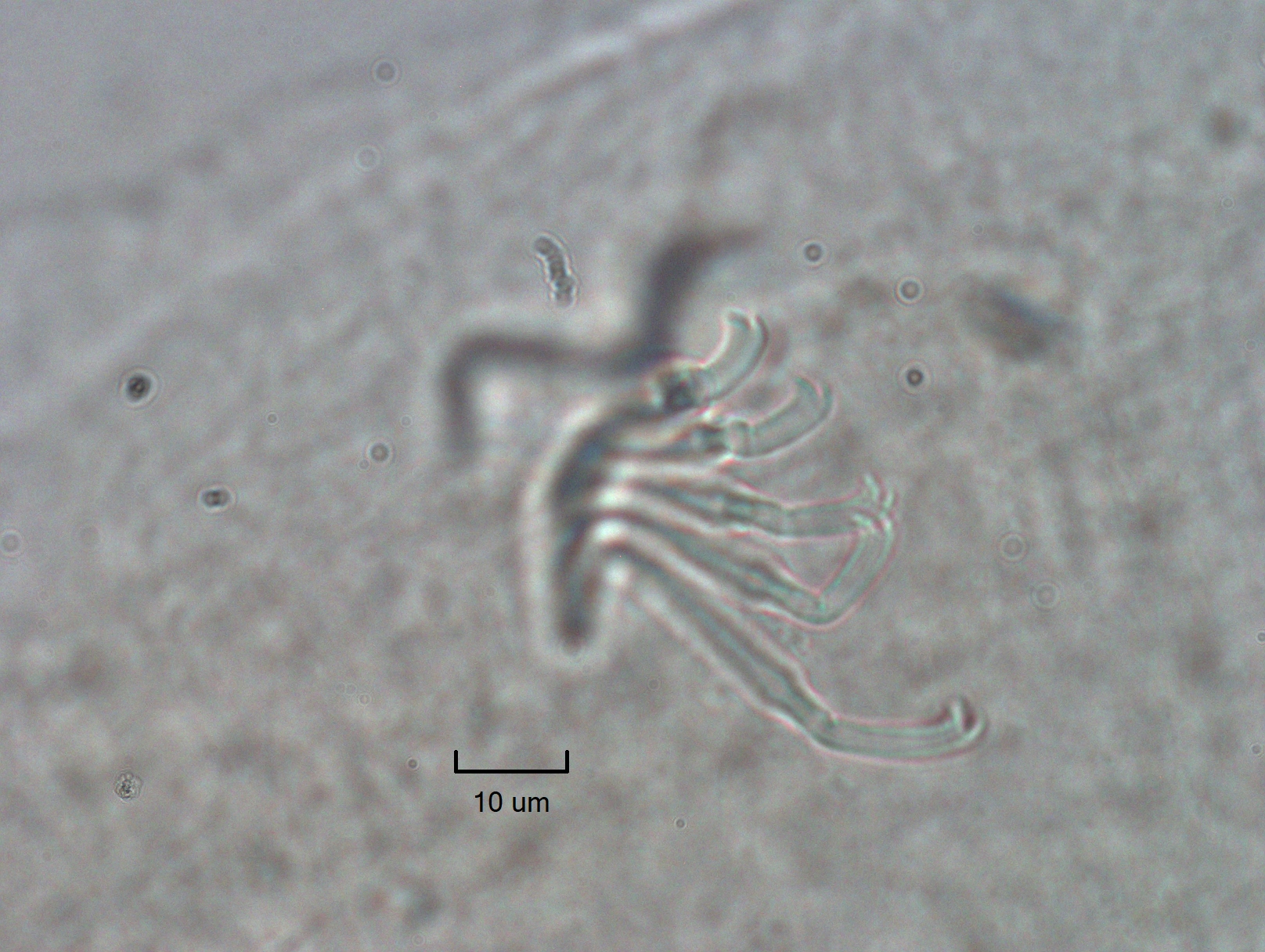
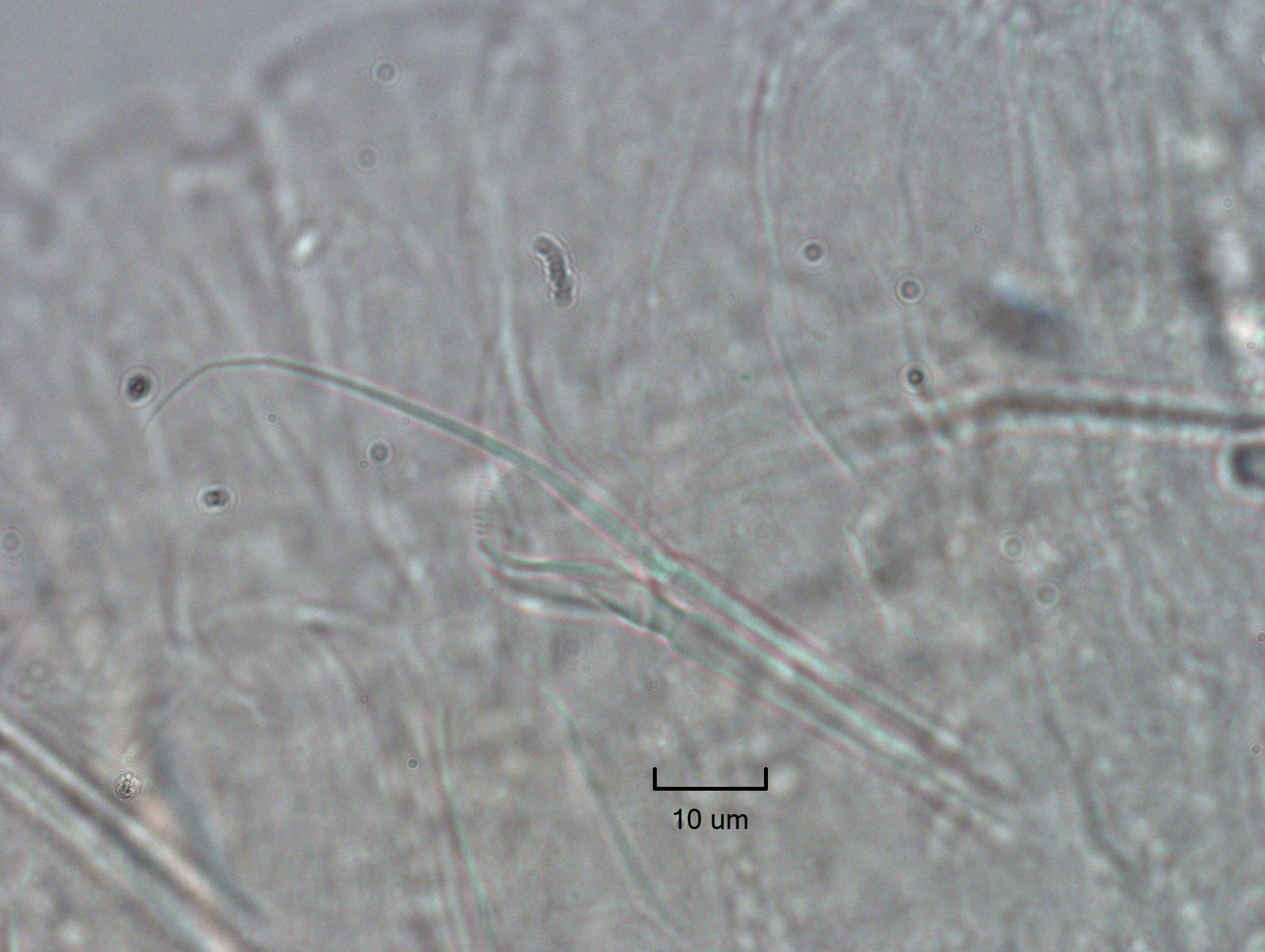
Figure 5. There are 1–3 hairs and 1–3 broadly palmate needles. The fan-shaped ends are symmetrical with fused intermediate teeth that may be faint compared to the outer margins, which are much easier to see.
Download Image -
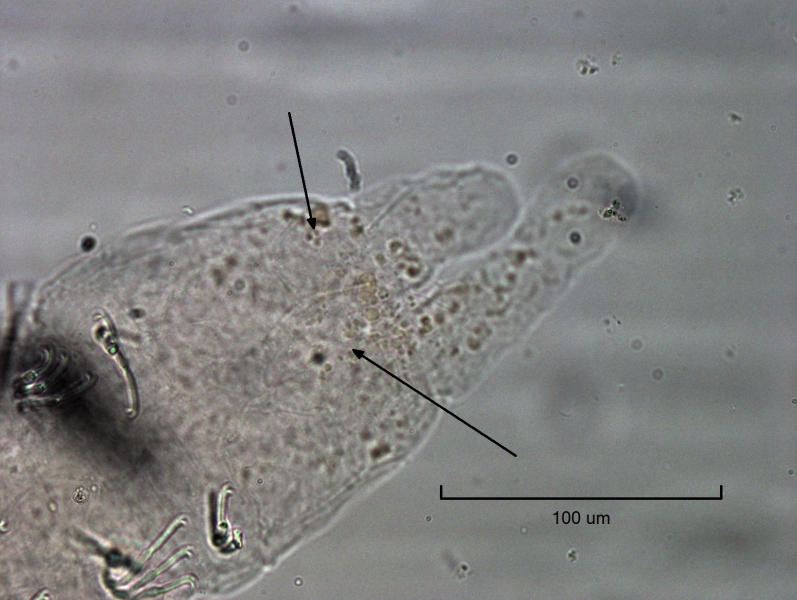
6/6
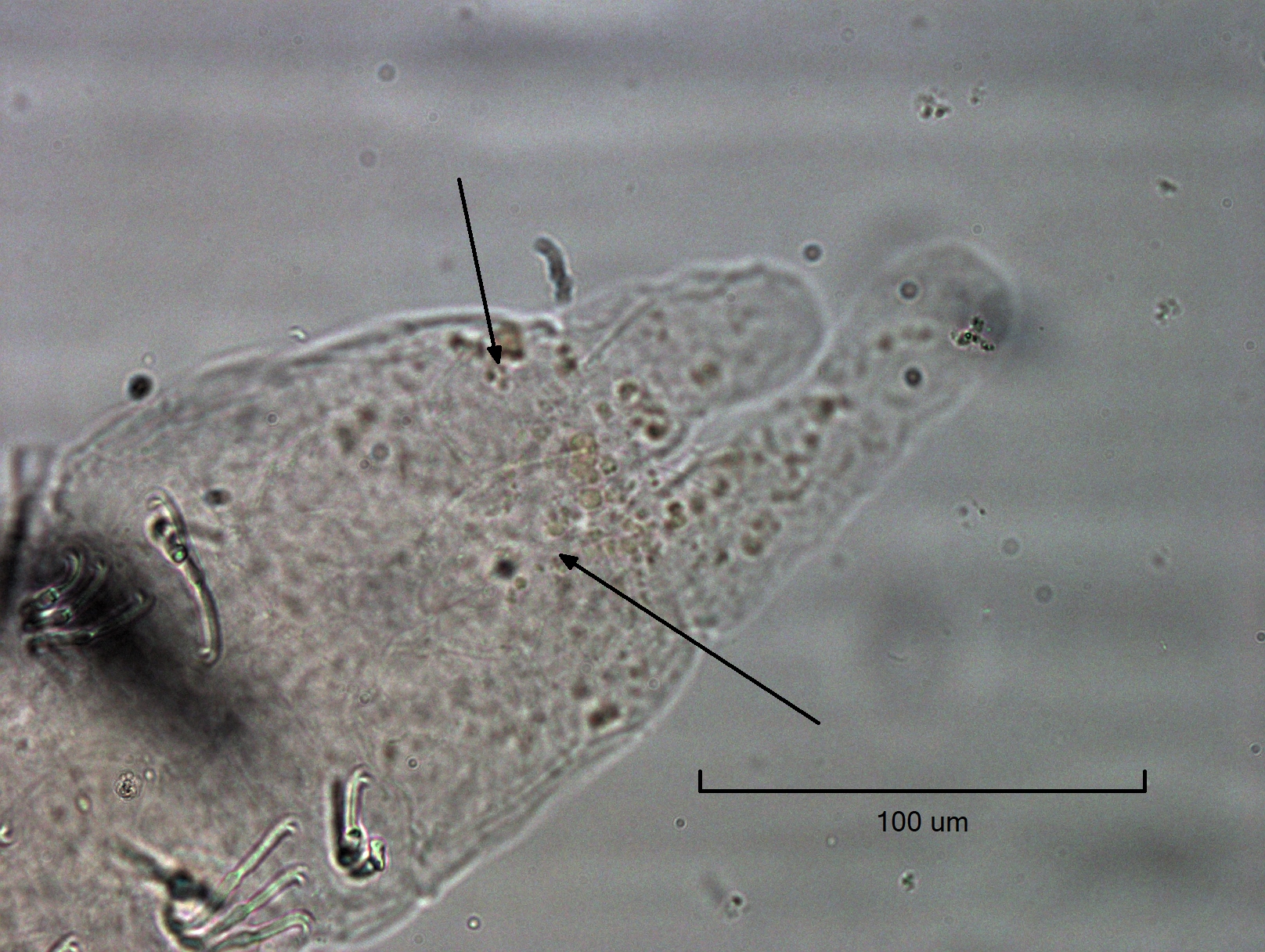
Figure 6. The branchial fossa has 1–2 pairs of very small gills (arrows) and two ciliated palps.
Download Image
Dero vaga
Taxa description
Dero vaga is a freshwater oligochaete worm that is uncommon in the Great Lakes. It is a naidid worm with dorsal bundles with hair chaetae beginning in VI, ventral chaetae beginning in II, no proboscis, and the posterior end has branchial fossa with gills and ciliated palps. This species of subgenus Dero (Aulophorus) is free living, not endocommensal. Dorsal bundles start in VI with 1–3 hairs and 1–3 broadly palmate needles that are a symmetrical blade with fused intermediate teeth. The dorsal needles of D. vaga might be hard to distinguish because the outer teeth are very distinct but the fused intermediate teeth are very faint, and if viewed on a different aspect they might just appear to be broken or hooked. The ventral chaetae of II–V have up to 7–14 chaetae per bundle with the upper tooth longer than the lower, which are up to twice as long as the posterior ventrals. Bundles in VI and beyond have 4–7 ventral chaetae that have very short upper teeth. The branchial fossa usually has 1–2 pairs of small gills and 2 palps, but these features may be missing in fragmented individuals or hard to see when preserved and mounted. It is common to have variation in the morphology of chaetae in Dero spp. depending on environmental conditions.
Distinguishing features
D. vaga is identified mainly by the branchial fossa with usually 1–2 pairs of gills and 2 palps on the posterior end, without which identification could be difficult. Another distinguishing factor is that the needle chaetae are broadly palmate symmetrical blades with fused intermediate teeth. Other features include dorsal bundles with 1–3 hairs and 1–3 needle chaetae starting in VI, anterior ventral chaetae with the upper tooth longer than the lower, posterior ventral chaetae with very short upper teeth, and the anterior ventrals are up to twice as long as the posterior ventrals.
Habitat
Benthic, littoral, and tributaries and wetlands. Previous occurrences of D. vaga in the Great Lakes include Old Woman Creek, Ohio (Krieger and Stearns, 2010), and Lake Erie (NOAA and USEPA 2019).
Lake occurrence
Lake Erie.
Similar species
D. vaga could be confused with some other Dero species. The closest species would be D. flabelliger. They both have broadly palmate needles, anterior ventrals up to twice as long as posterior ventrals, and a few pairs of gills in fossa with 2 ciliated palps. However, D. flabelliger has larger, asymmetrical bladed needles that do not appear to be made from fused intermediate teeth. If the posterior is visible, it has more pairs of longer gills, not tiny gills, although the two palps may be all that is visible. D. flabelliger usually has fewer chaetae, with only 1 hair and 1 needle dorsally and 5–7 anterior ventrals per bundle. Many of the other Dero species have unique dorsal chaetae in a variety of shapes or a different number or presentation of gills and ciliated palps.
Since the most identifying feature of Dero species is the posterior end, fragmented specimens could be confused with Nais communis or N. variabilis. Compared to other Dero sp. however, D. vaga has broadly palmate, blade-like dorsal needles, whereas N. communis or N. variabilis will have straight bifid needles with even teeth, so it is less likely to be mistaken for Nais sp.
Relative size
Dero vaga is generally a small oligochaete worm similar in size to other naidid worms.
Does it have a barcode reference from the Great Lakes?
No, this species does not yet have a barcode reference from the Great Lakes.
References
Hiltunen, J.K., and D.J. Klemm. 1980. A Guide to the Naididae (Annelida: Clitellata: Oligochaeta) of North America. pp. 16–18, 34.
Kathman, R.D., and R.O. Brinkhurst. 1998. Guide to Freshwater Oligochaetes of North America. pp. 66–75, 36, 40, 80, 88–89.
Krieger, K.A., and A.M. Stearns. 2010. Atlas of the Aquatic Oligochaete Worms (Phylum Annelida: Class Clitellata: Superorder Microdrili) Recorded at the Old Woman Creek National Estuarine Research Reserve and State Nature Preserve, Ohio. p. 14.
NOAA and USEPA. 2019 Great Lakes Waterlife. Accessed on 05/08/2025.
Occurrence in scientific literature
Spencer, D.R., Hudson, P.L. 2003. The Oligochaeta (Annelida, Clitellata) of the St. Lawrence Great Lakes region: an update. J. Great Lakes Res. 29, 89-104.
Brode, H.S. 1898. A contribution to the Morphology of Dero vaga (PDF). J. Morph., vol. xiv (1898), pp. 141-180, pls. XIII-XVI. Accessed 05/08/2025).