

Dero digitata
-
1/7
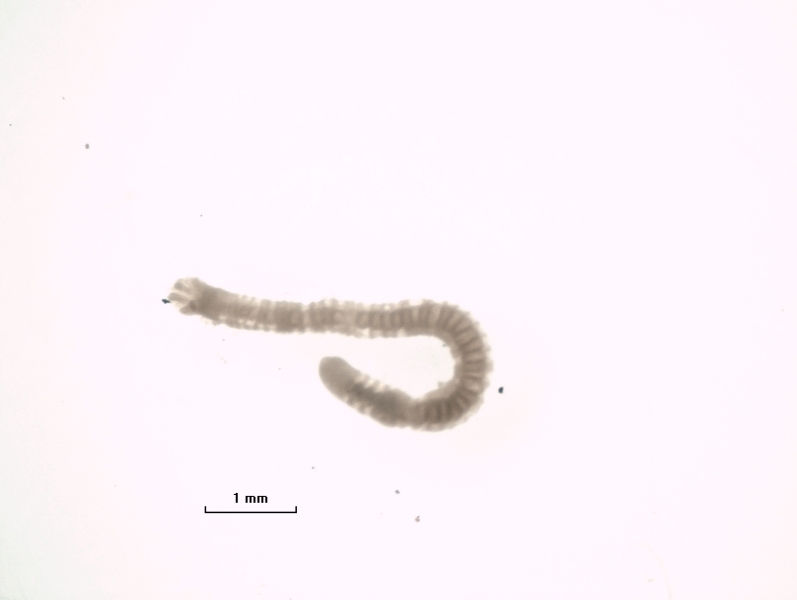
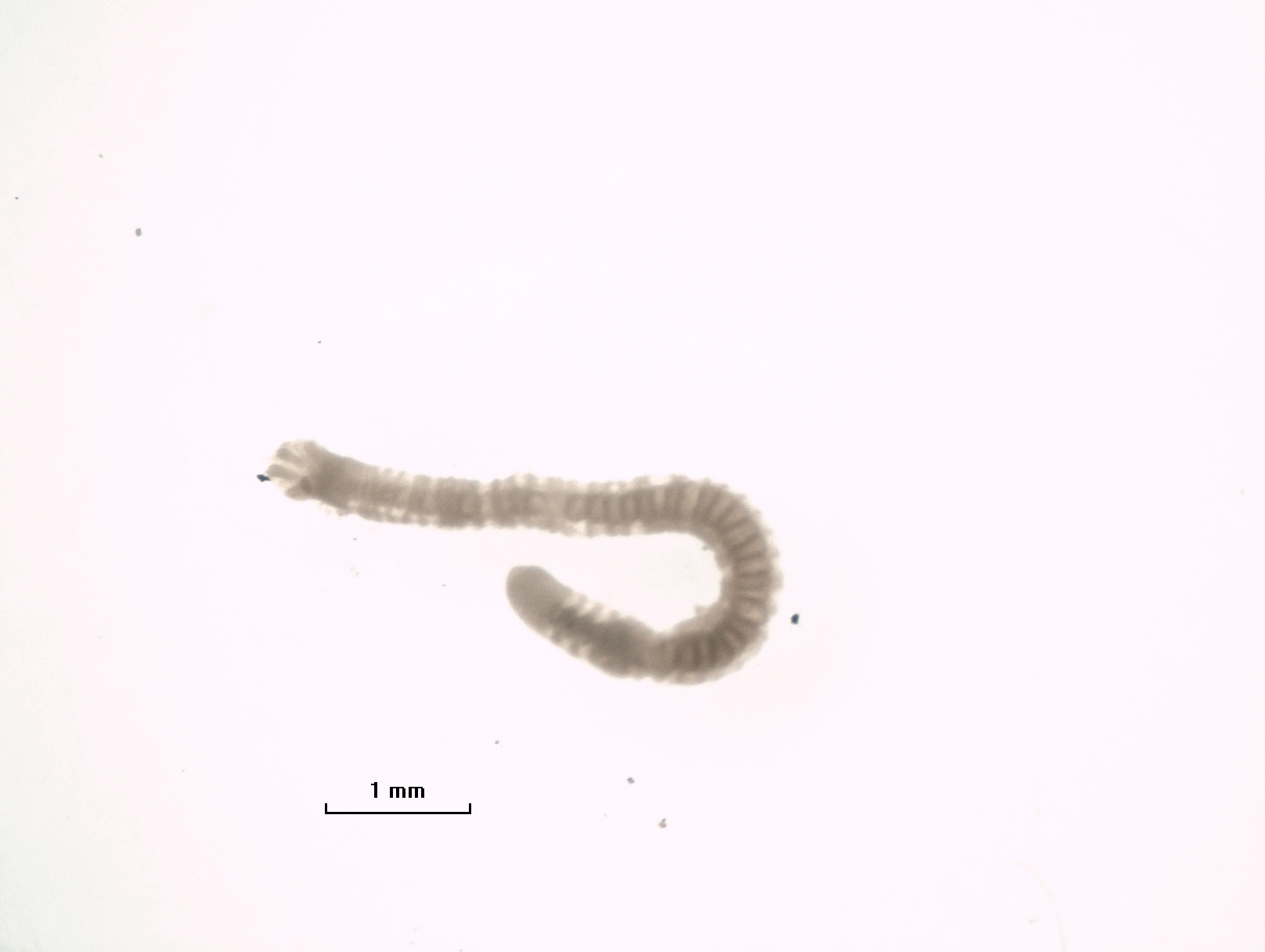
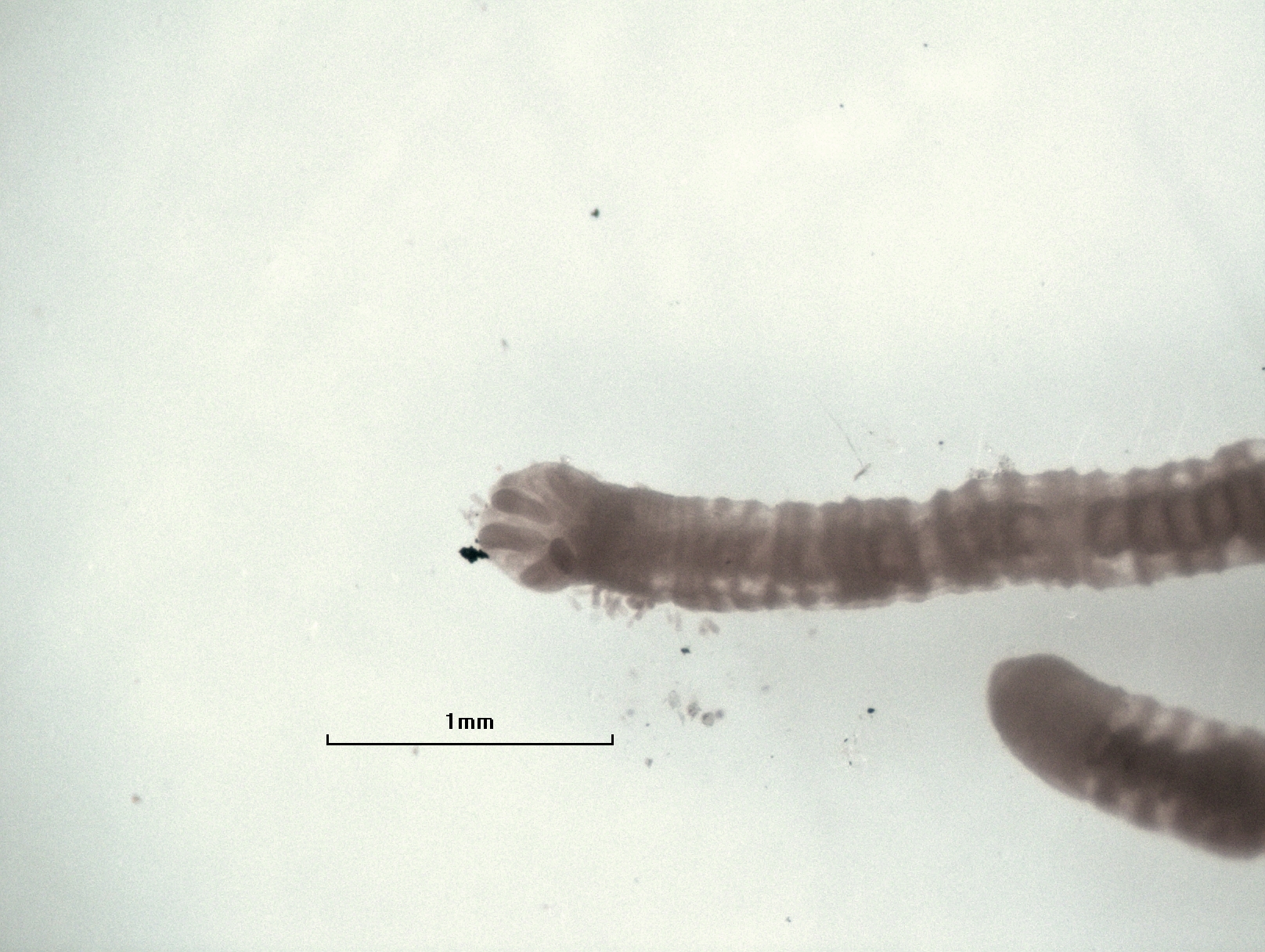
Figure 1. An unmounted Dero digitata. If the specimen is whole, you will see the fossa with gills.
Download Image -
2/7
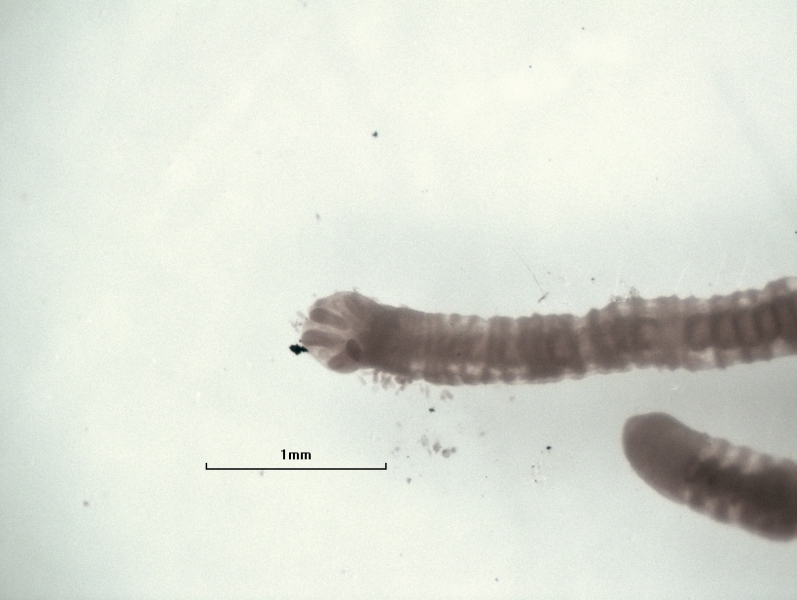
Figure 2. An unmounted Dero digitata displaying the pairs of gills in the fossa. The appearance of the gills of unmounted specimens are much different from mounted specimens which can be squished by the coverslip and then cleared by the mounting media, making the gills harder to see.
Download Image -
3/7
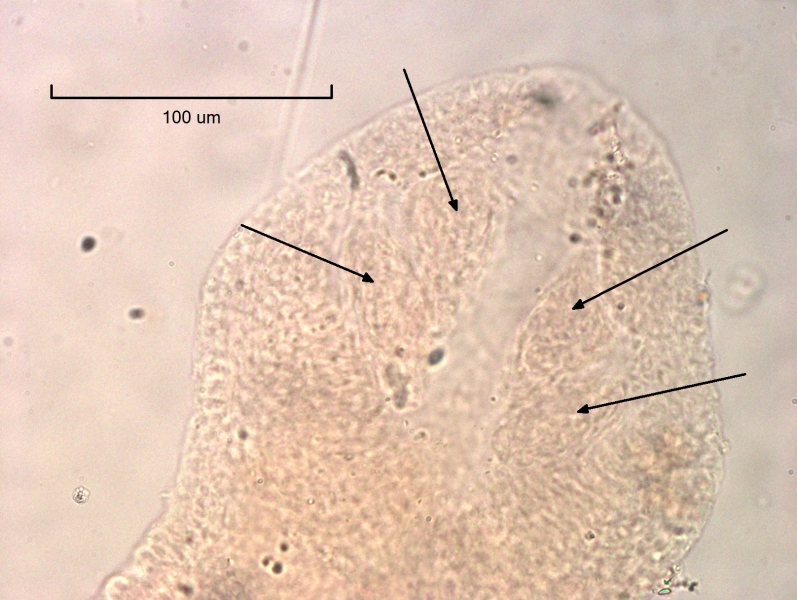
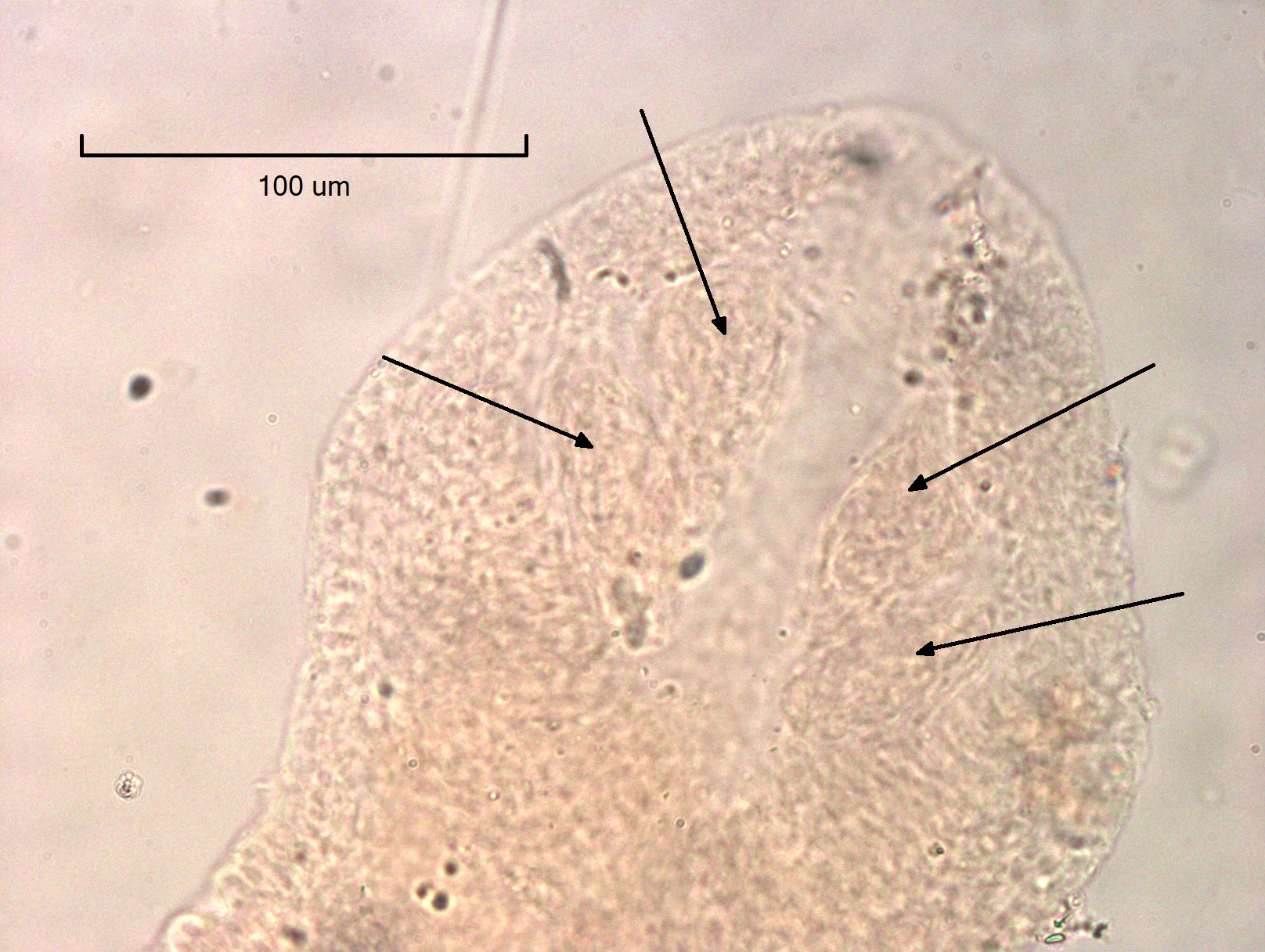
Figure 3. A couple pairs of gills are faintly visible (with arrows) in this mounted D. digitata specimen.
Download Image -
-
5/7
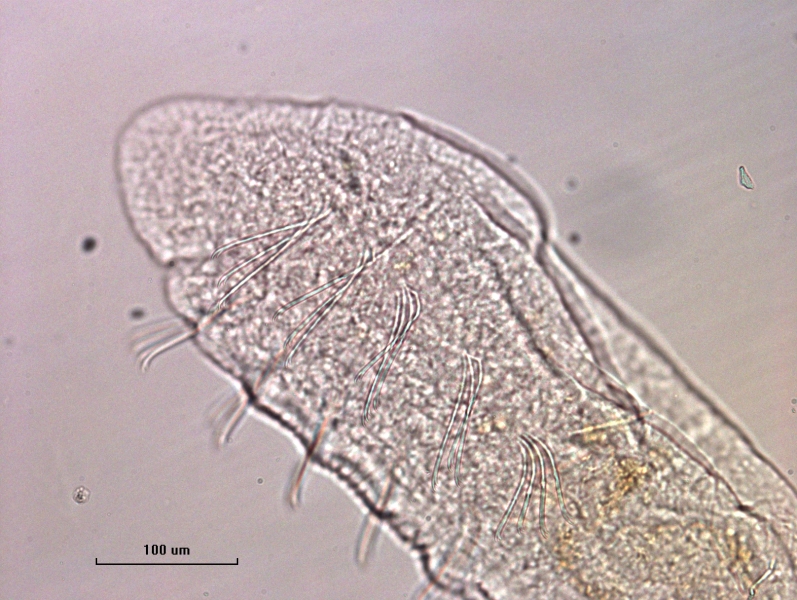
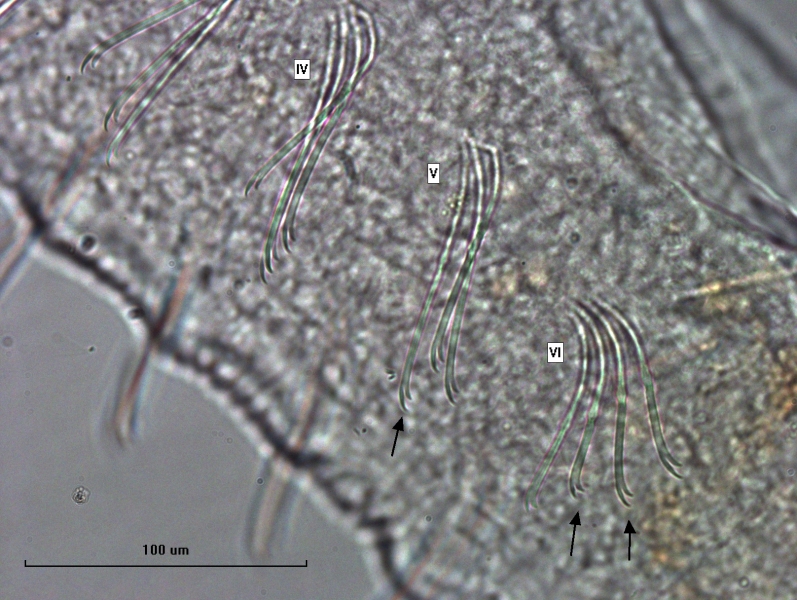
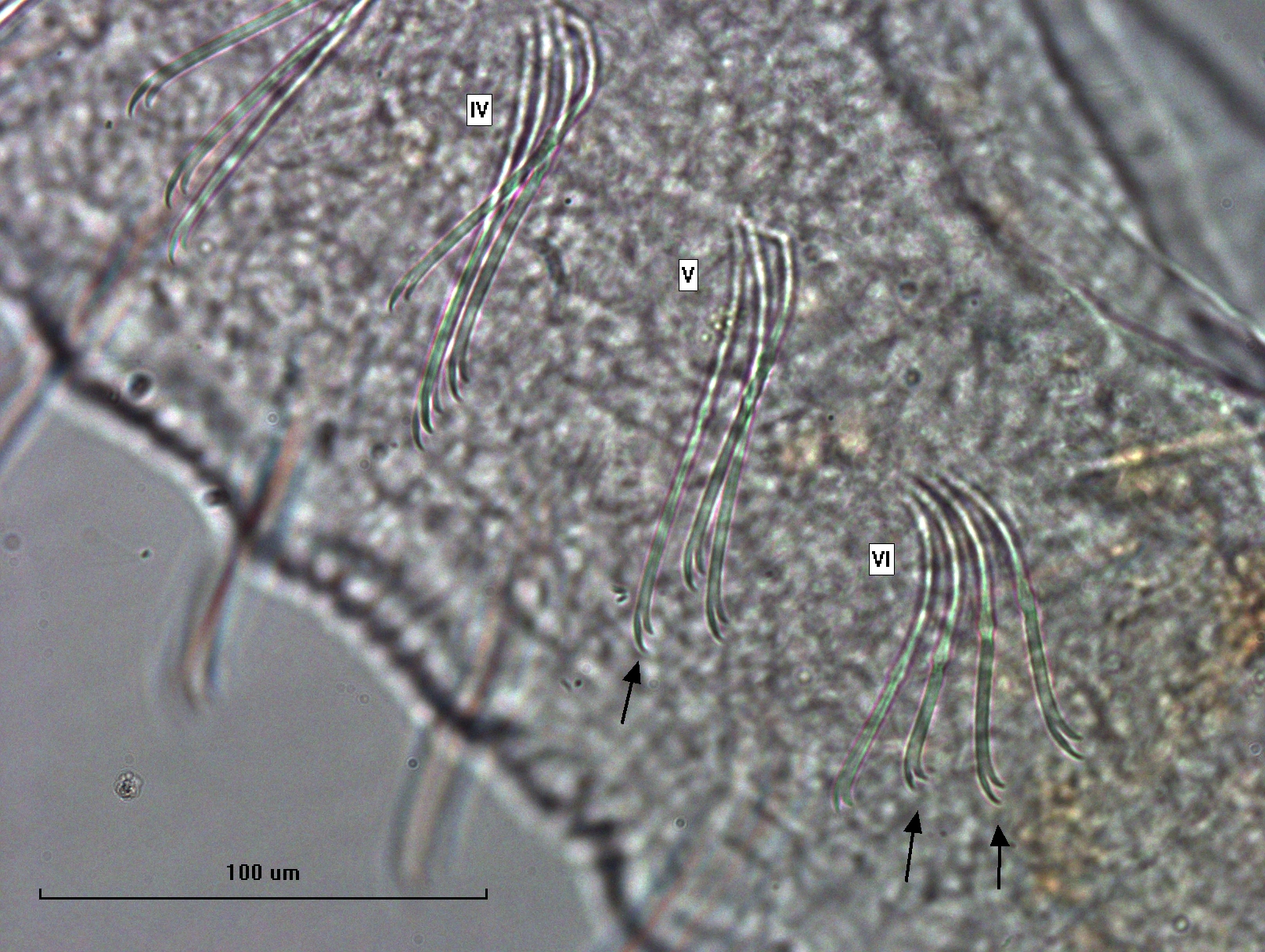
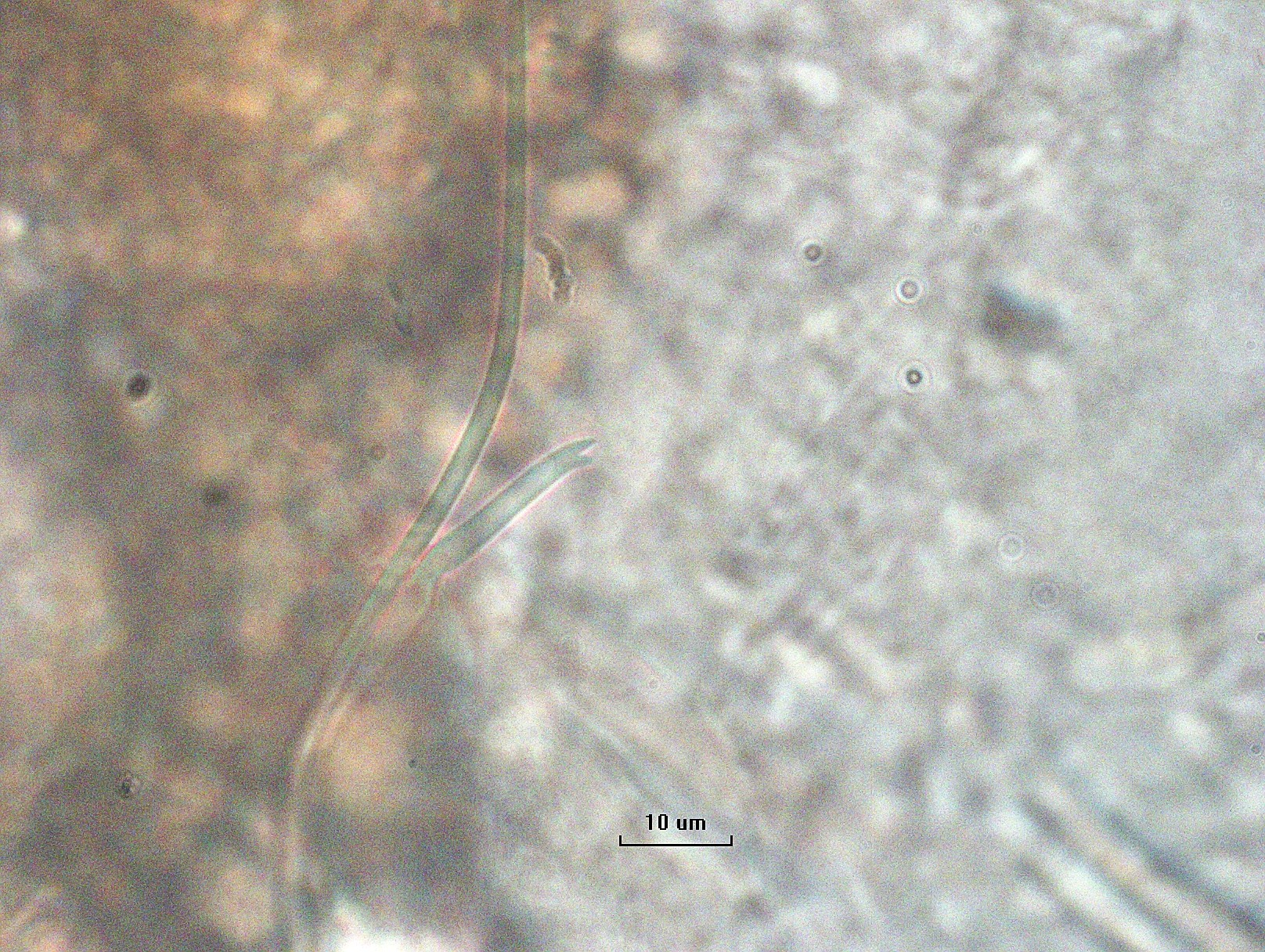
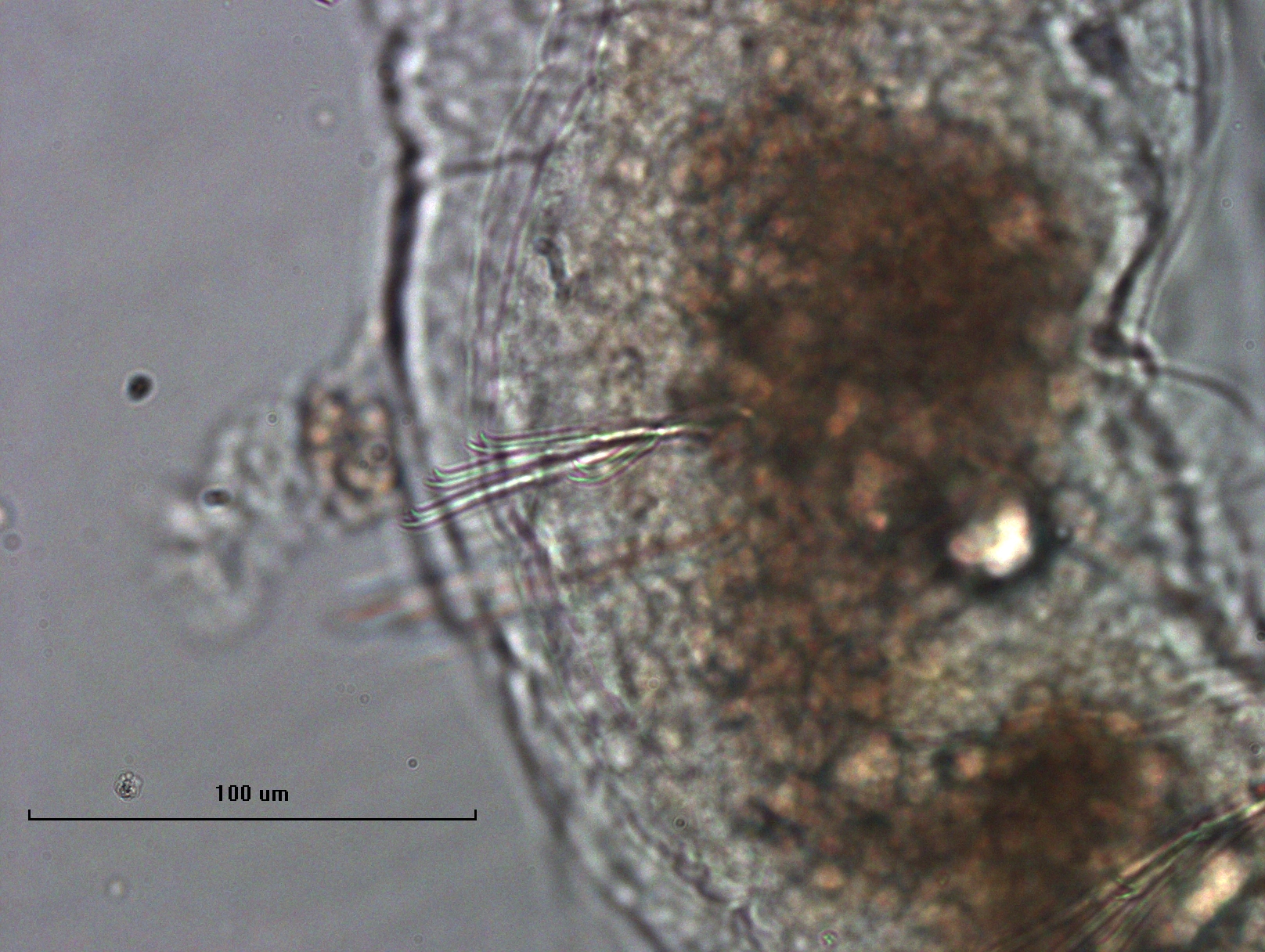
Figure 5. The anterior ventral chaetae of D. digitata are bifid with the upper tooth about twice as long as the lower. Ventral chaetae starting in VI have the upper teeth equal or a little longer than the lower.
Download Image -
6/7
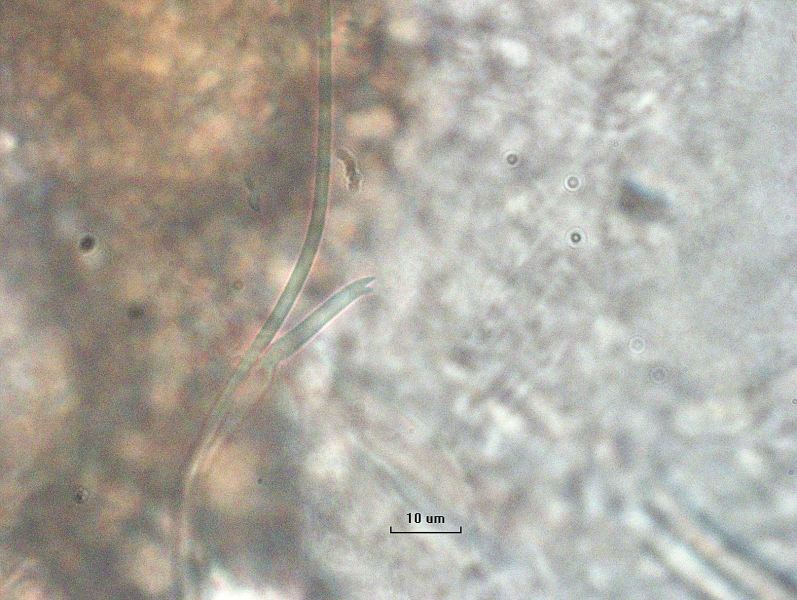
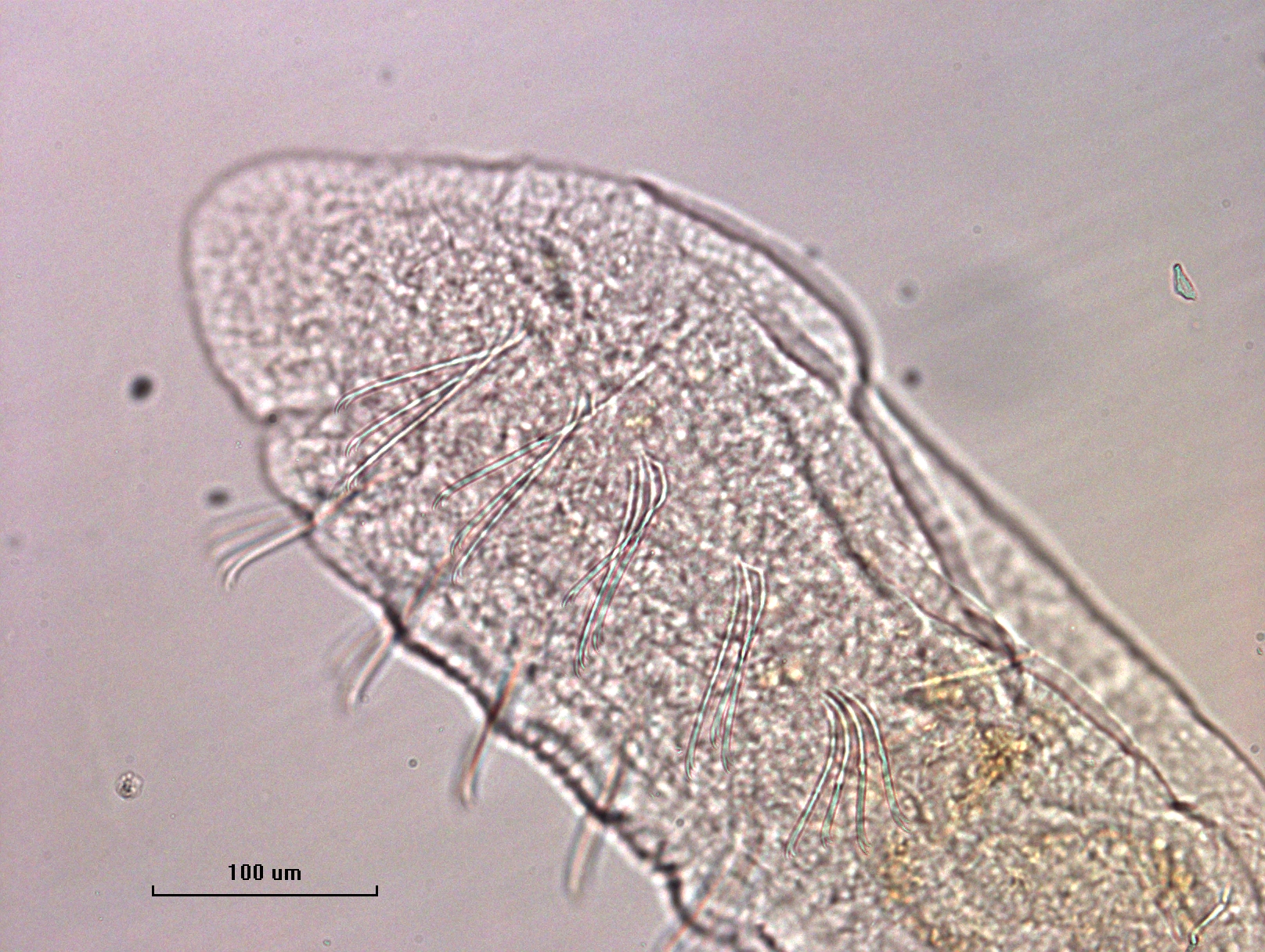
Figure 6. The dorsal chaetae of D. digitata have 1-2 hairs with 1-2 bifid needles with the upper tooth longer than the lower. Most other Dero sp. have needles with equal teeth, and Nais sp. also usually have equal teeth.
Download Image -
7/7
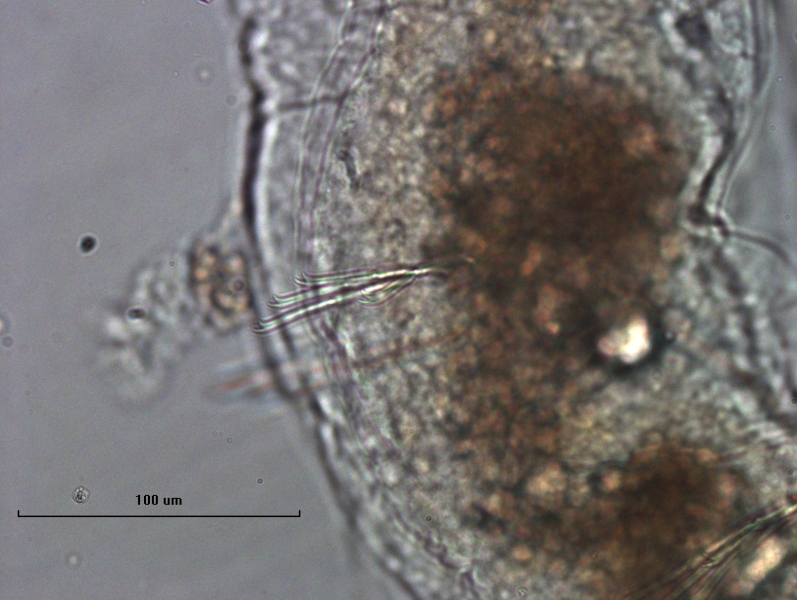
Figure 7. The posterior ventral chaetae of D. digitata have teeth that are about the same length.
Download Image
Dero digitata
Taxa description
Dero digitata is a freshwater oligochaete worm that is uncommon in the Great Lakes. It is a naidid worm with dorsal bundles with hair chaetae beginning in VI, ventral chaetae beginning in II, no proboscis, and the posterior end has branchial fossa with gills and no ciliated palps. This species of subgenus Dero (Dero) is free living, not endocommensal. Dorsal bundles start in VI with one hair and one bifid needle with the upper tooth usually longer than the lower. The ventral chaetae of II–V have 3–6 chaetae per bundle with the upper tooth up to 2 times longer than the lower. Bundles in VI and beyond have 2–5 ventral chaetae that usually have teeth that are equally long or with the upper tooth only slightly longer. The branchial fossa usually has 4 pairs of gills. It is common to have variation in the morphology of chaetae in Dero spp. depending on environmental conditions.
Distinguishing features
D. digitata is identified mainly by the branchial fossa with usually 4 pairs of gills on the posterior end, without which identification could be difficult. Another distinguishing factor is that the needle chaetae are bifid with the upper tooth longer than the lower. Other features include dorsal bundles with one hair and one needle chaetae starting in VI, anterior ventral chaetae with the upper tooth up to twice as long as the lower, and posterior ventral chaetae with the teeth equally long or the upper tooth only slightly longer than the lower.
Habitat
D. digitata is often found in/on littoral plants in sandy, silty, or silty-sand substrata thought out the region. It has been found in all five Great Lakes (Spencer and Hudson, 2003) but is limited to nearshore/shallow areas that are often not sampled during GLNPO summer surveys.
Lake occurrence
Lakes Erie, Huron, and Michigan.
Similar species
Since the most identifying feature of Dero digitata is the posterior end, fragmented specimens could be confused with Nais communis or N. variabilis since they both have 1-2 hairs with 1-2 bifid needles. D. digitata has needle chaetae with the upper tooth longer than the lower, whereas N. communis or N. variabilis will have even teeth. Another distinguishing factor is the ventral chaetae: D. digitata does experience a difference between anterior and posterior ventrals, and the anteriors are longer and thinner with upper teeth longer than the lower; N. variabilis is quite similar, but the posterior chaetae have a much thicker lower tooth, although there is much variation in the ventral chaetae of this species; N. communis does not have much difference between anterior and posterior chaetae, so the anterior chaetae do not have upper teeth longer than the lower. N. communis is known for having eyes, while that is not a noted feature for Dero species.
D. digitata could be confused with some other Dero species. The closest species would be D. obtusa and D. nivea. They all have bifid needles and 4 or fewer pairs of gills in fossa without ciliated palps. However, D. obtusa and D. nivea both have equal teeth on their needle chaetae. Another way to distinguish these is that D. obtusa and D. nivea usually have three pairs of gills instead of 4. D. trifida has bifid or trifid needles with short teeth that may appear uneven in length, but there will usually be several with a slender intermediate tooth. It has 4–5 pairs of gills. Many of the other Dero species have unique dorsal chaetae in a variety of shapes or a different number or presentation of gills and ciliated palps.
Relative size
Dero digitata is generally a small oligochaete worm similar in size to other naidid worms.
Does it have a barcode reference from the Great Lakes?
Yes, this species does have a barcode reference from the Great Lakes.
References
Hiltunen, J.K., and D.J. Klemm. 1980. A Guide to the Naididae (Annelida: Clitellata: Oligochaeta) of North America. pp. 16–17, 33.
Kathman, R.D., and R.O. Brinkhurst. 1998. Guide to Freshwater Oligochaetes of North America. pp. 70–75, 36, 66, 40, 80, 88–89.
Spencer, D.R. and P.L. Hudson. 2003. The oligochaete (Annelida, Clitellata) of the St. Lawrence Great Lakes region: an update. Journal Great Lakes Research 29: 89-104.