

Chaetogaster setosus
-
1/4
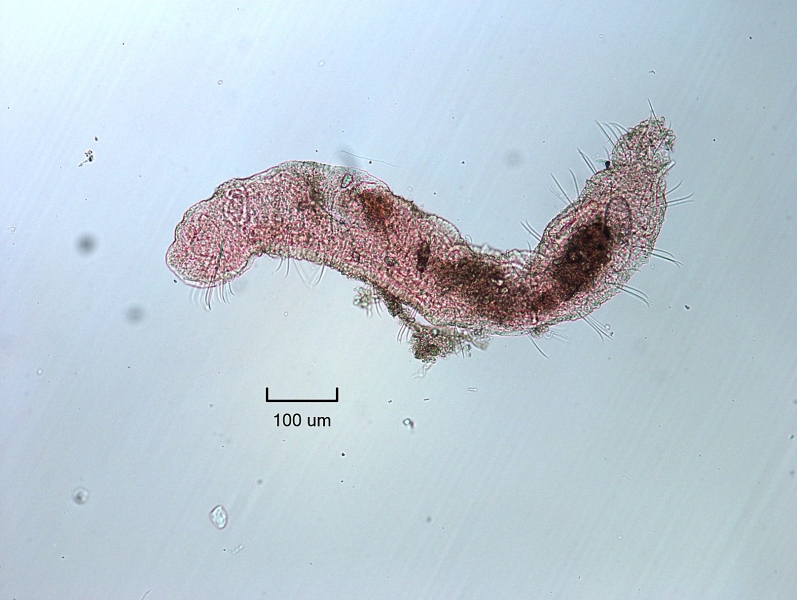
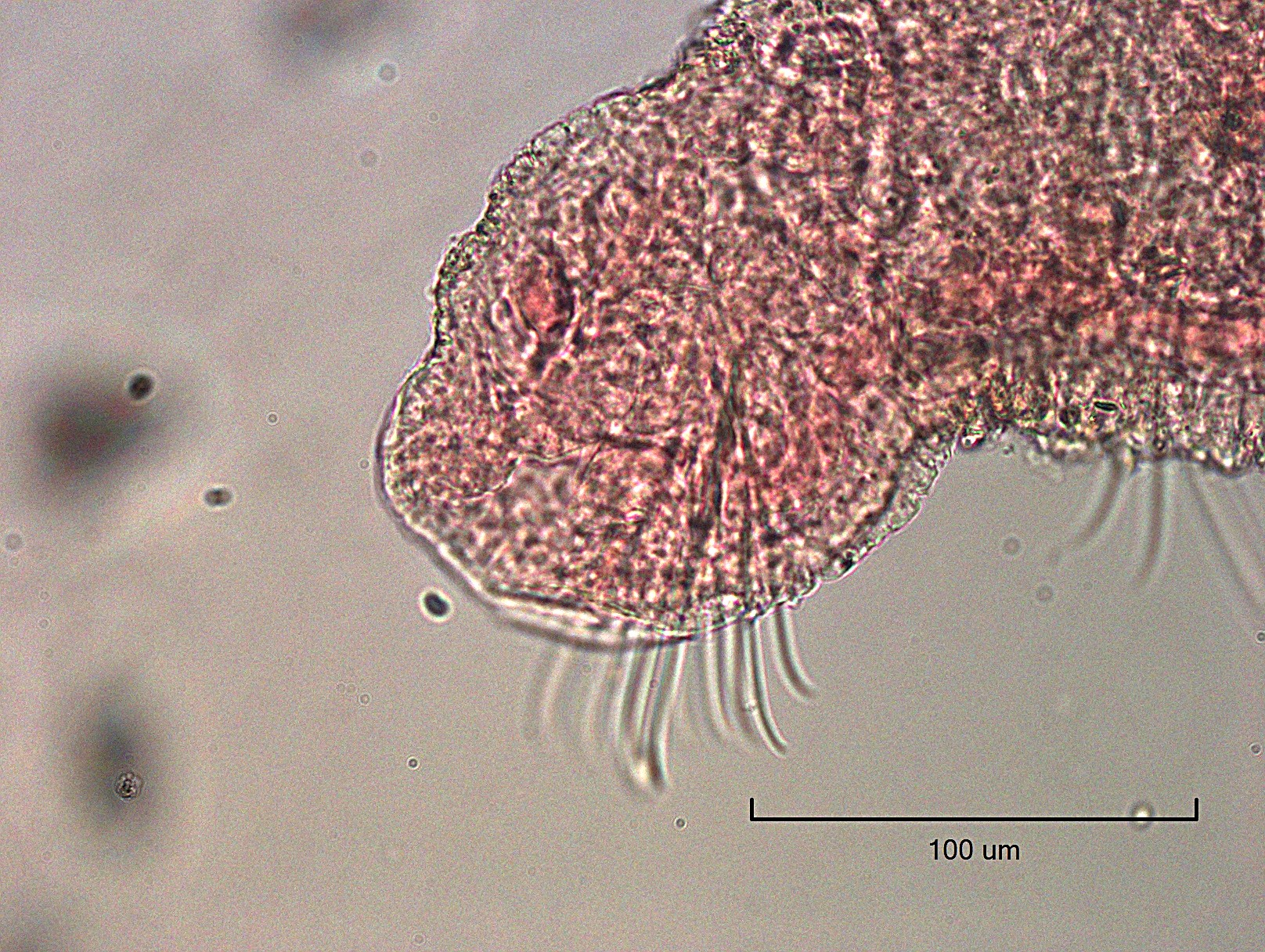
Figure 1. C. setosus has a terminal mouth with a rudimentary prostomium, a bundle of ventral chaetae in II with the next few segments missing chaetae. All chaetae are ventral, sigmoid, and simple-pointed.
Download Image -
2/4
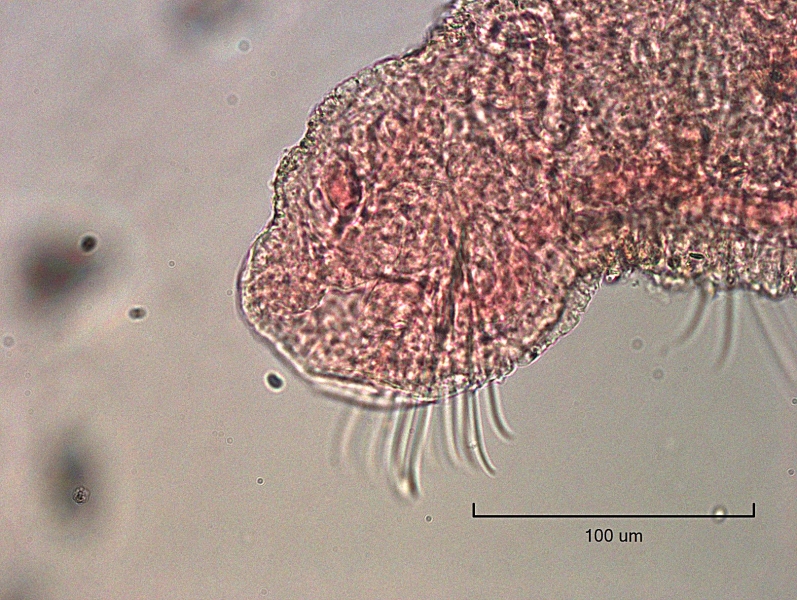
Figure 2. The mouth of C. setosus is terminal and lacks a well-developed prostomium. The ventral chaetae in II are about 100 µm long.
Download Image -
-

4/4
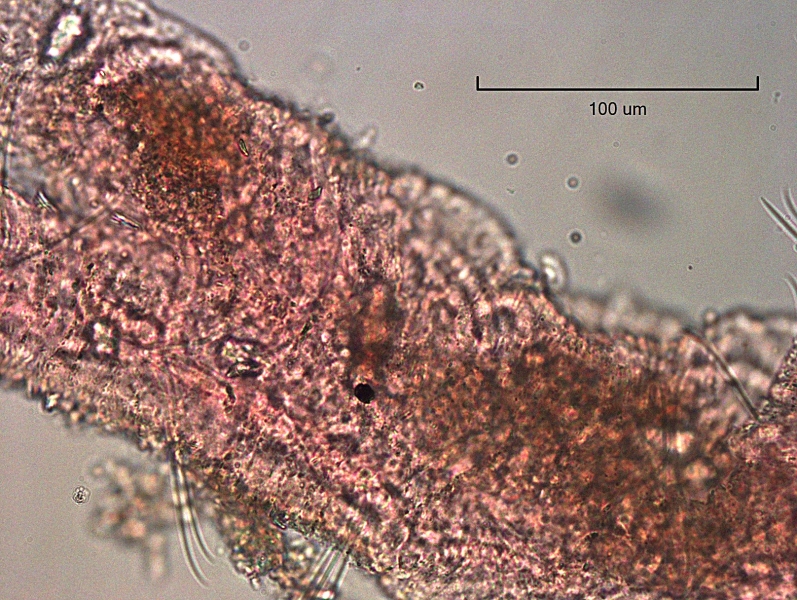
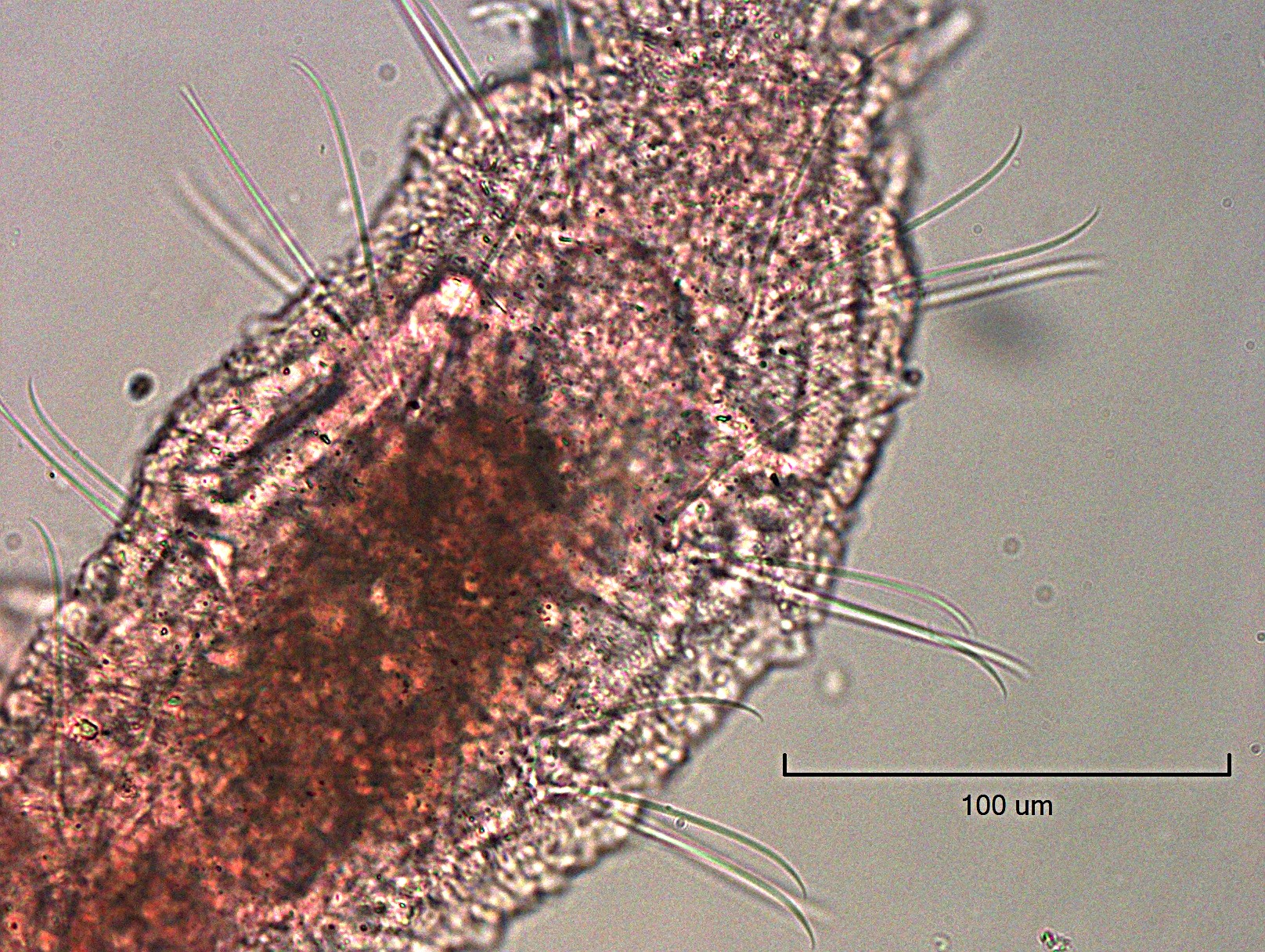
Figure 4. All the chaetae in C. setosus are the same: long, slightly sigmoid, and simple-pointed.
Download Image
Chaetogaster setosus
Taxa description
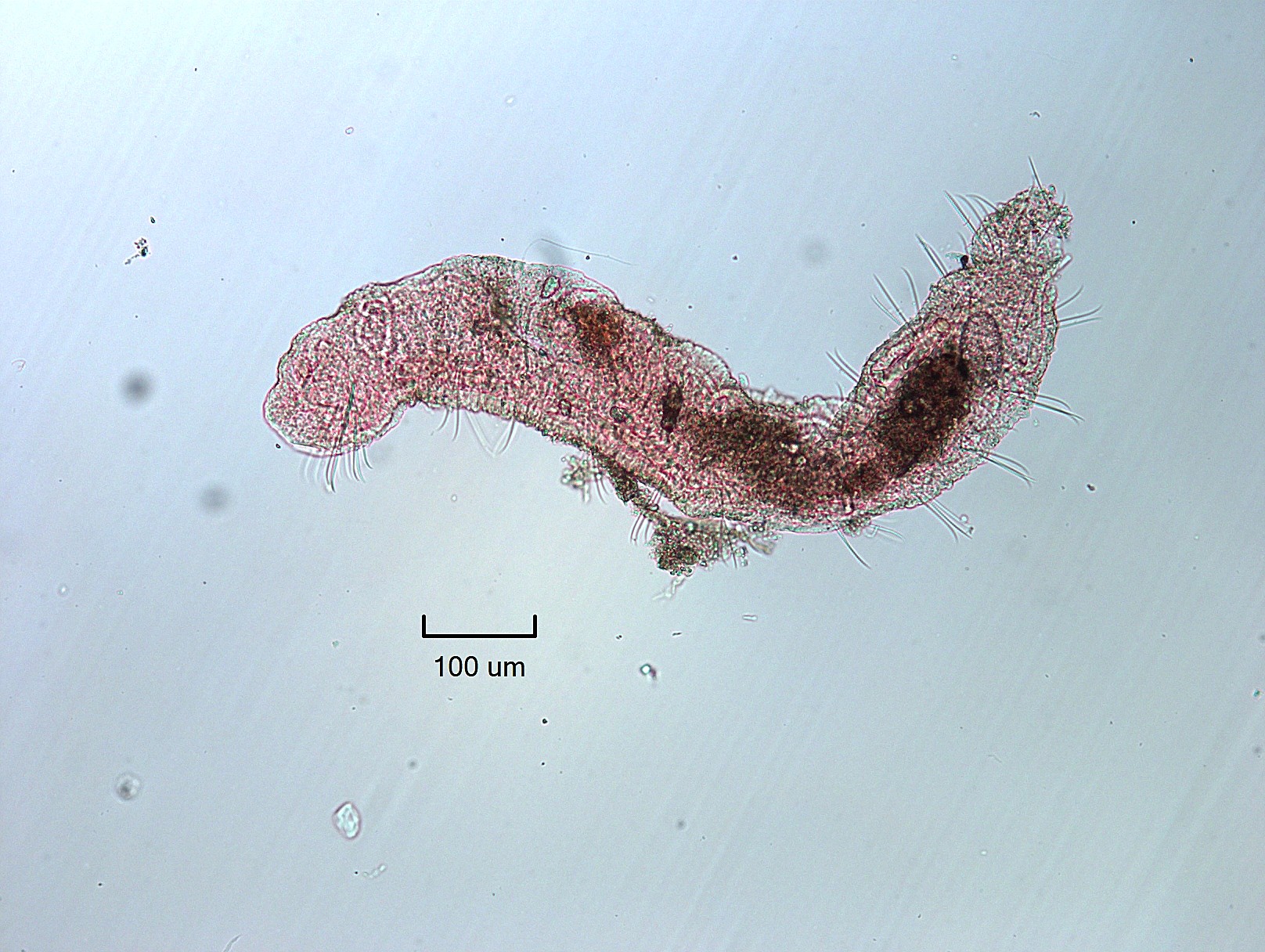
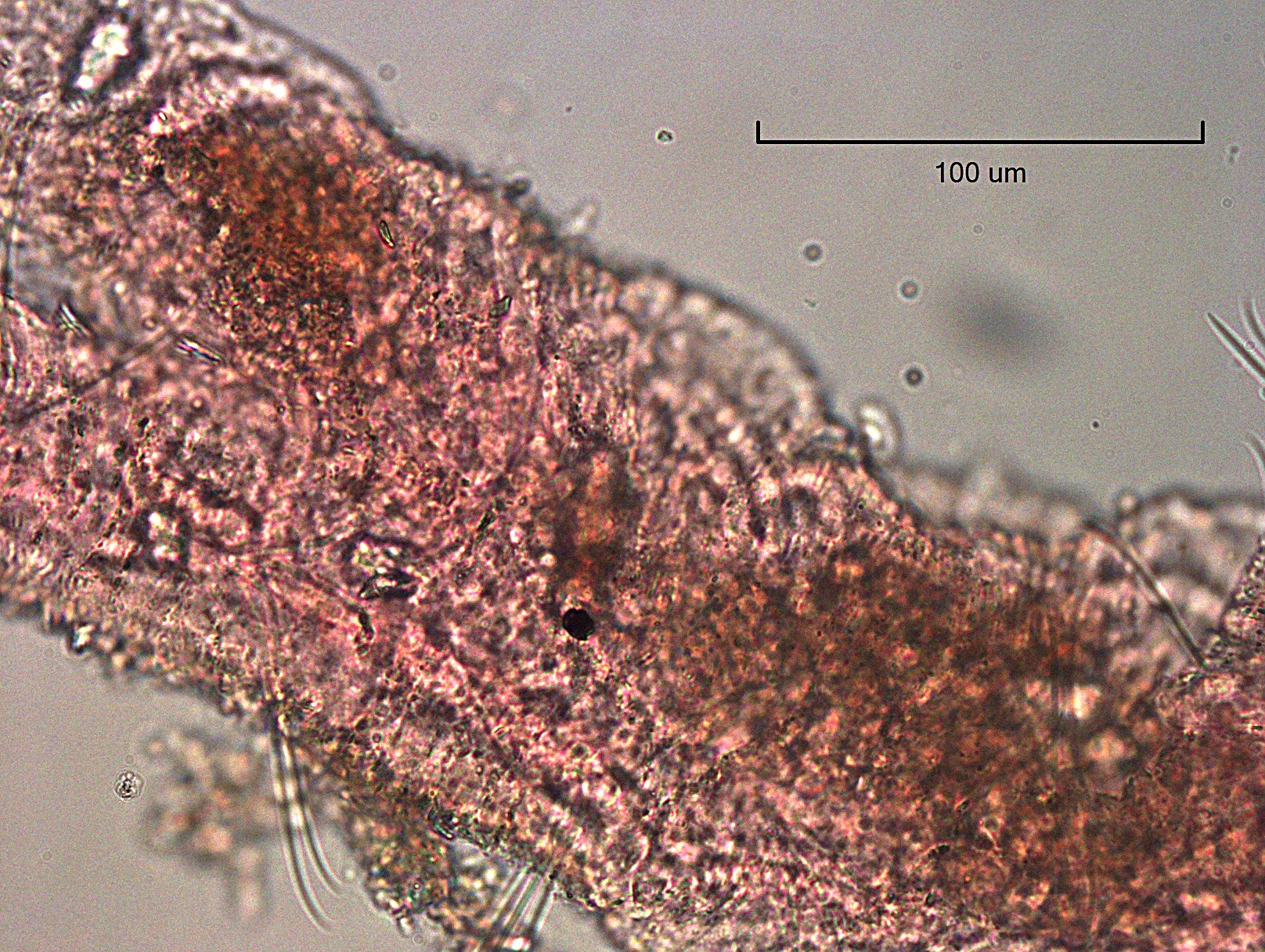
Chaetogaster setosus Svetlov, 1925 is a freshwater oligochaete worm that is uncommon in the Great Lakes. It is naidid worm without dorsal chaetae, with simple-pointed ventral chaetae, a highly modified and enlarged pharynx, a terminal mouth, and a reduced prostomium. There are 9–10 simple-pointed ventral chaetae in II which are between 105–113 μm long. These chaetae are often swept forward toward the mouth opening. There is often a large gap after II for the enlarged pharynx, and III–V are missing chaetae. There are 5–8 chaetae in bundles of VI and posteriad. The chaetae appear simple-pointed but under higher magnification (1000x), if bifid, the lower tooth may be extremely slender, rudimentary, and stuck to the much greater longer upper tooth, such that it appears simple-pointed. The prostomium is reduced.
Distinguishing features
C. setosus is unlike most worms in the Great Lakes because of its lack of dorsal chaetae, its truncated anterior end that is mostly lacking a prostomium, and simple-pointed ventral chaetae. The ventral chaetae of II are between 105–113 μm long and III–V are missing chaetae.
Habitat
St. Marys River, Michigan; Saginaw Bay, Lake Huron; Lake Erie; Lake Ontario; St. Lawrence River and Hudson River drainages. Benthic. It can be found in lakes Erie, Huron, Michigan, and Ontario, and the St. Marys River (NOAA and USEPA 2019).
Lake occurrence
Lakes Erie and Huron.
Similar species
Care must be taken to ensure that full specimens of C. setosus are not mistaken for oligochaete fragments due to its truncated anterior that lacks a prostomium. C. setosus is most similar to other Chaetogaster species, which also lack dorsal chaetae but have bifid ventral chaetae. C. diaphanus, has a very truncated prostomium and terminal mouth, and the chaetae of II are very long (145–350 μm). C. limnaei is parasitic or commensal with molluscs and has up to 20 bifid chaetae per bundle with long, strongly curved, sub-equal teeth (85–122 μm). C. diastrophus has a slightly developed prostomium, the chaetae of II are 72–110 μm, and rarely may have dorsal chaetae starting in VI.
Aside from Chaetogaster, the next most likely oligochaete to confuse with C. setosus is Enchytraeidae. This family of oligochaetes also has only simple-pointed chaetae. There are two main types found in the Great Lakes: ones with either short, straight chaetae and ones with longer sigmoid chaetae. Identification of Enchytraeidae requires the examination of soft parts as well as chaetae, and not much has done to create keys for the family, but it is possible to separate them from other oligochaetes. The chaetae of C. setosus may resemble Enchytraeidae with sigmoid simple-pointed chaetae. However, Enchytraeidae have both dorsal and ventral chaetae, the chaetae may lack a nodulus, the body shape is often narrow and stiff, and there is a prostomium with a subterminal mouth, although it may appear different than most naidid, tubificid, or lumbriculid worms.
Relative size
C. setosus is a short, small oligochaete worm similar in size to other naidid worms.
Does it have a barcode reference from the Great Lakes?
No, this species does not yet have a barcode reference from the Great Lakes.
References
Hiltunen, J.K., and D.J. Klemm. 1980. A Guide to the Naididae (Annelida: Clitellata: Oligochaeta) of North America. pp. 10–11, 33.
Kathman, R.D., and R.O. Brinkhurst. 1998. Guide to Freshwater Oligochaetes of North America. pp. 42–43, 32, 50–51, 64–65, 258, 16, 22, 84–85.
NOAA and USEPA. 2019 Great Lakes Waterlife. Accessed on 05/08/2025
Occurrence in scientific literature
Spencer, D.R., Hudson, P.L. 2003. The Oligochaeta (Annelida, Clitellata) of the St. Lawrence Great Lakes region: an update. J. Great Lakes Res. 29, 89-104.
Vivien, R., M. Lafont, C. Issartel, B.J.D. Ferrari, and P. Martin. 2024. The Genus Chaetogaster Baer, 1827 (Annelida, Clitellata) in Switzerland: A First Step toward Cataloguing Its Molecular Diversity and Description of New Species on a DNA Sequence Basis. Biology (Basel). 2024 Sep 4; 13 (9): 693. DOI: 10.3390/biology13090693