

Chaetogaster diastrophus
-
1/5
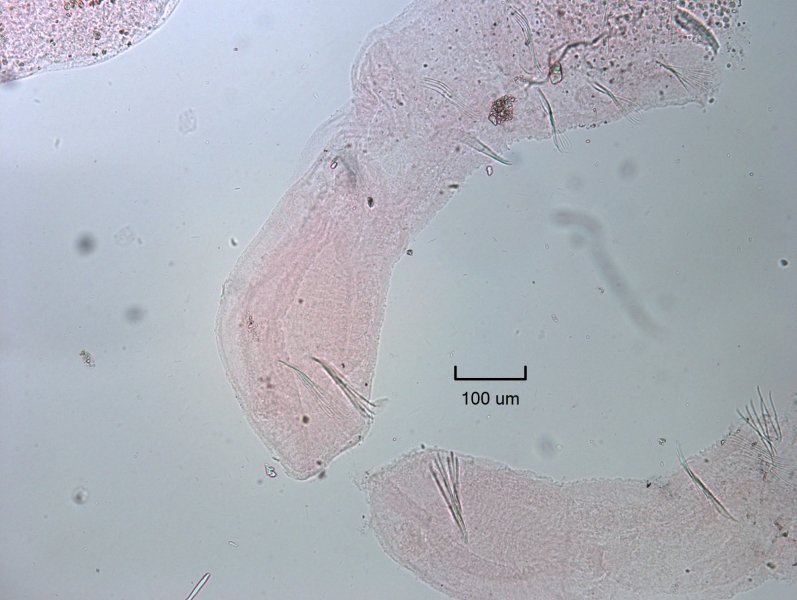
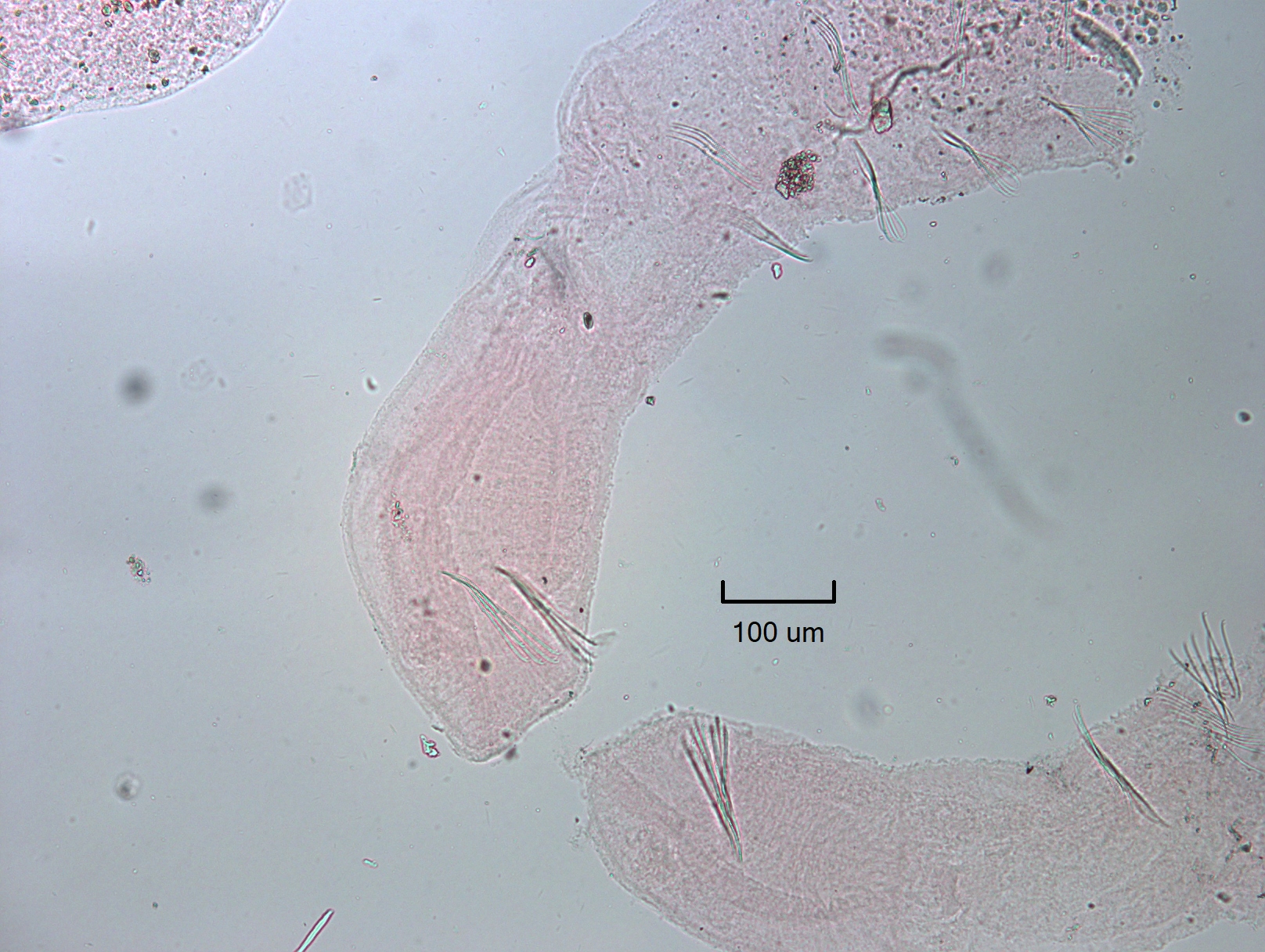
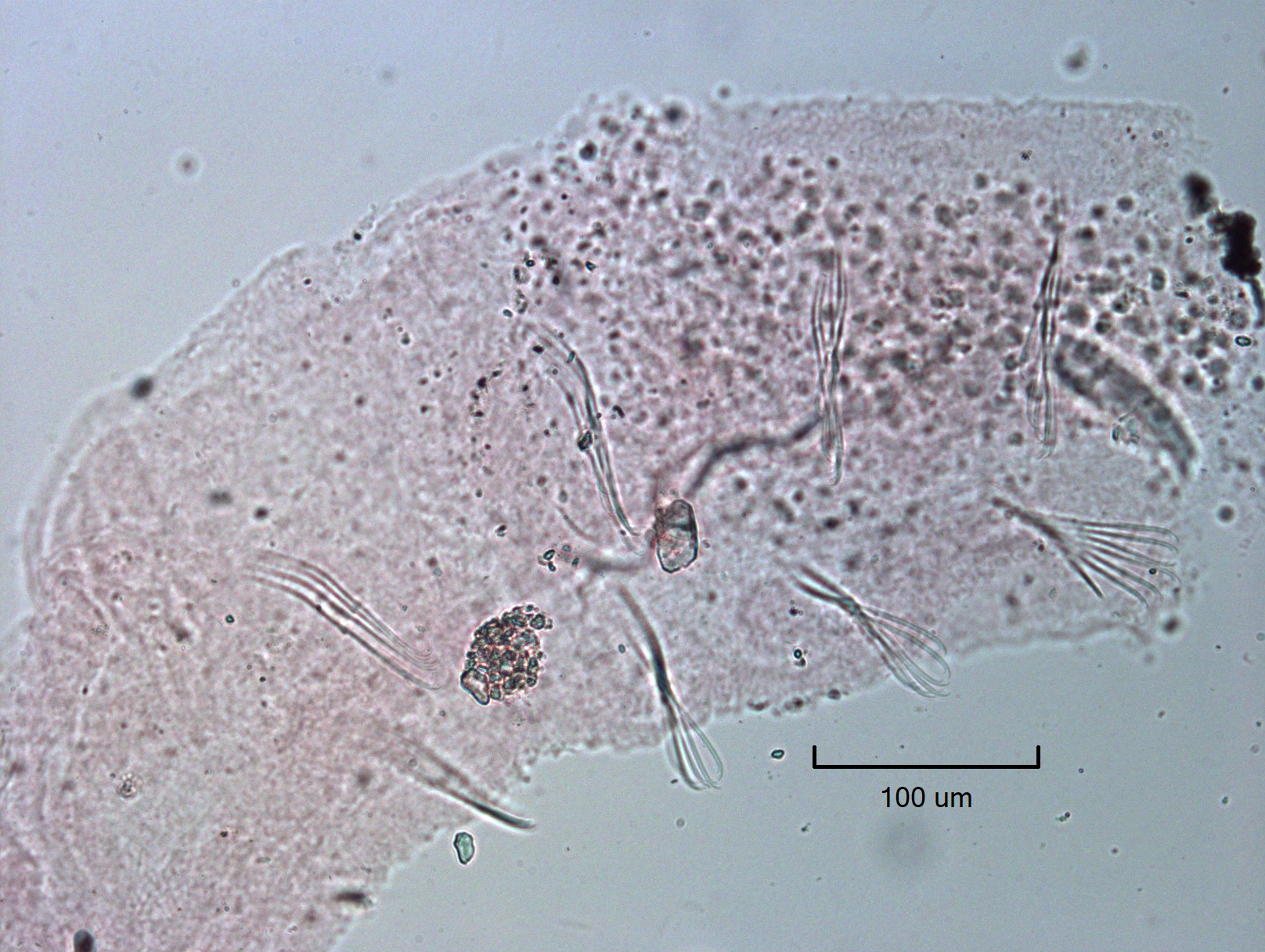
Figure 1. Chaetogaster diastrophus is a naidid worm without dorsal chaetae, with a highly modified and enlarged pharynx, and a slightly developed prostomium with a subterminal mouth.
Download Image -
2/5
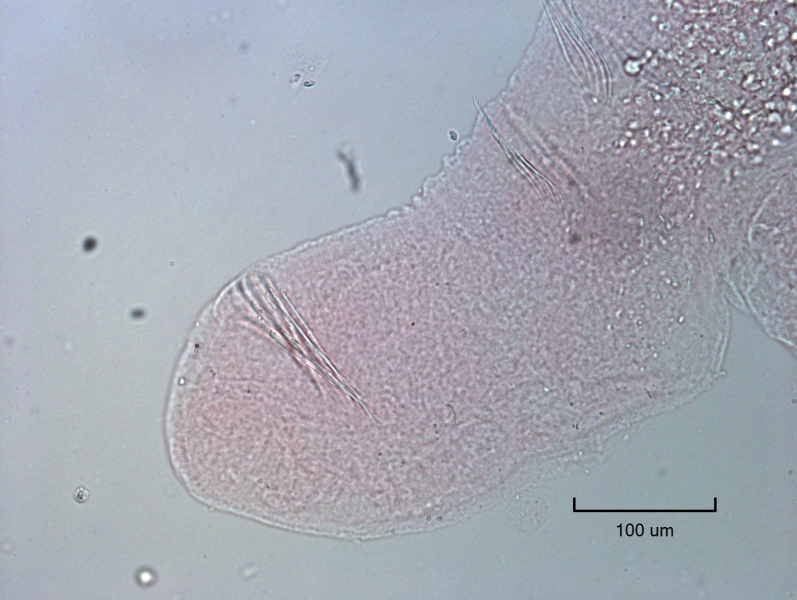
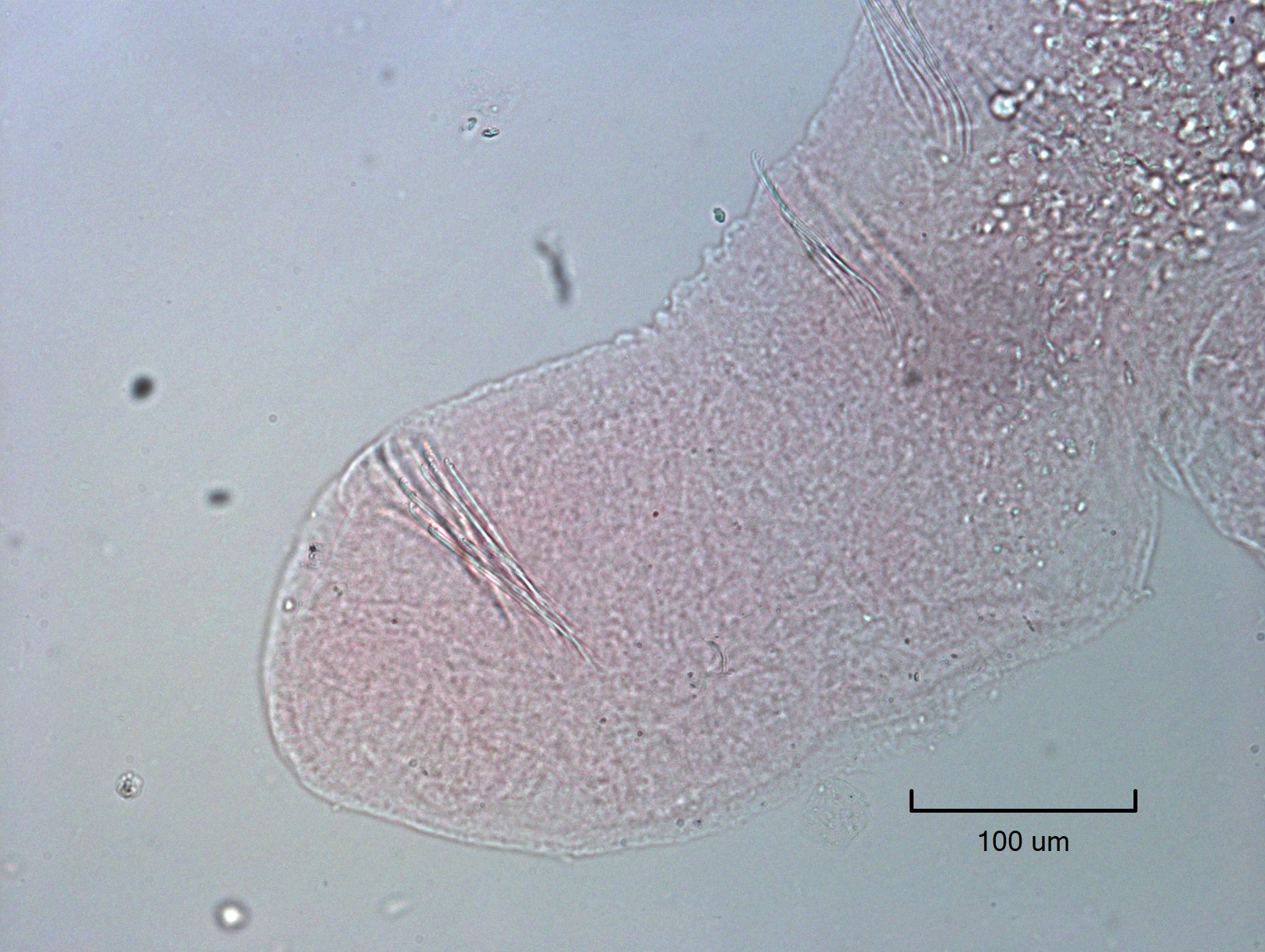
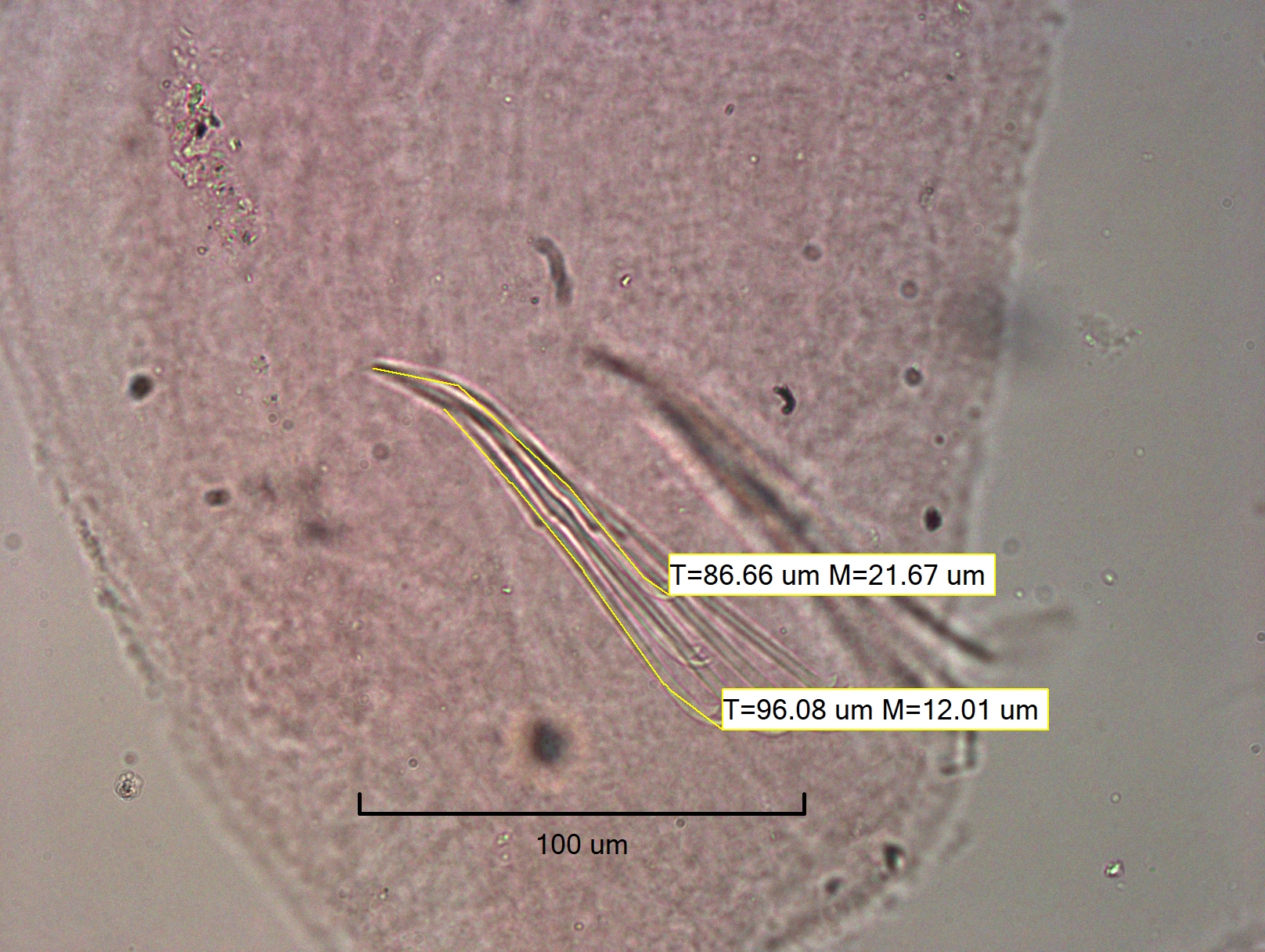
Figure 2. There are 4–8 ventral chaetae in II which are between 72–110 μm long, swept forward toward the mouth opening. Then there is a large gap for the enlarged pharynx where III–V are missing chaetae. All chaetae have the upper tooth is longer than the lower.
Download Image -
3/5
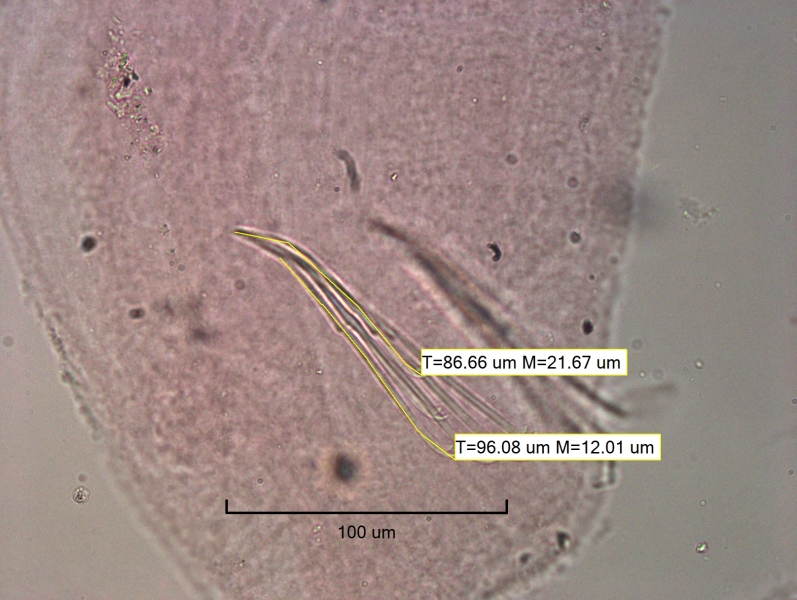
Figure 3. The ventral chaetae in II are between 72–110 μm long, swept forward toward the mouth opening.
Download Image -

4/5
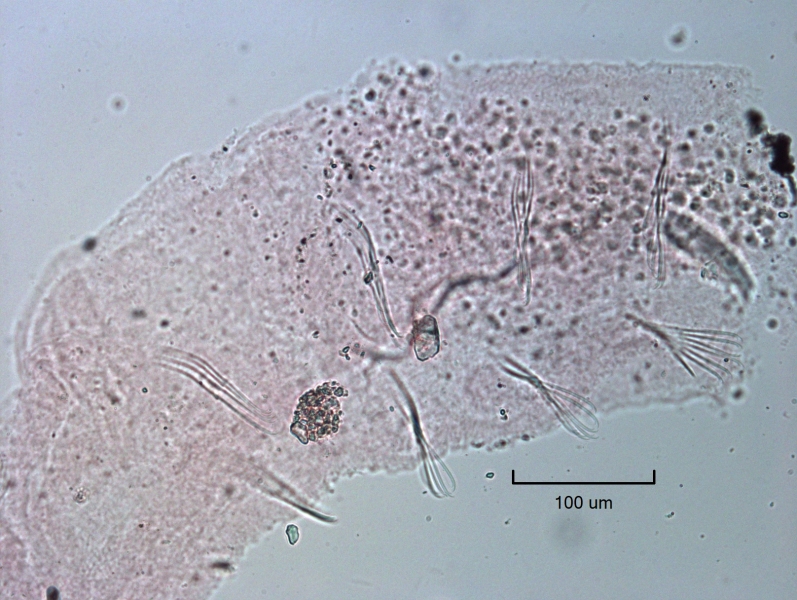
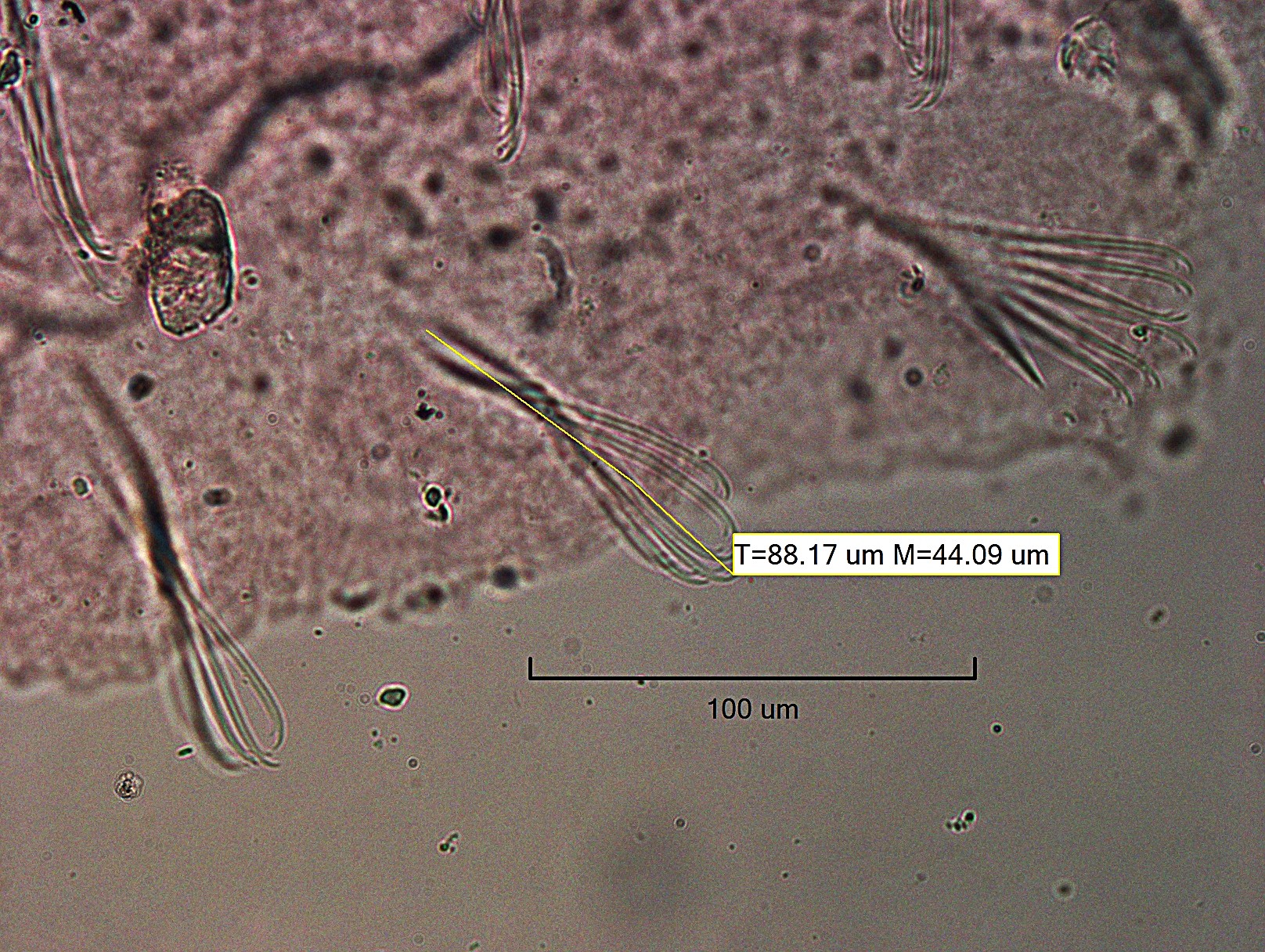
Figure 4. There are 3–7 chaetae in the bundles of VI and posteriad. They are about the same length as the chaetae in II.
Download Image -
Chaetogaster diastrophus
Taxa description
Chaetogaster diastrophus (Gruithuisen, 1828) is a freshwater oligochaete worm that is uncommon in the Great Lakes. It is a naidid worm without dorsal chaetae, with a highly modified and enlarged pharynx, and a slightly developed prostomium with a subterminal mouth. There are 4–8 ventral chaetae in II which are between 72–110 μm long. These chaetae are often swept forward toward the mouth opening. There is often a large gap after II for the enlarged pharynx, and III–V are missing chaetae. There are 3–7 chaetae in the bundles of VI and posteriad. All chaetae have the upper tooth is longer than the lower. Some specimens may have dorsal chaetae from VI (described as Pseudochaetogaster longmeri Lafont, 1981). C. diastrophus may also include C. langi Bretscher, 1896, which has a slightly smaller prostomium and chaetae in II have a slightly different range (63–100 μm).
Distinguishing features
C. diastrophus is unlike most worms in the Great Lakes because it lacks dorsal chaetae. The ventral chaetae of II are between 72–110 μm long, III–V are missing chaetae, and the upper tooth of the ventral chaetae is longer than the lower. The prostomium is not greatly reduced. Occasionally, there may be dorsal chaetae from VI.
Habitat
Lake occurrence
Lakes Erie, Michigan, and Ontario.
Similar species
C. diastrophus is most similar to C. diaphanus, which also lacks dorsal chaetae. C. diaphanus, however, lacks a prostomium and the chaetae of II are much longer at 145–350 μm. The other species of Chaetogaster all have reduced prostomiums and are much rarer, such as C. limnaei, which is parasitic or commensal with molluscs and has strongly curved sub-equal teeth, or C. setosus, which has sigmoid simple-pointed chaetae and a much smaller geographic range. Rarely, C. diastrophus may have dorsal chaetae starting in VI. If that is so, it might key out to Uncinais uncinata or Piguetiella spp. The chaetae are not shaped like Piguettiella spp. which have equal or subequal teeth and possibly hairs, so it is more likely to be confused with U. uncinata which have the upper tooth longer and thinner than the lower. However, the arrangement of the chaetae in II, the missing chaetae from III–V, and the enlarged pharynx should help point it back towards C. diastrophus.
Occasionally, Ophidonais serpentina sheds many or all of the dorsal needles. If there are any dorsal chaetae, it should still be possible to be identified by the solitary, thick, straight needles that are blunt or minutely bifurcate. Otherwise, it can still be distinguished from C. diastrophus because it has ventral chaetae in every segment and may have papillae or foreign matter. The other possible naidid worm that might be confused is Haemonais waldvogeli, which usually lacks dorsal chaetae from II–XVIII or XX. If the specimen has fragmented before XX, the ventral chaetae must be used to differentiate them. Normally, H. waldvogeli has dorsal bundles with 1 hair and 1 dorsal chaeta with the upper tooth longer than the lower, anterior ventral chaetae are longer and thinner than the rest, and posterior ventral chaetae are more curved and have the upper tooth shorter and thinner than the lower. The dorsal chaetae from II–XVIII do come in but are usually quickly shed. There is no enlarged pharynx, chaetae are present from III–V, and the ventral chaetae of II are not longer than the rest.
Relative size
C. diastrophus is generally a small oligochaete worm similar in size to other naidid worms.
Does it have a barcode reference from the Great Lakes?
No, this species does not yet have a barcode reference from the Great Lakes.
References
Kathman, R.D., and R.O. Brinkhurst. 1998. Guide to Freshwater Oligochaetes of North America. pp. 42–43, 32, 50–53, 64–65.
Hiltunen, J.K., and D.J. Klemm. 1980. A Guide to the Naididae (Annelida: Clitellata: Oligochaeta) of North America. pp. 10–11, 33.