

Bithynia tentaculata
-
1/2
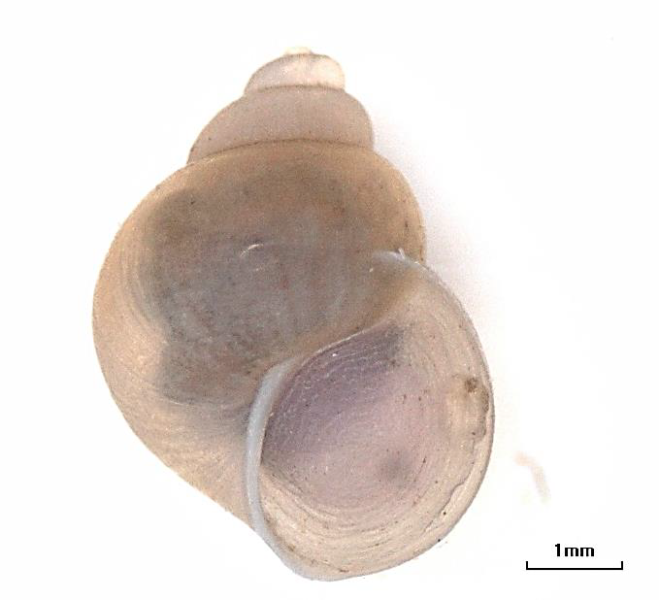
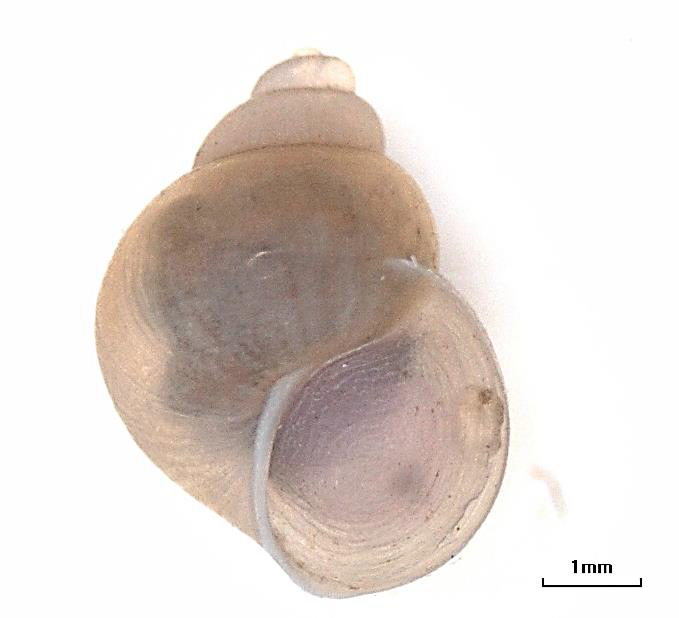
Figure 1. A specimen of Bithynia tentaculata found during 2017 CSMI Lake Huron survey. Please note the tear-drop-shaped operculum with distinct concentric rings.
Download Image -
2/2
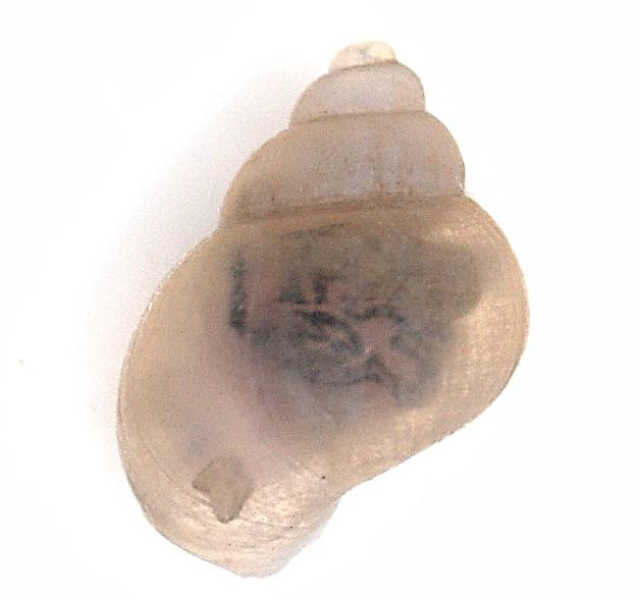
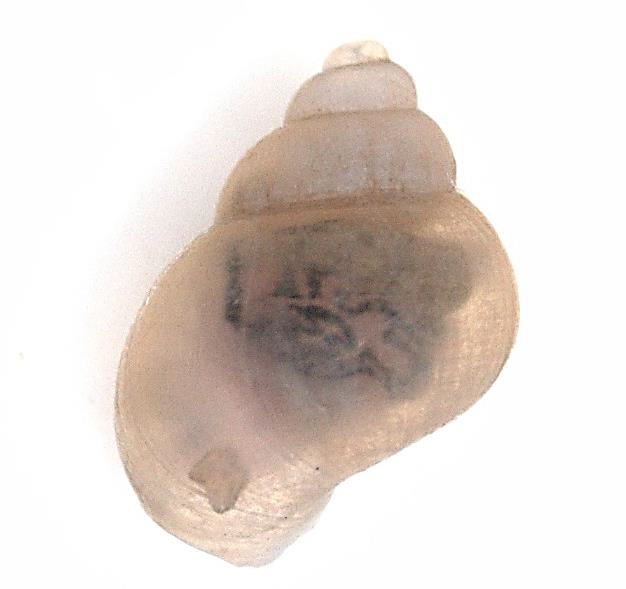
Figure 2. The back of a specimen of Bithynia tentaculata found during 2017 CSMI Lake Huron survey.
Download Image
Bithynia tentaculata
Taxa description
The faucet snail, Bithynia tentaculata (Linnaeus, 1758) has a shiny pale brown shell, oval in shape, with a relatively large and rounded spire consisting of 5–6 somewhat flattened whorls, no umbilicus, and a very thick lip (Clarke 1981; Jokinen 1992, Fig. 1). The aperture is less than half the height of the shell (Clarke 1981). Adult B. tentaculata possess a white, calcareous, teardrop to oval-shaped operculum with distinct concentric rings (Clarke 1981; Jokinen 1992; Pennak 1989). The operculum of juveniles, however, is spirally marked (Jokinen 1992). The operculum is always located very close to the aperture of the shell (Jokinen 1992). The animal itself has pointed, long tentacles and a simple foot with the right cervical lobe acting as a channel for water (Jokinen 1992). Trebitz et al. (2015) provides a list of features differentiating B. tentaculata from other gastropod species. This species can only be confused with immature Campeloma which is very similar in shape, but larger (to 30 mm); however Campeloma is not on GLNPO’s species list.
Distinguishing features
B. tentaculata is identified by an oval shell with a relatively large, rounded spire with 5-6 somewhat flattened whorls. There is no umbilicus and a very thick lip. The aperture is less than half the height of the shell. Adults have a teardrop to oval-shaped operculum with distinct concentric rings; juveniles have a spirally marked operculum. The animal has pointed, long tentacles and a simple foot, the right cervical lobe acting as a channel for water.
Habitat
This snail is commonly found in ponds, shallow lakes, nearshore zones, intertidal zones, and canals. B. tentaculata can often be found feeding on aquatic macrophytes during the summer months, and on substrate in the fall and winter (mostly on shoals and Dreissena beds but found to a depth of 5 m).
Lake occurrence
This species occurs in Lakes Michigan, Ontario, and Erie, and was recently found in Lake Superior.
Similar species
This species can only be confused with immature Campeloma which is very similar in shape, but larger (to 30 mm); however Campeloma is not on GLNPO’s species list.
Relative size
About 10 mm.
Does it have a barcode reference from the Great Lakes?
References
Clarke, A. H. 1981. The freshwater molluscs of Canada. National Museum of Natural Sciences, National Museums of Canada, Ottawa, Canada.
Jokinen, E. 1992. The freshwater snails (Mollusca: Gastropoda) of New York State. The University of the State of New York, The State Education Department, The New York State Museum, Albany, New York.
Kipp, R. M., A. J. Benson, J. Larson, and A. Fusaro. 2015. Bithynia tentaculata. USGS Nonindigenous Aquatic Species Database, Gainesville, Florida. (July 2015).
Occurrence in scientific literature
Carr, J. F., and J. K. Hiltunen. 1965. Changes in the bottom fauna of western Lake Erie from 1930 to 1961. Limnology and Oceanography 10: 551-569.
Trebitz, A., G. Shepard, V. Brady and K. Schmude. 2015. The non-native faucet snail (Bithynia tentaculata) makes the leap to Lake Superior. Journal of Great Lakes Research 41: 1197-1200.