

Aulodrilus pluriseta
-
1/10
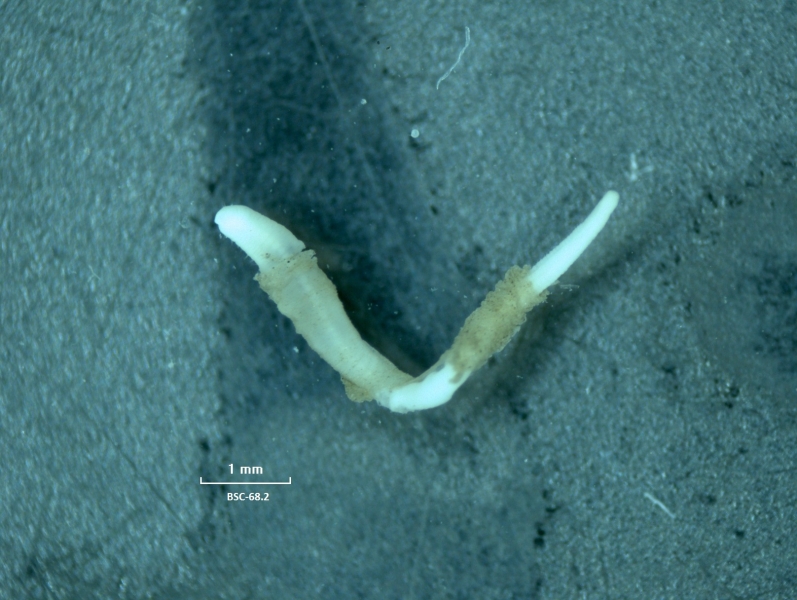
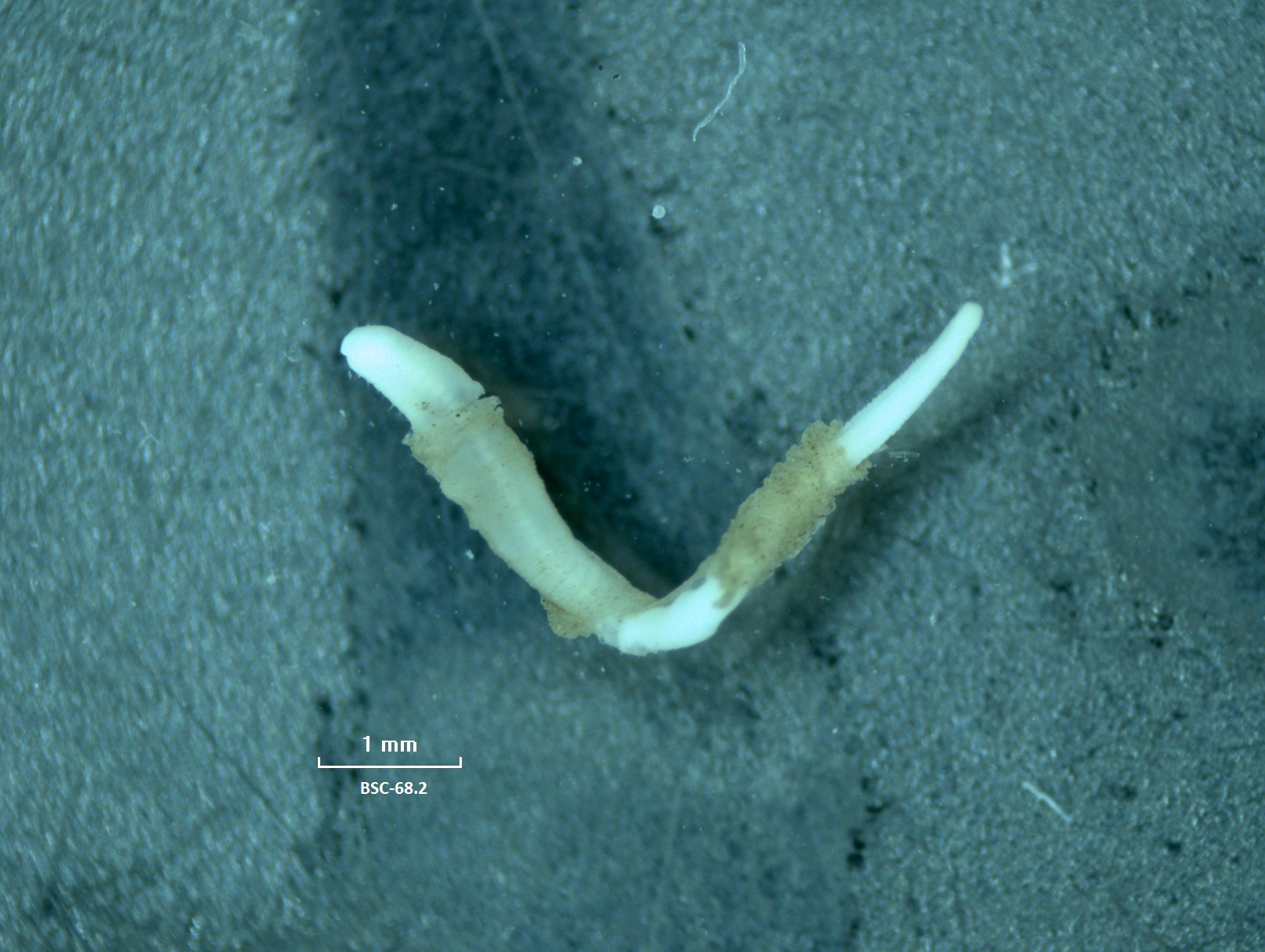
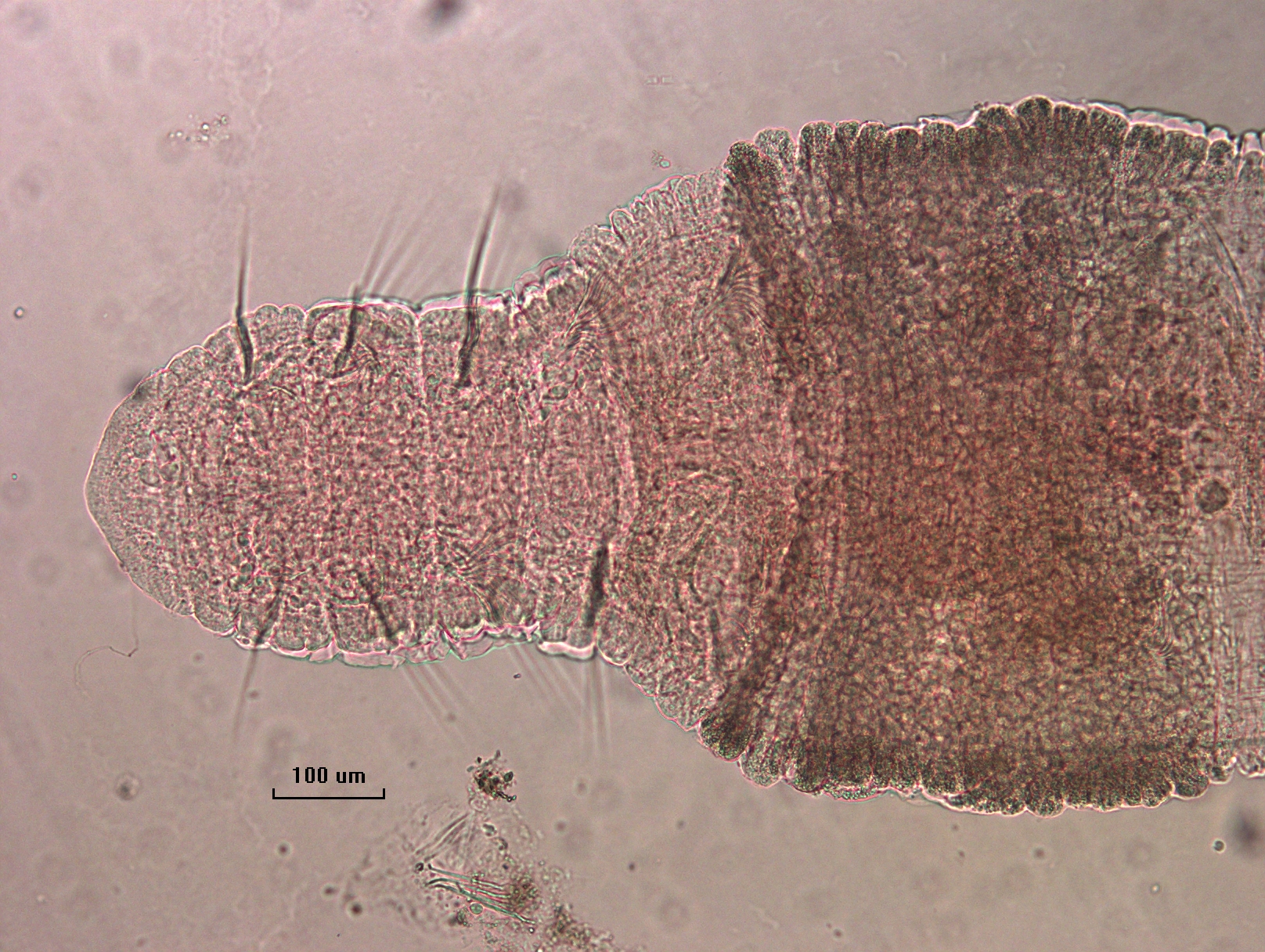
Figure 1. Aulodrilus pluriseta with a sediment tube. Aulodrilus spp. is the most likely genus to have sediment tubes. Sediment tubes may make identification to species difficult as they can obscure chaetae, reproductive structures, and even whether it is a fragment.
Download Image -
2/10
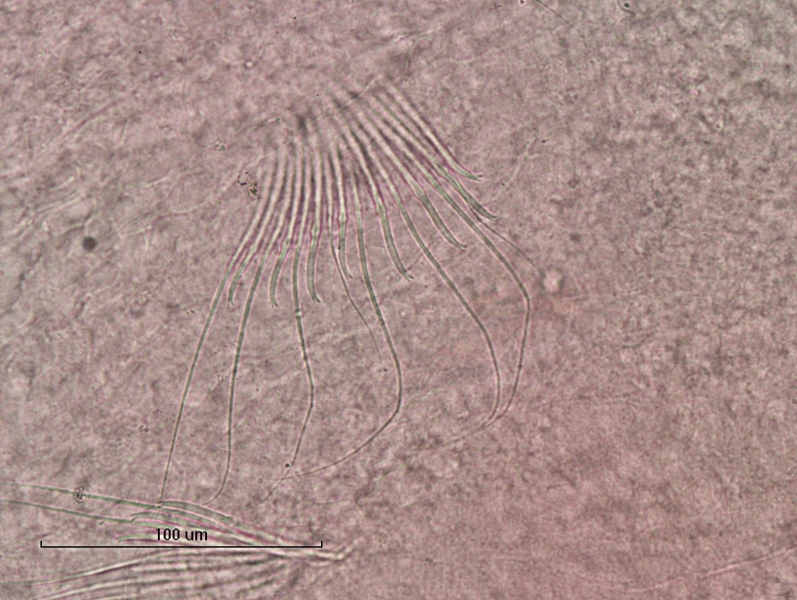
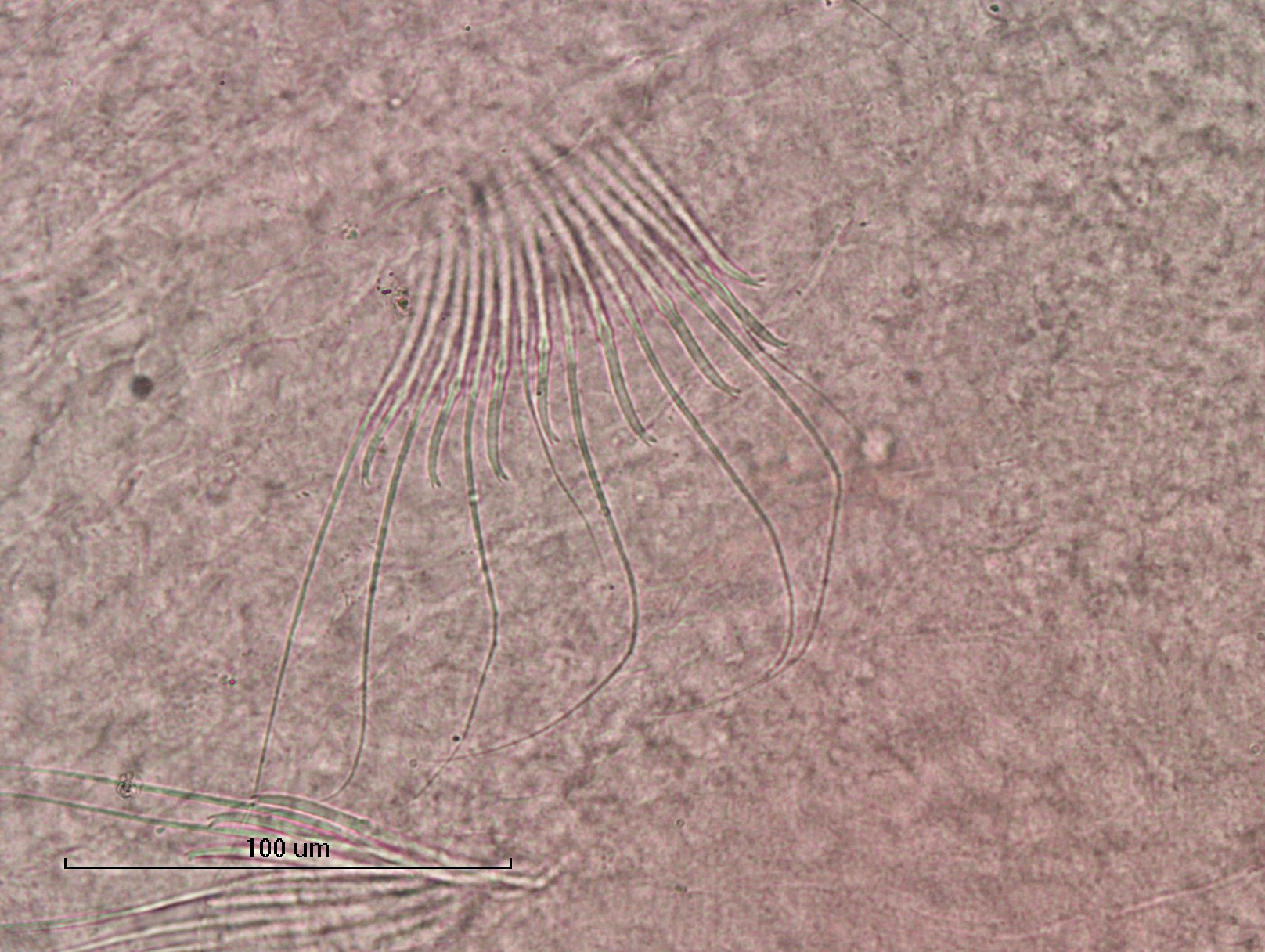
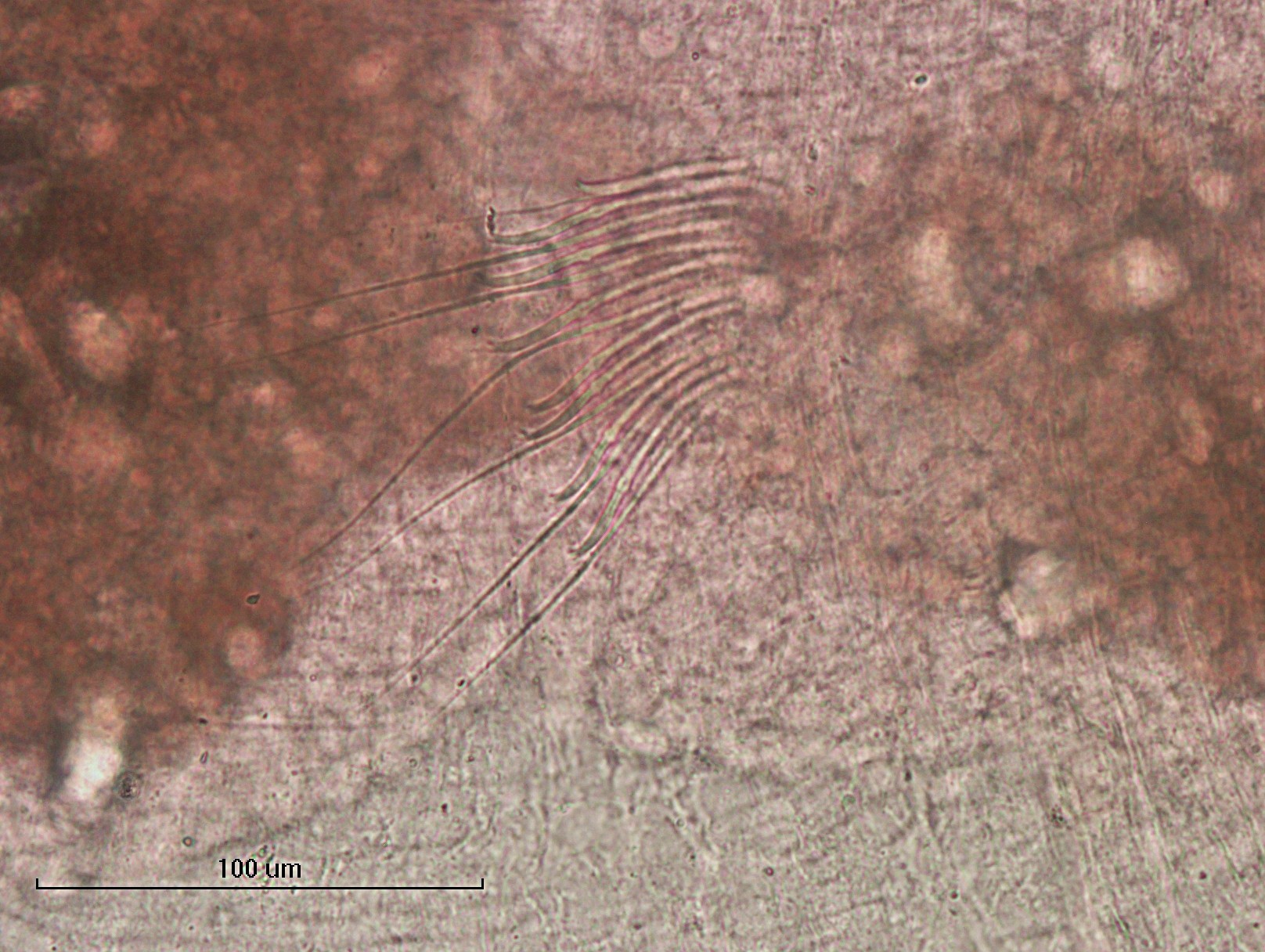
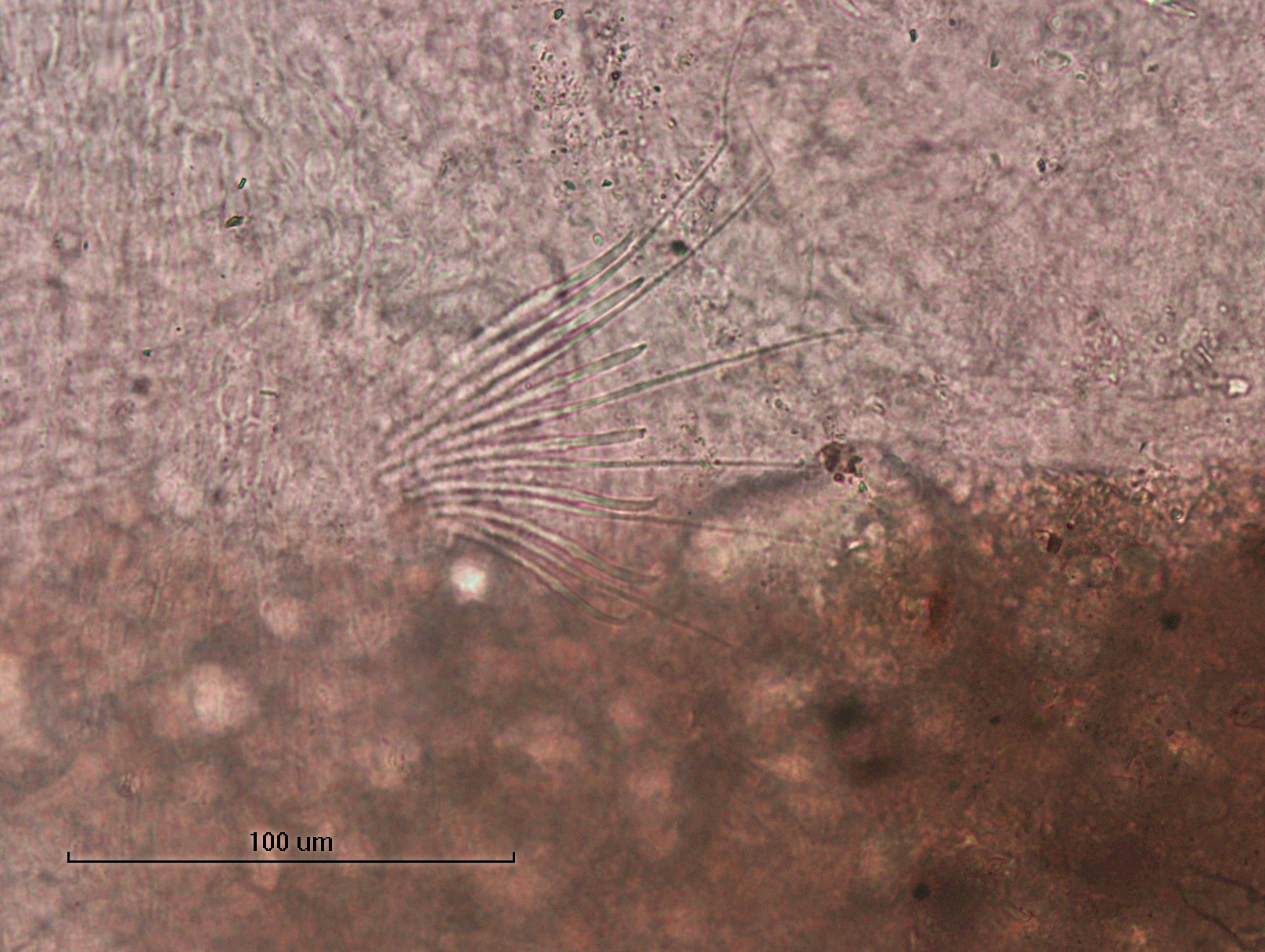
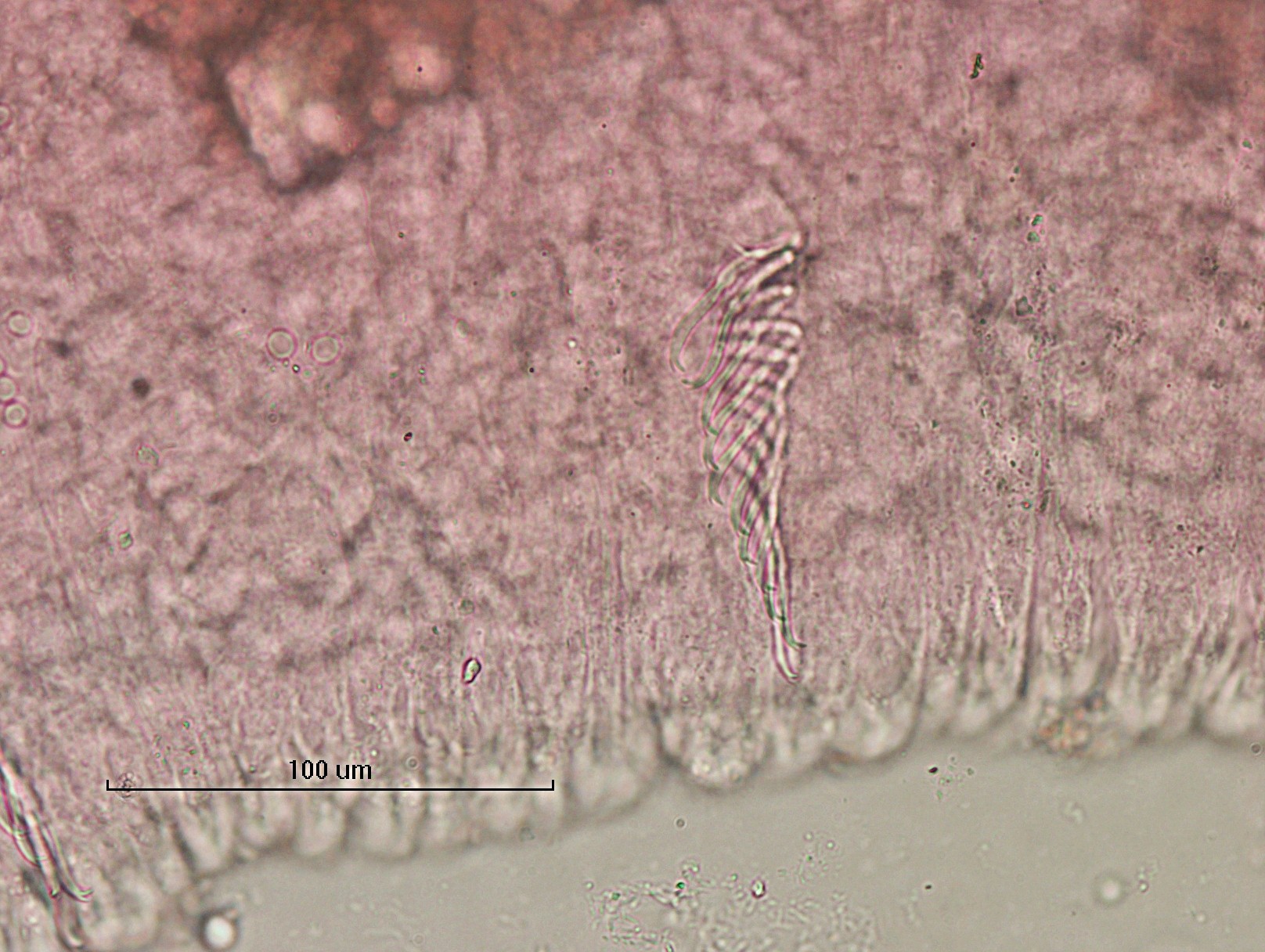
Figure 2. The anterior dorsal bundles of A. pluriseta have up to 8 hair chaetae and up to 10 curved bifid chaetae with short, thin upper teeth that may be replicated. There are 8 chaetae and 8 hairs in this example, and the upper teeth of the bifid chaetae do not appear to be replicated. A. pigueti, which also has hairs, tends to have much fewer hairs and chaetae in the anterior dorsal bundles, sometimes as few as 1-2.
Download Image -
3/10
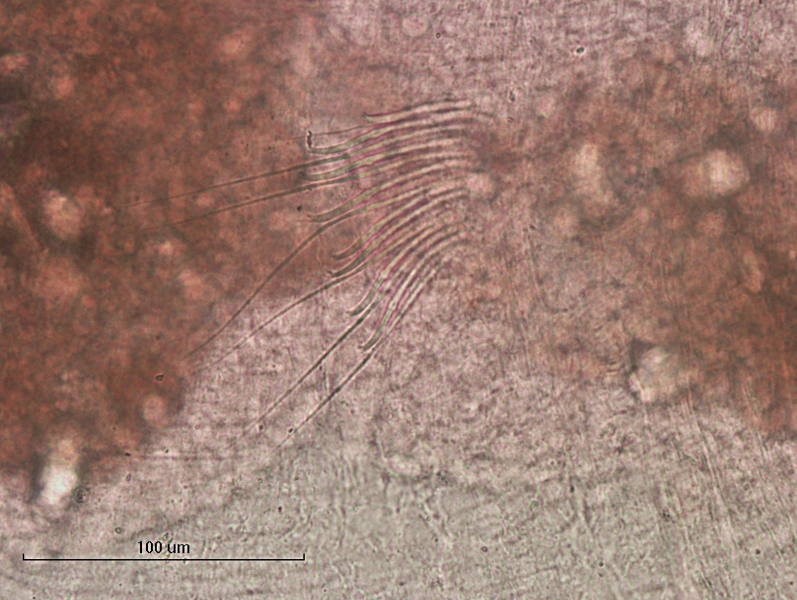
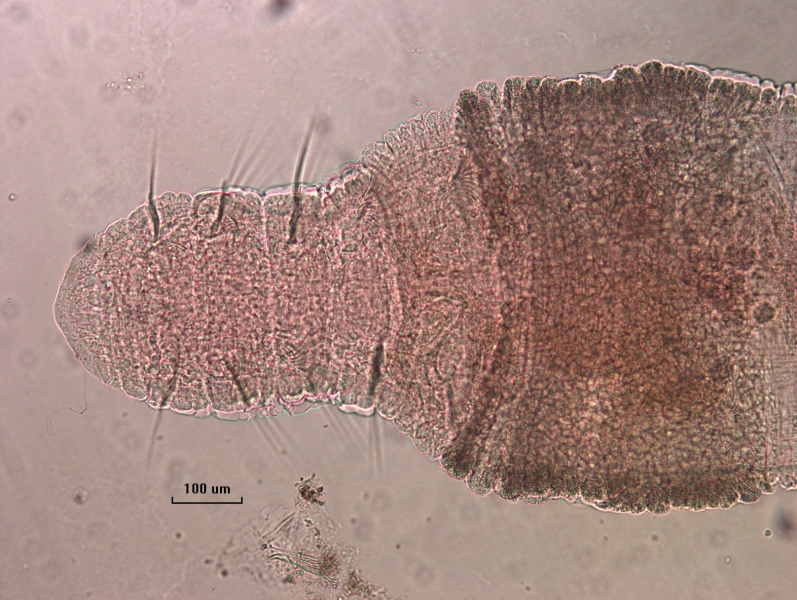
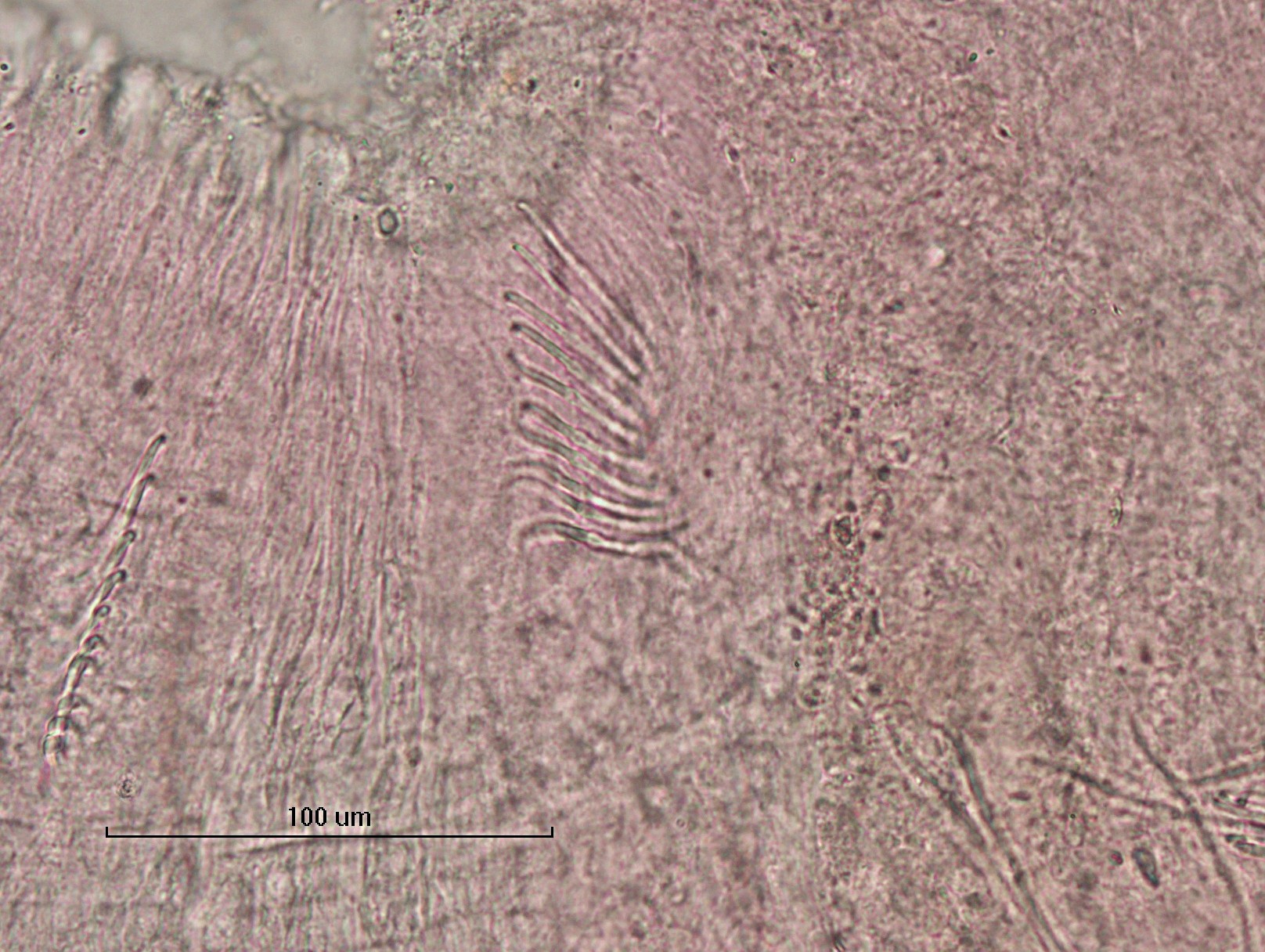
Figure 3. The posterior dorsal chaetae are the same as the anterior dorsal chaetae with no change in shape.
Download Image -
4/10
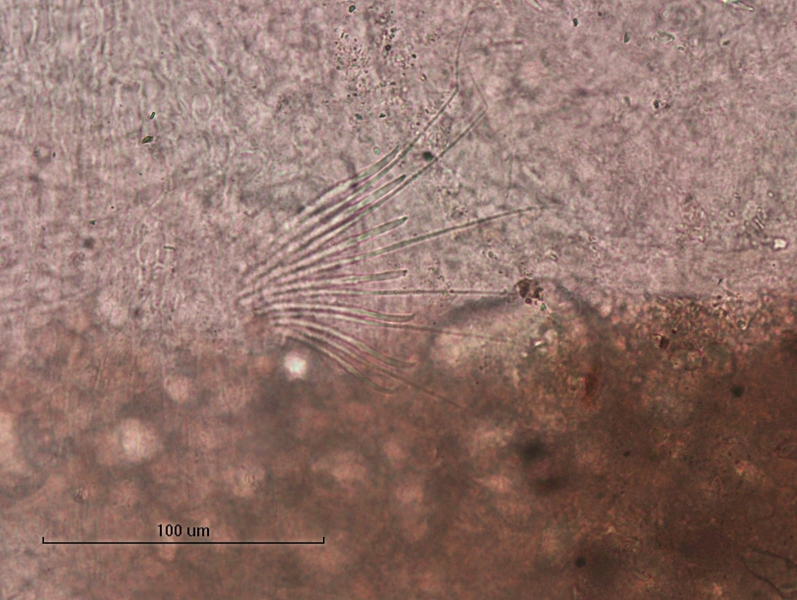
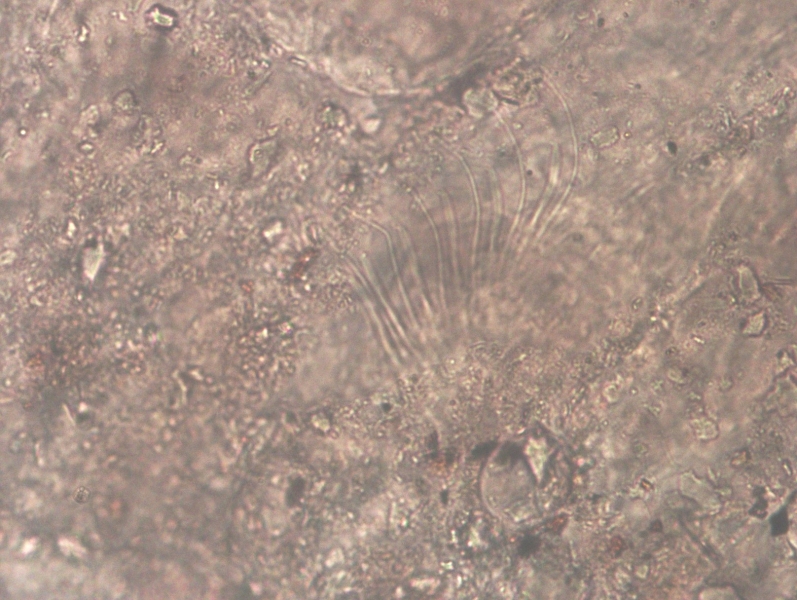
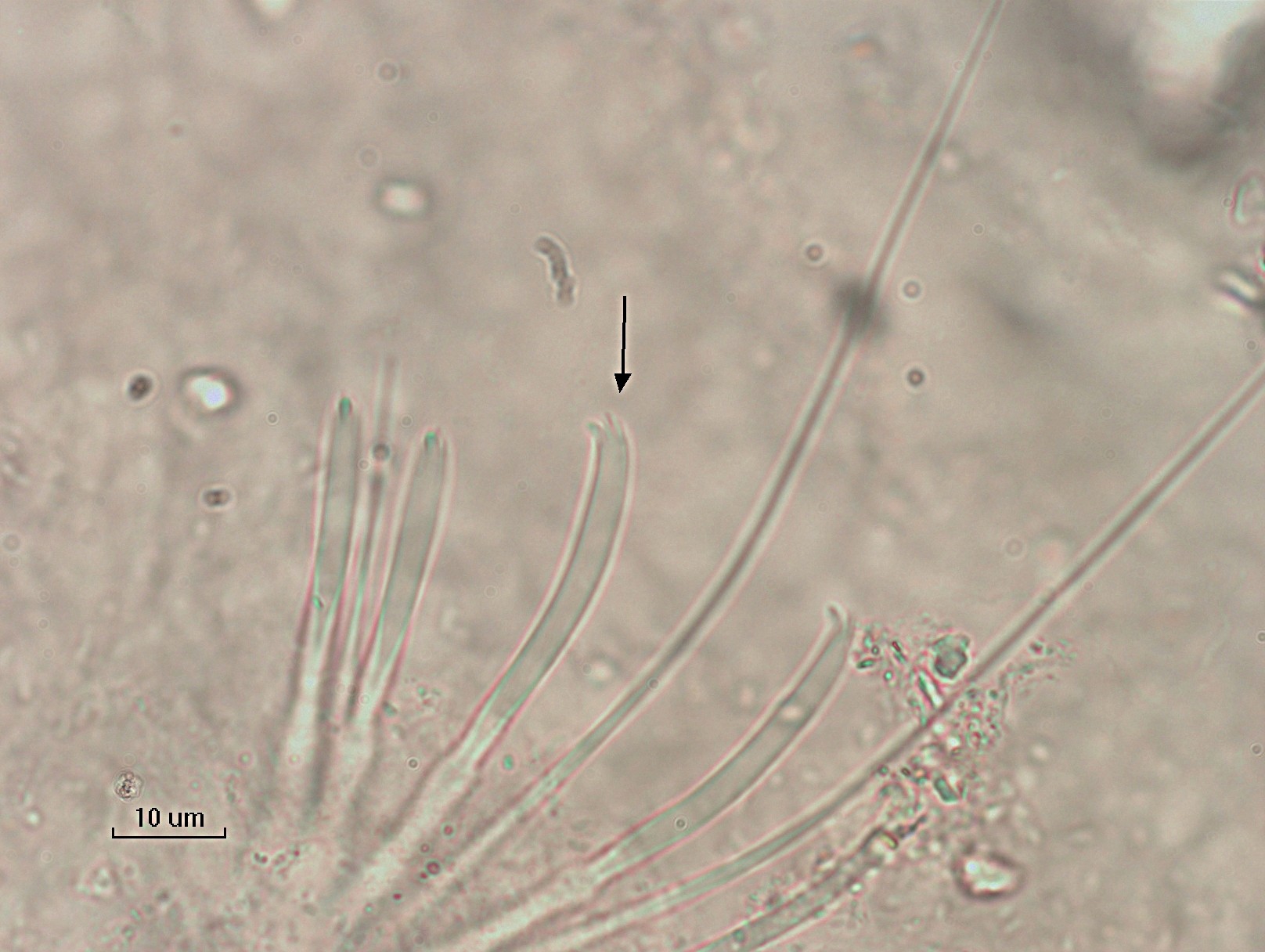
Figure 4. In the frontal aspect of the dorsal chaetae, the chaetae look like they widen a little near the distal end with a little bit of a dot at the tip where the bifid teeth are just barely visible. They slightly resemble the posterior chaetae of A. limnobius, although A. pluriseta chaetae are not nearly as spatulate, nor is the dot of the lower tooth nearly as pronounced as in A. limnobius, which also lacks hair chaetae.
Download Image -
5/10
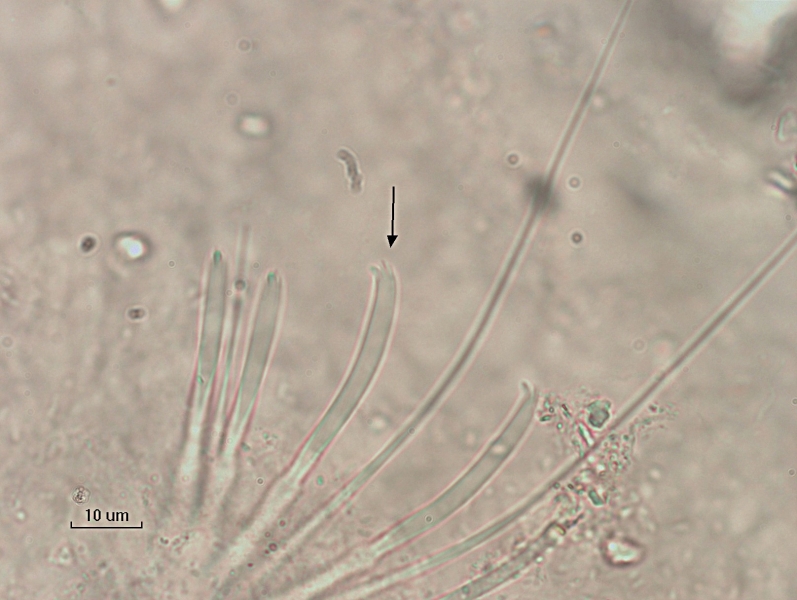
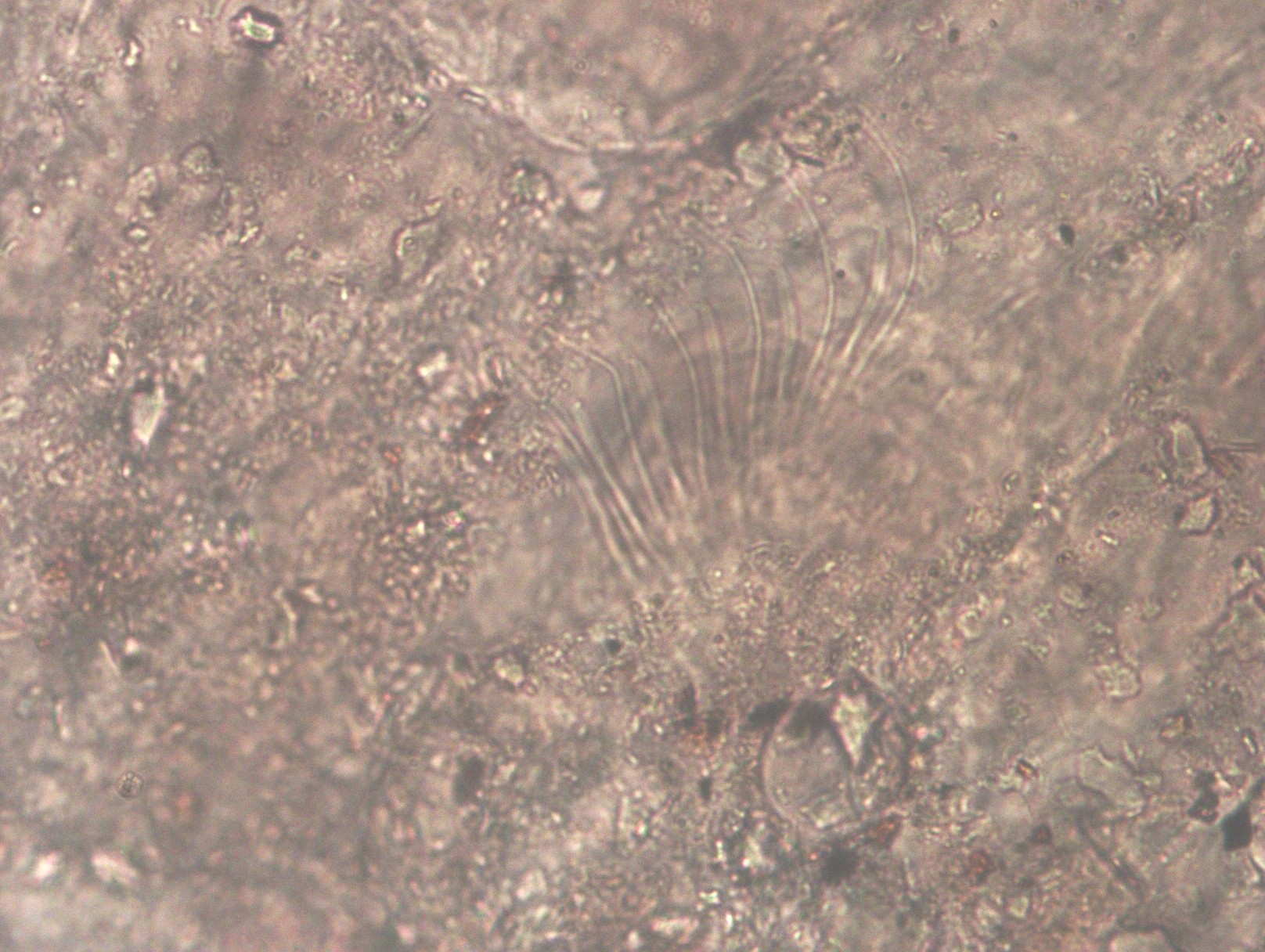
Figure 5. Some of the upper teeth may be replicated. This trait might belong to A. japonicus, which is indistinguishable from A. pluriseta.
Download Image -
6/10
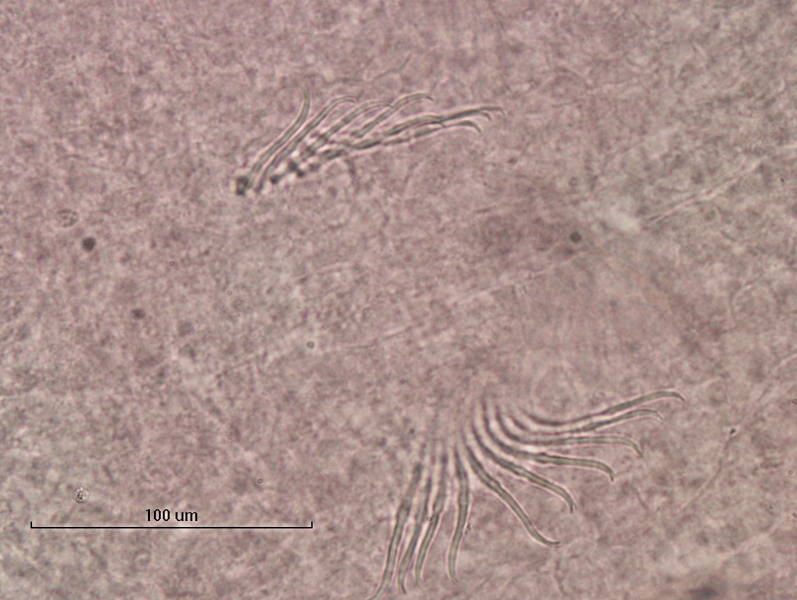
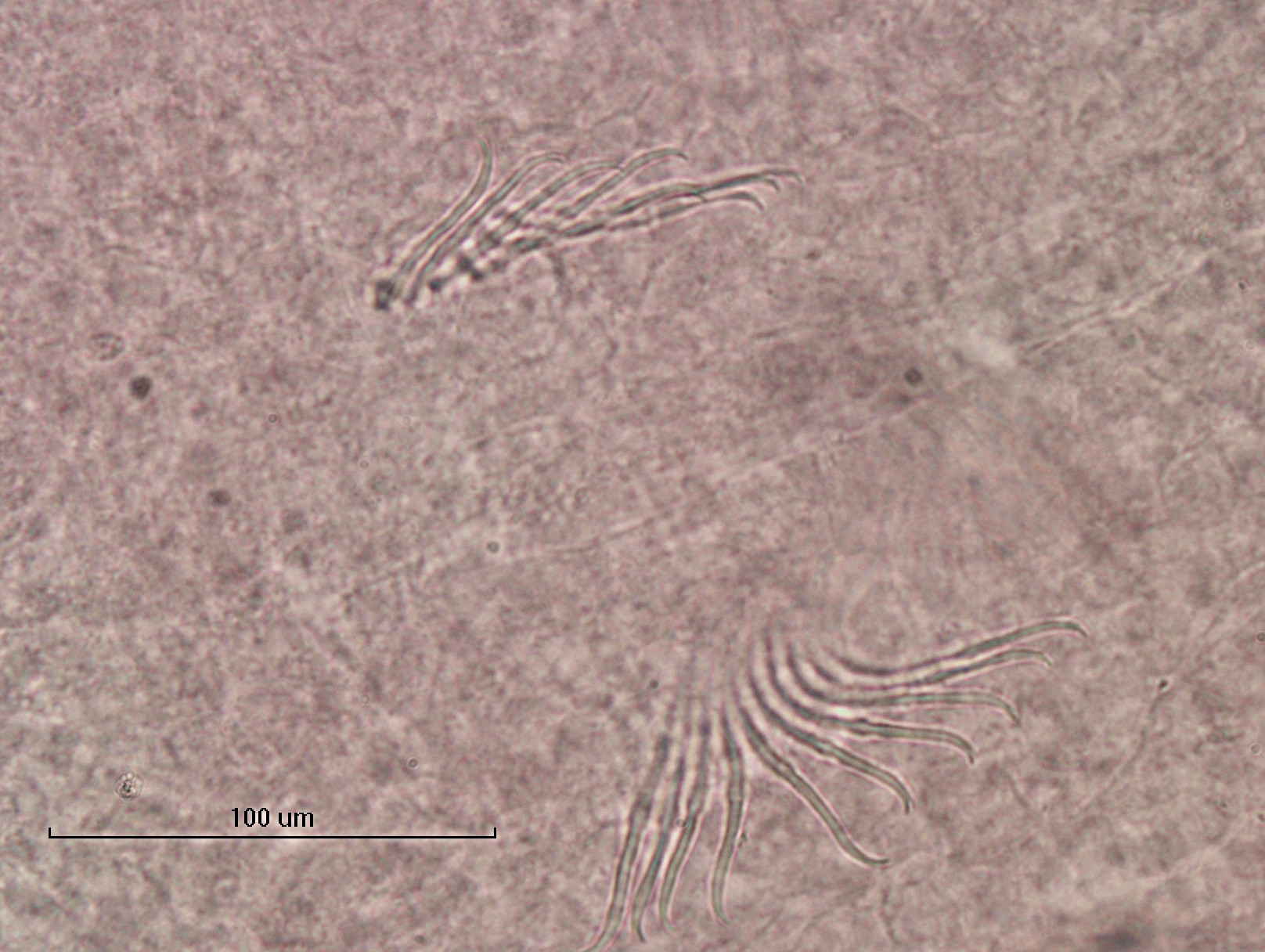
Figure 6. There are up to 16 curved ventral chaetae anteriorly with short, thin upper teeth that are not replicated. They look very similar to the dorsal chaetae.
Download Image -
-
8/10
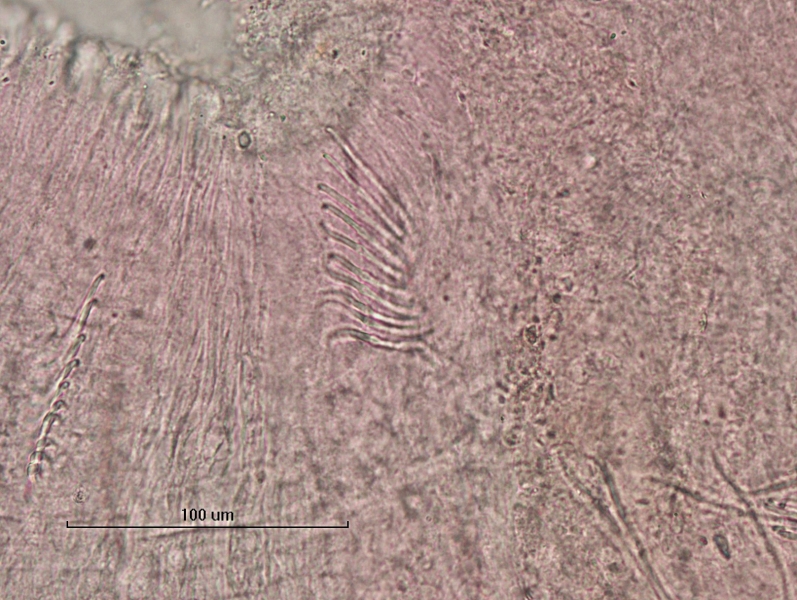
Figure 8. Just like the dorsal chaetae, in the frontal aspect the chaetae look like they widen a little near the distal end with a little bit of a dot at the tip where the bifid teeth are just barely visible. They slightly resemble the posterior chaetae of A. limnobius, although A. pluriseta chaetae are not nearly as spatulate, nor is the dot of the lower tooth nearly as pronounced as in A. limnobius, which also lacks hair chaetae.
Download Image -
-
Aulodrilus pluriseta
Taxa description
Aulodrilus pluriseta Piguet, 1906 is a freshwater oligochaete worm that is uncommon in the Great Lakes. It is a tubificid worm that has dorsal bundles with hairs and bifid chaetae and bifid ventral chaetae beginning in II. This genus is known for having distinctive somatic chaetae, which vary from species to species. They have true penes, but often reproduce asexually. They are often found in sediment tubes, which can obscure the features when mounted if not removed. The anterior dorsal bundles of A. pluriseta have up to 8 short, curved hair chaetae and up to 10 curved bifid chaetae with short, thin upper teeth that may be replicated. There are up to 16 curved ventral chaetae anteriorly with short, thin upper teeth that are not replicated. Unlike other Aulodrilus species, the chaetae of A. pluriseta do not change shape posteriorly. The forms with replicated upper teeth may belong to A. japonicus, and the two species may be distinct species based on chaetae and reproductive organs. Many of the North American specimens may be A. japonicus except for a few specimens with bifid chaetae with a lateral wing (Kathman and Brinkhurst 1998). All of the specimens the Great Lakes Center sent for genetic barcoding were identified as A. japonicus.
Distinguishing features
A. pluriseta is identified mainly by having hair chaetae, dorsal needle chaetae are bifid with short, thin upper teeth that may be replicated, ventral chaetae are bifid with short, thin upper teeth that are not replicated, all chaetae are somewhat curved. There may be replicate upper teeth on the dorsal chaetae (A. japonicus?). It may be found in sediment tubes like other Aulodrilus species.
Habitat
Aulodrilus spp. are found in mesotrophic habitats or locations with weeds. A. pluriseta does well in organically enriched habitats with silty substrates.
Lake occurrence
Lakes Erie, Huron, and Ontario.
Similar species
Unlike many other tubificids, A. pluriseta does not need to be mature in order to be identified. This species is quite distinctive, but it could be confused with other species from Aulodrilus. A. japonicus is nearly indistinguishable from A. pluriseta but specimens that have replicated bifid dorsal chaetae may be A. japonicus while those with only bifid dorsal chaetae may be A. pluriseta; it remains unclear. If there is a sediment tube on the mounted worm, it may be possible to see the short, thin upper teeth of the anterior chaetae but be unable to see specialized chaetae posteriorly through the sediment tube. It should also be possible to see hair chaetae through the sediment tube. The anterior chaetae of A. pluriseta are closer to either Aulodrilus pigueti or A. limnobius than A. americanus because the former three have upper teeth shorter and thinner than the lower, but not simple-pointed or minutely bifid. However, A. pluriseta and A. pigueti both have hair chaetae, while A. limnobius and A. americanus do not. The dorsal chaetae of A. pluriseta do not change posteriorly, but A. pigueti has oar-shaped chaetae starting in VII. A. limnobius has oar-shaped posterior chaetae with the upper tooth at the top, and A. americanus is larger than most of the others with brush-like posterior chaetae. Lastly, A. paucichaeta also bifid chaetae with short upper teeth but it lacks hair chaetae and posterior chaetae become solitary and very thick with large recurved lower teeth. A. paucichaeta is not usually found in the Great Lakes region.
Other than species of Aulodrilus, A. pluriseta may be confused with Branchiura sowerbyi. B. sowerbyi is quite large and has gill filaments on each segment posteriorly, but it readily fragments and the anterior end bears some resemblance to A. pluriseta. The dorsal bundles contain several hairs and several bifid chaetae with a short, thin upper tooth with replications on the lower tooth when examined under an oil immersion lens. A. pluriseta or A. japonicus will only have one replicated tooth, not several. The ventral chaetae of B. sowerbyi have short, thin upper teeth, but the anterior ventral chaetae may be simple-pointed in II–IV. A. pluriseta does not have simple-pointed ventral chaetae. B. sowerbyi has eversible pseudopenes, not true penes, and it does not have sediment tubes.
Relative size
A. pluriseta is a medium-sized oligochaete worm.
Does it have a barcode reference from the Great Lakes?
Yes, this species does have a barcode reference from the Great Lakes.
References
Kathman, R.D., and R.O. Brinkhurst. 1998. Guide to Freshwater Oligochaetes of North America. pp. 184–187, 122, 200–201, 198–199, 192–193, 166–169.
Stimpson, K.S., D.J. Klemm, and J.K. Hiltunen. 1982. A Guide to the Freshwater Tubificidae (Annelida: Clitellata: Oligochaeta) of North America. pp. 19, 44.