

Aulodrilus limnobius
-
1/5
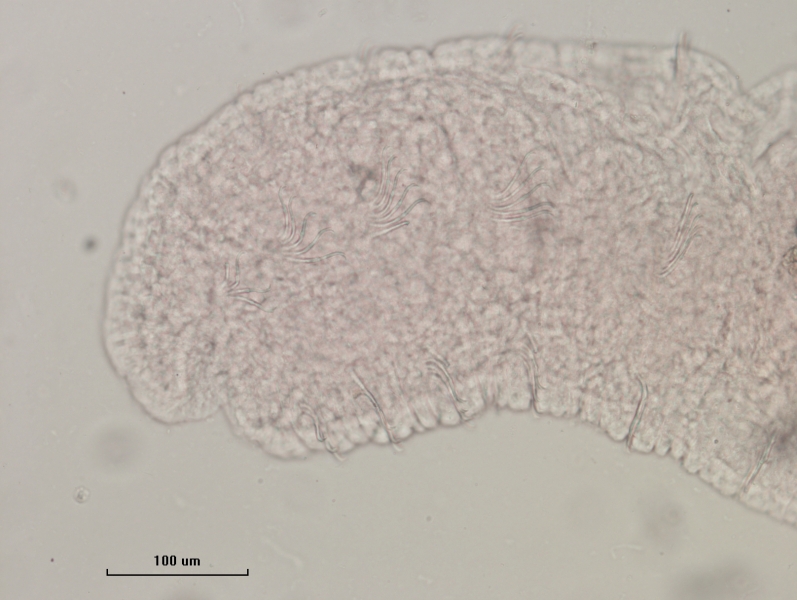
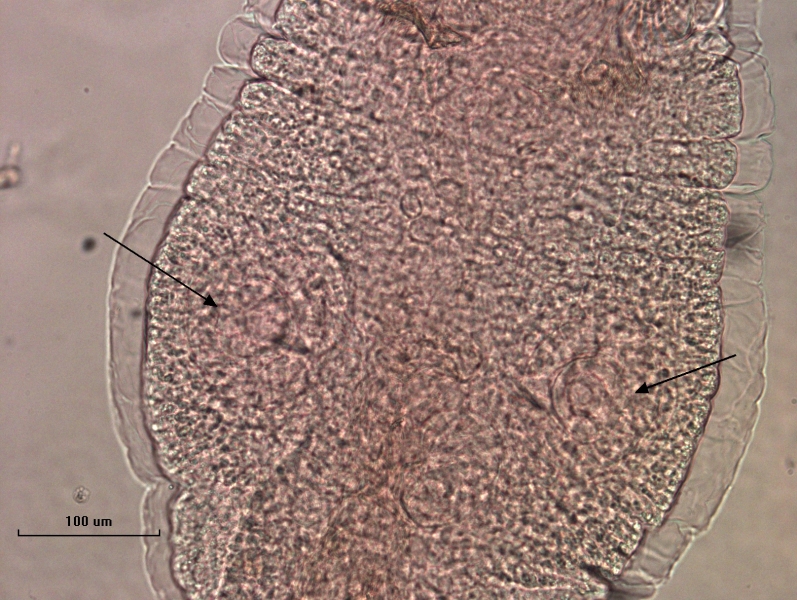
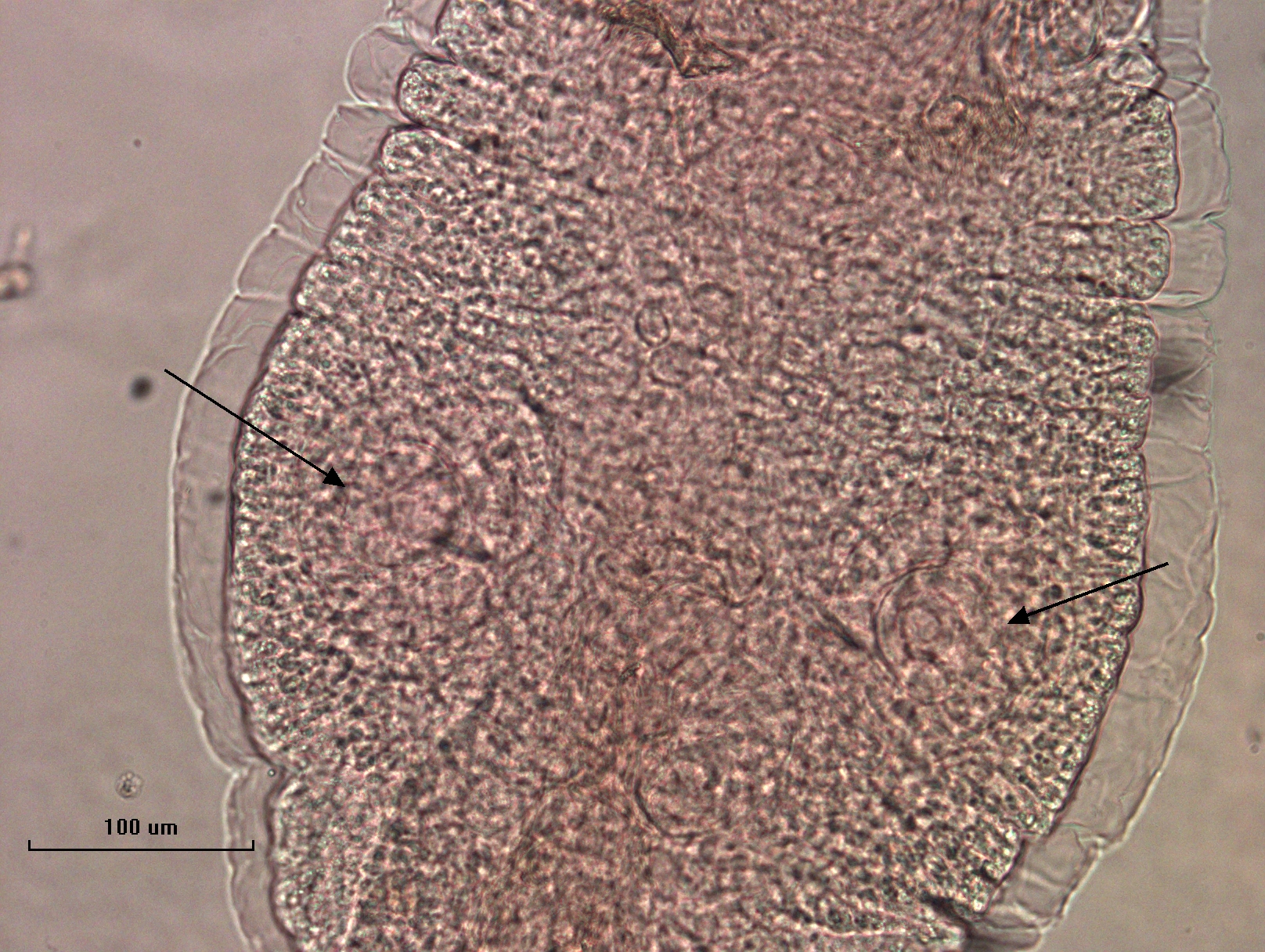
Figure 1. The anterior end of Aulodrilus limnobius has bifid chaetae with no hairs.
Download Image -
2/5
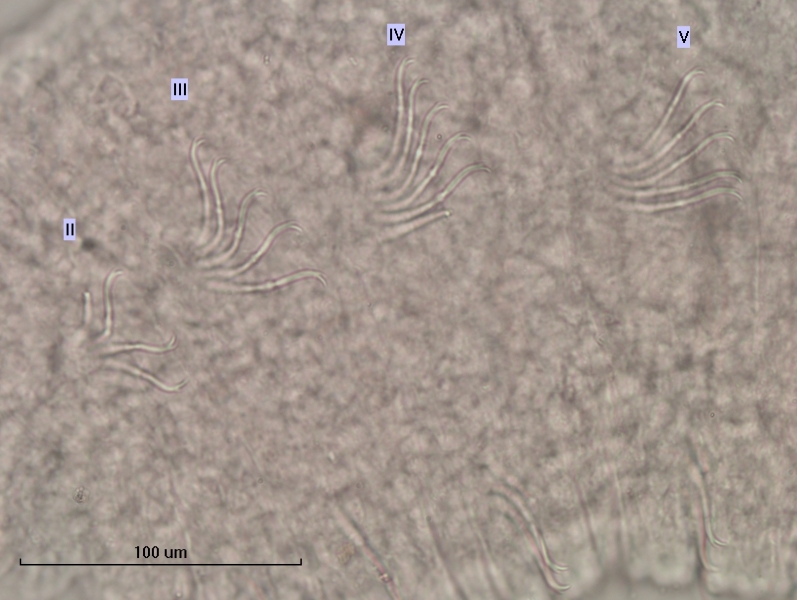
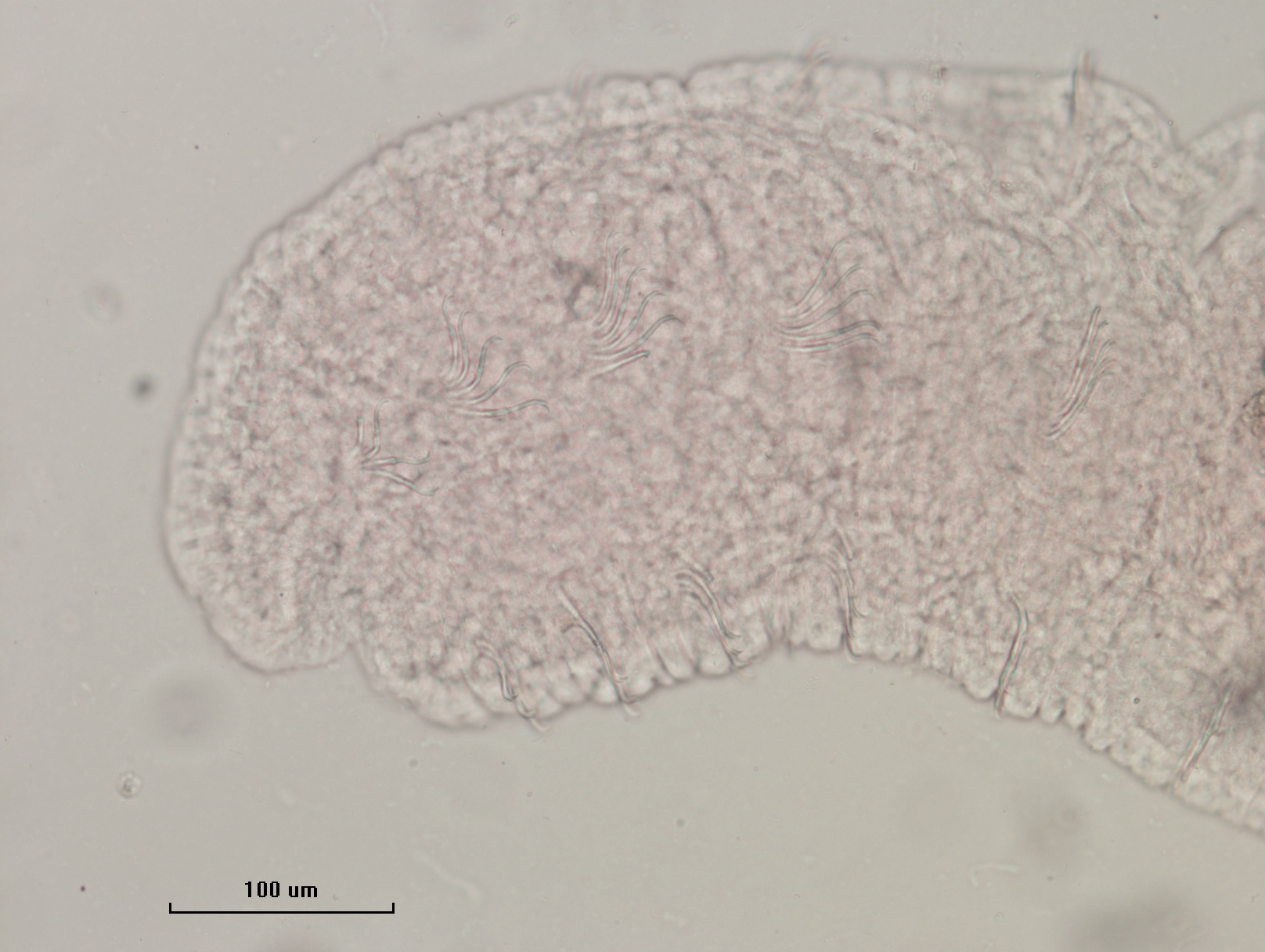
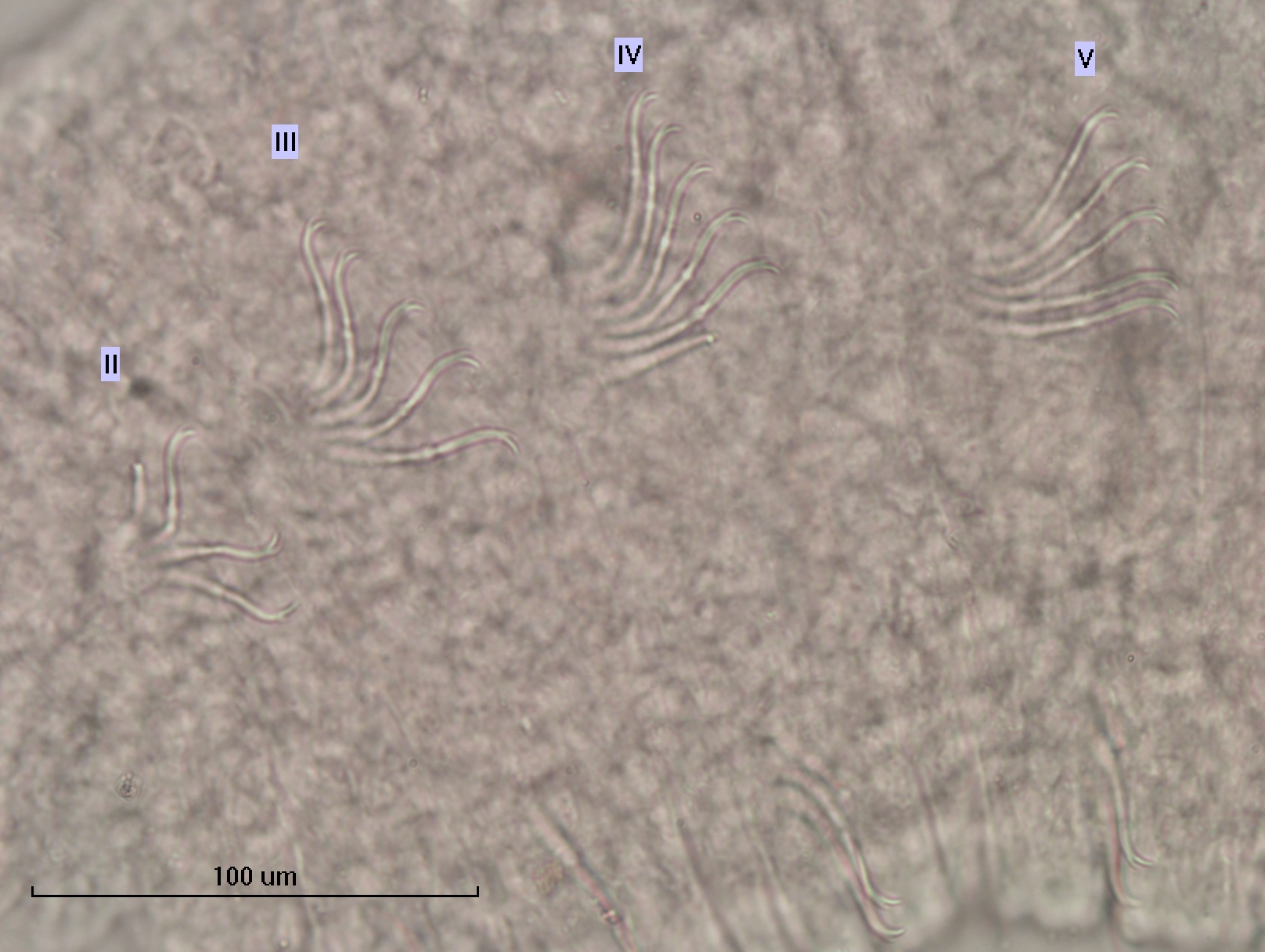
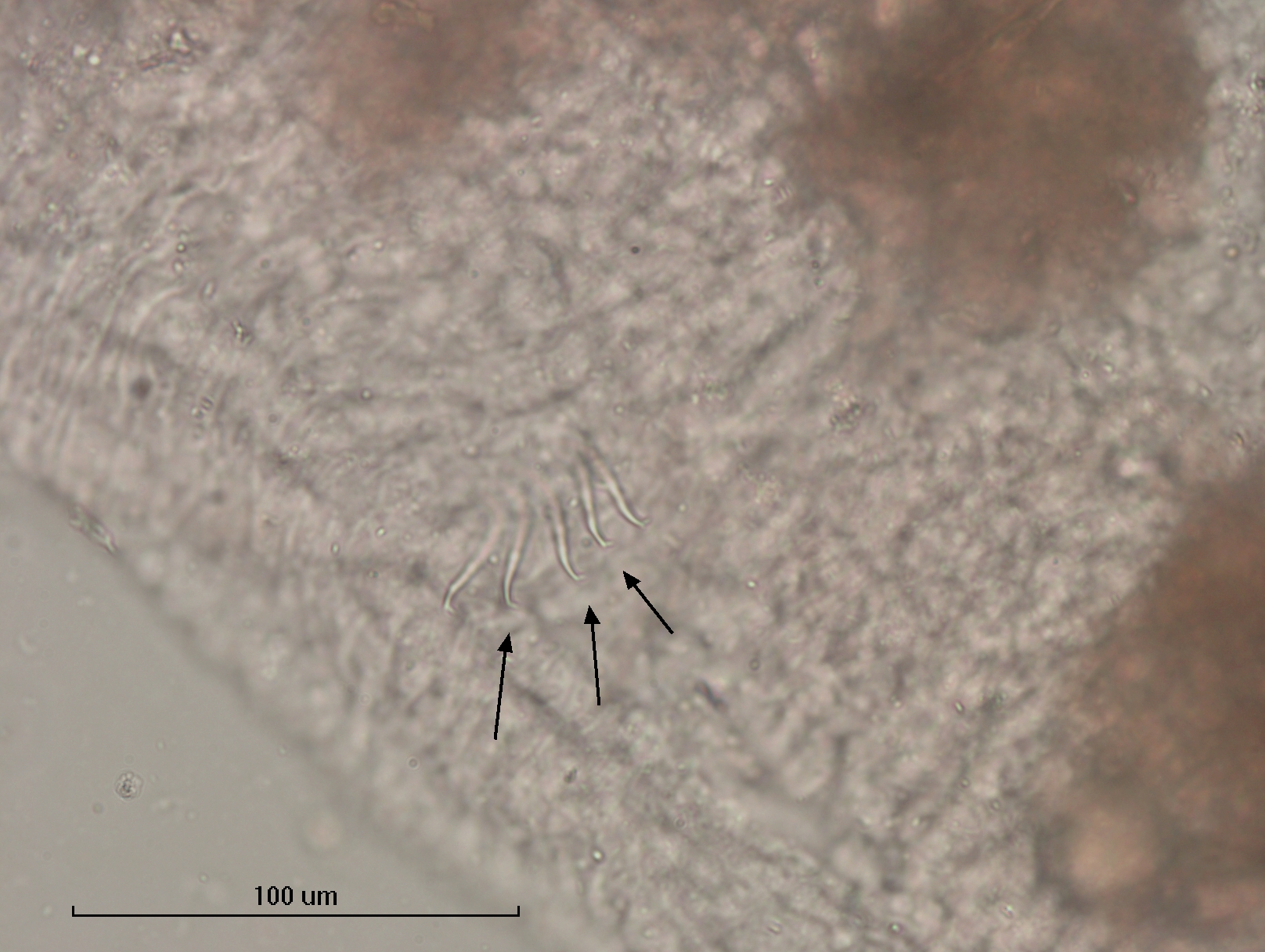
Figure 2. The anterior bundles of A. limnobius have up to 10 chaetae that are bifid with a short, thin upper tooth. Anterior chaetae are shorter, thicker, and more curved than posteriorly.
Download Image -
3/5
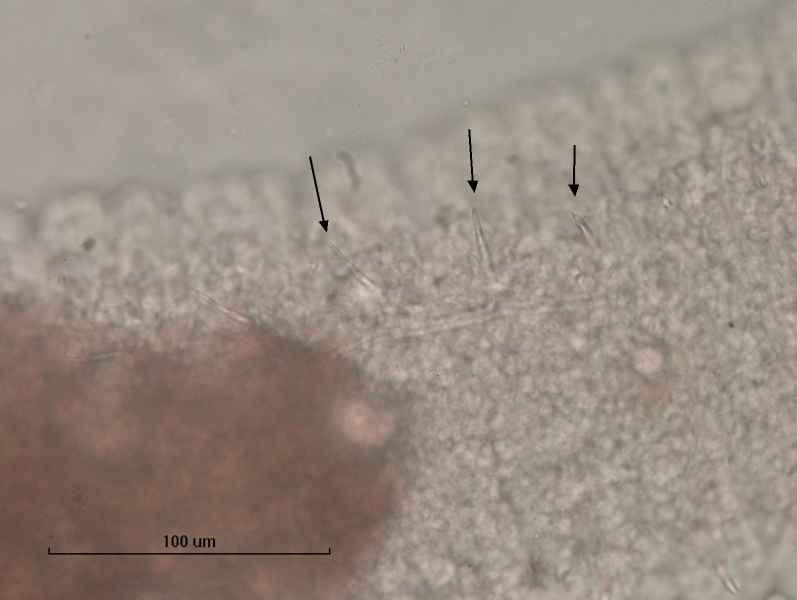
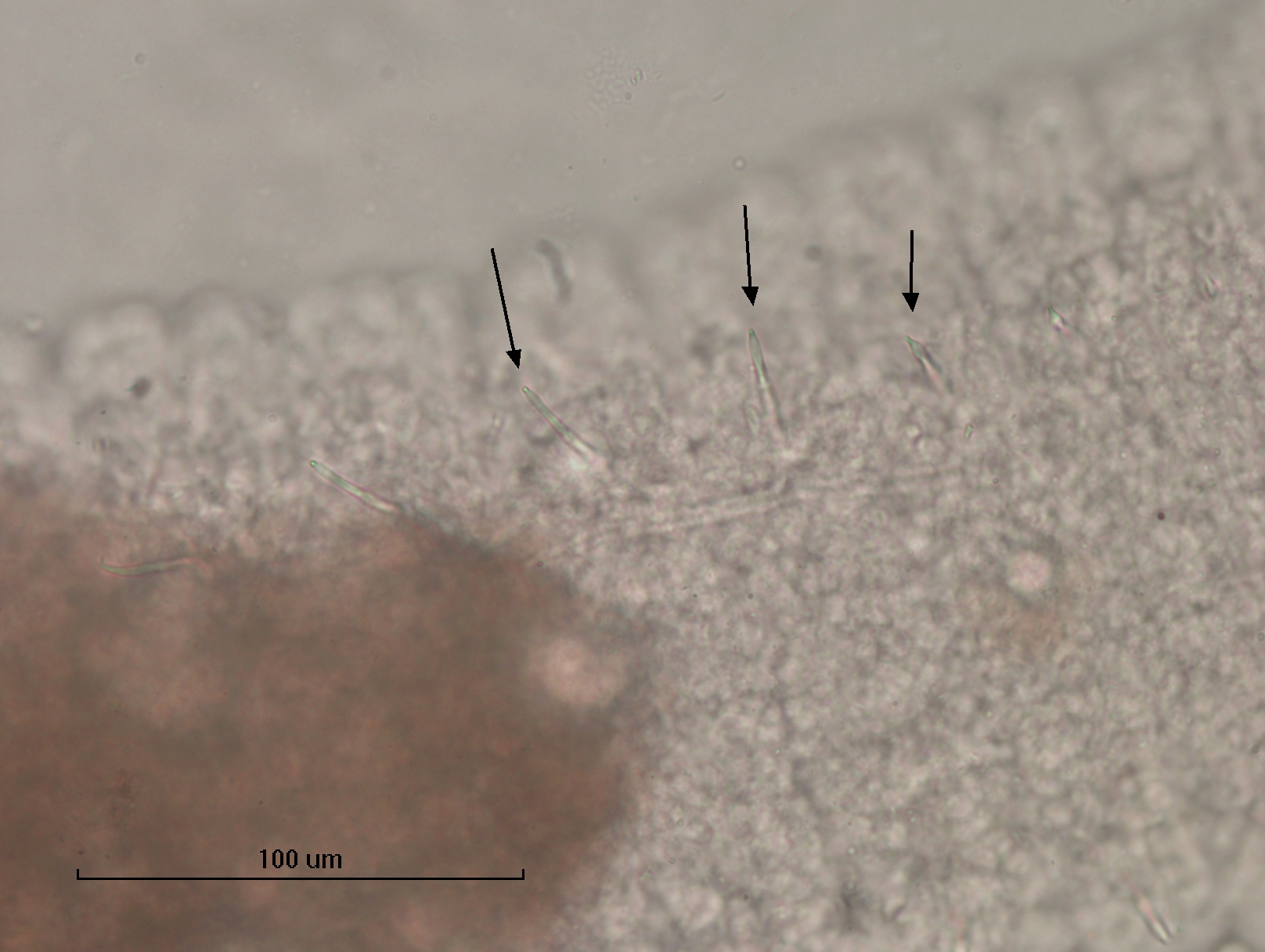
Figure 3. Starting in approximately VII, all chaetae have a lateral keel. When viewed in facial aspect it will appear spatulate with a tiny dot of an upper tooth at the tip. Many bundles may need to be looked at to find chaetae in the correct orientation.
Download Image -
4/5
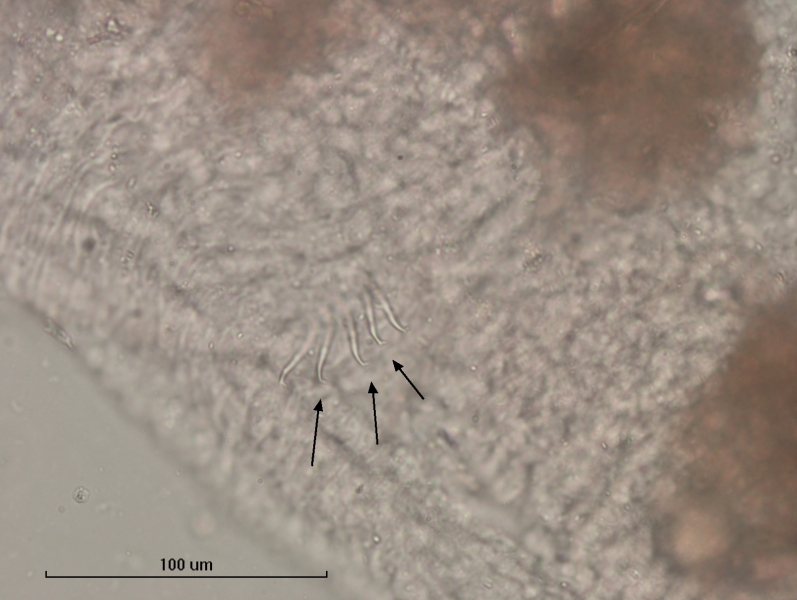
Figure 4. Starting in approximately VII, all chaetae have a lateral keel. The lateral keel may be difficult to view from the side, as it will look very similar to the anterior chaetae.
Download Image -
Aulodrilus limnobius
Taxa description
Aulodrilus limnobius Bretscher, 1899 is a freshwater oligochaete worm that is uncommon in the Great Lakes. It is a tubificid worm with dorsal chaetae beginning in II and both dorsal and ventral chaetae are bifid or specialized. This genus is known for having distinctive somatic chaetae, which vary from species to species. They have true penes, but often reproduce asexually. They are often found in sediment tubes, which can obscure the features when mounted if not removed. The anterior bundles of A. limnobius have up to 10 chaetae that are bifid with a short, thin upper tooth. Anterior chaetae are shorter, thicker, and more curved than posteriorly. Starting in approximately VII, all chaetae have a lateral keel. The lateral keel may be difficult to view from the side, as it will look very similar to the anterior chaetae, but when viewed in facial aspect it will appear spatulate with a tiny dot of an upper tooth at the tip. Many bundles may need to be looked at to find chaetae in the correct orientation. A. limnobius lacks hair chaetae. When mature, the true penes lack cuticular penis sheaths.
Distinguishing features
A. limnobius is identified mainly by the distinct somatic chaetae which start out as bifid with a short, thin upper tooth and in VII have a lateral keel which when viewed in facial aspect will appear spatulate with a tiny dot of an upper tooth at the tip. Unlike some other species of Aulodrilus, it lacks hair chaetae. It may be found in sediment tubes like other Aulodrilus species.
Habitat
Aulodrilus spp. are found in mesotrophic habitats or locations with weeds. A. limnobius is found in mesotrophic habitats with a silty substrate and can be found in the drift of rivers. It is often found with A. pigueti.
Lake occurrence
Lakes Erie, Huron, and Ontario.
Similar species
Unlike many other tubificids, A. limnobius does not need to be mature in order to be identified. This species is quite distinctive, but it could be confused with other species from Aulodrilus. If there is a sediment tube on the mounted worm, it may be possible to see the short, thin upper teeth of the anterior chaetae but be unable to see the specialized chaetae posteriorly through the sediment tube. It should also be possible to see hair chaetae through the sediment tube. The anterior chaetae of A. limnobius are closer to either Aulodrilus pluriseta or A. pigueti than A. americanus because the former three have upper teeth shorter and thinner than the lower, but not simple-pointed or minutely bifid. However, A. pluriseta and A. pigueti both have hair chaetae, while A. limnobius and A. americanus do not. The dorsal chaetae of A. pluriseta do not change posteriorly, but A. limnobius has a keel starting in VII. It is most likely that A. limnobius could be confused with A. pigueti because they are often found together and their anterior and posterior chaetae are similar, and the main difference lies in whether there are hair chaetae or not. The dorsal chaetae of A. pigueti also form a spatulate shape, but they lack an upper tooth and appear simple-pointed or compressed in profile. In addition, A. pigueti may be missing some chaetae or all in II–IV or VII, unlike other Aulodrilus species. Since A. limnobius lacks hair chaetae, it could be confused with A. americanus, although A. limnobius is usually smaller and it doesn’t have simple-pointed or minutely bifid chaetae anteriorly or brush-like palmate chaetae posteriorly. Lastly, A. paucichaeta also lacks hair chaetae but has bifid chaetae with short upper teeth becoming solitary and very thick with large recurved lower teeth posteriorly. A. paucichaeta is not usually found in the Great Lakes region.
Thalassodrilus hallae is a very small tubificid (less than 4 mm) that has bifid chaetae with short, thin upper teeth anteriorly and simple-pointed chaetae posteriorly. A. limnobius is also somewhat small, but instead of simple-pointed chaetae, it has keeled chaetae posteriorly. T. hallae doesn’t have sediment tubes, and it has penial chaetae on XI instead of penes on X.
Relative size
A. limnobius is a medium-sized oligochaete that is often smaller than many other tubificid worms and may be closer in size to naidid worms.
Does it have a barcode reference from the Great Lakes?
No, this species does not yet have a barcode reference from the Great Lakes.
References
Kathman, R.D., and R.O. Brinkhurst. 1998. Guide to Freshwater Oligochaetes of North America. pp. 186–187, 184–185, 136, 200–201, 198–199, 192–193, 166–169.
Stimpson, K.S., D.J. Klemm, and J.K. Hiltunen. 1982. A Guide to the Freshwater Tubificidae (Annelida: Clitellata: Oligochaeta) of North America. pp. 30, 44.