

Amphichaeta leydigi
-
1/2
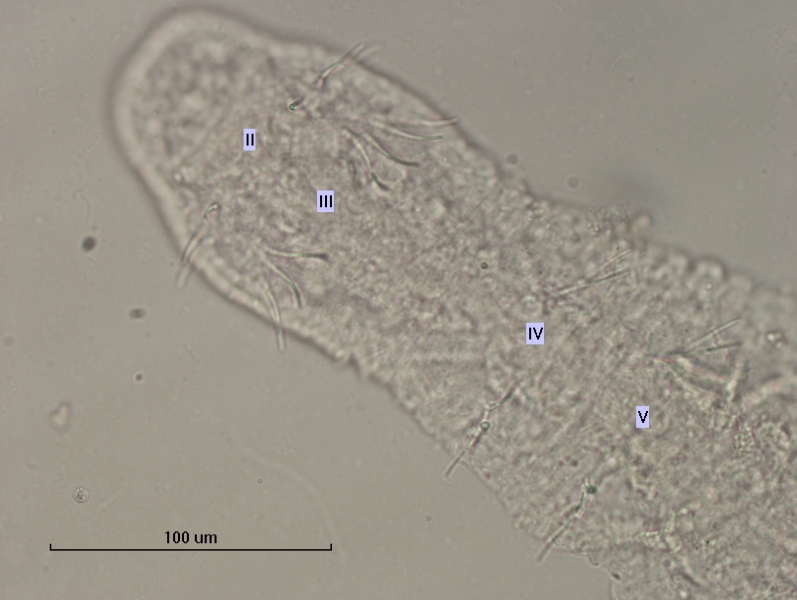
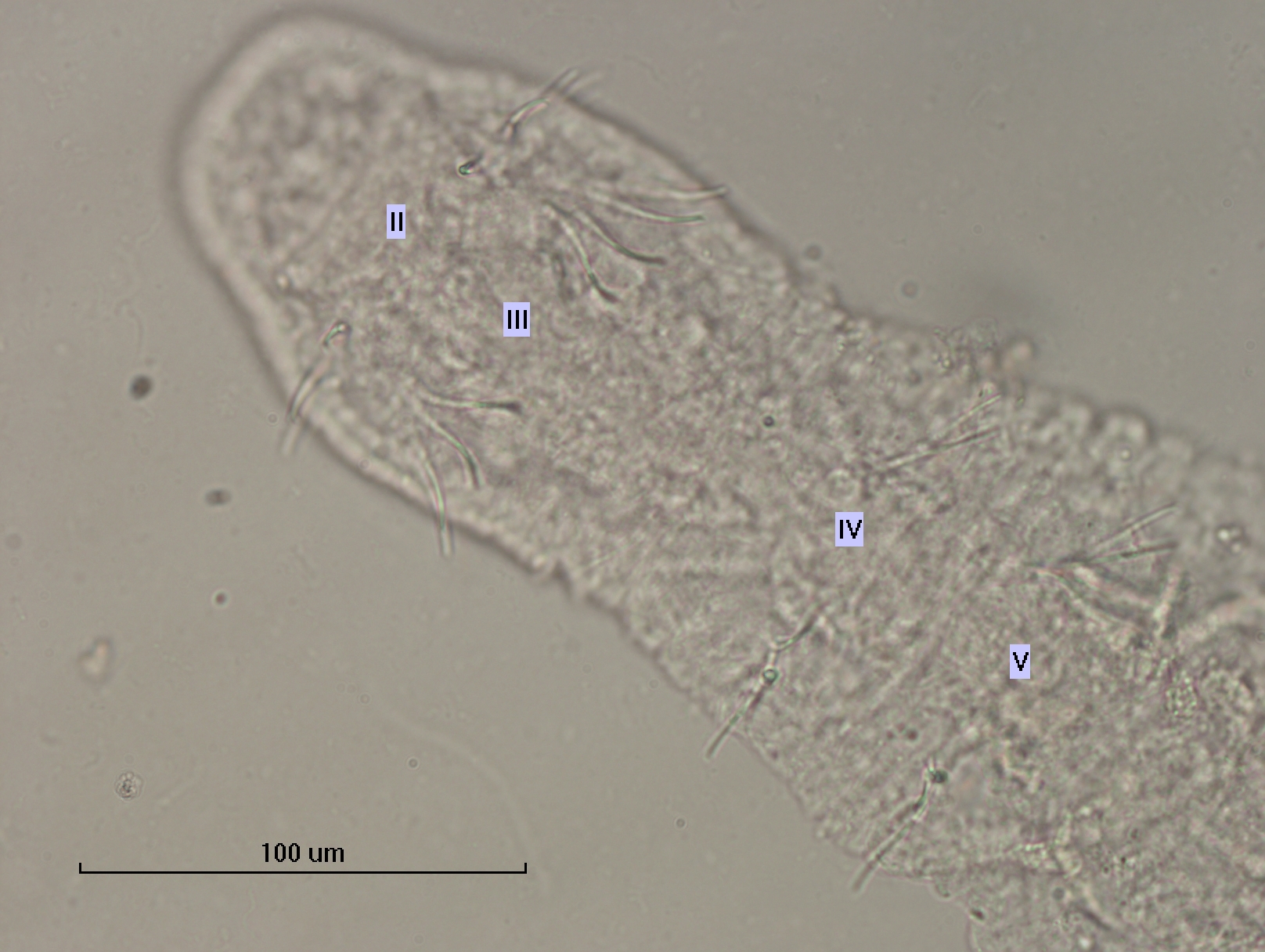
Figure 1. The ventral chaetae of Amphichaeta leydigi are all bifid, and there is a gap between III and IV for the elongated pharynx. Segment III has 5 chaetae, while the other segments have as few as two chaetae.
Download Image -
2/2
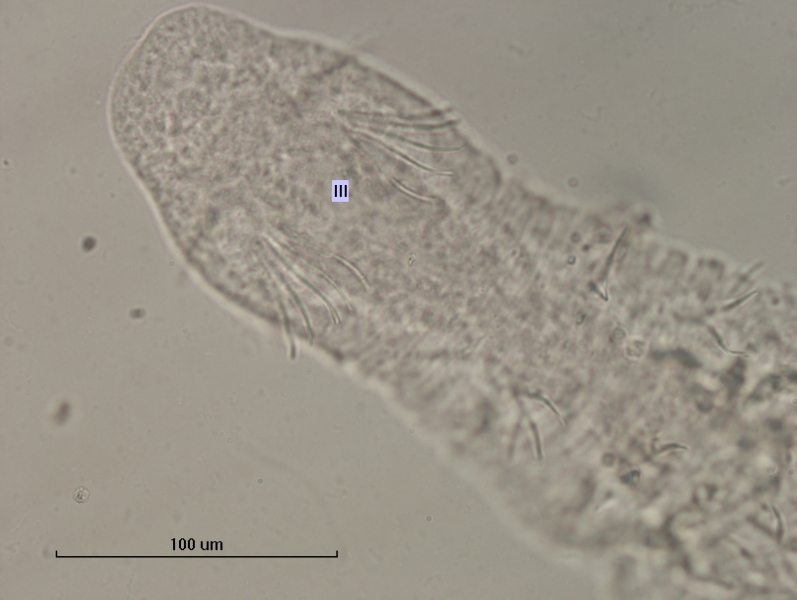
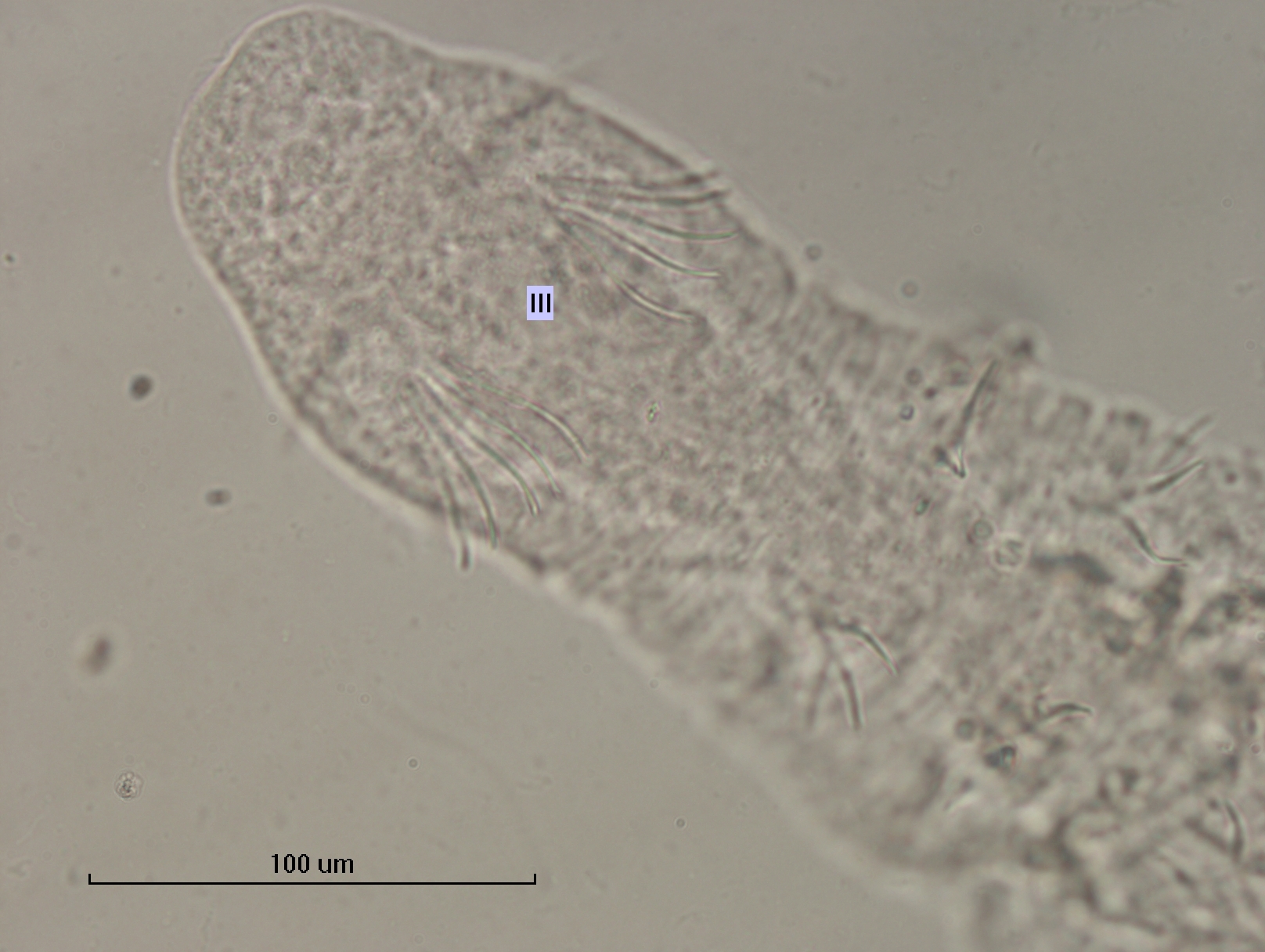
Figure 2. The dorsal chaetae of Amphichaeta leydigi begin in III, the chaetae are all bifid, and there is a gap between III and IV for the elongated pharynx. Segment III has 5 chaetae, while the other segments have as few as two chaetae.
Download Image
Amphichaeta leydigi
Taxa description
Amphichaeta leydigi Tauber, 1879 is a freshwater oligochaete worm that is uncommon in the Great Lakes. It is a naidid worm with dorsal bundles beginning in III and ventral bundles beginning in II, with no hair chaetae or proboscis. This genus has an elongated pharynx which may appear as a gap between the chaetae of III and IV, and the dorsals of III and the ventrals of II and III will be grouped together closely before the gap. Ventral chaetae of II–IV may be directed posteriad. A. leydigi has bifid chaetae in all bundles, usually with 5 chaetae in III and as few as 2 chaetae in the rest. The upper teeth of the anterior chaetae are usually a little shorter and thinner than the lower, but there is some variation and they may be subequal or slightly longer. Posteriorly, the upper teeth are in line with the shaft and as long or longer than the lower tooth. A common estuarine form in Europe, A. sannio, may be a synonym. It hasn’t been reported in North America yet, but there is not much distinction between it and A. leydigi.
Distinguishing features
A. leydigi is identified mainly by the dorsal bundles starting in III, no hair chaetae, bifid chaetae in all bundles, 5 chaetae in the dorsal bundle of III with less in the rest, anterior chaetae with the upper tooth usually shorter and thinner than the lower, and posterior chaetae with the upper teeth in line with the shaft and as long or longer than the lower.
Habitat
This species is often found on sandy substrata in shallow areas, in lotus beds, and barrier beaches. They are also not natatory but are small and extremely mobile.
Lake occurrence
Lakes Michigan and Ontario.
Similar species
There are few species that are similar enough to be confused with A. leydigi. It is most likely to be confused with other species in Amphichaeta, but they are not usually found in the Great Lakes. A. americana has up to 7 chaetae in III, with the upper tooth slightly longer than the lower anteriorly becoming up to three times longer posteriorly. There is a very long gap between III and IV. A. americana is found in Isle Royal, Lake Superior and the St. Marys River, Michigan, but not usually in our samples. A. raptisae also has 5 chaetae in III, and anterior chaetae have short teeth of equal length with the upper tooth becoming longer posteriorly, but there may intermediate teeth visible only under oil immersion. A. raptisae is only found in the Fraser River, British Columbia, where it lives in brackish, not fresh water.
The most confusing thing about A. leydigi is the grouping of chaetae in II and III. It may appear that the dorsals start in II since the ventrals of II may be placed between the dorsals and ventrals, instead of in line with the other ventrals. If it appears that the dorsals start in II, it may key out to Homochaeta, but that species isn’t present in the Great Lakes and only has one record in North America. H. naidina has 5 or 6 dorsal chaetae in II–V, not just in the first dorsal bundle. A. leydigi may also be confused with very small immature tubificid worms at first glance if it looks like the dorsals start in II, but the chaetae are more similar to naidid worms and the dorsals actually start in III.
Relative size
A. leydigi is a small freshwater oligochaete.
Does it have a barcode reference from the Great Lakes?
No, this species does not yet have a barcode reference from the Great Lakes.
References
Chekanovskaya, O.V. 1962. Aquatic Oligochaeta of the USSR. Key to the Fauna of the USSR.
Kathman, R.D., and R.O. Brinkhurst. 1998. Guide to Freshwater Oligochaetes of North America. pp. 46-47, 34, 44–45.
Hiltunen, J.K., and D.J. Klemm. 1980. A Guide to the Naididae (Annelida: Clitellata: Oligochaeta) of North America. pp. 15, 32.