

Great Lakes Center Newsletter: Issue 4
April 21, 2014
This issue focuses on changes in our staff, including three new additions and a tribute to a colleague whom we lost this January. It also features articles on the record levels of ice on the Great Lakes this winter, a PSM designation for our GLES MS program, and an invasive species management technique.
Great Lakes covered in ice
by Kit Hastings
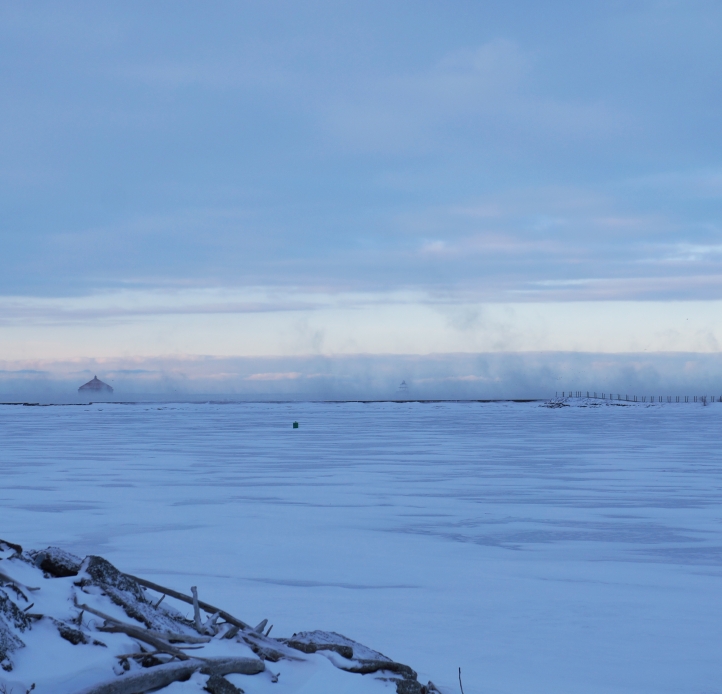
This winter has been a long and cold one in Buffalo and across the nation, with talk of polar vortexes and snow storms that reached far into the south. Buffalo, NY experienced two blizzards and over 128” of snow. Several days in January, the temperature hovered just above zero Fahrenheit and the relatively warm water of the Niagara River was thick with fog.
Ice forms on the Great Lakes every winter, although the amount of ice coverage varies greatly from year to year. According to data from the NOAA Great Lakes Environmental Research Laboratory, Great Lakes ice coverage was higher than it has been in 20 years. Ice cover across the region reached a maximum of 92 percent, making this year the second iciest on record after the winter of 1979. In contrast, the relatively snow-free winter of 2012 only saw about 12 percent ice coverage in the Great Lakes basin.
Except for Lake Ontario, all of the Great Lakes were more than 90 percent frozen this year. As the shallowest of the Great Lakes, Lake Erie has a smaller volume of water compared to its surface area and thus can cool faster than the other lakes. As such, it is the most likely to freeze over. Lake Erie reached 100 percent ice coverage in 1978, 1979, and 1996. This year, Lake Erie ice peaked at 96 percent coverage.
As of April 15, about 23 percent of Lake Erie remained covered in ice, much of which was trapped behind the ice boom at the mouth of the Niagara River. At this time last year, there was no ice on Lake Erie.
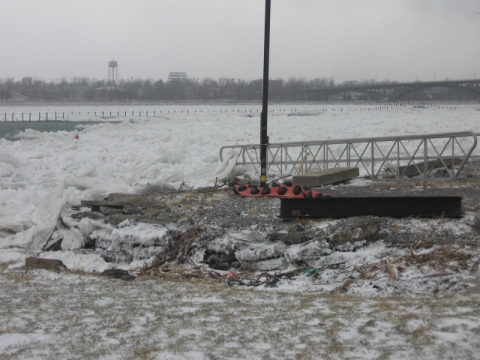
Lake ice can directly impact our early spring fieldwork. The GLC Field Station is located on the Black Rock Canal, connected to Lake Erie through Buffalo Harbor. The majority of the ice is kept from entering the Niagara River all at once by an ice boom. However, intense storms can blow the ice into the canal. In 2008, one such storm caused ice to pile up 6 feet thick on our dock!
While late ice might make for difficulties doing research on the lake, this year we have several projects on the Niagara River as well. Our field season began on April 16 with some sampling in the Lower Niagara River. The ice won’t be a difficulty for long, though. By early May it will hopefully be gone and then field season will really begin.
Remembering our colleague: Jagat J. Mukherjee
by Subodh Kumar

This winter, one of our researchers passed away unexpectedly. Jagat is remembered here by Subodh Kumar, who worked closely with Jagat throughout his career at the Great Lakes Center.
Jagat J. Mukherjee, a dear colleague and friend of mine, died very unexpectedly January 24, 2014. He was an outstanding molecular biologist. A significant portion of his collaborative research during last decade was aimed at understanding the molecular basis of carcinogenic chemical constituents (such as heavy metals and polycyclic aromatic hydrocarbons) found in cigarette smoke in order to identify signaling molecule(s) as chemopreventive targets that can be used to prevent cancer, especially lung cancer, among active and passive smokers. His research has yielded much valuable information on the details of various signaling proteins that are involved in cell transformation and promoting cancerous growth in lung and other tissues susceptible to cigarette smoke-induced carcinogenesis.
In a recent ongoing research project, Jagat was collaborating with me to investigate the role that alcohol intake by cigarette smokers has on lung cancer. Funded by the National Institutes of Health (NIH) with a perfect score, this study was important because in general smokers are usually heavy drinkers. Our data demonstrated that alcohol intake can significantly inhibit the induction of a cell protective mechanism initiated within normal cells exposed to the cancer-causing chemicals found in cigarette smoke. This initial finding has a novel implication that alcohol intake may potentiate tumor formation in cigarette smokers. In his final days, including the day he passed away, Jagat was actively engaged in deciphering the mechanistic understanding of the tumor potentiating effect of ethanol in the presence of carcinogenic polycyclic aromatic hydrocarbons.
Jagat was born on November 11, 1951 in Serampore, India. He completed his B.Sc. degree in chemistry from Calcutta University, where he also earned his M.Sc. and Ph.D. degrees in biochemistry. After completing his post-doctoral studies at the University of Michigan in 1988, he joined the prestigious Indian Institute of Chemical Biology in Jadavpur, India. After only a short stay in India, he came back to North America and worked at the University of Manitoba in Winnipeg, the Cleveland Clinic Foundation at Cleveland, and the University of Minnesota in different areas of biochemistry and cancer-related projects.
In 2001, he joined the Environmental Chemistry and Toxicology Laboratory of the Great Lakes Center in our ongoing projects funded by NIH, US EPA, and other agencies. Because of his hard work and devotion, he quickly became the principal investigator of his own NIH grants. His research, which resulted in more than 40 publications, has been published regularly in prestigious journals such as Carcinogenesis, Chemical Research in Toxicology, Mutation Research, and Cell Signal. As an active member of the American Association for Cancer Research, a prestigious cancer research organization, he regularly presented his research at their annual meetings. He actively participated in reviewing grant applications from various funding agencies including very recently from NIH. He was also invited as a guest speaker at Shantou University, Shantou, China in November, 2009.
Jagat, as I know personally, was not only a good researcher and a teacher, he was also a very social person with a simple style of living. He enjoyed spending time in the social network of the Buffalo community. He was also a good cook, a popular host and a popular guest ready to speak on any subject during a get-together, whether it was professional or social.
Jagat is survived by his wife, Alpana Mukherjee, who is presently living in Amherst, NY; his mother, Kalyani Mukherjee from Serampore, India; a sister, Meghamala Biswas, and three brothers, Barat Chandra Mukherjee, Srikant Mukherjee, and Subrata Mukherjee from India. He will be missed by all he interacted with professionally and personally.
For more information, see the article on the GLC webpage.
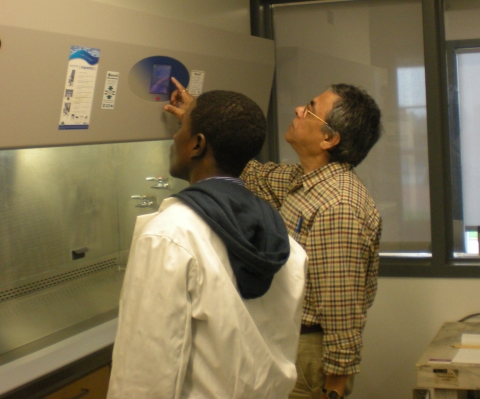
Growing the Great Lakes Center
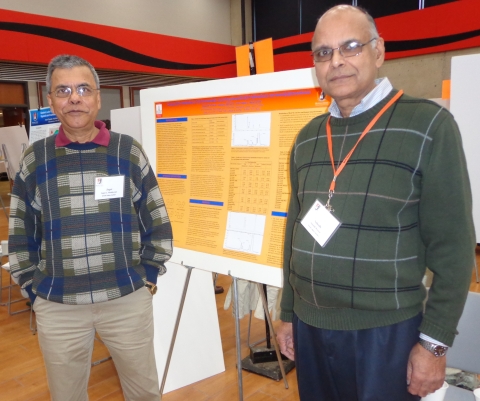
Since the beginning of 2014, three new people joined the GLC including WNY PRISM Coordinator Andrea Locke, Research Scientist Dr. Knut Mehler, and Senior Research Support Specialist Wendy Paterson.
Andrea Locke
Andrea Locke began working with us in January. She is the Coordinator of the Western New York Partnership for Regional Invasive Species Management (WNY PRISM) office. The GLC received a five-year $1.1 million grant from the New York State Department of Environmental Conservation to establish the regional center.
Andrea brings 12 years of experience in ecology, conservation, stewardship, program development, and non-profit management to the position. She has extensive experience developing innovative methods for managing invasive species and increasing resistance to further invasion. Previously, Andrea worked for The Nature Conservancy in Indiana where she employed methods including prescribed burning and planting design in the Kankakee Sands Prairie Restoration project. The project seeks to restore native ecosystems including the sand prairie and the black oak savanna. She did similar work restoring native woodlands, savannas, and prairies in Minnesota, Wisconsin, and Iowa. She has also worked with landowners, not-for-profits, and government agencies to identify resources and coordinate efforts to promote land stewardship. Her goal at WNY PRISM is to get people involved and excited!
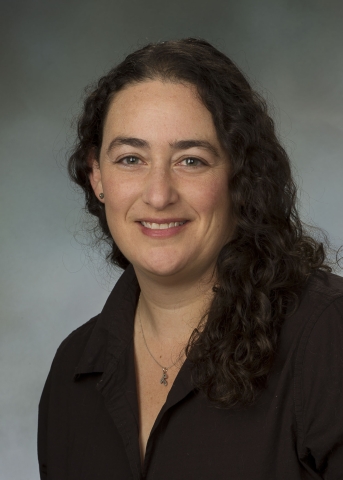
Dr. Knut Mehler
Joining us at the beginning of April, Knut’s work has just begun on a study of lake sturgeon in the lower Niagara River. He recently finished a Ph.D. in Benthic Ecology and Ecological Stoichiometry at the University of Nevada, Las Vegas in cooperation with the Desert Research Institute. Knut received his B.Sc. and M.Sc. in Geography from Friedrich Schiller University in cooperation with the Max Planck Institute for Biogeochemistry in Jena, Germany. Before joining the Ph.D. program at the University of Nevada, Knut worked on various water quality and benthic macroinvertebrate projects in the Las Vegas Wash and Walker River.
Knut’s Ph.D. dissertation primarily focused on the relationship between habitat characteristics and the diversity of benthic macroinvertebrates (BMI) in a stream ecosystem along land use, temperature, and elevation gradients. He examined linkages between spatiotemporal patterns in land use changes and its effect on BMI communities to assess the availability and quality of benthic resources for the Lake Lahontan cutthroat trout (Oncorhychus clarki) in the Walker River, Nevada. His research has resulted in several papers being published or under review. We are very excited to have Knut in our team.

Wendy Paterson
Wendy Paterson, who started in March, will be involved in much of our ongoing research but most intensively with the Lake Erie Intensive Year project and the early detection of invasive species in Great Lakes ports (part of the EPA Great Lakes Monitoring grant).
We met Wendy in 2010 during a large collaborative study of unionid refuges in the lower Great Lakes, when Wendy was working on an M.S. in Conservation Biology at Central Michigan University. Her thesis was dedicated to the genetic structure of native mapleleaf mussels and effects of the Dreissena invasion in the western basin of Lake Erie.
During her undergraduate years at SUNY Oswego she established recycling initiatives programs and worked on a variety of research projects. Wendy has worked as an environmental educator and was a part of the recovery efforts of the Deepwater Horizon oil spill in Alabama. Most recently, Wendy worked as a research scientist at the Cornell Biological Field Station and as a staff scientist at Atlantic States Legal Foundation.
Wendy is a great team member, very friendly and outgoing, and we welcome her to our crew!

Early detection, rapid response key to controlling invasives
by Andrea Locke
Prevention is the best and first line of defense when it comes to managing invasive species, but even the best prevention efforts will be unable to stop all invasive species from becoming established in a given area. Early detection and rapid response (EDRR) increases the likelihood that invasions will be controlled while populations are still localized and at low levels that can more easily be contained and eradicated. Once an invasive species becomes well established, it is significantly more difficult and expensive to control. In many cases, once a species reaches that point, all that may be possible is a lessening of their negative impacts.
Successful EDRR programs identify potential threats in time to allow effective measures to be taken to prevent the spread and permanent establishment of invasive species. In addition, the costs associated with EDRR efforts are typically far less than those of long-term invasive species management programs. Invasive species can spread rapidly and there is a critical need to coordinate EDRR efforts, which is one of the many tasks WNY PRISM is taking on.
Early detection and rapid response depends on both the ability to identify the threat and the existence of effective management options. One of the first steps is to get as many trained eyes as possible on the ground looking for and reporting sightings of these species. iMapInvasives is an online database and mapping tool that supports efforts to protect New York State from invasive species. Once trained, anyone can enter invasive species reports and use the information to find other populations. We encourage people to get trained in invasive species identification and in how to use this important tool.
An example of EDRR in action is the water chestnut survey and eradication effort in Chautauqua County. Water chestnut (Trapa natans) is an aggressive aquatic plant that was only recently discovered in Chautauqua County. It has the potential to choke ponds, lakes and slower moving portions of streams and rivers, thereby severely affecting wildlife habitat and greatly reducing the recreational value of those waterways. The early detection of this species has provided us with an incredible opportunity to remove the species before it becomes well established.
A working group including Conewango Creek Watershed Association, Jamestown Audubon and other WNY PRISM Partners has formed to lead the eradication effort within the Conewango Creek and upper Allegheny River Watershed. Eradication efforts will consist of mostly hand-pulling the plant, which wouldn’t be possible with higher population levels. This type of effort would also not be possible if not for the participation of area residents reporting sightings of this invasive species.
For more information on WNY PRISM or on how to become part of the WNY PRISM Early Detectors Network, please contact Andrea Locke, WNY PRISM Coordinator at lockeas@buffalostate.edu. If you are interested in more information about the water chestnut effort in Chautauqua County, please contact Jamestown Audubon Center & Sanctuary at waterchestnut@jamestownaudubon.org.
Sampling in the Rio Grande
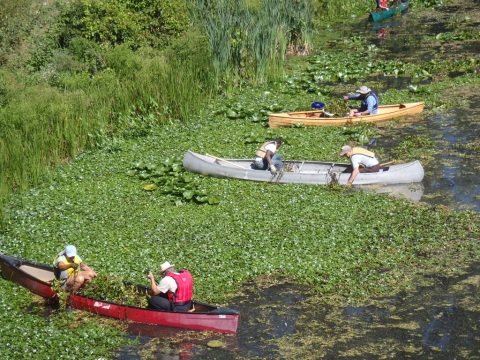
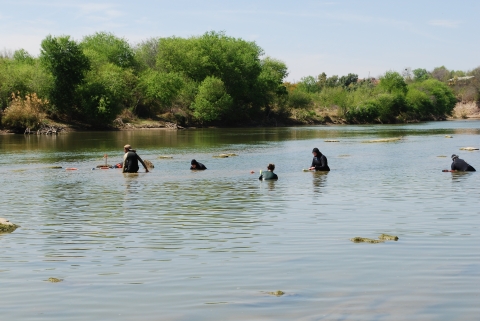
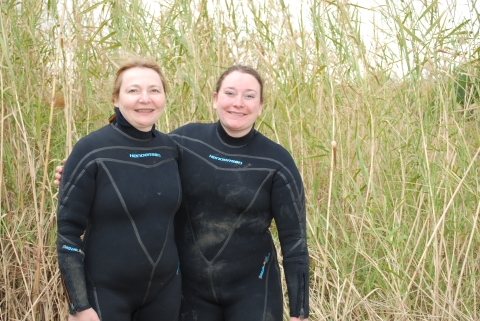
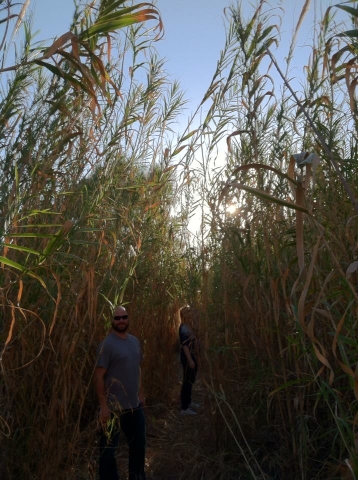
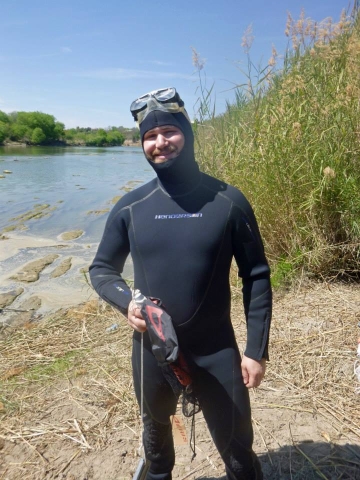
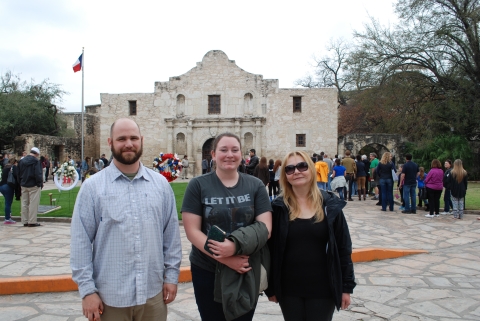
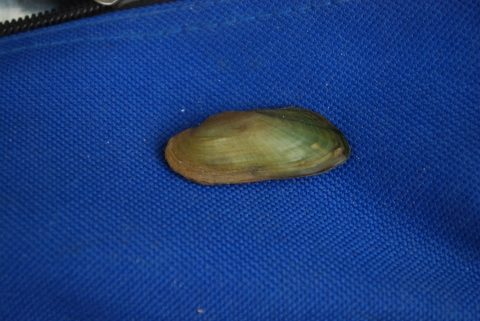
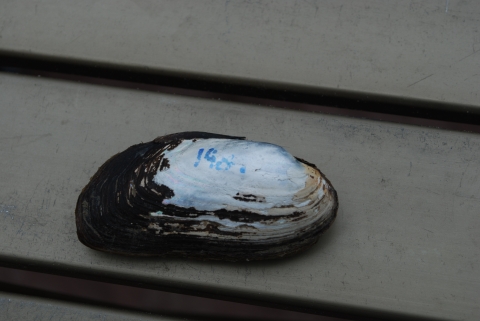
Great Lakes Center researchers traveled to Laredo, Texas in early March to sample for unionids (freshwater mussels) in the Rio Grande. Alexander Karatayev, Lyubov Burlakova, Susan Daniel, and Joshua Fisher spent several days snorkeling in the river searching for native Texas Hornshell (Popenaias popeii) mussels and recording size information as part of a mark-and-recapture study. To find these mussels, one must gently look under rocks with soft sediment and feel for the shells that are partly submerged in the substrate. It was not uncommon for searchers to come out of the water with scratched and bloody hands from sharp rocks. Most people would think, “at least it was warm,” but that wasn’t the case this time. Water temperatures hovered above 65˚F with air temperatures uncharacteristically low for this season in Texas. Toward the end of the week it even rained for several days, also uncommon in the arid to semi-arid climate. It was decided that Buffalo weather followed our researchers, although luckily the snow stayed behind!
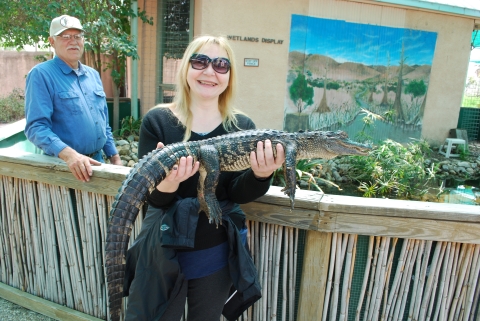
During free time the team was able to hike, sample the local cuisine, and sightsee at key places such as the Alamo. Thomas Miller, collaborator of the project, also gave us a tour of the Lamar Bruni Vergara Environmental Science Center where he is the director. This facility features local flora and fauna of the Rio Grande basin, and provides education to local students about environmental threats to the area.
Overall nearly 260 Texas Hornshell mussels were newly marked and 142 were recaptured from previous years. With an estimated density of around 1.5m^-2, the population of Texas Hornshell at this site may include up to 8700 mussels.
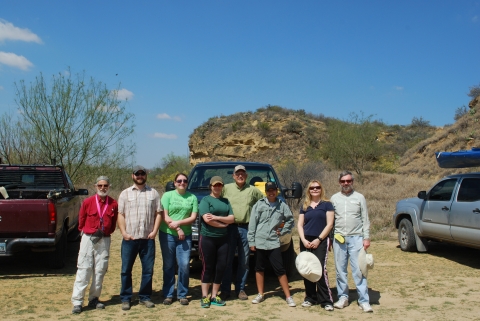
Around the GLC
International scientific collaboration
In order to promote international collaboration, the Great Lakes Center is inviting scientists from different countries to conduct collaborative research or for experience exchange. Dr. Frances Lucy from Institute of Technology, Sligo (Ireland) will present a workshop on aquatic invasive species in June. Frances is Director of the Centre for Environmental Research Innovation and Sustainability, and Editor-in-Chief of international journals Aquatic Invasions and BioInvasions Records.
Exchange student from the Netherlands
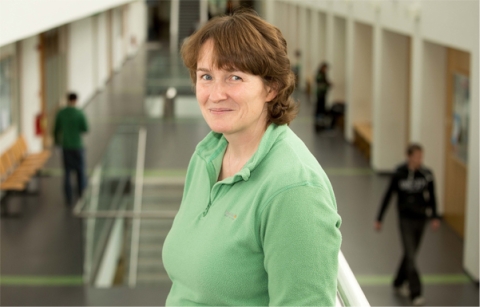
Frank Collas, a graduate student from Radboud University at Nijmegen, the Netherlands, will spend three months from April to July at the GLC Field Station conducting a study on the mechanisms of attachment and detachment of invasive dreissenid mussels, as well as focusing on environmental factors that influence attachment strength, detachment, and survival rates. Although still in graduate school, Frank has already conducted several research projects on aquatic species and published two papers. Dreissenid species have invaded both the Netherlands and the Great Lakes, and their invasion caused ecosystem changes as well as large economic losses. The ability of dreissenids to attach to hard substrates is an important factor in determining their impacts, and is critical for their dispersal. Frank is planning to perform a series of laboratory trials to test the effects of temperature, plate material and shape, and other factors on dreissenid attachment and detachment and contrast these between two dreissenid species, zebra and quagga mussels. To fund this study, Frank received an award from the Radboud Honours Academy. We are looking forward to Frank’s visit and possible future collaboration.
New graduate student
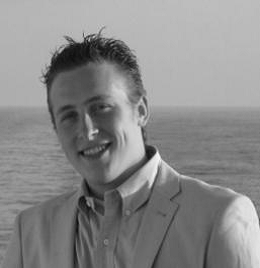
We welcome Eric Bruestle – a new GLES MA student – who will be working on the Greenway project to study lake sturgeon habitat use and feeding ecology in the lower Niagara River. Eric received his B.A. in Biology and Environmental Studies from St. Mary’s College of Maryland, and has professional experience working with US Fish and Wildlife Service in Central New England Fishery Resources Office, New Hampshire Fish and Game, National Park Service in Crater Lake National Park, and in Glen Canyon National Recreation Area. During this time, Eric co-authored a fishery management plan for American eels in the Merrimack River; conducted Atlantic salmon surveys and Marine Recreational Fishery Statistics surveys; monitored threatened Bull trout populations; and coordinated Glen Canyon’s zebra mussel monitoring program. Eric will be supervised by Dr. Dimitry Gorsky and will study diet and habitat use of sub-adult and adult lake sturgeon in the lower Niagara River, and develop and maintain an acoustic telemetry array for tracking lake sturgeon.
Welcome back!
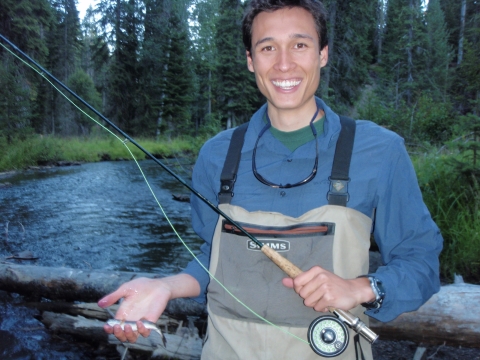
Brianne Tulumello, a lab technician working on the EPA monitoring project, returned to work on April 9. She had been absent due to a prolonged illness. We missed her and are glad to have her back!
Great Lakes Ecosystem Science M.S. program officially recognized as a Professional Science Master’s

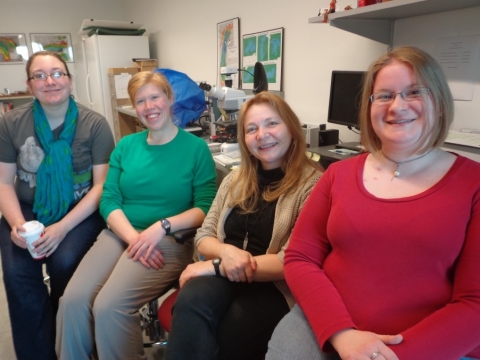
The GLC recently learned that the Great Lakes Ecosystem Science (GLES) Master of Science has been officially recognized as a Professional Science Master’s (PSM) program. The GLES M.S. was planned as a PSM, but a rigorous application to the national PSM Office was required to gain official PSM affiliation status. PSM programs must have a majority of the coursework in natural science, technology, engineering, math, or computational sciences; a professional skills component and an experiential capstone course is required; and the program must have an active advisory board made up of professionals in the field.
The GLES PSM includes coursework in biology, geography, earth science, and chemistry. The professional skills courses cover project management and business and technical communication. The capstone course is an internship that a student completes with an industry, consulting firm, non-governmental organization, or a government agency. The GLES advisory board includes professionals from Buffalo Niagara Riverkeeper, Ecology and Environment, Erie County Department of Environment and Planning, NY Department of Environmental Conservation, US Fish and Wildlife Service, US Army Corps of Engineers, and the Natural Resources Conservation Service.
Benefits of affiliation include promotional assistance to increase recruitment to PSM programs, professional meetings that focus on best practices, and research and advocacy for PSM programs. According to the PSM website, the GLES PSM is one of 305 PSM programs nationally.