
Great Lakes Center Newsletter: Issue 3
October 9, 2013
This issue focuses on some of the new projects we have been working on, including two new ones planned for the Niagara River. It gives an update on the first group of students in the GLES master's programs. Also included is an article on migratory birds.
Great Lakes Long-term Monitoring Program kicks off
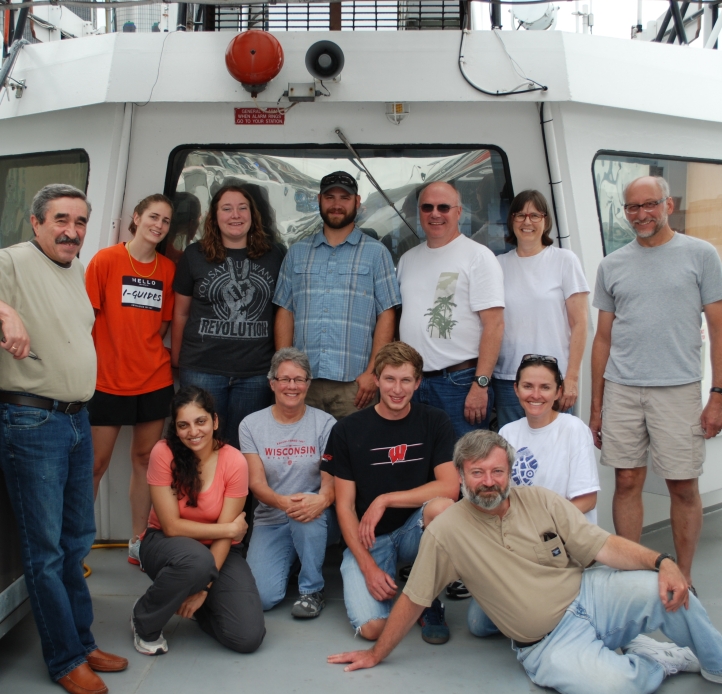
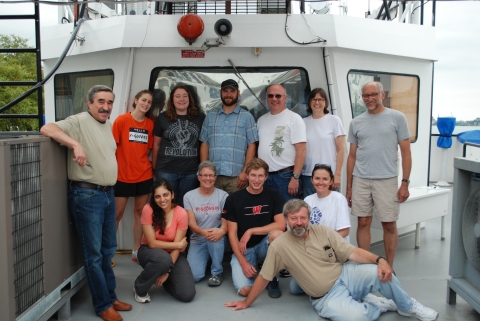
This August was a busy month for four Great Lakes Center researchers. Lyubov Burlakova, Susan Daniel, Alexander Karatayev, and Joshua Fisher boarded the 180-foot EPA research vessel Lake Guardian in Milwaukee, Wisconsin. They spent the better part of the next month touring the Great Lakes, starting in Lake Michigan and heading east to Lake Ontario, and finally heading back west to sample in Lake Superior.
In collaboration with the scientists from Cornell University, they collected samples of benthic organisms, zooplankton, and chlorophyll from all five Great Lakes. This opportunity was made possible by a five-year grant funded through the U.S. EPA.
GLC researchers were responsible for the benthic study, a continuation of an effort that was initiated in 1997. They collected over 200 samples from 63 stations using a Ponar grab sampler. All samples had their sediments removed by washing through fine mesh sieves and organisms were preserved for later processing at the lab. The US EPA released a nighttime underwater video of a Ponar being deployed by Susan Daniel and crew members.
Once back at the lab, benthic invertebrates will be picked out of the remaining substrate, identified, and added to the U.S. EPA database. Currently, Brianne Tulumello, Lyubov Burlakova, Susan Daniel, and graduate assistant Keith Pawlowski are processing samples from the previous year. The Great Lake Center will take part in the long tradition of the Great Lakes Long-term Monitoring Program for at least the next five years.
Spending the whole month on board was fascinating and the chance of a lifetime. It was also a wonderful opportunity to meet people from different agencies and universities, make new friends and collaborators, as well as enjoying spectacular sunsets and wonderful food.
New projects: Researching a keystone species in the Niagara River
Great Lakes Center researchers have been awarded a grant for $766,488 by the Niagara Greenway Ecological Fund to study emerald shiner ecology in the upper Niagara River for the next three years. Dr. Alicia Pérez-Fuentetaja, Mark Clapsadl, and Dr. Randal Snyder are PIs on this project, although other GLC staff will be involved.
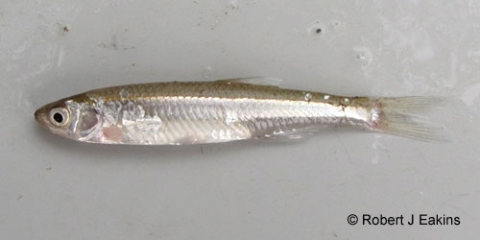
Emerald shiners (Notropis atherinoides) are small fish that constitute the base of the food web that supports many sport fish and fishing birds in the river. They are particularly important in the diet of the common tern, a threatened species in this area, and contribute significantly to their chick-rearing success.
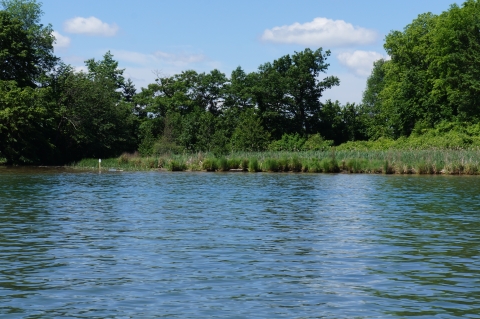
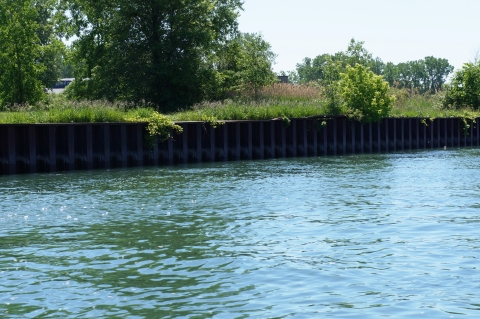
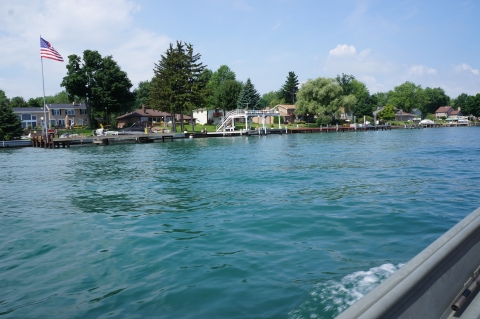
Despite their abundance and importance in the food web, we know very little about the movements of the emerald shiners in and out of the river into Lake Erie. However, observational accounts report that while the adults move into the river in the spawning season, juveniles and larvae swim upstream back into Lake Erie. Unfortunately, the river shoreline has suffered multiple transformations; riprap and bulkheads dominate most of the areas that in a natural river would have slower currents. The concern is that the emerald shiners, and especially their juveniles, may have a difficult time completing their annual migration cycles.
A collapse in this species would have negative repercussions to their predators, sport fish and birds that depend on this resource. The impact would be felt by the public as well: sport fishermen and bird-watchers, nature-lovers and river users.
To address the complexity of this project, we are collaborating with scientists from the NYS DEC, US Army Corps of Engineers, and Buffalo Niagara Riverkeeper. The grant will also support three graduate students and three or four undergraduate technicians.
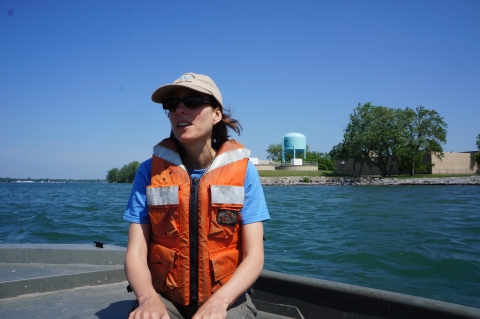
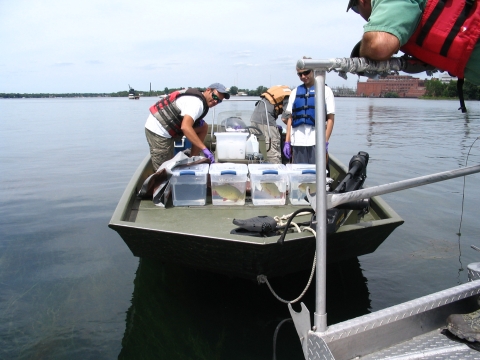
This summer, GLC staff did some preliminary work on the Niagara River to scout out potential sampling and launch sites. This project will be one of the first projects on the Niagara River for the GLC in many years.
“I’m really very excited to finally have this opportunity to work on the Niagara River,” said Field Station manager and research associate Mark Clapsadl. “It is such an important and dynamic body of water and I feel that the work we are going to conduct will really help move us towards protecting and improving the overall health of the river.”
Planning is already underway to determine the final roster of sampling sites and to develop a sampling protocol. In the spring, sampling will begin to track the movement of adult and juvenile emerald shiners in the Upper Niagara River.
Grant information
Title: Emerald shiner habitat conservation and restoration study in the upper Niagara River: importance for sport fish, common terns and public education.
Collaborators: T. DePriest, M. Wilkinson, D. Einhouse (NYSDEC), A. Hannes (USACE), R. Kraft (Buffalo Niagara Riverkeeper), D. Potts, K. Hastings (SUNY-Buffalo State), S. Delavan (UB). 2014-2016.
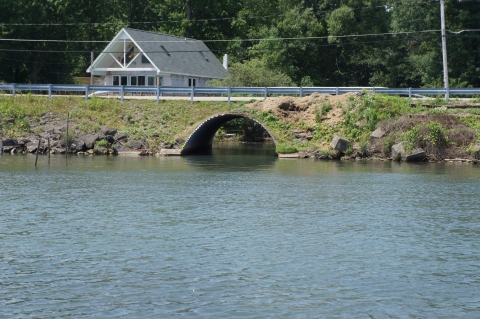
Niagara River habitat
Class in session for GLES master’s programs
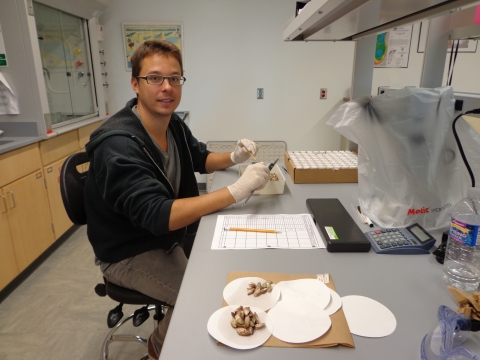
The new Great Lakes Ecosystem Science (GLES) master’s programs started this fall with seven students: three are pursuing the thesis-based M.A. and four are in the internship-based M.S. program. We were pleased to offer two GLES students graduate assistant positions. Keith Pawlowski is working in Dr. Karatayev’s lab and Michael Borrelli is working in Dr. Pennuto’s lab.
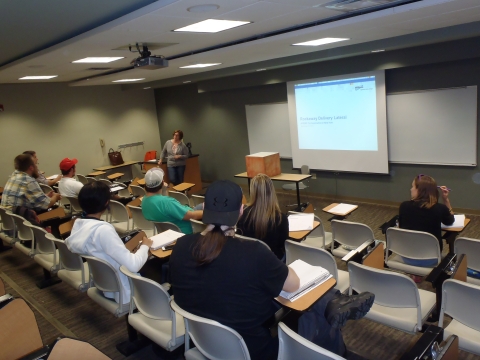
Most of the GLES students are taking GLC 600 Great Lakes Seminar this semester. GLC 600 is a required course for students in both GLES programs. The purpose of the course is to provide an opportunity for invited speakers representing various groups within the Great Lakes basin to give presentations on Great Lakes environmental science and management topics.
This semester speakers are from Buffalo State, UB, US Fish and Wildlife Service, Ecology & Environment, and Buffalo Niagara Riverkeeper. We hope that GLC 600 will be a venue for students and faculty to interact.
GLC 600 is being held in the Classroom Building, room B332 on Wednesdays 4:30-6:00 PM. For a schedule of fall 2013 presentations, or if you would like to present during the spring 2014 semester, please contact Kelly Frothingham, GLES program coordinator.
Other GLES classes
This semester, five other classes are being offered for GLES students:
- GEG 525 Fundamentals of GIS
- GEG 575 Principles of Hydrology
- BIO 635 Great Lakes Ecology
- PSM 601 Project Management for Math and Science Professionals
- GES 525 Advanced Hydrogeology
For more information on the GLES M.A. or M.S. programs, or to apply, please visit the Graduate Programs section of the GLC website.
Investigating Lake Sturgeon habitat use, feeding ecology, and benthic resource availability in the Lower Niagara River
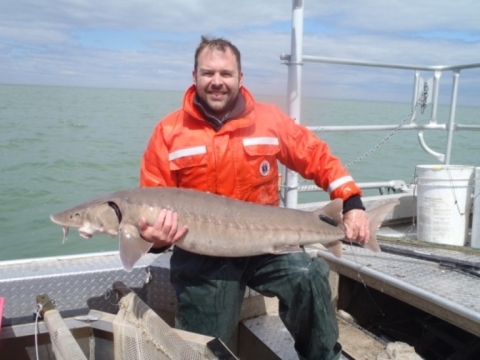
Great Lakes Center researchers have been awarded a grant for $835,829 by the Niagara Greenway Ecological Fund to investigate Lake Sturgeon habitat use, feeding ecology, and benthic resource availability in the Lower Niagara River for 2014-2017 (principal investigators Alexander Karatayev, Lyubov Burlakova, and Dimitry Gorsky from the USFWS).
In order to advance our understanding of the Niagara River ecosystem, we will study the diversity, distribution, and density of benthic forage resources and the biology and ecology of lake sturgeon in the lower Niagara River. Using bathymetric and habitat data on the lower Niagara River we will develop benthic habitat maps, and use these maps to identify and prioritize habitats of importance as feeding grounds for lake sturgeon and other valuable fish species. The data on species composition, density, and biomass of macrozoobenthos will be also used to employ existing and develop new benthic community biological indices that provide assessment for stressors such as pollution, sediment deposition, habitat alteration and storm water runoff point sources. The Niagara River is affected by all of these stressors and is thus a particularly appropriate candidate for testing benthic bioassessment measures of ecological health.
The lower Niagara River provides habitat to one of the few remnant populations of lake sturgeon in the lower Great Lakes. According to a piece in the Buffalo News, evidence shows that this population may be in recovery, but information about diet and habitat use in this unique system is lacking. We will determine lake sturgeon movement patterns, habitat use, and diet in the lower Niagara River and relate it to our benthic habitat analysis to determine substrate and habitat preferences and to predict a carrying capacity for lake sturgeon in the lower Niagara River. Our study will produce an assessment of food availability and habitat preferences of lake sturgeon in relation to restoration of the local population. This information will help researchers and managers develop opportunities to protect and enhance habitat to advance lake sturgeon recovery in the lower Niagara River.
Field Station collaborates with variety of agencies
It’s no secret that members of the Great Lakes Center frequently collaborate with faculty, staff, and students from other departments at Buffalo State. However, it is less well known that a large number of organizations and individuals beyond the campus community partner with us or simply benefit from our assistance or facilities, particularly at the Field Station.
We have partnered with most of the government agencies that have a stake in Lakes Erie and Ontario or the Niagara River. These agencies include the NYS Department of Environmental Conservation, US Fish and Wildlife Service, US NAVY, Buffalo Underwater Recovery Team (Buffalo Police), Buffalo Fire Department, and the NYS Naval Militia.
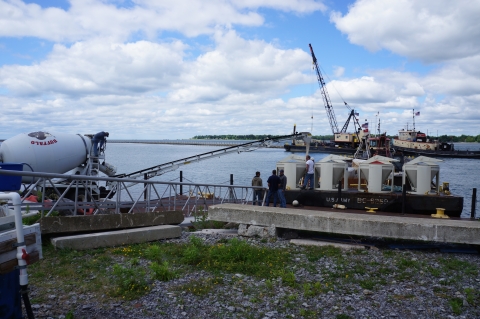
The US Army Corps of Engineers, the City of Buffalo, and the Niagara River Greenway teamed together to implement much needed repairs on the Bird Island Pier. The Field Station provided access to the water so that heavy equipment, personnel, and concrete could be delivered to the boats and barges performing the repair work. We have also helped out the Corps by providing laboratory space and microscopes so that biologists Richard Ruby and Andrew Hannes could identify samples.
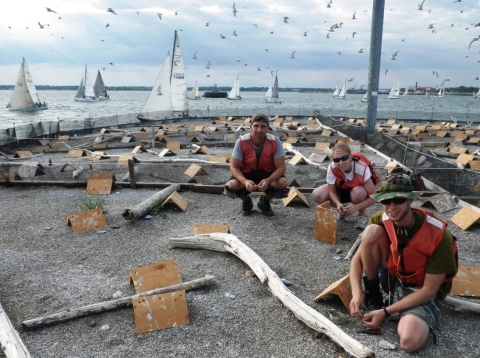
The NYS Department of Environmental Conservation and Dr. Lee Harper of Riveredge Associates have been using GLC facilities for staging and launching in order to work on common tern nesting projects along the Buffalo breakwaters. This work has been funded by the New York Power Authority and is being done in cooperation with the US Army Corps Of Engineers.
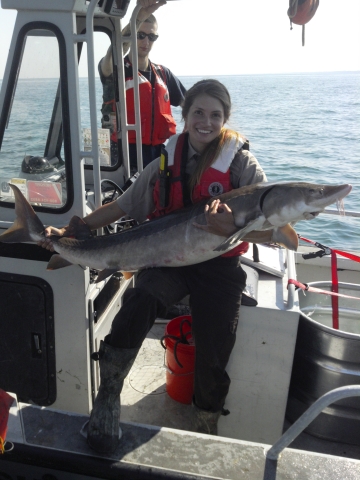
The USFWS is working to understand sturgeon movements in the Niagara River. Recently, the USFWS moved their offices to the Iroquois National Wildlife Refuge, unfortunately increasing travel time to and from research sites. The GLC has been helping with the logistics of the sturgeon research program by providing space for boats and laboratory access to USFWS.
In addition to agencies GLC scientists have collaborations with researchers from a number of universities. They include faculty from Auburn University, University at Buffalo, Middlebury College, and SUNY College of Environmental Science and Forestry. We have also partnered with local non-governmental organizations like Buffalo Niagara Riverkeeper and have had students participate in projects here from Groundwork Buffalo.
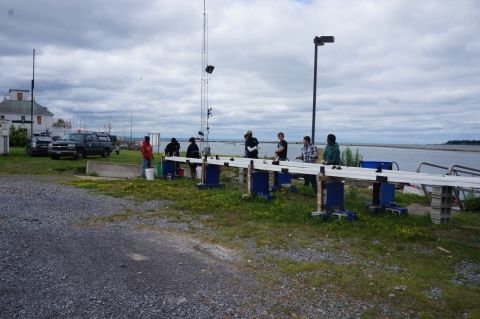
We are finishing our second year of collaboration with Dr. David Blersch, now at Auburn University, in an algal culture experiment testing the feasibility of using flow through culture systems for bio-removal of pollutants from waterways.
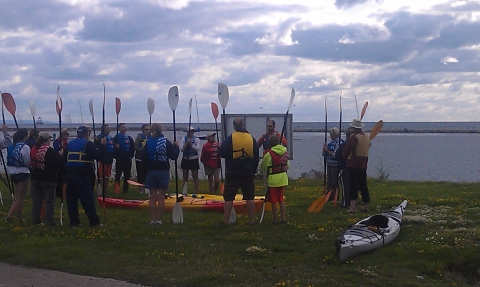
The Buffalo Niagara Riverkeeper launched some paddle tours from the Field Station this summer, offering a unique opportunity for people to learn about the history and ecology of the Niagara River and surrounding areas. They also had a few tours specifically for refugees living on the westside of Buffalo to learn about the Niagara River. In addition to access to the launch site the GLC has contributed to BNRK projects in the past by providing laboratory space for bacterial analysis of samples collected from local waterways.
Researchers from NYS DEC and SUNY College of Environmental Science and Forestry are working with rudd, an invasive fish in the Niagara River, to better understand the impact these fish are having on the aquatic vegetation that is critical nursery habitat for many Niagara River fishes. The GLC has provided important support to both DEC and ESF for this and other projects and is actively collaborating with both groups to conduct Niagara River studies.
For a full list of our academic collaborators, visit the About section of the GLC website.
Monitoring the effects of Elton Creek stream restoration
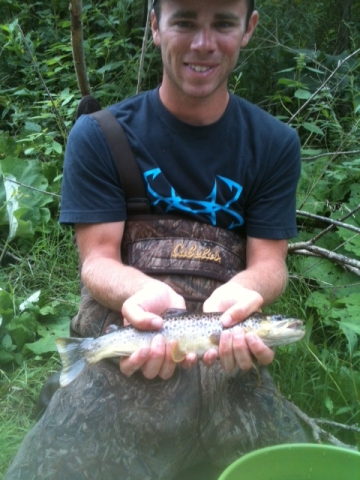
GLC biologist Dr. Chris Pennuto and graduate student Steve Sliwinski are part of a research team investigating how in-stream restoration activities affect the movement and population dynamics of trout and sculpins in Elton Creek, NY. The long-term project brings together the NYS DEC, researchers from the Great Lakes Center and UB, stream restoration consultant, Dave Derrick, and LaFarge Quarry operators to restore critical trout habitat in the stream.
Large machinery moved huge quantities of boulders August 19-23, installing hydraulic cover stones, single-stone bendway weirs, brush piles, living dikes, and bank amendments along 1.2 km of stream. Dr. Pennuto and Sliwinski assessed sculpin and trout populations before any restoration activities began, and will re-assess the same locations at 6, 12, and 18 month post-restoration.
Using a backpack electroshocker, they caught brown trout and sculpin in Elton Creek. All trout captured were implanted with passively induced transponder (PIT) tags. A remotely operated PIT tag reader system is currently being installed in the stream to remotely monitor the movement of tagged fish.
The work should provide important information to fisheries managers on the benefits of in-stream habitat modifications to trout and sculpin populations in NY streams.
In the news
Million Dollar Club inducts two GLC researchers
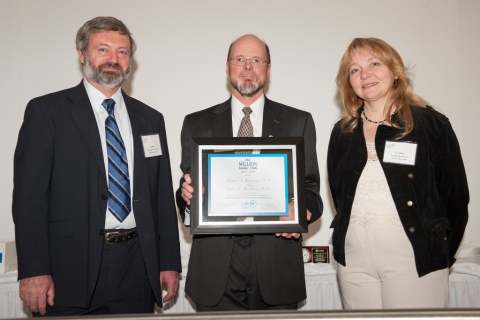
GLC researchers Alexander Karatayev (left) and Lyubov Burlakova (right) stand with Dean Mark Severson. Karatayev and Burlakova were inducted into the Research Foundation’s Million Dollar Club this spring for securing sponsored program funding in excess of a million dollars.
GLC invited to Bird Island Pier opening ceremony
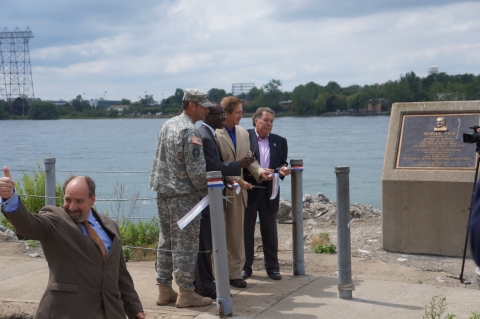
The US Army Corps of Engineers recognized the GLC among other stakeholders who made the restoration of the Bird Island Pier possible at the ribbon cutting ceremony on August 13 to reopen the pier to the public. Much of the pier had been closed for approximately three years due to structural damage to the outer wall which could lead to water inundating the pier in windy weather. The pier is over 100 years old, and with these renovations should last for years to come. This project is tied to a major reimagining of Broderick Park.
PRISM coordinator hiring delayed
Setbacks in the release of funds from the NYS DEC led to delays in the hiring of the PRISM Coordinator position at the Great Lakes Center. That issue has been resolved and the search has resumed. The search committee will make their decision in the upcoming weeks.
Oligochaete identification workshop
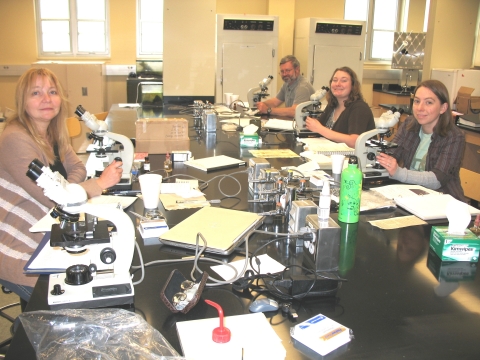
Lyubov Burlakova, Alexander Karatayev, Susan Daniel, and Kit Hastings attended a workshop at the National Center for Water Quality Research at Heidelberg University in Ohio to learn to identify oligochaete worms.
Sign of the season: Birds flock to Niagara Frontier
Twice every year hundreds of thousands of migratory birds pass through the Niagara River corridor on their way to their breeding grounds in the spring and to their wintering grounds in the fall. The Niagara River is part of the Atlantic flyway, a major migration route that starts along the northern Atlantic coast and stretches down through the Caribbean and to South America.
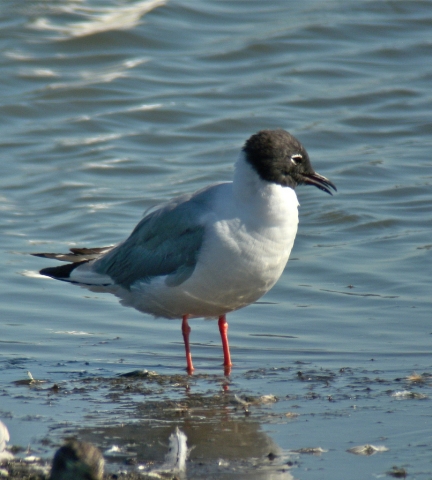
Particularly impressive are the gulls with 19 species represented. Some of these flocks will contain tens of thousands of birds of a single species; in fact, Bonaparte’s gulls sometimes arrive in flocks up to 100,000 individuals!
The Bonaparte’s gull nests in the remote boreal forests of Alaska and Canada, but is seen commonly during migration and winter throughout North America. The flocks migrating through the Niagara River corridor represent up to 50% or more of the estimated worldwide population, which makes this area one of the best to see Bonaparte’s in the winter.
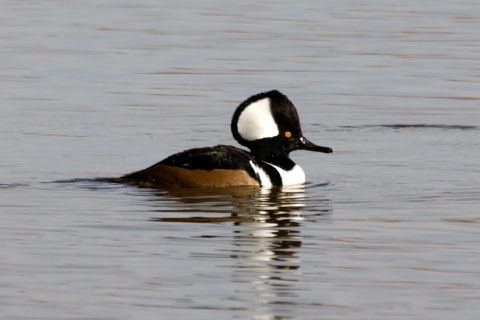
Besides the typical Canada goose, over 20 species of waterfowl migrate through our region. There are many types of ducks, including diving ducks like the hooded merganser or the bufflehead, some of which spend the winter here. These birds spend their days flying upstream, then feeding as they drift down the river.
Aquatic birds like gulls and waterfowl aren’t the only birds that can be seen migrating at this time of year. Songbirds and birds of prey also follow the flow of the seasons and migrate along the lakes before heading south.
Take some time this October-December to grab your binoculars and a field guide and visit any one of the numerous parks along the Niagara River and watch for some of the beautiful, and sometimes rare, birds that will be passing by on their way to warmer climates for the winter. This is one of the most spectacular displays of nature in our region, and can be witnessed right from our urban backyard.