
GLC Seminar: The role of seabed dynamics in structuring an estuarine macrobenthic community
November 25, 2014
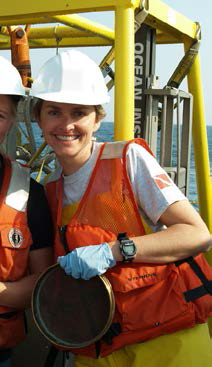
Please join the Great Lakes Center for a seminar presented by Elizabeth Hinchey Malloy, Ph.D., environmental scientist with the US EPA Great Lakes National Program Office. The seminar will be held on Thursday, December 4th from 12:15 to 1:30 p.m. in Science Building, Room 272.
Estuaries are dynamic physical environments. The stability of the sediment-water interface is influenced by sources and rates of sediment delivery and physical reworking of sediments by currents, tides, waves and biology. The effects of disruption of this interface on benthic biology is poorly resolved. In this presentation, Hinchey will describe her field and laboratory investigations of effects of prevalent gradients in seabed disturbance processes and associated seabed characteristics on estuarine benthic community structure and function in the York River, a tributary of Chesapeake Bay.
Hinchey used a variety of approaches to characterize the seabed and to document differences in magnitude of deposition and subsequent reworking of the sediments by physical processes. Temporal and spatial variations in benthic spring recruitment, secondary production and community structure were observed across the five benthic subenvironments sampled, suggesting that variations in seabed characteristics across relatively small spatial scales can influence benthic community structure and function.
Her presentation will conclude by transitioning from estuaries to the sweetwater seas and highlight the Great Lakes National Program Office’s benthic monitoring program and Great Lakes benthic index development.